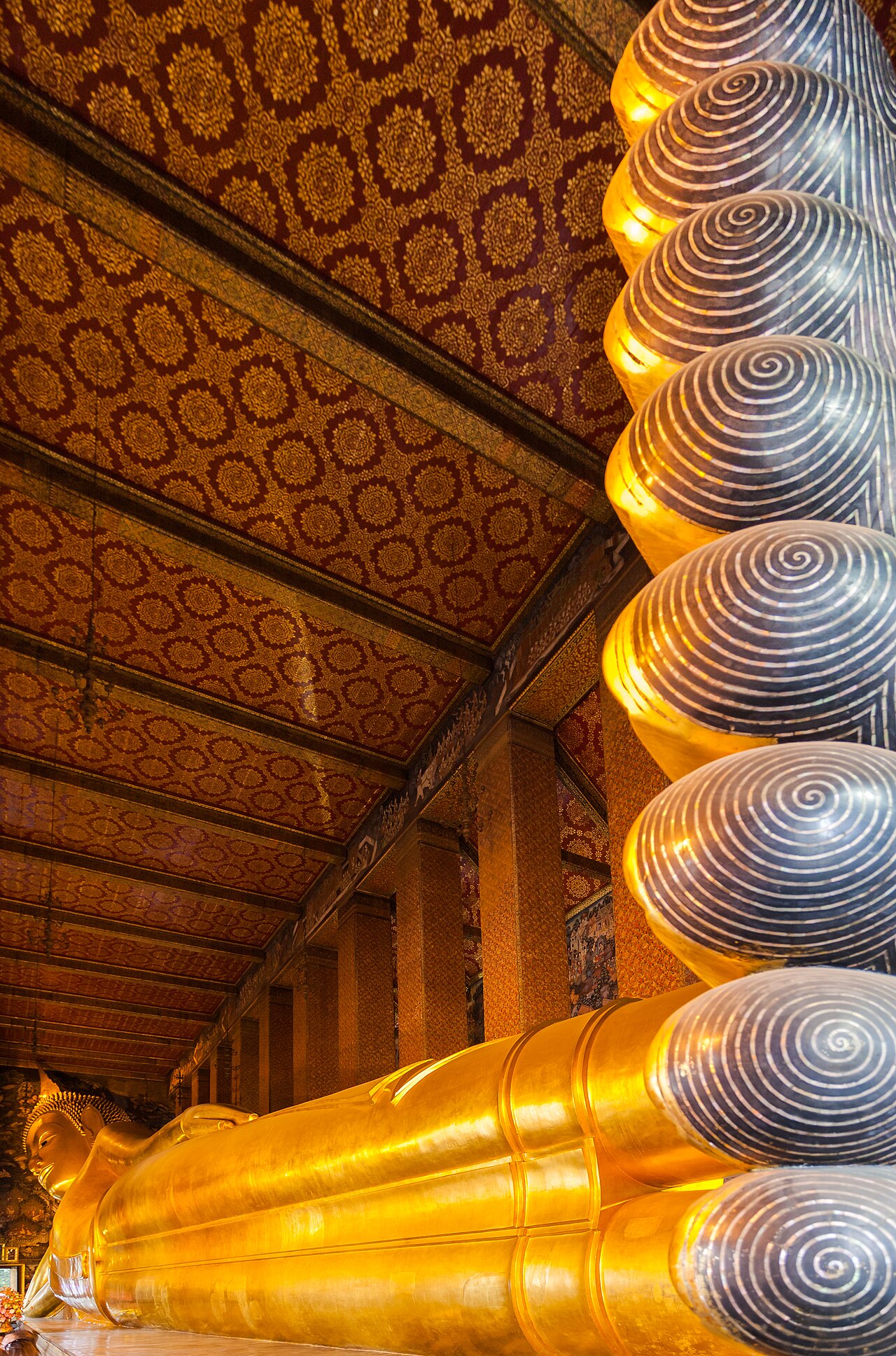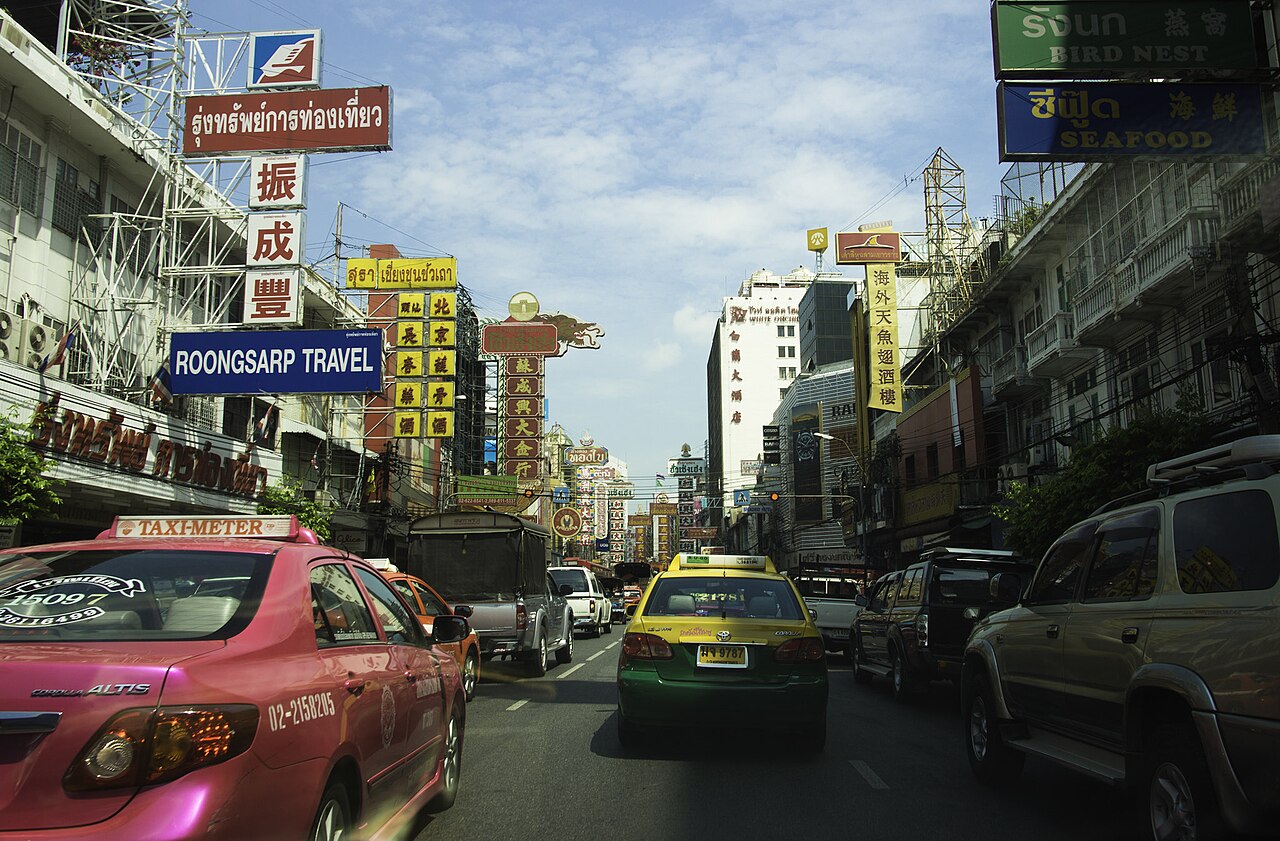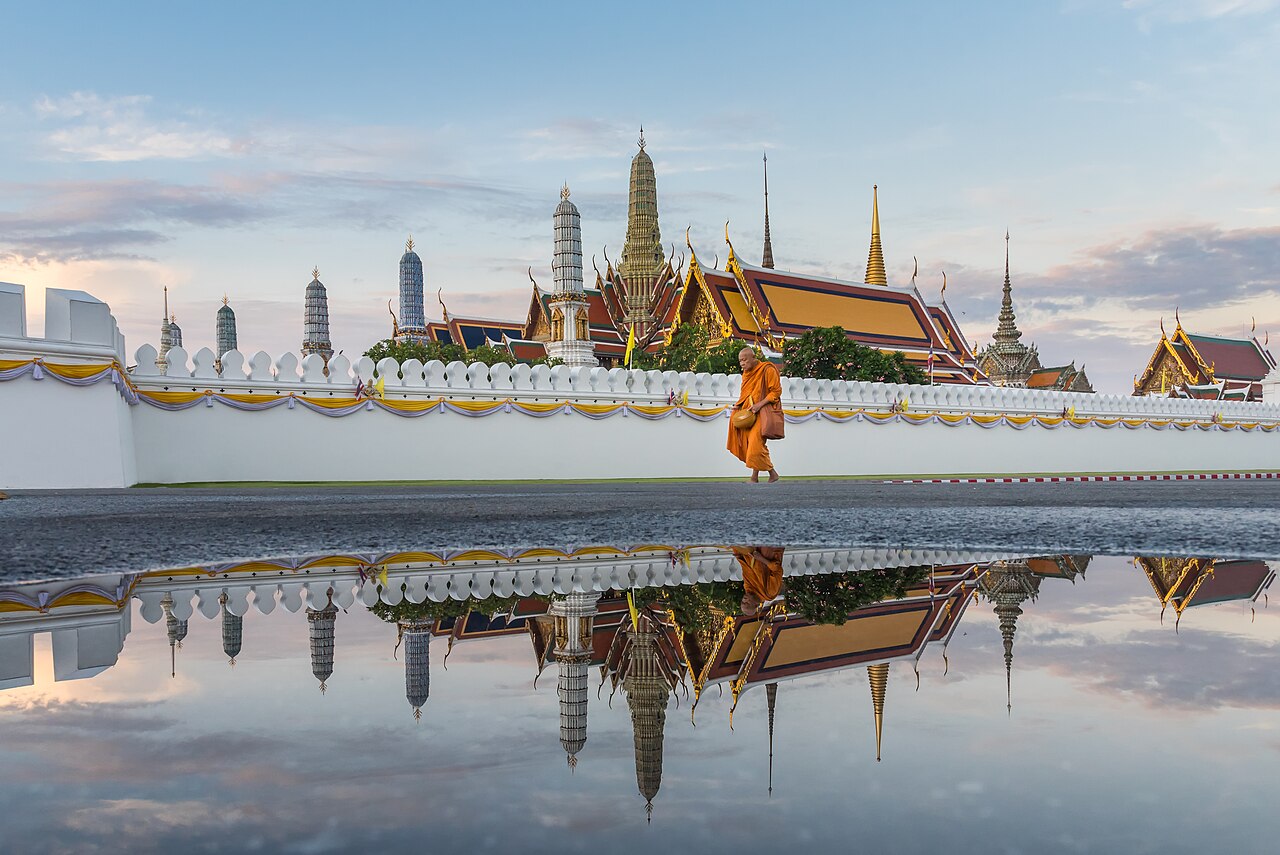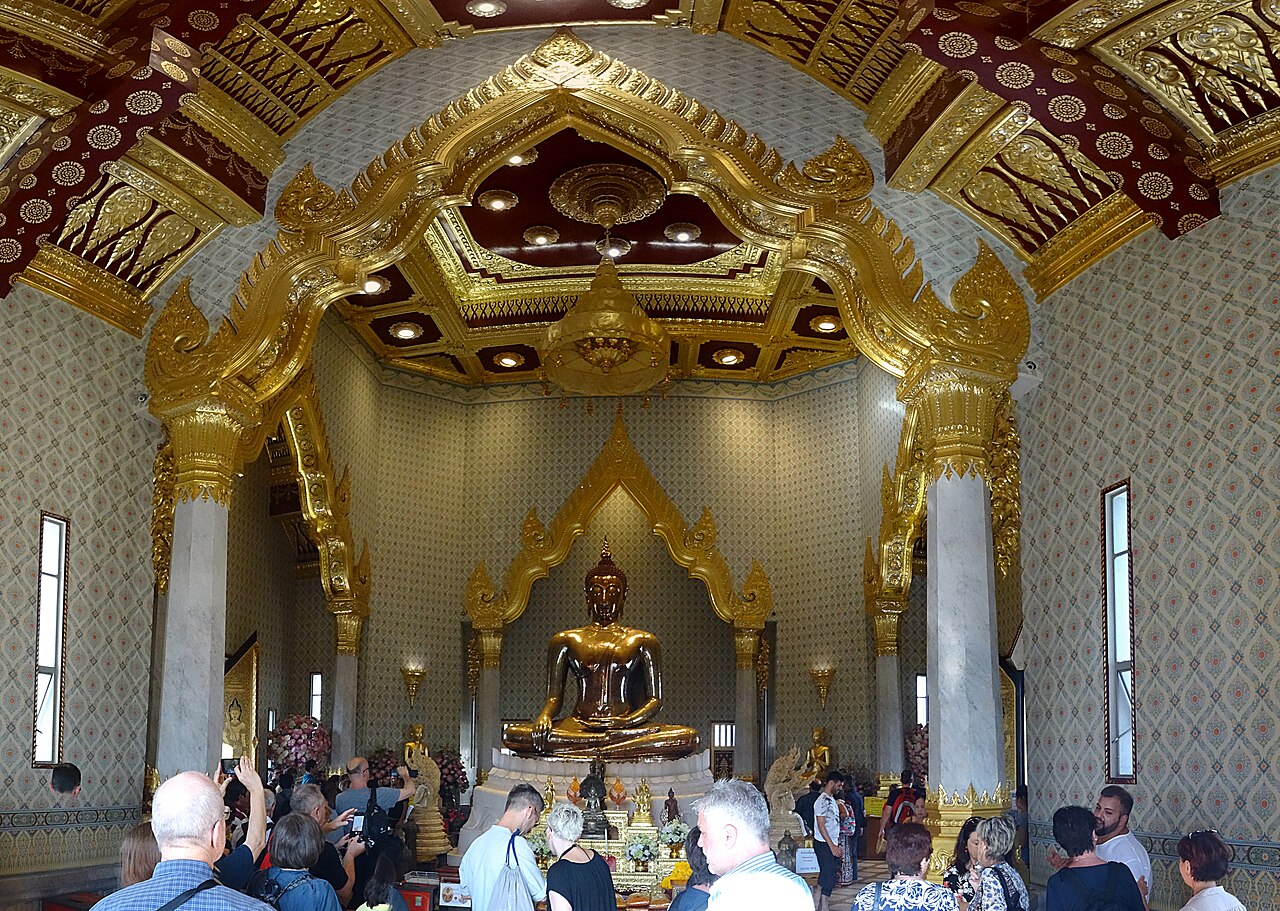
Wat Traimit is the essential first stop of any Chinatown visit and holds one of the most remarkable objects in Thailand: a seated Buddha image about three metres tall, cast in solid gold and weighing several tonnes, the largest such image in the world. Its story is the stuff of legend. The image, made in the Sukhothai style several centuries ago, was at some point covered in plaster and coloured glass, most likely to hide it from invading armies, and for generations it sat unrecognised in a series of Bangkok temples. In the 1950s, while it was being moved to a new building at this temple, formerly known as Wat Sam Chin, the plaster cracked, and the gold beneath was revealed. Today the image sits in splendour on the top floor of the Phra Maha Mondop, a gleaming white marble building with a gold-tipped spire completed in the early twenty-first century, visible from the busy Odeon Circle at the western end of Yaowarat Road where the Chinatown gate stands. The hall is bright and serene, with the Buddha glowing against a red and gold backdrop, and it is easy to spend more time here than you expect, watching worshippers make offerings. The floors below house two worthwhile exhibitions: one telling the story of the golden image and its discovery, and the Yaowarat Chinatown Heritage Center, which traces the history of Bangkok's Chinese community with dioramas, models and objects, explaining how Teochew immigrants built the district. The temple is open daily during the day, roughly from 8am to 5pm, and there are modest separate fees for the Golden Buddha hall and the exhibitions; the exhibitions may close one day a week. It is small and quick to visit, so it pairs perfectly with an afternoon and evening in Chinatown.
Planning the visit: come in the afternoon, see the Golden Buddha and the heritage centre, then walk into Chinatown as the street-food stalls set up on Yaowarat Road at dusk; it is an ideal, compact itinerary. The heritage centre is the right introduction to what you are about to eat and see: the arrival of Chinese traders and labourers, the gold shops that still line the main road, the shophouse architecture and the community's role in building modern Bangkok. Dress as you would for any temple, with shoulders and knees covered, and remove your shoes before entering the image hall. Photography of the Golden Buddha is generally allowed from a respectful distance; follow the signs and avoid posing with your back to the image.
Getting there: Wat Traimit is a five-minute walk from Hua Lamphong MRT station on the Blue Line, and right beside the Chinatown gate at Odeon Circle. From the river, the Ratchawong pier on the Chao Phraya express boat line is about fifteen minutes' walk through Chinatown's lanes, past Sampeng market. The Wat Mangkon MRT station, deeper into Chinatown, is another option. Chinatown's narrow streets are congested with traffic in the late afternoon, so the MRT is faster than a taxi.
Who it suits: first-time visitors (the golden image is one of Bangkok's iconic sights), culture lovers interested in the Chinese-Thai story, and families, since the visit is short, cool and indoors. Couples can make an evening of it by continuing on to the street-food stalls, the Wat Mangkon Kamalawat temple and a riverside dinner. On the 2026 floods: Chinatown was reported accessible throughout, and the temple was not among affected sites; check opening times for the exhibitions, which may change on public holidays and during the December royal ceremonies.
What to expect
The experience
A compact temple visit to the Golden Buddha hall at the top of a white marble mondop, with exhibitions on the image and on Chinatown history below.
Best time
Mid to late afternoon, before walking into Chinatown as the street food starts at dusk.
How long
Forty-five minutes to an hour with the exhibitions.
Tips
Cover shoulders and knees. Visit the Yaowarat Chinatown Heritage Center before eating your way along Yaowarat Road. Use the MRT to Hua Lamphong rather than a taxi in rush hour.
Quick picks
- Best for
- Seeing the world's largest solid-gold Buddha image and getting the background to Chinatown.
- Families
- Good: short, indoors and cool, with dioramas in the heritage centre that children enjoy.
- Couples
- The perfect start to an evening of street food and temples in Chinatown.
- Pair with
- Chinatown and Yaowarat street food straight afterwards.
- Time needed
- About an hour.
Good questions
Is the Golden Buddha really solid gold?+
Yes. The image, about three metres tall and weighing several tonnes, is cast in gold. It was hidden under plaster for centuries and revealed when the plaster cracked during a move in the 1950s.
How much does it cost to visit?+
There are modest, separate fees for the Golden Buddha hall and for the exhibitions on the lower floors. Check current prices at the ticket desk.
What are the opening hours?+
Roughly 8am to 5pm daily for the temple. The exhibitions may close on one weekday, so check before you go if they are your priority.
How do I get to Wat Traimit?+
It is a five-minute walk from Hua Lamphong MRT station and sits beside the Chinatown gate at Odeon Circle.
What is the Yaowarat Chinatown Heritage Center?+
An exhibition inside the temple building on the history of Bangkok's Chinese community, with models and dioramas of the old shophouses, trades and daily life of Yaowarat.