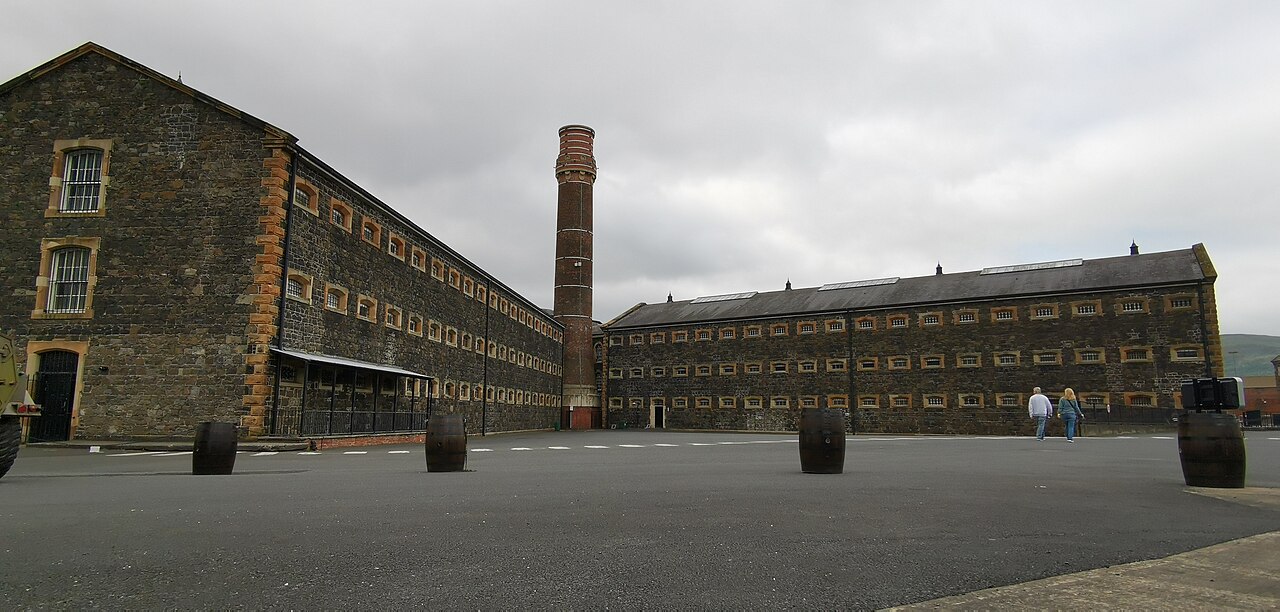
Crumlin Road Gaol is one of the most powerful places in Belfast to understand the city’s past. The Grade A listed jail, designed by the architect Charles Lanyon, took its first prisoners in 1846 and operated for 150 years, until the governor left and the air-lock gates closed for the last time on 31 March 1996. In between, more than 25,000 people passed through its gates: murderers and petty thieves, suffragettes, and, during the Troubles, loyalist and republican prisoners held in segregated wings. The tour takes you along the radiating wings and into the cells, through the Governor’s office and the prison hospital, and down into the tunnel that ran beneath Crumlin Road to the courthouse opposite, so prisoners could be moved without being seen. Most sobering of all are the condemned man’s cell and the hanging cell beside it, and the unmarked graves in the yard. Stories of executions, escapes, hunger strikes and riots are told frankly, with room for the different perspectives that still shape Belfast. This page links to the Tiqets venue page for Crumlin Road Gaol tickets.
How to visit: the gaol is at 53-55 Crumlin Road, about a mile north of the city centre, an easy taxi ride or a twenty-minute walk from City Hall. Tours run daily, and the Tiqets listing shows opening from 10:30am to 3pm, so plan for a late morning or early afternoon visit. Book ahead, as group sizes are limited and popular times fill. The visit lasts about seventy minutes, and much of it is on foot along stone floors, with some steps and narrow passages.
What to expect: the atmosphere is cold and austere, especially in November, so bring a warm layer. The content is serious, covering capital punishment and the conflict years, but it is told with care, and older children often find it gripping. The site also hosts concerts and events in the evenings, and there is a café for a break afterwards.
Making the most of it: visit the gaol the same day as a black taxi tour, as the drivers bring the Shankill and Falls roads to life and the gaol fills in the institutional side of the story. Look up at the huge courthouse across the road as you leave, linked to the gaol by the tunnel you have just walked through.
What to expect
The experience
A tour of about seventy minutes through the cell wings, the Governor’s office, the hospital, the tunnel to the courthouse, the condemned man’s cell and the hanging cell.
Best time
A late morning or early afternoon slot, within the listed 10:30am to 3pm opening, and ideally on the same day as a black taxi tour.
How long
About seventy minutes for the tour, or up to two hours with the café and the exhibition areas.
Tips
Book a time in advance, wear comfortable shoes and a warm layer, and be ready for frank content about executions and the Troubles.
Quick picks
- Best for
- History lovers and anyone who wants the story of the Troubles from inside the walls that held its prisoners.
- Families
- Gripping for teenagers, but the hanging cell and the subject matter make it unsuitable for younger children.
- Couples
- A thought-provoking afternoon, best followed by a drink and a debrief in the Cathedral Quarter.
- Pair with
- A black taxi tour of the murals and peace walls, or Titanic Belfast for a different side of the city’s history.
- Time needed
- One and a half to two hours.
Good questions
How long is the Crumlin Road Gaol tour?+
The tour lasts about seventy minutes. Allow up to two hours if you want time for the café and the exhibition areas.
When did Crumlin Road Gaol close?+
The gaol closed on 31 March 1996, after 150 years of operation. It first took prisoners in 1846.
Is Crumlin Road Gaol suitable for children?+
Teenagers usually find it fascinating, but the hanging cell and the themes of execution and conflict are heavy. Use your judgement with younger children.
How do I get to Crumlin Road Gaol?+
It is at 53-55 Crumlin Road, about a mile north of the city centre. Walk in about twenty minutes from City Hall or take a short taxi ride.
What can you see inside Crumlin Road Gaol?+
You see the cell wings, the Governor’s office, the prison hospital, the tunnel to the courthouse and the hanging cell. The tour also passes the graveyard where executed prisoners were buried.