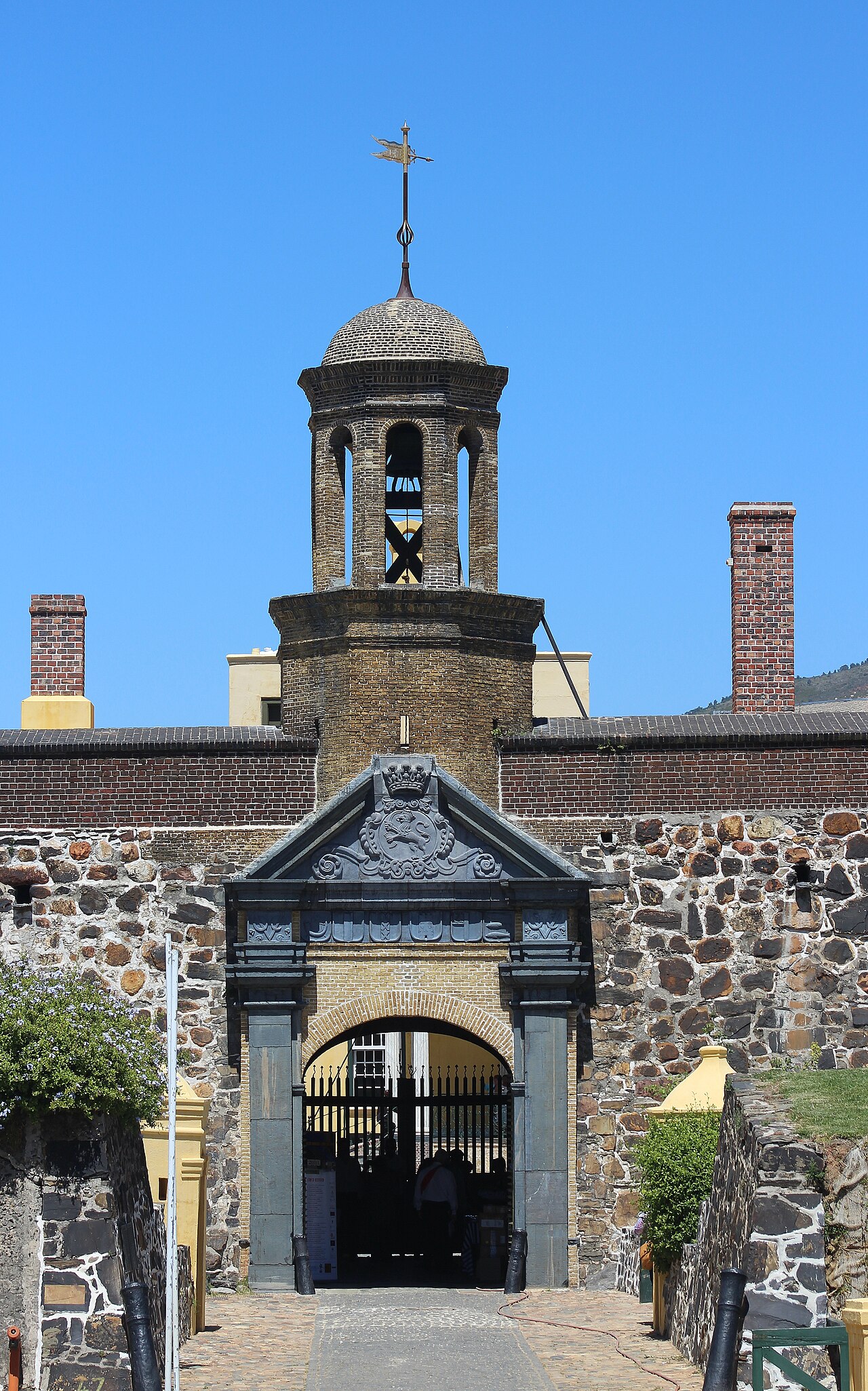
The Castle of Good Hope is the place to understand how Cape Town began and who paid the price for it. The Dutch East India Company, the VOC, built it between 1666 and 1679 to replace the earlier mud-and-timber fort that Jan van Riebeeck had put up in 1652, and it is the oldest surviving colonial building in South Africa. It is a pentagon, a star-shaped fort with five bastions named after the titles of the Prince of Orange, and its stone walls once stood on the shoreline of Table Bay before land reclamation pushed the sea back. For more than three centuries it was the centre of power at the Cape, the seat of the colonial government, a military headquarters and a prison, and today it is still the regional seat of the South African Army, which is why there are uniformed soldiers on the gate. A visit takes you through the main gate into the courtyard, which is divided in two by the Kat, a defensive wall with a graceful balcony from which proclamations were read and new governors were sworn in. From there you can walk the ramparts for views of Table Mountain and the city, explore the bastions and the dark cells below them, and visit the museums. The William Fehr Collection holds paintings, furniture and porcelain from the Cape's colonial period, and the military museum covers the soldiers who served here. The Castle Control Board now describes the site as a place of inclusivity, healing, learning and memorialisation, and a visit should keep in mind the Khoi communities whose land the fort was built on and the enslaved people who built and worked it. Ceremonies with soldiers in period uniform are held on some days, weather permitting. Entry is modest, about fifty rand for adults, and the Castle is open daily from 09:00 to 16:00.
Planning the visit: allow about an hour and a half. Join a guided tour if one is running when you arrive, as the guides bring the stones to life, then walk the ramparts on your own. Arrive well before the last ticket sale at 15:15. The Castle is wheelchair-friendly in the main areas, but the ramparts and cells involve steps and uneven ground. Wear comfortable shoes and something warm on windy days, as the courtyards funnel the wind. Online ticket sales were listed as coming soon when we checked, so bring a card or cash for the gate.
Where it fits: the Castle sits on the edge of the city centre, opposite the Grand Parade and City Hall, where Nelson Mandela gave his first speech after his release in 1990. From here it is a short walk to the District Six Museum, the Company's Garden and the Iziko museums, which together make the best history day in the city. Note that the Castle is in a busy part of town; keep valuables out of sight and take a car or a ride-hailing app if you are going on afterwards.
Who it suits: history lovers and first-time visitors who want context for everything else they will see, and families with children old enough to enjoy cannons, cells and ramparts. It pairs naturally with Robben Island and the District Six Museum for a fuller picture of Cape Town's history, from colonial conquest to apartheid and freedom.
What to expect
The experience
A seventeenth-century star fort with a divided courtyard and the Kat balcony, ramparts with mountain views, cells, the William Fehr Collection of colonial art and a military museum.
Best time
Mornings, on a calm day for the ramparts. Last tickets are sold at 15:15.
How long
About an hour and a half; two hours with a guided tour.
Tips
Join a guided tour if one is running. Wear comfortable shoes for the ramparts and steps. Combine with the District Six Museum and Company's Garden for a history day.
Quick picks
- Best for
- The beginning of Cape Town's story, in stone.
- Families
- Cannons, cells, soldiers and ramparts make it a good history outing for older children.
- Couples
- A morning of history, then lunch in the city centre or the Company's Garden.
- Pair with
- The District Six Museum, Company's Garden and Robben Island.
- Time needed
- About ninety minutes.
Good questions
How old is the Castle of Good Hope?+
The Dutch East India Company built it between 1666 and 1679, replacing an earlier fort from 1652. It is the oldest surviving colonial building in South Africa.
What are the opening hours and entry fee?+
The Castle is open from 09:00 to 16:00, with last tickets at 15:15, every day except Christmas Day and New Year's Day. Adult entry is about fifty rand, with lower rates for children and South African pensioners.
What is there to see inside?+
The courtyards and the Kat balcony, the ramparts and bastions, the cells, the William Fehr Collection of Cape colonial art and furniture, and a military museum. Ceremonies are held on some days, weather permitting.
Is the Castle still a military site?+
Yes. It remains the regional seat of the South African Army, which is why there are soldiers at the gate, but the historic areas and museums are open to visitors.
Is it safe to visit?+
Yes, during opening hours. The surrounding streets near the Grand Parade are busy, so keep valuables out of sight and use a car or ride-hailing app to move on afterwards.