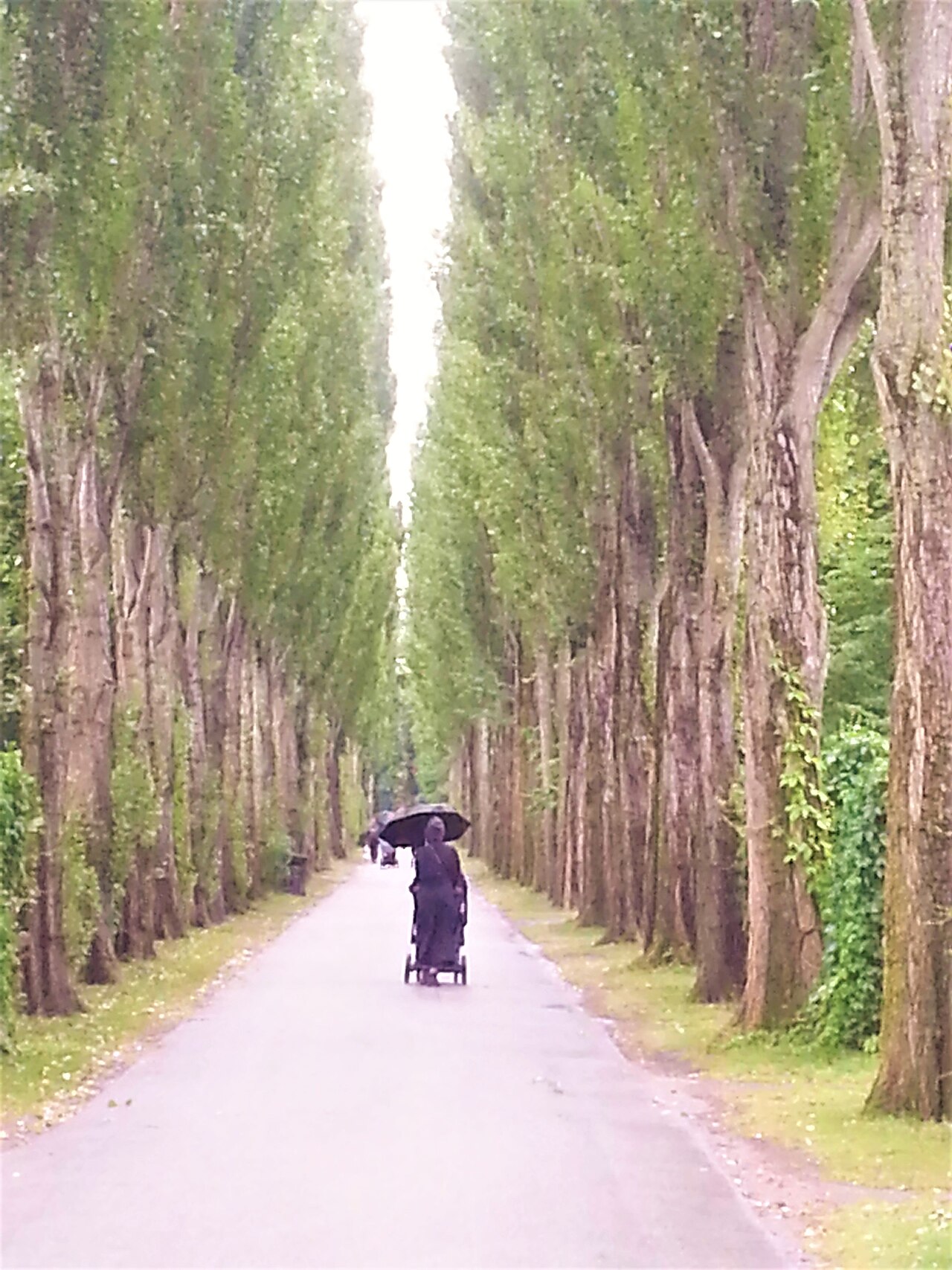
Assistens Cemetery, Assistens Kirkegard, is one of the most surprising places in Copenhagen: a historic burial ground that doubles as one of the city's best-loved parks. It lies in the middle of Norrebro, the lively multicultural district north-west of the lakes, and it has been in use for more than 250 years. It was founded in 1760 as an overflow cemetery, outside the old city walls, to assist the crowded churchyards of the inner city, which is how it got its name. Over time it became the burial place of choice for many of the most famous Danes, and today it is a walled garden of tall trees, avenues and old headstones, home to some of the most visited graves in Scandinavia. The best known is the grave of Hans Christian Andersen, the writer of the fairy tales, a simple stone often decorated with flowers left by visitors from all over the world. Close by lies Soren Kierkegaard, the philosopher, in his family plot, and the cemetery also holds the physicists H.C. Orsted, who discovered electromagnetism, and Niels Bohr, the Nobel laureate who shaped modern atomic physics, as well as the poet Michael Strunge and the singer Natasja Saad, whose grave is a place of pilgrimage for younger Danes. The American jazz saxophonist Ben Webster, who spent his last years in Copenhagen, is buried here too. What makes Assistens so very Copenhagen is how it is used. Locals walk through it on their way to work, cycle along its paths, run, read on benches, and on sunny days spread out with picnics on the lawns between the older sections, a relaxed attitude to life and death that visitors often find moving. It remains a working cemetery, so the newer sections are quiet places for mourning and should be treated as such. Entrance is free, and the gates open early in the morning and close in the evening, with later closing in summer. Maps at the entrances mark the famous graves. The cemetery is a short walk from the Norrebros Runddel metro station on the City Circle Line, and easy to reach by bike from the centre in about ten minutes.
Finding the graves is part of the fun. Andersen's grave is near the main paths and well signposted, and Kierkegaard's family plot is a short walk away; picking up a map at the entrance, or looking at the boards inside the gates, saves time. The older sections, with their mossy stones, iron railings and family tombs of nineteenth-century merchants and artists, are the most atmospheric, especially in autumn, when the avenues of trees turn gold and the light falls low through the branches. In spring, the cherry trees and flowers make it one of the prettiest places in the city.
How to visit respectfully: walk and cycle slowly, keep music and voices down near graves, and avoid picnicking in the newer, active burial sections, where funerals still take place. Photograph the famous graves, but do not climb on or lean against monuments. Assistens works well as a stop on a longer walk through Norrebro, and it is pleasant at any time of day; early morning is the quietest, while sunny afternoons in summer show the relaxed local spirit at its fullest.
Norrebro around the cemetery is one of the most interesting districts in Copenhagen. Jaegersborggade, along one side of the cemetery, is a short street of independent coffee roasters, bakeries, ceramics studios and small restaurants, and Elmegade and Ravnsborggade nearby are full of vintage shops. A little further, Superkilen is an award-winning urban park celebrating the area's many nationalities, and the lakes are a short walk to the south. Combine the cemetery with lunch on Jaegersborggade and an afternoon at Torvehallerne and Rosenborg for a day that mixes local life and royal history.
What to expect
The experience
A free walk through a historic, park-like cemetery in Norrebro, with the graves of Hans Christian Andersen, Soren Kierkegaard, Niels Bohr and other famous Danes, among trees, avenues and lawns used by locals.
Best time
Early morning for quiet, or a sunny afternoon to see local life. Autumn and spring are especially beautiful.
How long
About an hour, longer if you linger.
Tips
Check the maps at the entrances for the famous graves. Be respectful in the newer sections. Combine with Jaegersborggade for coffee and lunch.
Quick picks
- Best for
- Fans of Andersen and Kierkegaard, history lovers and anyone curious about everyday Copenhagen life.
- Families
- Fine for a quiet walk; older children who know Andersen's tales will enjoy finding his grave.
- Couples
- A peaceful walk under the trees, then coffee and pastries on Jaegersborggade.
- Pair with
- Jaegersborggade and Norrebro, Torvehallerne for lunch and Rosenborg Castle.
- Time needed
- About an hour.
Good questions
Who is buried at Assistens Cemetery?+
Hans Christian Andersen, Soren Kierkegaard, the physicists H.C. Orsted and Niels Bohr, the poet Michael Strunge, the singer Natasja Saad and the jazz saxophonist Ben Webster, among many other well-known Danes.
Is it free to visit?+
Yes, entry is free. The gates open early in the morning and close in the evening, later in summer than in winter.
Is it really used as a park?+
Yes. Locals walk, cycle, run and picnic in the older sections, which has become part of the cemetery's character. The newer sections are active burial grounds and should be kept quiet.
How do I get there?+
The cemetery is in Norrebro at Kapelvej 2, a short walk from the Norrebros Runddel metro station on the City Circle Line, or about ten minutes by bike from the centre.
How do I find Andersen's grave?+
It is signposted and marked on the maps at the main entrances, close to the central paths. Kierkegaard's family plot is a short walk away.