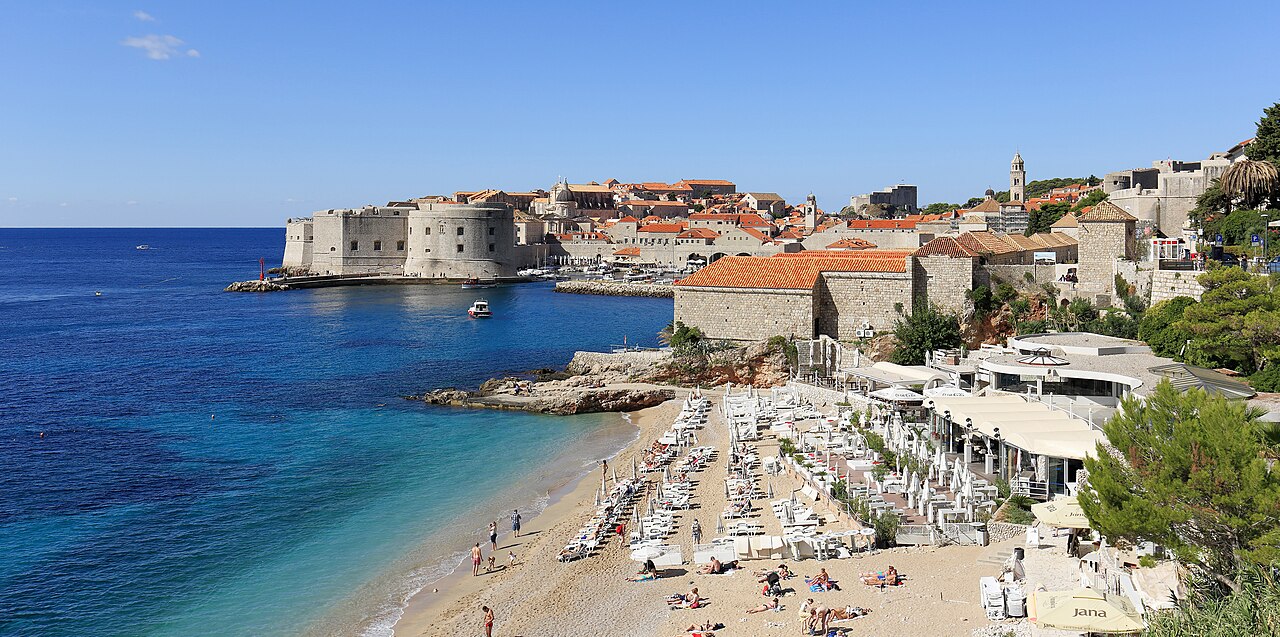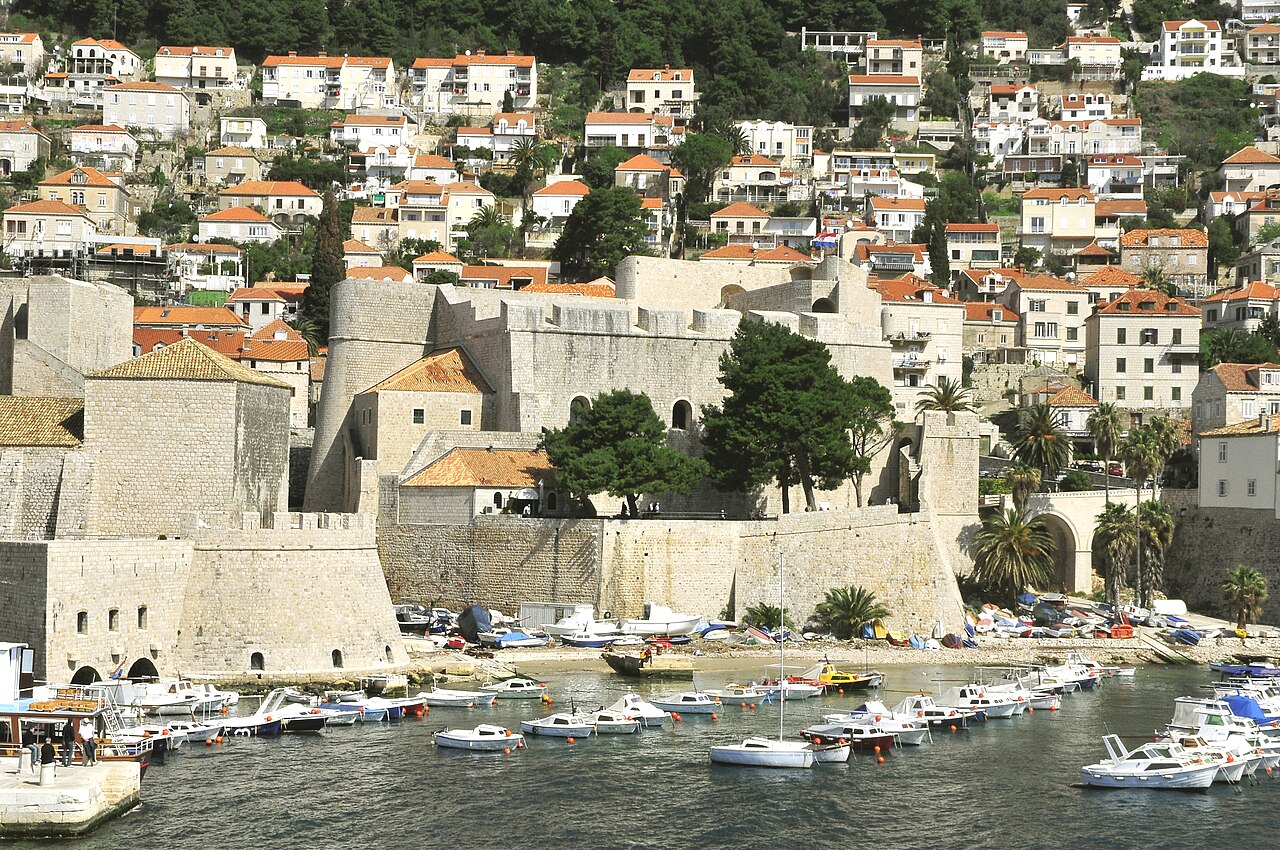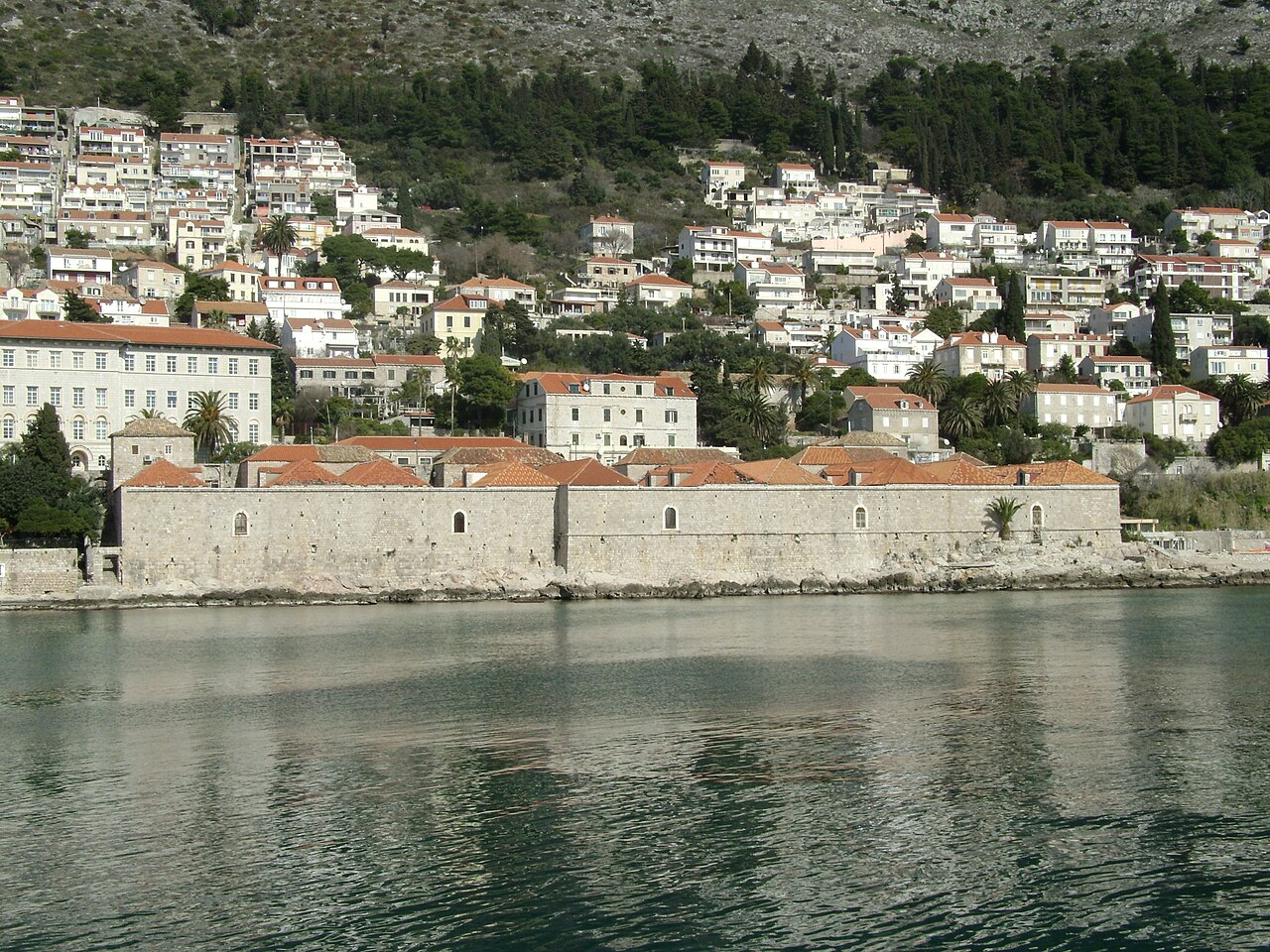
Long before the word quarantine was common, Dubrovnik had a system for it, and the Lazarettos are its best surviving monument. They stand just outside the Ploče Gate on the road toward Banje Beach, a low row of stone buildings stepping down toward the sea. The Republic built its first quarantine at Ploče in 1377, to isolate travellers and goods arriving from the east, where outbreaks of plague and other contagious diseases were common, and it was one of the earliest public health measures of its kind anywhere. Ploče was where merchant caravans from the Ottoman interior arrived after crossing the mountains, so the quarantine sat exactly where it was needed: travellers and their goods were held here for a set period before being allowed into the city. The complex was renovated in 1623 so that larger boats could land from the sea side, and in the seventeenth century it was the largest merchant transit centre on the Adriatic and one of the best organised quarantines in the Mediterranean. What survives today is a group of eight buildings around five courtyards, which once held warehouses for goods and livestock and lodgings where merchants waited out their isolation. The Dubrovnik Tourist Board describes it as the only fully preserved quarantine complex of its kind in Europe. Today the Lazarettos are used for culture, crafts and entertainment, with workshops, folklore performances, concerts and club nights in season, and the Museum of Modern Art and the Excelsior hotel are close by.
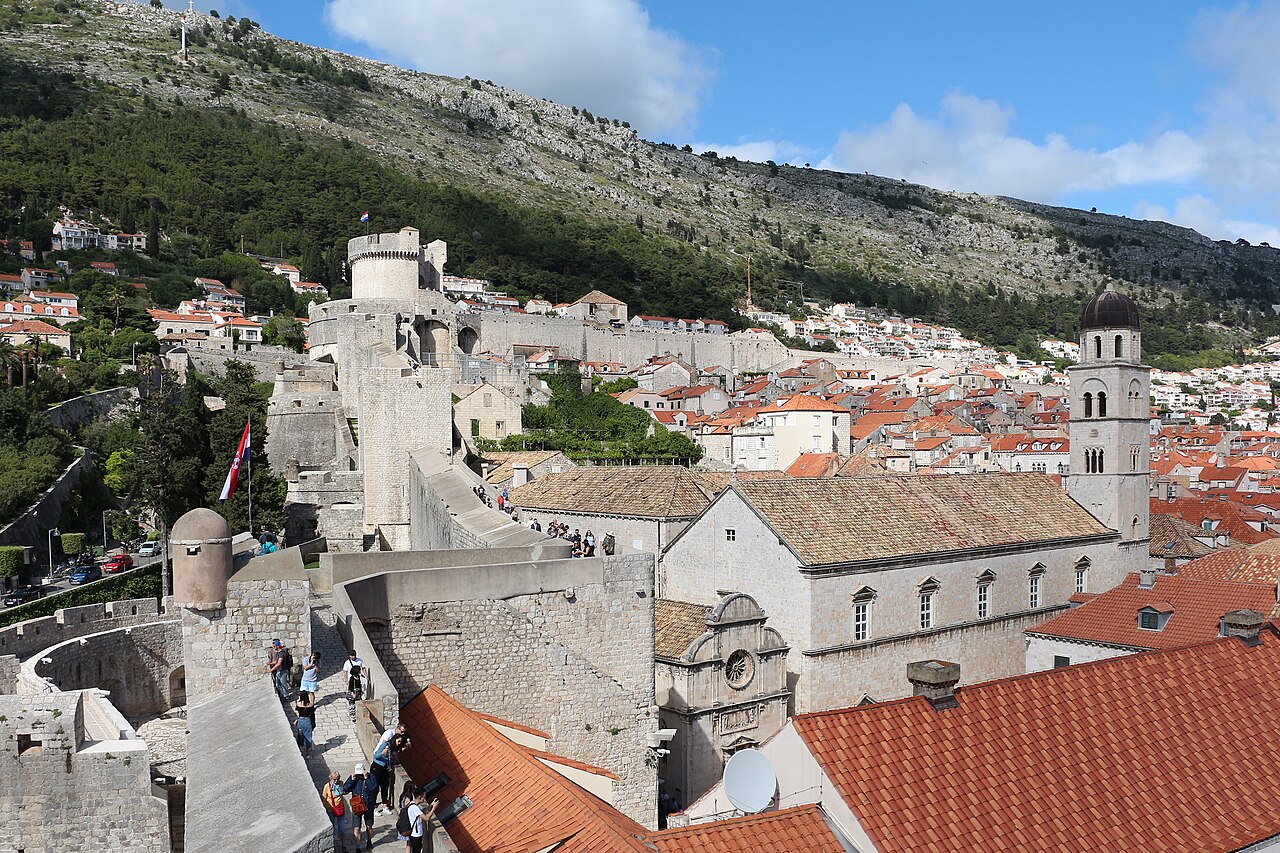
The best way to appreciate the Lazarettos is to stop and think about what they represented. Dubrovnik's wealth depended on trade with the Ottoman Balkans, and its survival depended on keeping disease out. The Republic's answer was a strict, bureaucratic system: guards, health officials, fixed periods of isolation and careful handling of goods. Standing in one of the courtyards, with the walls of the city just beyond, you can imagine merchants and their animals waiting out their days within sight of the gate. In a world that has recently relearned the meaning of quarantine, the story resonates. It also explains the shape of the eastern approach to the city: the caravan road came down from the hills to Ploče, the Lazarettos sat at the bottom, and only cleared goods continued through Revelin and the Ploče Gate into the market streets. Seen that way, the walk from Banje to the gate retraces the route every Ottoman trader once took.
Access is free to the outside of the complex and the courtyards when they are open, and events in the halls are ticketed separately. Programming is strongest in summer, when folklore shows, concerts and festival events take place in the courtyards; in winter the buildings are quieter. Check the Dubrovnik Tourist Board event calendar for what is on during your stay. The complex is a two-minute walk from the Ploče Gate and directly on the way to Banje Beach.
Who should go: history buffs interested in public health and trade, anyone heading to Banje Beach who wants a short, meaningful stop on the way, and travellers looking for evening performances outside the Old Town walls. It pairs well with the Museum of Modern Art just along the road, a swim at Banje, and the Ploče side of the walls and Revelin Fortress.
What to expect
The experience
A free look at a preserved complex of stone halls and courtyards built as a quarantine, now used for crafts, performances and events.
Best time
On the way to Banje Beach, or a summer evening for a performance.
How long
Twenty to thirty minutes, longer for an event.
Tips
Check the tourist board event calendar for performances. Combine with Banje Beach and the Museum of Modern Art next door.
Quick picks
- Best for
- A short, thought-provoking stop on the way to the beach.
- Families
- Easy and free; the quarantine story is a good one to tell older children.
- Couples
- A summer evening performance in the courtyards.
- Pair with
- Banje Beach, Revelin Fortress and the Museum of Modern Art.
- Time needed
- About half an hour.
Good questions
What are the Lazarettos in Dubrovnik?+
A historic quarantine complex outside the Ploče Gate where travellers and goods from the east were isolated before entering the city.
How old are the Lazarettos?+
Dubrovnik built its first quarantine at Ploče in 1377. The complex was renovated in 1623 and became the largest transit centre on the Adriatic.
Can you visit the Lazarettos?+
Yes, the courtyards can be seen when open, and events in the halls are ticketed separately. Programming is busiest in summer.
Where are the Lazarettos?+
Just outside the Ploče Gate, on the road to Banje Beach and the Museum of Modern Art.
Why is quarantine linked to Dubrovnik?+
The Republic introduced one of the earliest organised quarantine systems in Europe to protect its trade-dependent population from disease.