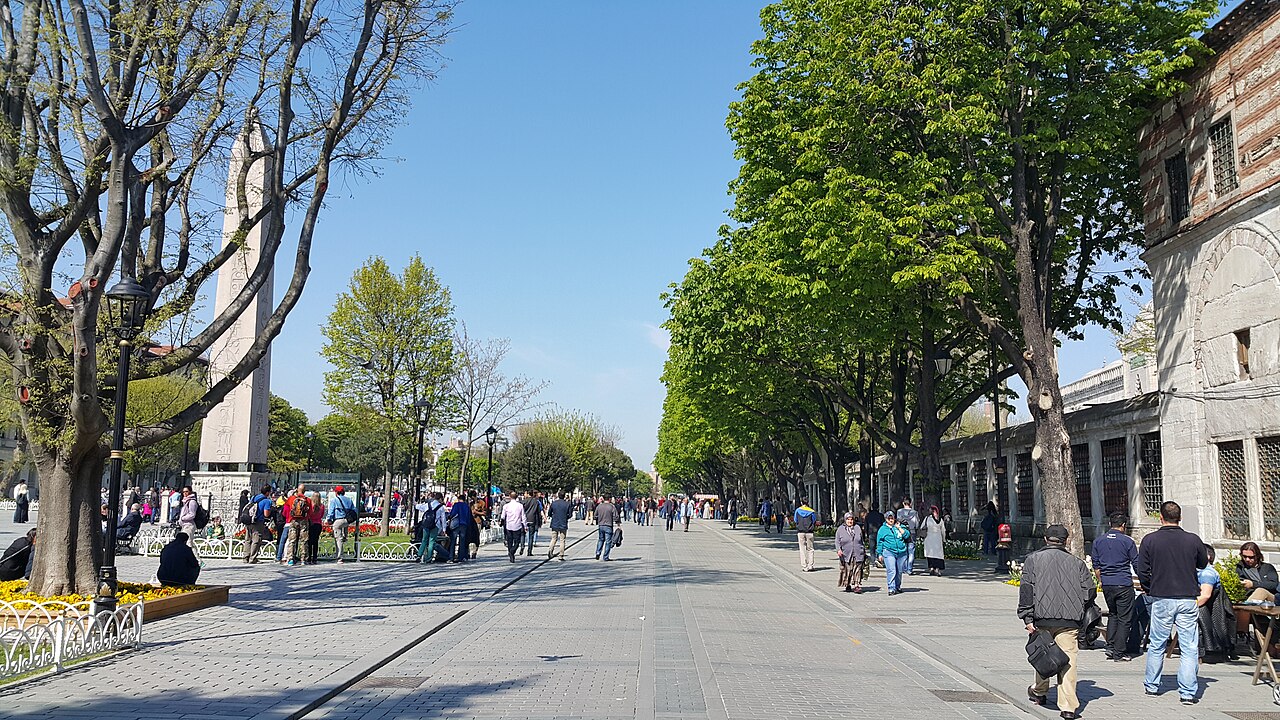
Almost every visitor to Istanbul walks across the Hippodrome, but few realize they are standing in the arena that was the beating heart of Byzantine Constantinople. Begun under the Roman emperor Septimius Severus and enlarged by Constantine the Great, the stadium could seat a huge crowd for chariot races, and the racing factions, the Blues and the Greens, were political parties as much as fan clubs: in 532 their Nika riot nearly toppled Justinian, and thousands died here before order was restored, after which he rebuilt Hagia Sophia. The track itself lies buried several metres below today's park, but the line of monuments that decorated its central barrier, the spina, still marks its route. The Obelisk of Theodosius is the oldest thing in Istanbul, carved for the pharaoh Thutmose III at Karnak around 1450 BC and erected here in 390 on a marble base that shows the emperor and his court watching the races. Beside it, the twisted bronze Serpent Column was cast to celebrate the Greek victory over the Persians at Plataea in 479 BC and brought from the sanctuary of Apollo at Delphi; its serpent heads were lost centuries ago, though a fragment survives in the Archaeological Museums. At the southern end the rough Walled Obelisk, once sheathed in gilded bronze, was restored by Constantine VII in the tenth century. At the northern end stands the octagonal German Fountain, a gift from Kaiser Wilhelm II after his visit in 1898. The square is free, open at all hours, and the perfect place to begin or end a day in Sultanahmet.
How to read the square: start at the German Fountain near the tram stop and walk south along the line of monuments. Look closely at the four sides of the obelisk base, where the reliefs show the emperor with his family, dancers and musicians, the crowd in the stands and the engineering used to raise the obelisk. Then step down to the Serpent Column, which sits in a pit at the level of the old ground, a good way to see how far the city has risen. The curved southern end of the stadium, the sphendone, survives as a massive substructure below the slope towards the Sea of Marmara, visible from the streets south of the square.
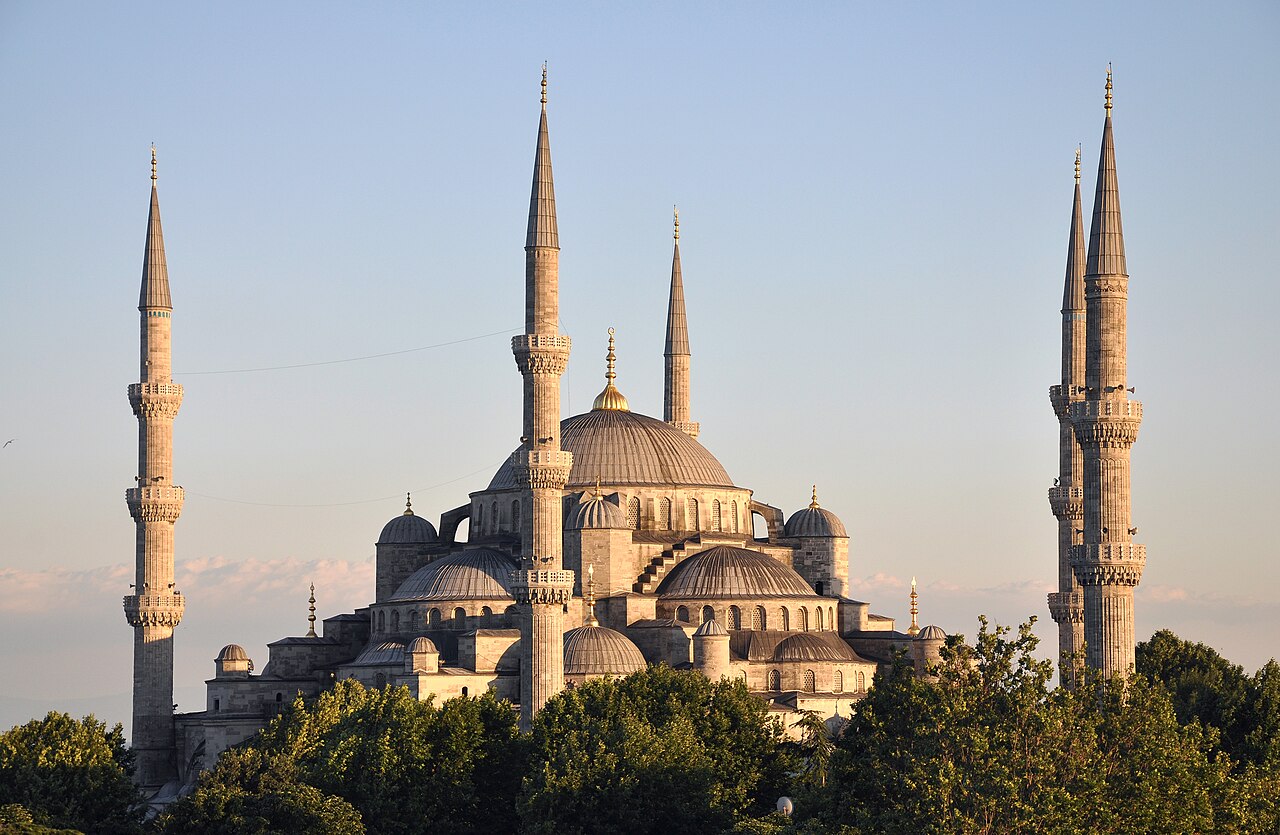
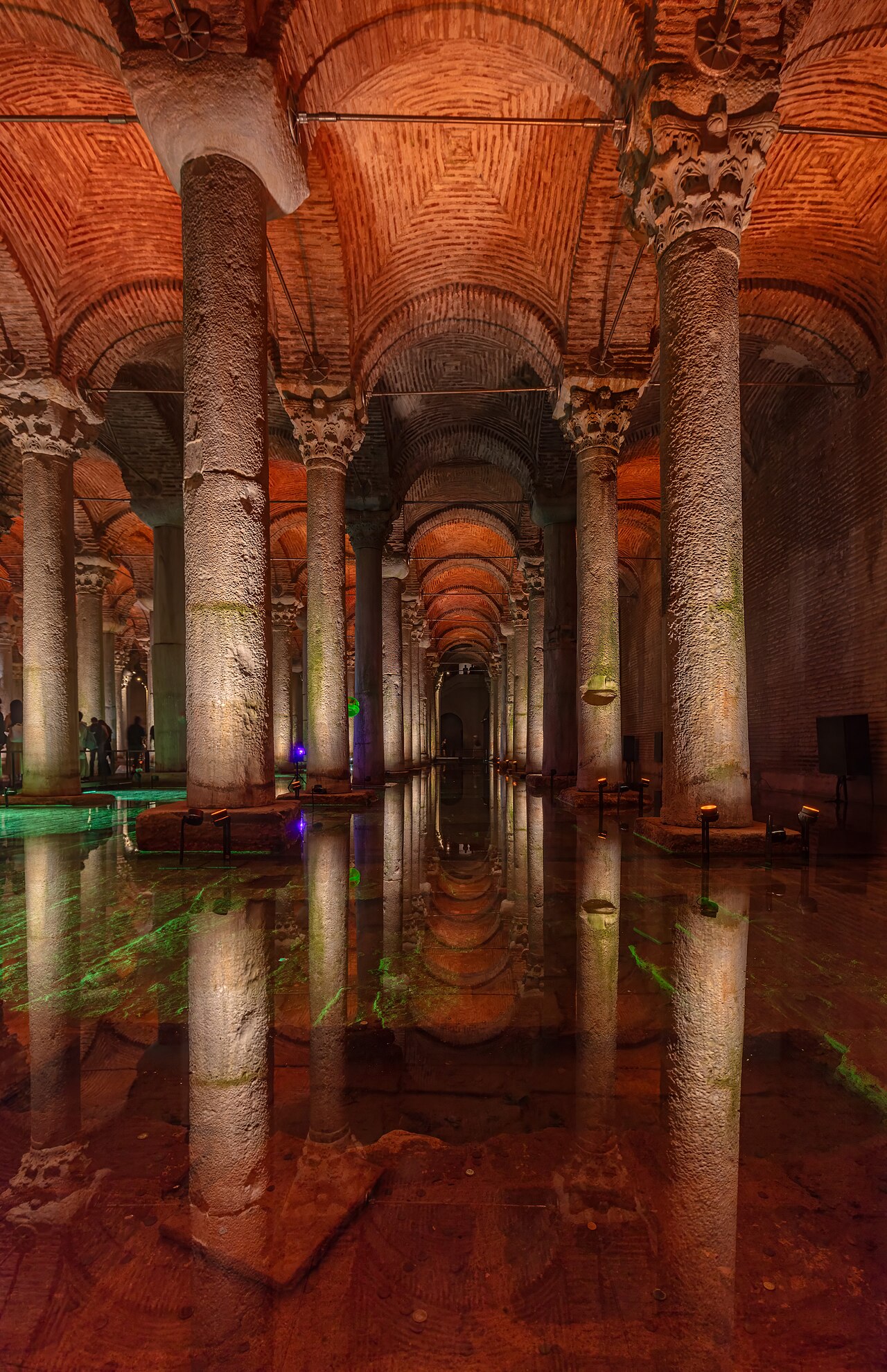
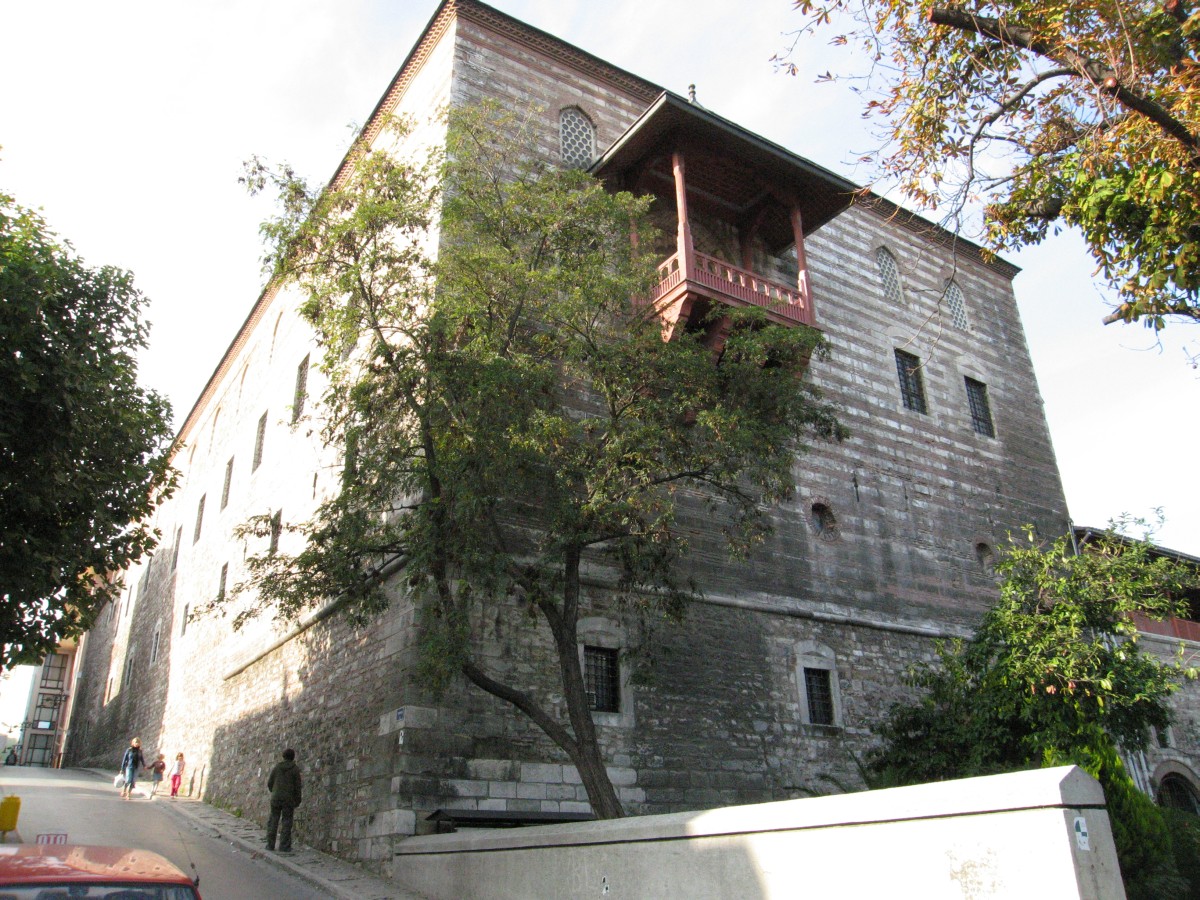
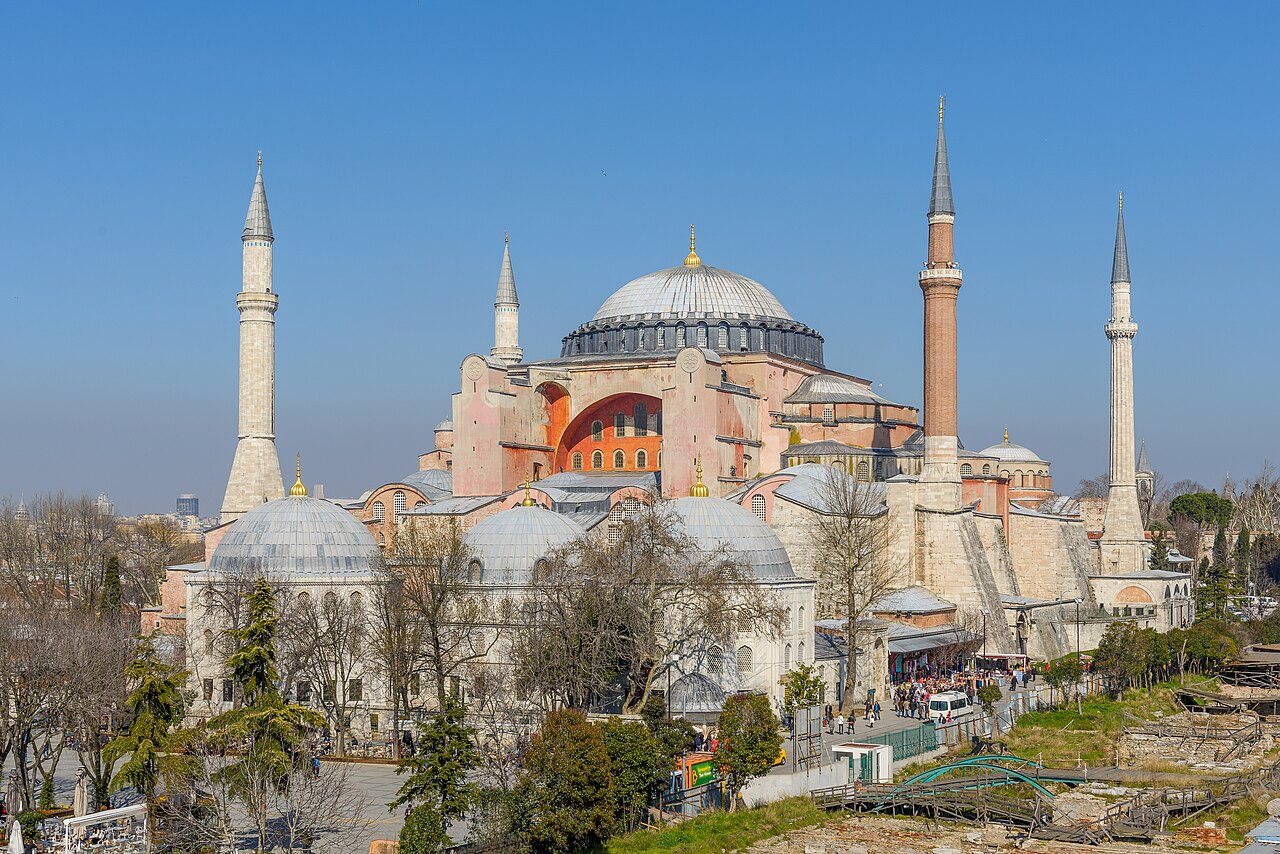
Around the square: the west side is lined by the palace of Ibrahim Pasha, now the Museum of Turkish and Islamic Arts, and the east side opens onto the courtyard of the Blue Mosque, so the Hippodrome is the natural hinge of any Sultanahmet day. The Basilica Cistern and Hagia Sophia are a few minutes to the north. Benches under the trees and simit and corn sellers make it a pleasant place to rest, and the tea gardens and cafes around the square are good for a break, though prices on the square itself are aimed at visitors.
When to come: early morning, when the light falls on the obelisk and the square is nearly empty, or after dark, when the Blue Mosque is lit and the crowds have gone. During Ramadan the square hosts an evening festival with food stalls and crafts after the fast is broken, which is lively and fun for families. Watch for the persistent touts who approach visitors here, especially offering carpet shop visits or tours; a polite but firm no is enough. The monuments are fenced but fully visible, and there is no ticket or timetable, so you can come back as often as you like during your stay.
What to expect
The experience
An open public square on the line of the ancient stadium, with four monuments along its old central barrier: the German Fountain, the Obelisk of Theodosius, the Serpent Column and the Walled Obelisk.
Best time
Early morning for soft light and empty paths, or after dark when the Blue Mosque is lit.
How long
Thirty to forty-five minutes; longer with the museum on its west side.
Tips
Look closely at the reliefs on the obelisk base. Ignore touts offering carpet shop visits. Combine with the Blue Mosque and the Museum of Turkish and Islamic Arts.
Quick picks
- Best for
- Every first-time visitor, and anyone who wants to imagine Byzantine Constantinople.
- Families
- Open space to run around, the stories of chariot races and riots, and simit sellers on hand.
- Couples
- An evening stroll when the Blue Mosque is floodlit and the square is quiet.
- Pair with
- The Blue Mosque, the Museum of Turkish and Islamic Arts and the Basilica Cistern.
- Time needed
- About half an hour.
Good questions
Is the Hippodrome free?+
Yes. It is a public square, open at all hours, with no ticket. The monuments are fenced but fully visible from the paths.
How old is the obelisk in the Hippodrome?+
The Obelisk of Theodosius was carved for the pharaoh Thutmose III around 1450 BC, making it the oldest monument in Istanbul. It was erected in the Hippodrome in 390.
Where did the Serpent Column come from?+
From the sanctuary of Apollo at Delphi, where it celebrated the Greek victory over the Persians at Plataea in 479 BC. Constantine brought it to his new capital.
Can you see the old racetrack?+
Not directly. The track is buried several metres below today's park, but the monuments mark the line of its central barrier, and the curved southern end survives as a substructure on the slope below.
What else is on the square?+
The Museum of Turkish and Islamic Arts on the west side, the Blue Mosque on the east, and the German Fountain, a gift from Kaiser Wilhelm II, at the northern end.