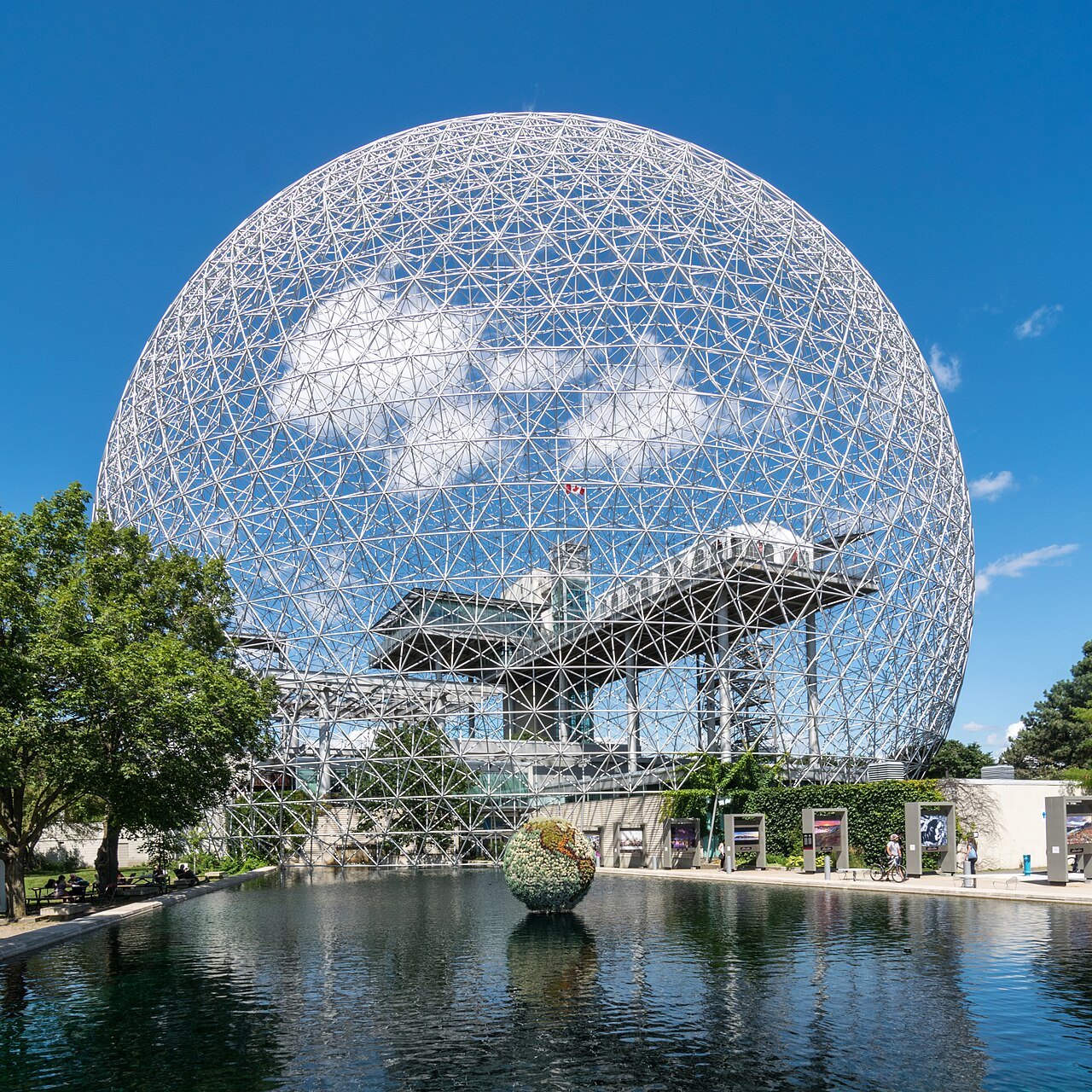
The Biosphere is the most recognisable piece of architecture Montreal inherited from Expo 67, and one of the great modernist structures in North America. Designed by Buckminster Fuller as the United States pavilion for the 1967 World's Fair, it is a vast geodesic sphere of steel tubes, about 76 metres across, standing on the wooded western side of Ile Sainte-Helene in Parc Jean-Drapeau. During the fair it was clad in a transparent acrylic skin and a monorail ran straight through it; in 1976 a fire during renovation work burned the skin away in minutes, leaving the bare lattice you see today, which many Montrealers think is even more beautiful. Since the 1990s the building has housed an environment museum, and it now operates as part of Space for Life, the city's family of nature museums alongside the Biodome, Botanical Garden, Insectarium and Planetarium. Inside a separate structure tucked within the sphere, the exhibitions deal with the relationship between society and the environment: climate, water, biodiversity and the practical choices that shape them, presented through interactive displays that work well for older children and curious adults. The visit is compact, usually an hour to ninety minutes, and the upper levels open onto viewing areas inside the lattice, with views across the river toward Old Montreal and the downtown towers. Admission is modest, the museum is generally open Tuesday to Sunday with Monday closures outside holiday periods, and it is reached in a few minutes from the Jean-Drapeau metro station. It pairs naturally with a walk or bike ride around the islands.
Why it matters: Expo 67 was the moment Montreal introduced itself to the world as a modern international city, and the Biosphere is the best surviving symbol of that summer. Fuller's dome was a statement about lightness, efficiency and engineering, the idea that a huge enclosed space could be built from a minimum of material. The pavilion displayed American culture and space exploration during the fair; after the fire it stood empty for years before Environment Canada converted it into a museum dedicated to water and the St. Lawrence ecosystem. Under Space for Life its mission has broadened to environmental issues and the ecological transition, which suits a building that was always about rethinking how we build.
How to visit well: give yourself time outside as well as in. The best photographs of the sphere are from the paths around it, especially late in the afternoon when the light comes through the lattice, and from the pedestrian routes leading toward the river. Inside, start at the top for the views, then work down through the exhibitions. School groups are common on weekday mornings during term, so early afternoon is often calmer. The museum is not large, so it fits easily into a half day that also includes the island trails, Alexander Calder's Expo 67 sculpture Trois disques and, in summer, the beach or the aquatic complex.
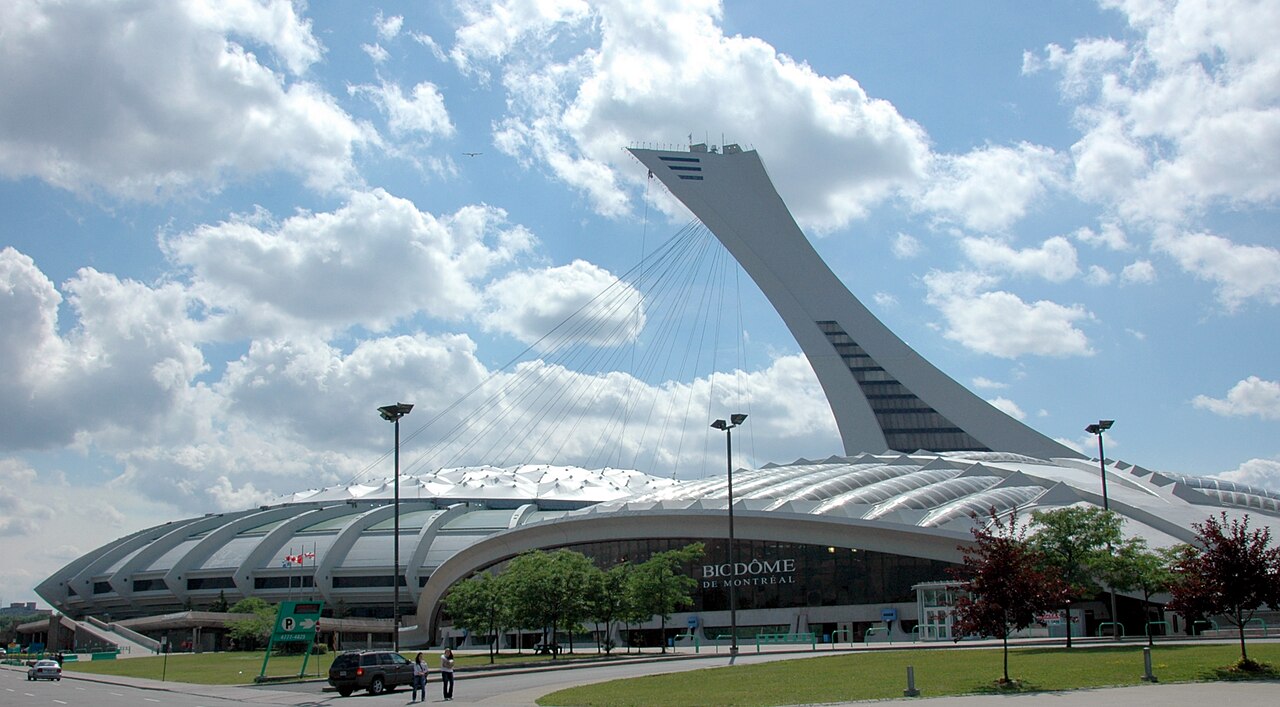
Practicals: the Biosphere stands on the western side of Ile Sainte-Helene, a short signed walk from the Jean-Drapeau station on the yellow metro line, one stop from Berri-UQAM. Parking on the islands is paid, and the park encourages transit or cycling; BIXI stations operate in the warm months. Check hours and current exhibitions before going, as Space for Life ticketing and opening days vary by season. Combined Space for Life visits are possible, but the Biodome and Planetarium are across the city at the Olympic Park, where the Montreal Tower observatory remains closed for renovation until spring 2027.
What to expect
The experience
A compact environment museum inside Buckminster Fuller's Expo 67 geodesic sphere, with interactive exhibitions and viewing areas within the lattice.
Best time
Weekday afternoons, when school groups have left; late afternoon light is best for photos of the sphere from outside. Closed most Mondays.
How long
About an hour to ninety minutes inside, plus time on the island paths.
Tips
Walk around the sphere before going in for the classic photographs. Combine with the Parc Jean-Drapeau trails and the Calder sculpture on the island. Take the yellow metro line rather than driving.
Quick picks
- Best for
- Architecture fans and families who want an Expo 67 icon with an engaging science museum inside.
- Families
- Interactive environmental exhibits suit school-age children, and the islands offer space to run around afterward.
- Couples
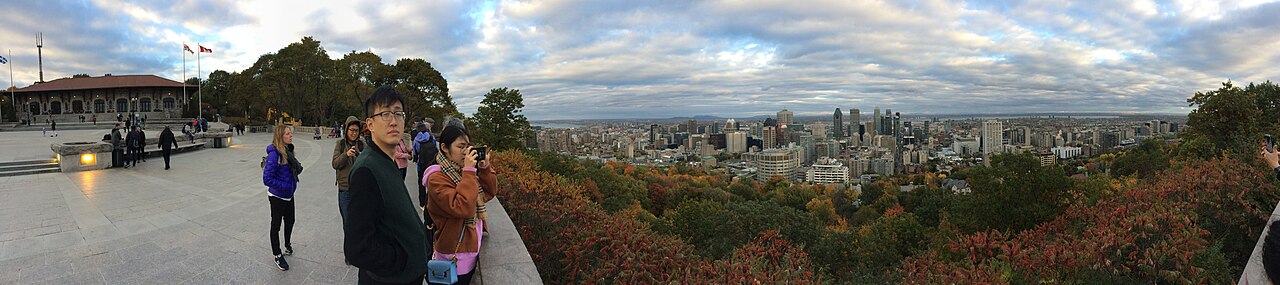
- A striking setting for photos and a riverside walk with skyline views.
- Pair with
- Parc Jean-Drapeau, then back to Old Montreal and the Grande Roue for the evening.
- Time needed
- Half a day with the islands.
Good questions
What is the Biosphere?+
It is the former United States pavilion from Expo 67, a geodesic sphere designed by Buckminster Fuller, which now houses an environment museum run as part of Montreal's Space for Life network of nature museums.
Why does the dome have no covering?+
The sphere was originally clad in transparent acrylic panels, but a fire during renovation work in 1976 destroyed the skin. Only the steel lattice survived, and it has been left uncovered ever since.
How do I get there?+
Take the yellow metro line from Berri-UQAM to Jean-Drapeau station on Ile Sainte-Helene; the Biosphere is a short signed walk away. Island parking is paid, so transit or a bike is easier.
Is it good for children?+
Yes, for school-age children in particular. The exhibitions are interactive and hands-on, the visit is short enough to hold their attention, and the island paths and playgrounds are close by.
When is it open?+
Generally Tuesday to Sunday, with Monday closures outside holiday periods. Hours and exhibitions change by season, so check the official schedule before you travel out to the island.