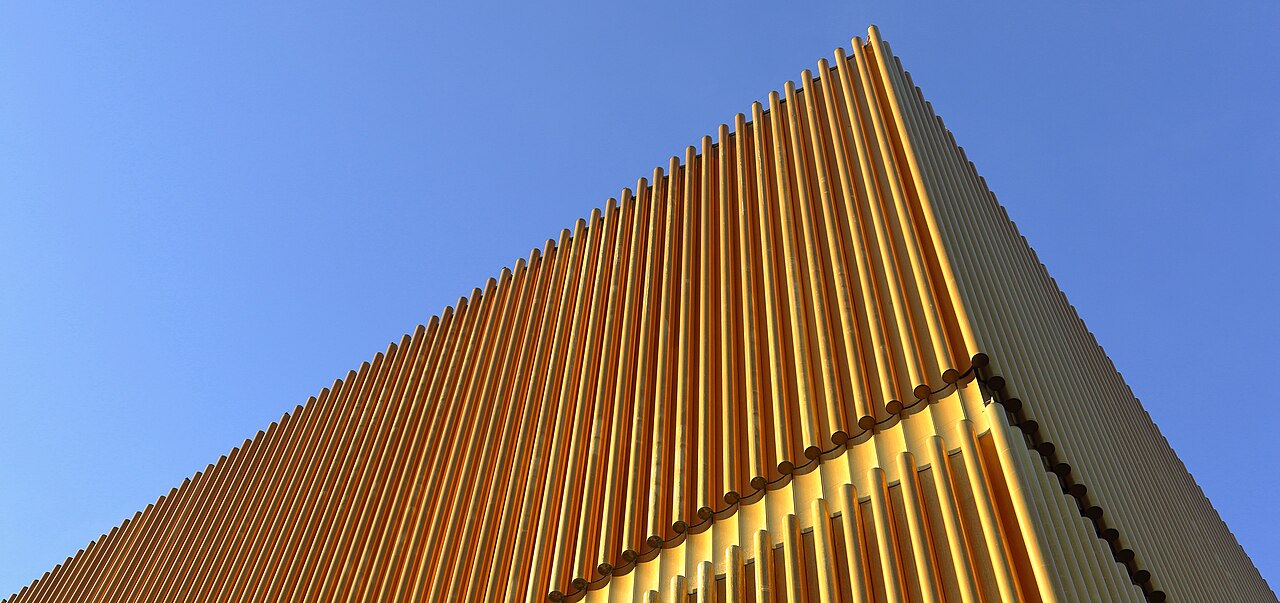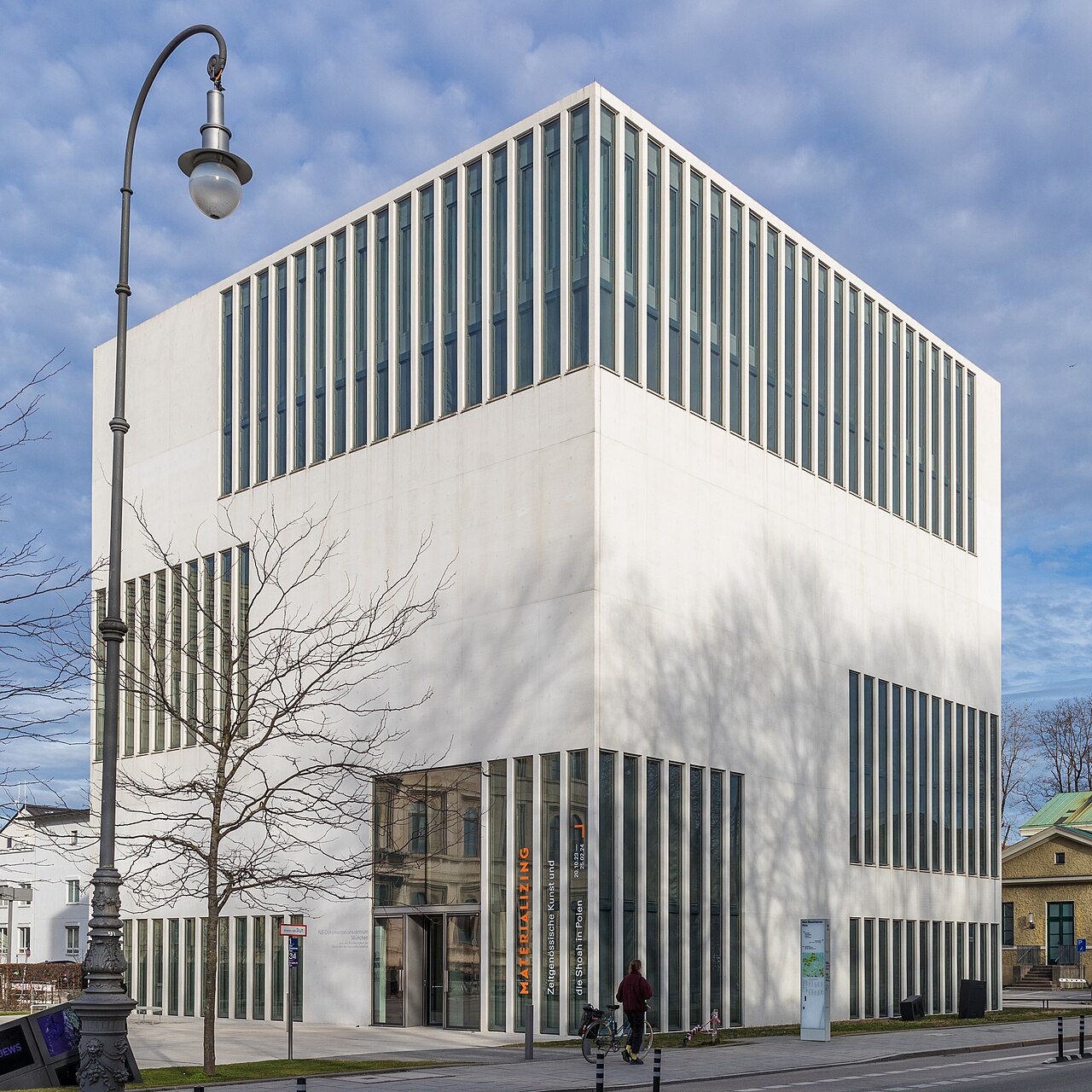
Munich was the city where National Socialism was born. The Nazi party was founded here, Hitler attempted his putsch here in 1923, and the regime later called Munich the capital of the movement. For decades the city was slow to confront this history, and the NS-Dokumentationszentrum, known as the NS-Dok or nsdoku, which opened in 2015, is its long-overdue answer. It stands on Max-Mannheimer-Platz, on the edge of the Koenigsplatz, on the site of the Brown House, the party's headquarters, which was destroyed in the war. The building, a plain white cube with tall slatted windows, is deliberately sober, and from its upper floors you look out at the surviving Nazi-era buildings around the Koenigsplatz, which once formed the party's administrative quarter. The permanent exhibition, Munich and National Socialism, tells the story from the end of the First World War through the rise of the movement, how Hitler came to power and why democracy failed, the persecution and exclusion of Jews and other groups, war and mass murder, and Munich's special role in the regime of terror. It ends with the difficult history of remembrance in Munich after 1945 and the legacy that remains today. The exhibition is dense with photographs, documents and text, in German and English, and works from the top floor downwards. Entry is free for everyone, and tickets are not required. A free media guide, available in several languages and including a version for families with children over ten, can be borrowed in the first basement or used on your own phone with headphones. The centre is open Tuesday to Sunday from 10am to 7pm, and also on public holidays that fall on a Monday. It also runs temporary exhibitions, talks and guided tours, and the building is fully accessible.
How to plan your visit: allow at least two hours for the permanent exhibition, which is detailed and text-heavy, and take breaks if you need them. Start at the top and work down. Borrow the media guide or download it before you go, and bring headphones. The U2 station at Koenigsplatz and the tram stops nearby make it easy to reach, and it is a short walk from the Pinakotheken and the Lenbachhaus, so it fits naturally into a day in the Kunstareal.
When to go: weekday mornings are quietest; school groups visit often, especially on weekdays during term. The late opening until 7pm makes it possible to visit after a day of sightseeing. Closed on Mondays except on public holidays.
Why it matters: Dachau, a short train ride away, shows the terror the regime inflicted, and the NS-Dok explains how a modern, cultured city enabled and embraced it. Seeing both gives a far fuller picture than either alone. After your visit, walk around the Koenigsplatz and look at the surviving buildings, now used by music and arts institutions, with new eyes, and continue to the Odeonsplatz, where the putsch ended in 1923. The subject is hard, and some displays are distressing, so the museum is best suited to teenagers and adults, though the family media guide helps older children engage with it.
What to expect
The experience
A free, self-guided exhibition on four floors, rich in photographs and documents, with a free multilingual media guide.
Best time
Weekday mornings or late afternoons; open until 7pm. Closed Mondays except public holidays.
How long
Two to three hours.
Tips
Start at the top floor. Bring headphones for the media guide. Combine with the Koenigsplatz and the Kunstareal museums.
Quick picks
- Best for
- Anyone who wants to understand Munich's role in the Nazi era.
- Families
- Best for teenagers; the family media guide suits children over ten, but some content is distressing.
- Couples
- A sober, thought-provoking visit, followed by a quiet walk on the Koenigsplatz.
- Pair with
- The Dachau memorial, the Pinakotheken and the Lenbachhaus.
- Time needed
- Two to three hours.
Good questions
Is the NS-Dokumentationszentrum free?+
Yes. Entry is free for everyone, and tickets are not required.
When is it open?+
Tuesday to Sunday from 10am to 7pm, and on public holidays, including those that fall on a Monday.
Is the exhibition in English?+
Yes. The permanent exhibition is in German and English, and a free media guide is available in several languages.
Where is it?+
On Max-Mannheimer-Platz by the Koenigsplatz, on the site of the former Nazi party headquarters, the Brown House. The nearest U-Bahn station is Koenigsplatz.
Is it suitable for children?+
It is aimed at teenagers and adults. A family version of the media guide suits children over ten, but some material is distressing.