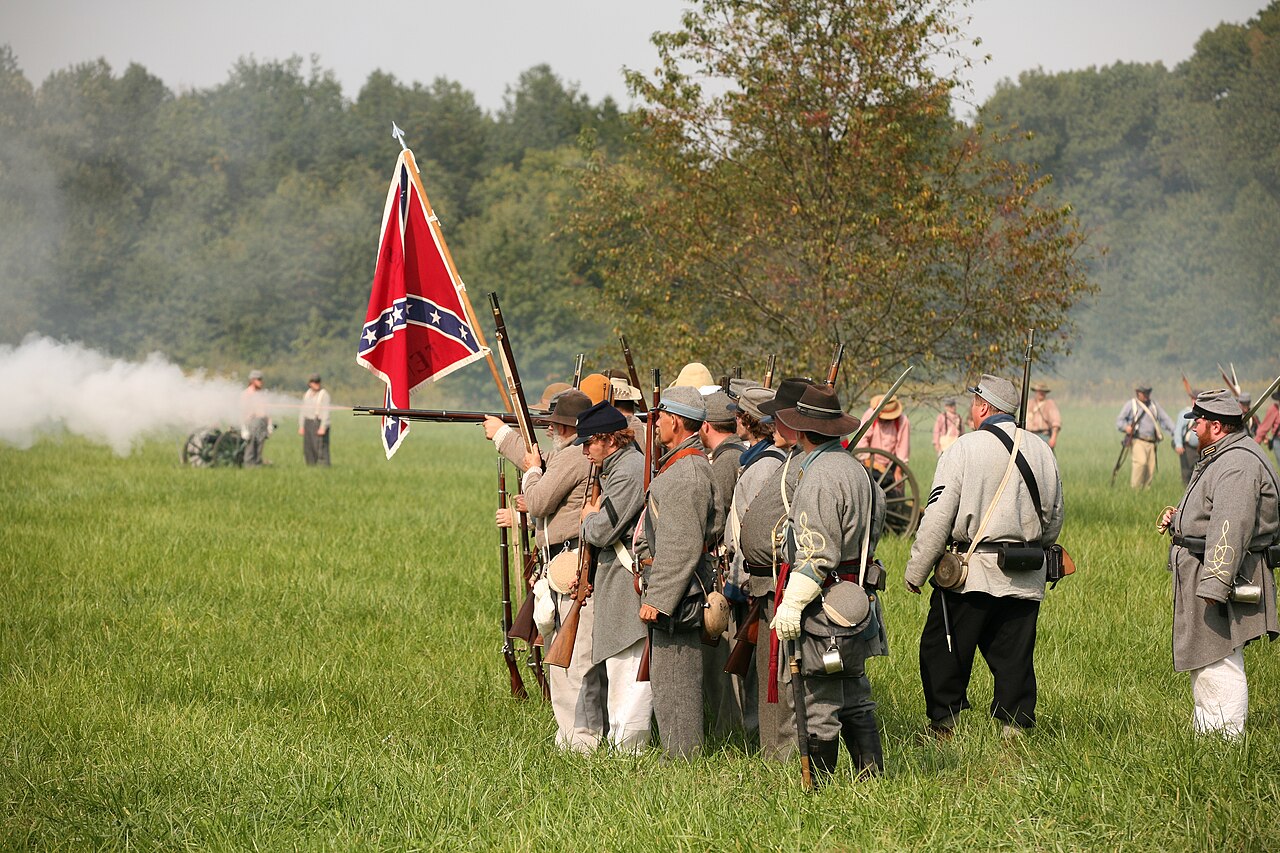
The Battle of Franklin, fought on the afternoon and evening of November 30, 1864, was one of the bloodiest few hours of the Civil War, and the Battle of Franklin Trust's sites in the town of Franklin, about twenty miles south of downtown Nashville, are where that history is told most powerfully. The Carter House stood at the center of the Union line; its farm office and outbuildings are still riddled with hundreds of bullet holes, and the guided tour explains how the Carter family sheltered in the cellar while the fighting raged around them. A mile or so away, Carnton was the home of the McGavock family, who turned their plantation house into a field hospital for Confederate wounded; the bodies of several Confederate generals killed in the battle were laid on its back porch, and bloodstains are still visible on the floors. Behind the house is the McGavock Confederate Cemetery, one of the largest private military cemeteries in the country, which the family created after the war — the story at the heart of the novel The Widow of the South. The Trust's tours are honest about the enslaved people who lived and worked on both properties, and a dedicated Slavery and Enslaved tour is offered alongside the classic house tours and battlefield walks. A combination ticket and a Tennessee Campaign ticket covering a third site, Rippa Villa in Spring Hill, make it easy to see more than one. Fit: history buffs above all, but also couples and first-time visitors who want a half-day trip out of the city that leaves a real impression.
The battle itself explains why the sites are so affecting. The Confederate Army of Tennessee, under General John Bell Hood, launched a frontal assault across open ground against Union troops entrenched around the Carter farm; casualties were enormous on the Confederate side, and six Confederate generals were killed or mortally wounded. Much of the battlefield was later built over, but a growing preservation effort has reclaimed land around both houses, and the walking paths at Carnton now trace the eastern flank of the attack. Standing on that ground with a guide is the best way to understand the scale of the fighting.
How to do it well: decide whether you want a quick classic tour of one house or a deeper day. The Trust advises against booking both Carter House and Carnton tours too close together, as there is not enough time to get between them; a combination ticket bought online lets you see both at your own pace on the same day. Tours run Monday to Saturday from morning to late afternoon and on Sundays from late morning, with the last guided tour starting at 4pm. Specialty tours sell out on weekends, so book ahead. On the battle anniversary at the end of November, the Trust runs evening commemorative tours that must be booked in advance and are not suitable for young children.
Practicals and fit: Franklin is about half an hour south of Nashville by car on I-65 in normal traffic. Combine the sites with lunch and a stroll on Franklin's Main Street, a handsome, walkable historic downtown full of independent shops and restaurants. There is free parking at both houses. Children of school age interested in history will follow along; very young kids will struggle with the length and the subject matter. Closed on major holidays including Thanksgiving and Christmas. Visitors with a strong interest in the campaign can continue south to Rippa Villa in Spring Hill on the Tennessee Campaign ticket.
What to expect
The experience
Guided tours of two Civil War sites in Franklin run by the Battle of Franklin Trust — the bullet-scarred Carter House and Carnton, a plantation house used as a field hospital — plus battlefield walks and the McGavock Confederate Cemetery.
Best time
Weekday mornings for smaller groups. Late November brings anniversary programs; book ahead.
How long
A half day including the drive from Nashville; a full day with Franklin's Main Street.
Tips
Buy the online combination ticket to see both houses at your own pace. Last guided tour starts at 4pm. Lunch on Main Street in Franklin.
Quick picks
- Best for
- Civil War and American history enthusiasts, and anyone wanting a meaningful half-day trip outside Nashville.
- Families
- Good for older children studying history; the subject and tour length are hard for young kids.
- Couples
- Pair the sites with a long lunch and shopping on Franklin's charming Main Street.
- Pair with
- Andrew Jackson's Hermitage for another major history site, or Belle Meade for the Battle of Nashville story.
- Time needed
- Half a day.
Good questions
How far is Franklin from Nashville?+
About twenty miles south, typically a thirty-minute drive on I-65 outside rush hour. There is free parking at both Carter House and Carnton.
Should I visit Carter House or Carnton?+
Both if you can. Carter House shows the center of the fighting, with bullet-scarred buildings; Carnton tells the story of the aftermath, as a field hospital, with the Confederate cemetery behind it. The online combination ticket covers both.
What are the opening hours?+
Monday to Saturday from 9am and Sundays from 10am, until 5pm, with the last guided tour starting at 4pm. The sites close on major holidays.
Do I need to book ahead?+
Classic tours often have walk-in space, but specialty and battlefield tours, and all anniversary tours in late November, should be booked online in advance. Tickets are non-refundable.
Do the tours cover slavery?+
Yes. The Trust offers a dedicated Slavery and Enslaved tour, and the classic tours also discuss the enslaved people who lived and worked on both properties.