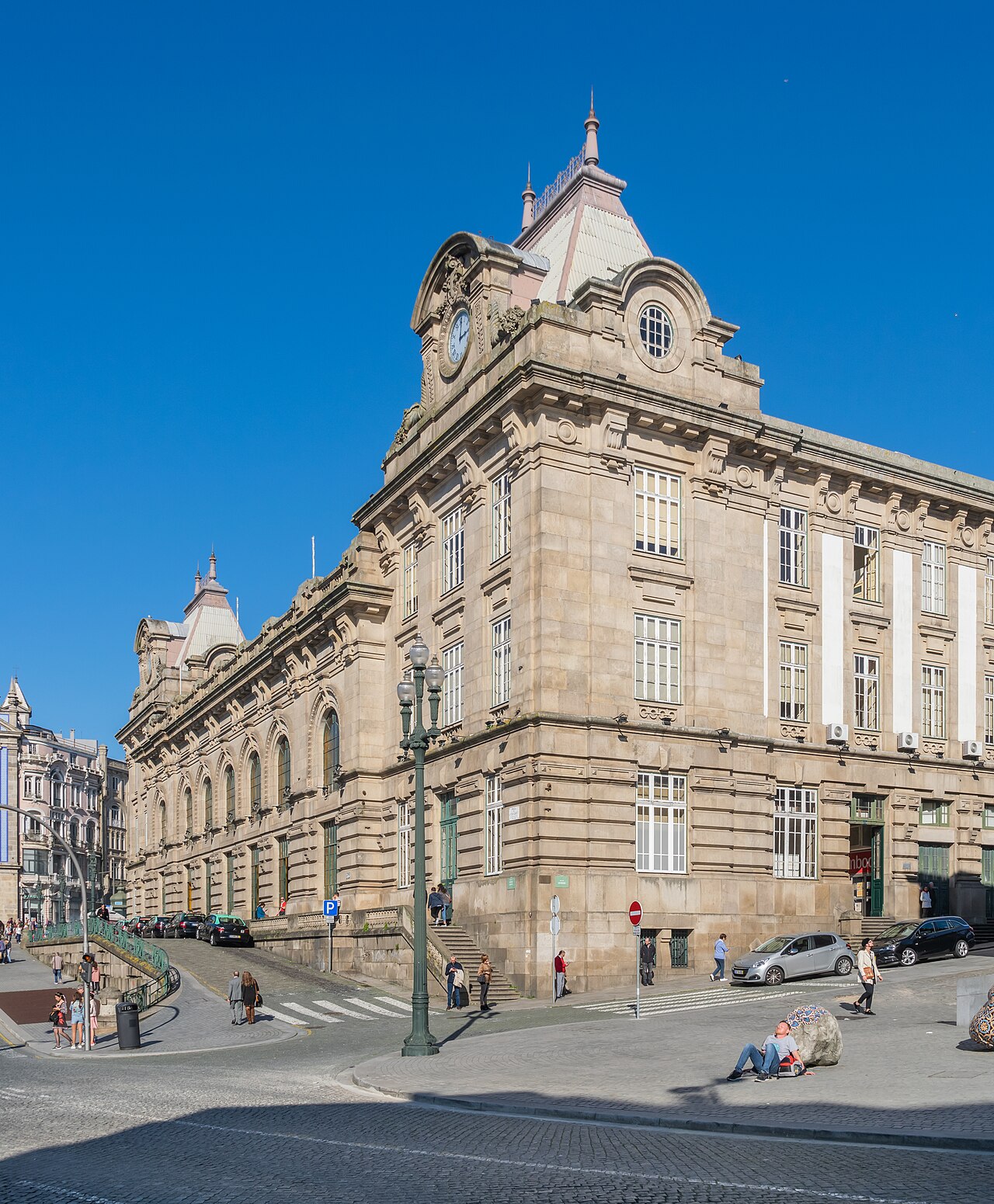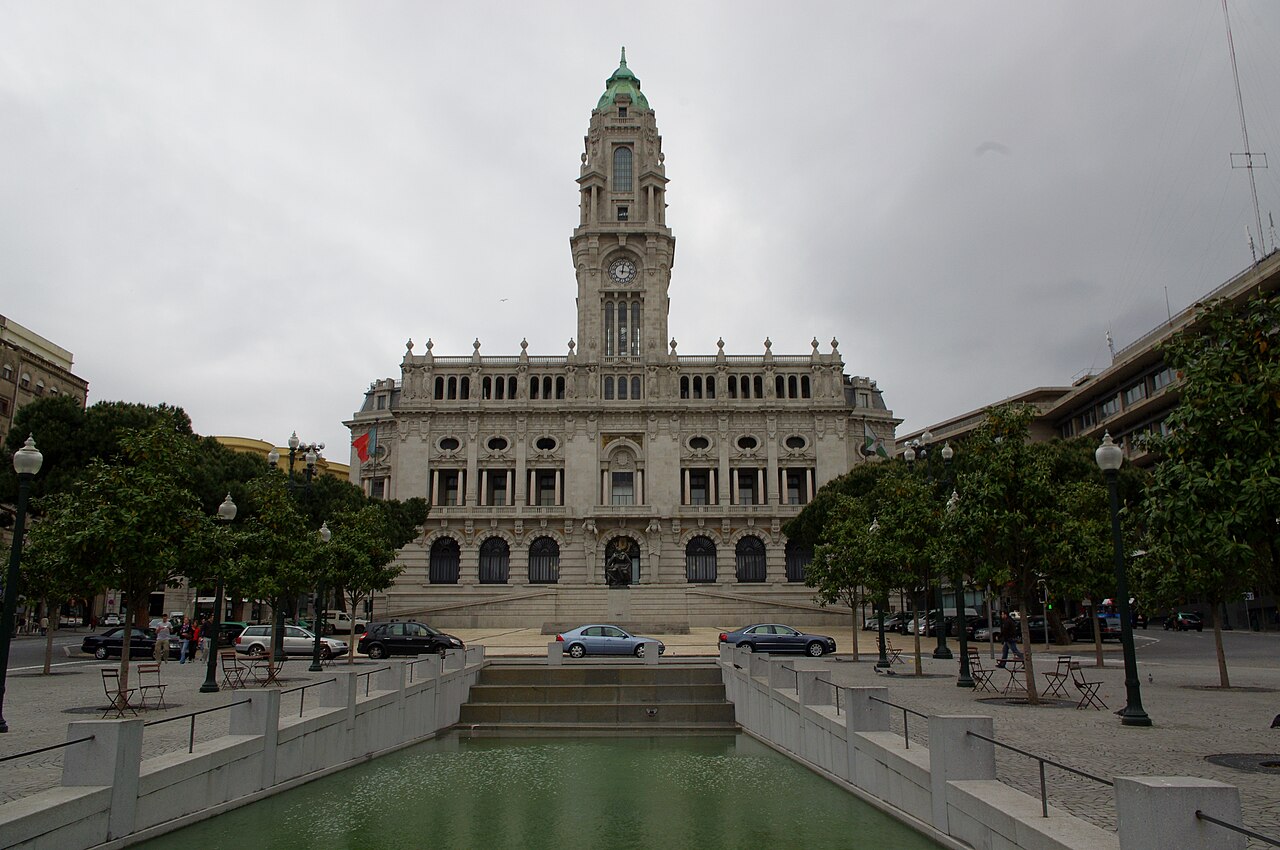
Most of Porto's charm is in its tangle of medieval lanes, but the city also has a grand, formal heart, and it is the Avenida dos Aliados. This broad boulevard climbs gently from the Praça da Liberdade, with its equestrian statue of King Pedro IV, to the City Hall, the Câmara Municipal, whose tall clock tower closes the view at the top. Both sides are lined with monumental granite and white-stone buildings from the early twentieth century, banks, insurance companies, hotels and grand cafés, with domes, mansard roofs, sculpted figures and wrought-iron balconies that give the avenue a distinctly Parisian air. The name, meaning Avenue of the Allies, honours the countries alongside which Portugal fought in the First World War. A central promenade runs down the middle, redesigned in the early 2000s with granite paving, and it is the city's natural stage: crowds gather here for New Year, for football celebrations and, above all, for the festival of São João on the night of 23 June, when the whole city takes to the streets. On an ordinary day, it is simply a beautiful place to walk, sit and get your bearings, with São Bento station, the Clérigos Tower, Rua de Santa Catarina and the Mercado do Bolhão all within a few minutes. Look out along the way for the former Café Imperial near the Praça da Liberdade, now a fast-food restaurant but still dressed in its Art Deco stained glass, chandeliers and a huge bronze eagle over the door. Entry, of course, is free, and you will almost certainly pass through more than once. Give it a deliberate half-hour, walking up the avenue to the City Hall and looking back down towards the river, and Porto's layout will suddenly make sense.
How it was made: the avenue was cut through the old fabric of the city in the early twentieth century, replacing a quarter of narrower streets with a grand civic space intended to show that Porto was a modern, prosperous European city. The City Hall at its head was begun in the 1920s and completed decades later, its granite tower rising high above the square. The buildings along the avenue were designed by leading architects of the day, and together they form one of the most complete ensembles of early twentieth-century architecture in Portugal.
When to go: early morning, when the avenue is calm and the light falls along the facades, is lovely for photographs, and the view looking down from the City Hall towards the Praça da Liberdade is the classic angle. In the evening, the buildings are illuminated. For an unforgettable experience, come on the night of São João in June, when the avenue and the surrounding streets fill with music, grilled sardines, plastic hammers and basil pots, and the party lasts until dawn. In December, the avenue usually hosts the city's main Christmas lights.
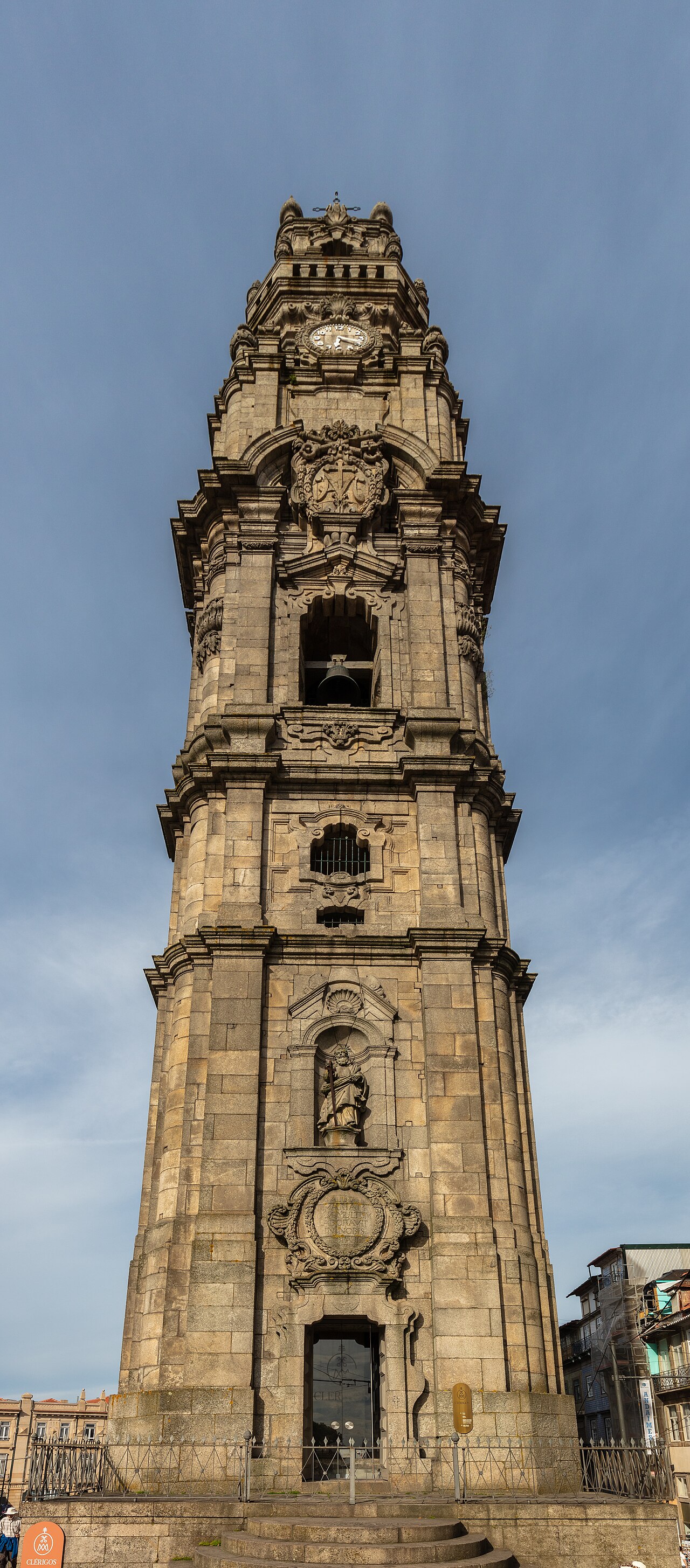
Fitting it in: the avenue is the hinge between the old town and the shopping districts. Walk from São Bento station up to the Praça da Liberdade and along the avenue to the City Hall, then continue east to Rua de Santa Catarina, the Capela das Almas and the Bolhão market, or west to the Clérigos Tower. Fit: first-time visitors finding their bearings, architecture lovers, and anyone in town for São João.
What to expect
The experience
A free, open-air ceremonial boulevard lined with early twentieth-century granite buildings, running from the Praça da Liberdade to the City Hall and its clock tower.
Best time
Early morning for calm and photographs, evening for illuminated facades, and the night of 23 June for the São João festival.
How long
Thirty minutes for a deliberate walk; you will pass through many times.
Tips
Walk uphill to the City Hall, then turn to look down towards the river. Look for the former Café Imperial's Art Deco interior near the Praça da Liberdade. Use the avenue as your orientation point.
Quick picks
- Best for
- Getting your bearings in Porto and seeing its grand, formal side.
- Families
- A wide, open space for a breather between sights, with the shopping streets nearby.
- Couples
- An evening stroll under the illuminated facades, then dinner in the old town below.
- Pair with
- São Bento station, Rua de Santa Catarina with the Capela das Almas, and the Mercado do Bolhão.
- Time needed
- Thirty minutes.
Good questions
What is the Avenida dos Aliados?+
Porto's grand central boulevard, lined with early twentieth-century buildings and running from the Praça da Liberdade up to the City Hall. It is the city's main ceremonial space.
Why is it called Aliados?+
The name means the Allies and honours the countries with which Portugal fought in the First World War.
What happens on the avenue during São João?+
On the night of 23 June, the avenue and surrounding streets fill with crowds celebrating the city's patron saint festival, with music, food and festivities that run until dawn.
Can I visit the City Hall?+
The building is the seat of the municipal government. The exterior and tower are the main attraction for visitors; interior access is limited to occasional open days and events.
What is nearby?+
São Bento station and the Clérigos Tower are a few minutes away, and Rua de Santa Catarina, the Capela das Almas and the Mercado do Bolhão are a short walk east.