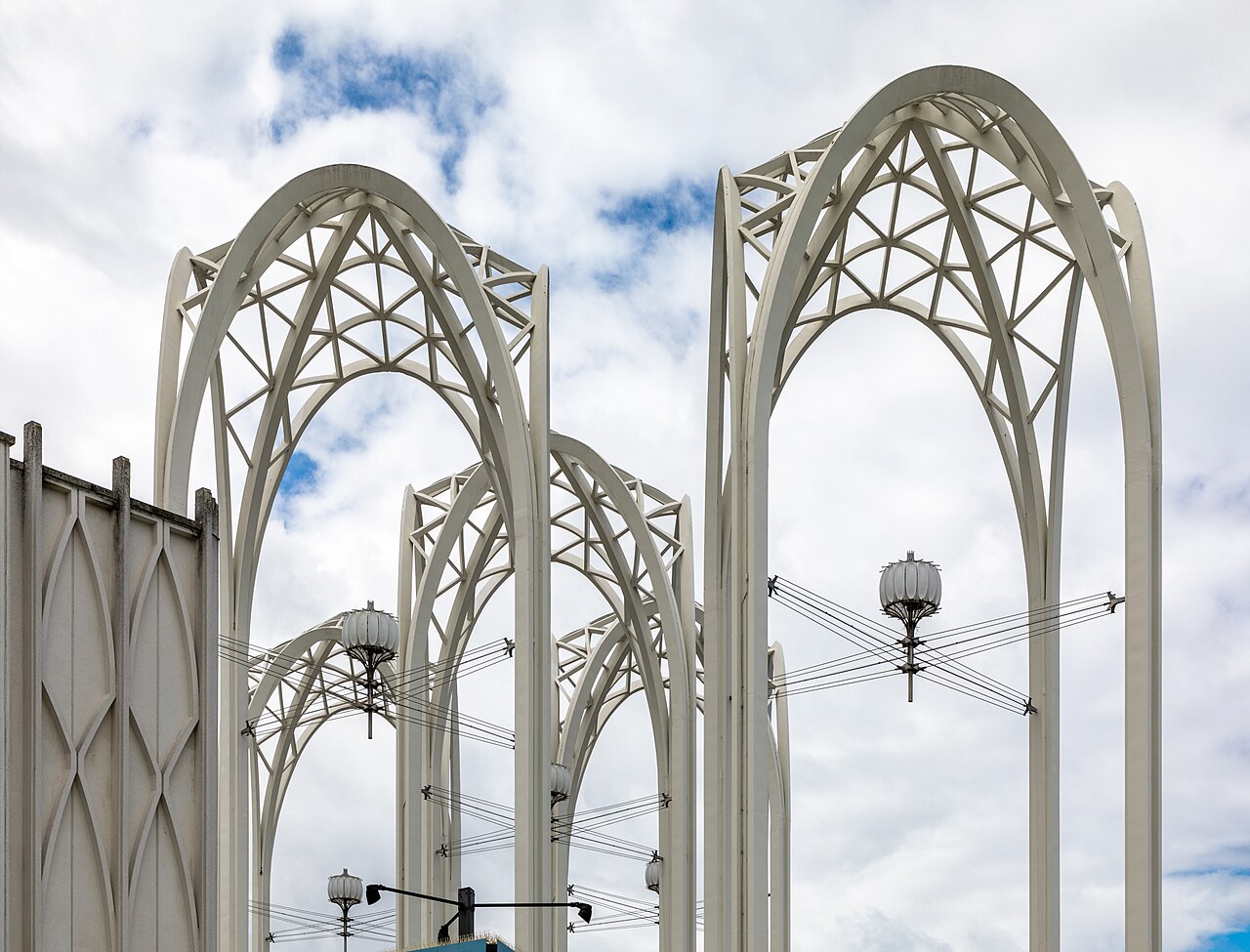
Pacific Science Center is the Seattle Center attraction that families keep coming back to, and its setting is half the appeal: the campus was built as the United States Science Pavilion for the 1962 World's Fair, designed by Minoru Yamasaki (later the architect of the World Trade Center), and its soaring white Gothic-modern arches over reflecting pools are one of the most photographed pieces of architecture in the city. Inside, PacSci is a hands-on science center rather than a quiet museum. General admission covers the exhibit halls, the Tropical Butterfly House — a warm, humid glasshouse where hundreds of free-flying butterflies land on visitors and staff explain the chrysalis displays — and the planetarium and daytime laser dome shows, which need free timed reservations once you arrive and fill quickly on busy days. The Maker and Innovation Lab is the growth story: a woodworking, electronics and robotics space that the center is expanding significantly, and the rotating headline exhibitions (recently a LEGO-built space-exploration show) give repeat visitors a reason to return. IMAX films are sold separately on site. The honest context: PacSci has been working through a financial reset, has sold part of its campus to the neighboring Space Needle company, retired some longtime exhibits including its animatronic dinosaurs, and opens fewer days than it once did (typically Wednesday through Sunday). Entry is currently through the north entrance near the Armory rather than Denny Way. None of that dims the core visit, and the courtyard arches are now more open to Seattle Center than before. Fit: families with kids roughly three to twelve, rainy days, and anyone pairing science with the Needle and Chihuly next door.
The 1962 fair, Century 21 Exposition, was a Space Age statement, and the science pavilion was its intellectual centerpiece, built to show Americans what post-Sputnik science looked like. When the fair closed, the pavilion was handed to a new nonprofit and became one of the first institutions in the country to call itself a science center — a place built around doing rather than display cases. The architecture survives largely as Yamasaki intended: low white pavilions grouped around pools and arches, a contemplative space in the middle of a busy civic campus. The recent removal of perimeter gates and fencing has opened that courtyard to everyone passing through Seattle Center, so even visitors who skip the ticketed halls can walk under the arches.
Working a visit: arrive at opening and reserve planetarium and laser dome times at check-in before doing anything else, because seats are limited and the best slots go first. Head to the Tropical Butterfly House early too — butterflies are most active in the warm late morning, and strollers must be parked outside it. Then let kids loose in the exhibit halls and the Maker and Innovation Lab, which runs facilitated activities that are worth checking on the day. Budget about three hours for a full visit, longer if you add an IMAX film. Food options on campus are limited; the Armory food hall next door is the easy lunch answer, and the International Fountain and the Artists at Play playground are free add-ons outside.
Practicals and fit: PacSci sits at the south edge of Seattle Center, a short walk from the Space Needle, Chihuly Garden and Glass and MoPOP, and the monorail from Westlake Center drops you nearby. It typically opens Wednesday through Sunday and closes Monday and Tuesday, with last entry an hour before closing — check the posted schedule before planning around it, as the center has been adjusting hours. Tickets through the booking link cover general admission with the butterfly house, planetarium, laser shows and maker lab; IMAX and parking are extra. CityPASS holders can use it as an option. Fit: families with younger children, rainy-day itineraries, and architecture lovers who want the arches as much as the exhibits.
What to expect
The experience
Hands-on science halls, a warm tropical butterfly house, planetarium and daytime laser dome shows by free timed reservation, a growing maker lab and rotating exhibitions, all set around the 1962 fair's white arches.
Best time
Opening time on Wednesday through Sunday, to claim planetarium and laser show slots; weekdays outside school holidays are calmest.
How long
About three hours; add an hour for an IMAX film.
Tips
Reserve show times at check-in first. Visit the butterfly house in late morning. Enter from the north side near the Armory, not Denny Way. Lunch at the Armory food hall next door.
Quick picks
- Best for
- Families who want hands-on science and butterflies under the Space Needle.
- Families
- Ideal for ages three to twelve — touchable exhibits, live butterflies and dome shows that hold attention.
- Couples
- Walk the free arch courtyard at golden hour; save the ticketed halls for a rainy morning.
- Pair with
- The Space Needle, Chihuly Garden and Glass and MoPOP are all within a few minutes on foot.
- Time needed
- A half day at Seattle Center, ideally paired with one neighbor.
Good questions
What is included with a Pacific Science Center ticket?+
General admission covers the exhibit halls, the Tropical Butterfly House, planetarium shows, daytime laser dome shows and the Maker and Innovation Lab. IMAX films and parking are sold separately, and show seats need free timed reservations once you arrive.
Which days is Pacific Science Center open?+
It typically opens Wednesday through Sunday and closes Mondays and Tuesdays, with last admission about an hour before closing. The center has been adjusting its schedule during a period of change, so confirm before building a day around it.
Are the dinosaurs still there?+
The longtime animatronic dinosaurs have been retired, and the center now leans on the butterfly house, dome shows, the expanding maker lab and rotating headline exhibitions instead. Kids who loved the dinosaurs will find the Burke Museum's real fossils a strong substitute.
Is it good for older kids and teens?+
It works best for younger children, though the maker lab and laser shows hold older kids. Teens often prefer MoPOP next door or the Museum of Flight, both of which skew a little older in tone.
Where is the entrance?+
Use the north entrance inside Seattle Center, near the Armory and the Mural Amphitheater. The Denny Way entrance has been closed for construction, and the courtyard with Yamasaki's arches is now open to walk through.