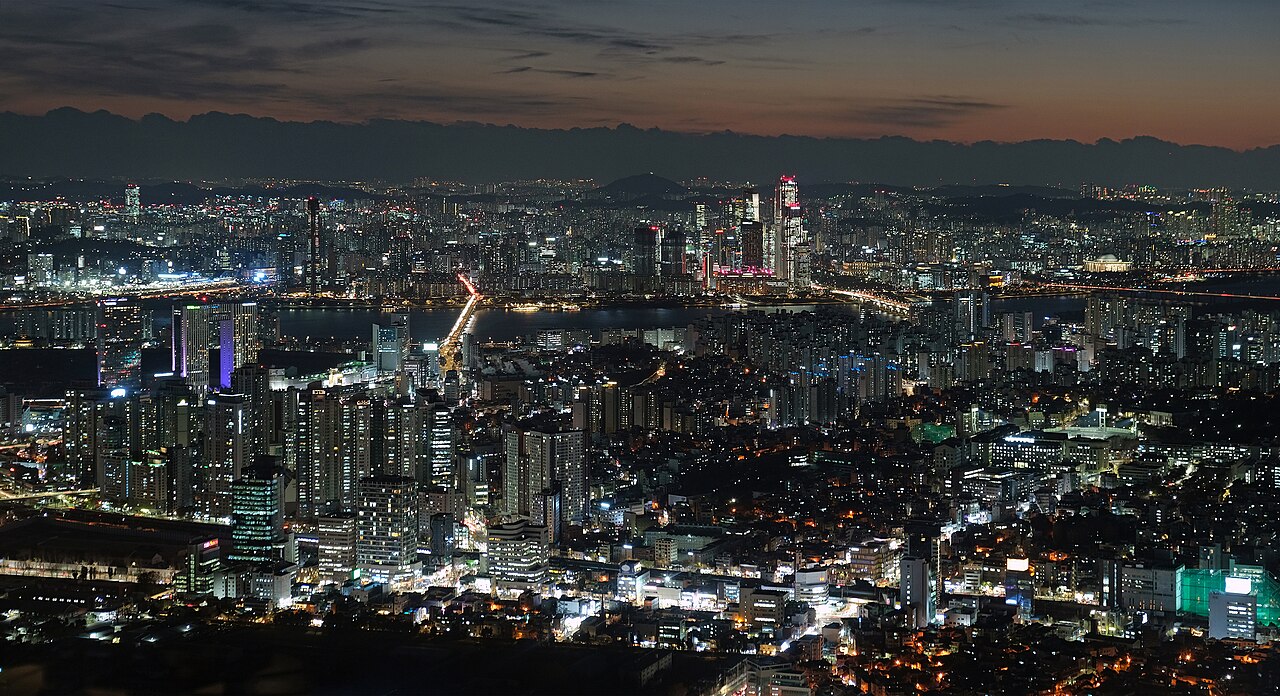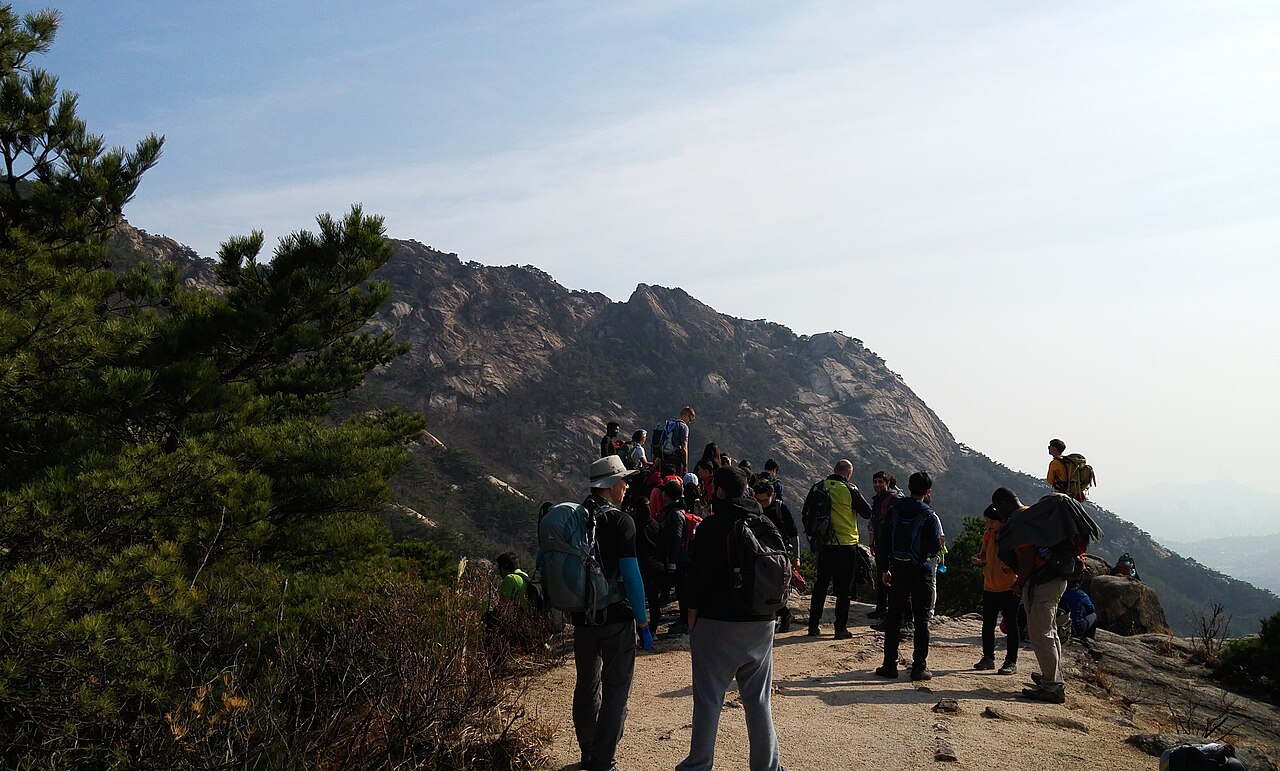
Few capitals have a national park you can reach by subway, and fewer still a granite mountain this dramatic. Bukhansan rises on Seoul's northern edge as a ridge of bare rock domes and pinnacles, and hiking it is one of the most Korean things you can do: on weekends the trails fill with Seoulites in technical outdoor gear, and the summit rocks are crowded with hikers sharing kimbap and makgeolli. The highest peak, Baegundae, stands at about 836 meters, and the final approach climbs steep granite slabs with handrails and steps cut into the rock, ending on an exposed summit with a flag and a panorama that takes in the whole of Seoul, the Han River and, on clear days, the mountains beyond. Nearby Insubong, a sheer granite dome, is one of Korea's most famous rock-climbing walls. The park also preserves Bukhansanseong, a mountain fortress built in the early eighteenth century as a refuge for the royal court, whose stone walls and gates — Daenammun, Daedongmun and others — can be reached on the ridge trails. Buddhist temples and hermitages are tucked into the valleys, including Doseonsa on the eastern approach. For visitors, the classic route climbs from the Ui-dong side to Baegundae and descends the same way or into the valleys, a full-day outing that rewards fitness with views and a real sense of accomplishment; gentler options follow the valley trails to temples and the fortress walls. Entry to the park is free. The Seoul Hiking Tourism Center near the trailhead was set up specifically for international visitors and rents boots, clothing, poles and gloves, with lockers, showers and changing rooms.
The most practical start for visitors is Bukhansan Ui Station, the last stop on the Ui-Sinseol light rail line, which connects with Lines 4 and 6. From Exit 2 it is a five-minute walk to the Seoul Hiking Tourism Center, where staff give route advice in English, then a short walk or taxi to the Baegun visitor center trailhead. The Baegundae route from this side runs to roughly ten kilometers round trip and takes around four to five hours, rated advanced: the section near the summit is steep and slippery, and you will need to use the handrails. Wear proper shoes, bring water and snacks, and start early, especially on weekends, when the summit bottleneck can mean queues on the rocks.
Choose your season and conditions carefully. Spring and autumn are ideal, with autumn color peaking in late October and early November. Summer is hot and humid, with thunderstorms during the monsoon, and in winter the rock can be icy — crampons are standard local gear, and inexperienced hikers should stick to lower trails. Check the Korea National Park Service for trail closures, which are imposed in fire-risk seasons and after heavy rain, and stay on marked trails. Cell coverage is generally good.
If Baegundae is too much, easier hikes include the walk up to the fortress gates from the Bukhansanseong side, or shorter city-edge hikes such as Inwangsan and Bugaksan near the palaces, which give superb views for an hour or two of effort. Afterward, do as the locals do and celebrate with savory pajeon pancakes and makgeolli in one of the restaurants near the trailheads.
What to expect
The experience
A free national park of granite peaks, valley trails, temples and fortress walls, with a challenging summit route and gentler alternatives.
Best time
Spring and autumn weekdays, starting early in the morning.
How long
Four to five hours for Baegundae from Ui-dong; two to three for easier valley and fortress routes.
Tips
Start at Bukhansan Ui Station and the Seoul Hiking Tourism Center for gear and advice. Wear proper shoes and use the handrails near the summit. Avoid icy winter days.
Quick picks
- Best for
- Fit travelers who want a real mountain and the best view of Seoul.
- Families
- Choose valley and temple trails rather than the summit with younger children.
- Couples
- A shared summit, then pajeon and makgeolli at the trailhead.
- Pair with
- A recovery evening at a jjimjilbang, or a gentler hike up Inwangsan another day.
- Time needed
- Most of a day.
Good questions
How hard is the hike to Baegundae?+
It is rated advanced. The round trip from the Ui-dong side is about ten kilometers and four to five hours, with steep, slippery granite near the summit where you need the handrails.
How do I get there by public transport?+
Take the Ui-Sinseol light rail to Bukhansan Ui Station, then walk from Exit 2 to the Seoul Hiking Tourism Center and the trailhead.
Can I rent hiking gear?+
Yes. The Seoul Hiking Tourism Center rents boots, clothing, poles and gloves for a fee, and has lockers, showers and changing rooms.
Is there an entry fee?+
No. Entry to Bukhansan National Park is free.
Can I hike in winter?+
Experienced hikers do, with crampons, but the rock can be icy. Inexperienced visitors should stick to lower trails or wait for spring.