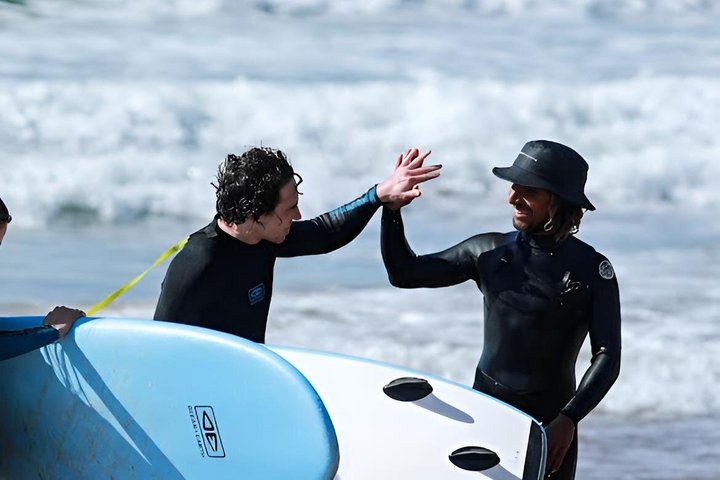
The stretch of coast north of Agadir is Morocco's surf heartland. Fishing villages such as Taghazout and Tamraght have turned into laid-back surf towns, with cafes, camps and shops, while new resorts have appeared along Taghazout Bay. Whether you want a first lesson or a full week of waves, this guide explains how it fits together.
The geography
Heading north from Agadir, the coast road passes beaches, banana plantations and a series of villages. Tamraght and Aourir come first, then Taghazout, about thirty minutes from the city, and further north the road continues toward Tamri and Essaouira. Each village has its own character, from busy Taghazout to the quieter Imi Ouaddar. Between them are point breaks, reef breaks and beach breaks, which means there are waves for different levels.
When to go
Autumn and winter bring the biggest swells, which suit intermediate and advanced surfers. Spring and summer are gentler, with smaller waves and warmer air, which makes them the best choice for beginners. The Atlantic is cool at all times, so a wetsuit is normal even in summer. Mornings are usually cleaner, before the wind picks up in the afternoon. Always ask local coaches about tides and conditions on the day.
Learning to surf
A two-hour lesson with a local coach is the classic introduction, covering safety, paddling and standing on whitewater. Group lessons are cheaper, and private lessons give more attention. For anyone who wants to progress, a week-long camp bundles accommodation, coaching and meals, and builds skills quickly. When comparing options, check the coach to student ratio, equipment, transfer arrangements and what happens when conditions are poor.
Beyond surfing
If you do not surf, there is plenty to do. Stand-up paddleboarding in sheltered water is a gentle alternative, a guided bike tour covers the coastal trails, and a half-day village tour explains the area's history and Amazigh culture. Horse riding on the beach is another favourite, especially at sunset, and yoga classes are common in surf camps. For quieter days, a hammam and massage repair tired muscles.
Where to eat
Taghazout has cafes serving fish, tagines, pizza and smoothies, and prices are friendly. Fresh grilled sardines, bread and mint tea are staples. Menus often cater to vegetarians, and hostels and camps sometimes serve family-style dinners. Alcohol is limited in the villages, so check before you go if it matters.
Where to stay
Options range from surf hostels and camps to guesthouses and large resorts. Taghazout Bay has international-brand hotels with spas and pools, while the villages have smaller places closer to the waves. Agadir itself is a better choice if you want shops, nightlife and the beach promenade, and Taghazout is a short taxi ride away. Decide whether you value quiet and the sea or convenience and city life.
Getting around
Shared taxis, called grand taxis, run set routes along the coast, and buses connect the villages to Agadir. Private transfers are easy to arrange, and many lessons include pickup. If you rent a car, parking in village centres can be tight, and driving along the coast road requires care on weekends. Walking between neighbouring villages is possible but hot in summer.
Respect and safety
Dress modestly in the villages, covering shoulders and knees away from the beach, and ask before photographing people. Respect local surfers by sharing waves and following etiquette, take care with rip currents and rocks, and always use sun protection. If you are a beginner, stay within your limits, and stay close to your coach.
What to pack
Bring a rash vest or swim top, reef-safe sun cream, a hat, a light jacket for evenings and a reusable water bottle. Most schools lend boards and wetsuits, but fit varies, so ask about sizes when you book. A waterproof phone pouch is useful, and a small bag of cash helps in villages where cards are not always accepted. Keep valuables locked at your accommodation, and rinse your gear in fresh water after each session to make it last.
A sample plan
On day one, take a village tour to get your bearings, with a coffee by the sea. On day two, take a morning lesson, a long lunch and a hammam. Day three can be a paddleboard session or bike ride, and day four a trip to Paradise Valley or Essaouira. If you love it, a week at a surf camp is an excellent way to deepen the experience.