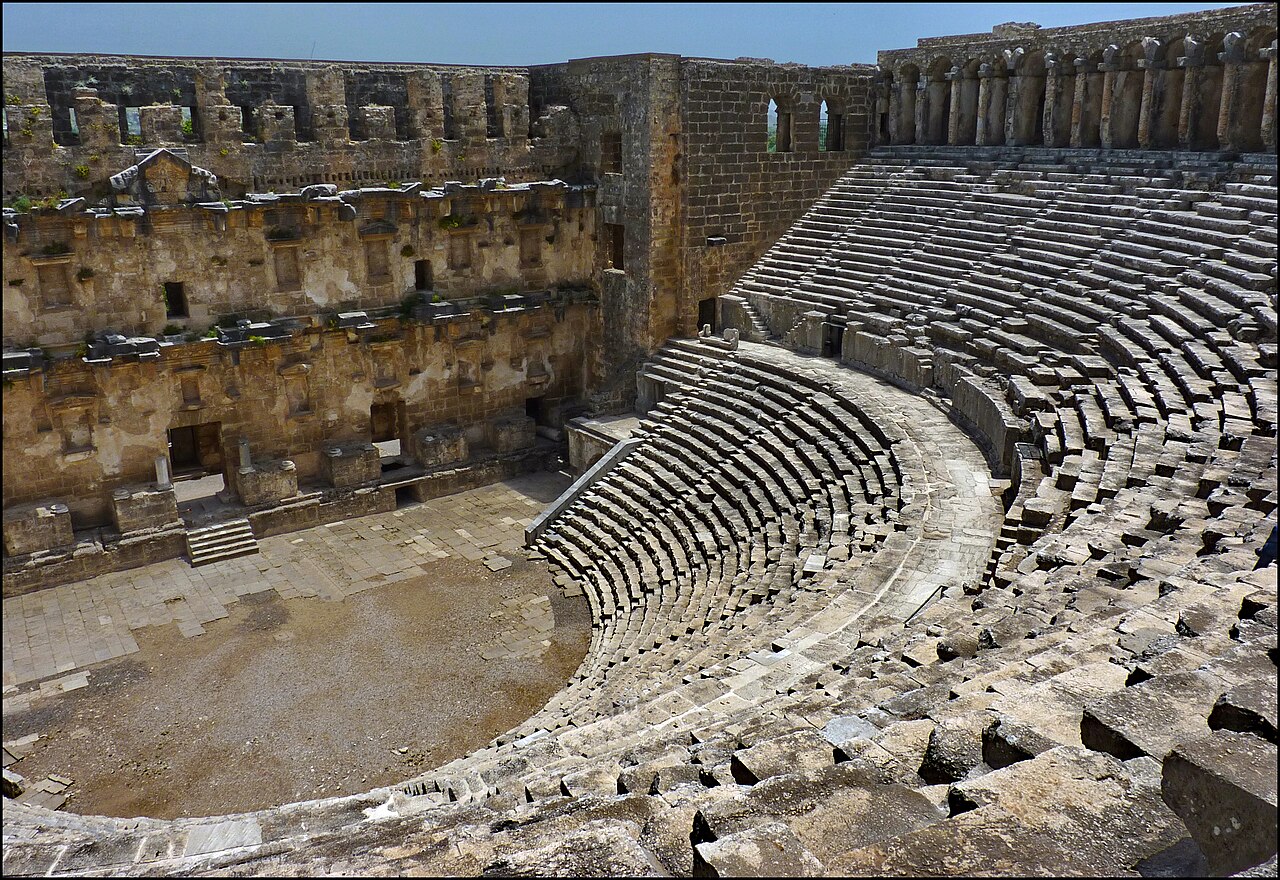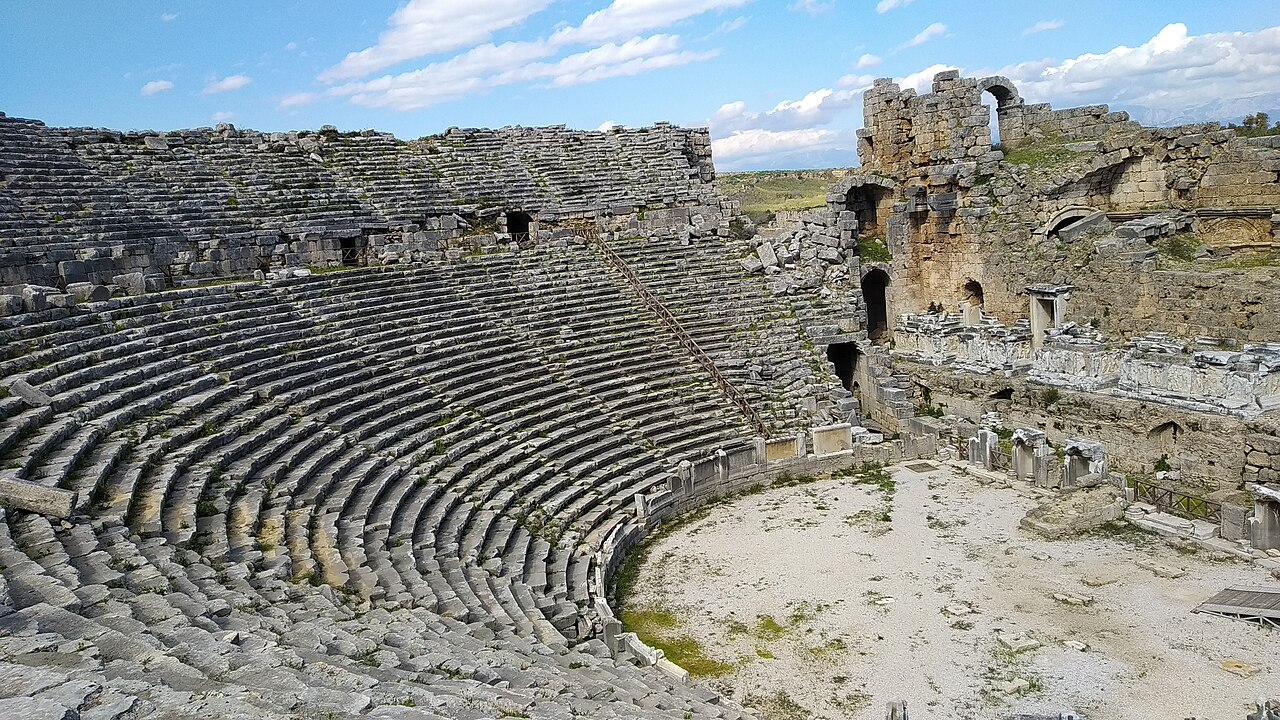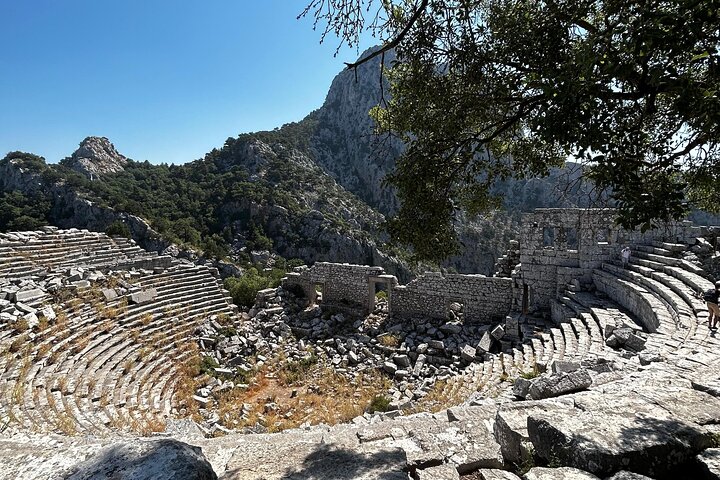
Sagalassos is the sort of place that rewards travellers who have already seen the coastal ruins and want something wilder. The ancient city lies high in the Taurus Mountains, about 1,500 metres above sea level, on the slope of Mount Akdağ in the province of Burdur. For centuries it was one of the most prosperous cities of Pisidia, known for its fine pottery, its mountain setting and its monumental buildings, and its ruins have been excavated and partly restored by an international team over many years. Because it is far from the beach resorts, it is much quieter than Perge, Aspendos or Side, and the feeling of standing in a mountain city is quite different. The highlights include the restored Antonine Fountain, a grand nymphaeum whose façade has been pieced back together from fallen blocks, the theatre with its sweeping view over the valley, the agora and the colonnaded street, and several temples and civic buildings. The scale and the setting are what make it special: pine forest and bare rock around the site, cool air in summer and wide views to the horizon. Walking between the monuments is a real outing, with some climbing, and a guide helps you understand how the buildings fit together and why this high location mattered to the Romans. A day trip from Antalya is long, because the site is reached by a drive of roughly two hours or more each way, but the journey passes through varied landscape of lakes, mountain villages and farmland. The tour often includes lunch and other stops. It is best for history lovers and travellers who like quiet sites, and it makes a worthwhile alternative to the classic coastal route when you have already seen it.
History in brief
Sagalassos was settled long before the Roman period and became an important city under Hellenistic and Roman rule. It was rebuilt on a grand scale during the Roman Empire, with monumental fountains, baths, a theatre and an agora, and it was known for its red-slipped pottery. Earthquakes, famine and the arrival of plague weakened the city during the later empire, and it was gradually abandoned. The high altitude and the isolation helped to preserve it, and modern archaeologists have been able to reconstruct several major buildings.
On site
The walk is on uneven paths and some stairs, so wear solid shoes. The Antonine Fountain is the visual centre, with its tall wall of niches that once held statues and water spouts. The theatre, set against the hillside, gives a clear picture of how the city faced the valley. Other points of interest include the Roman baths, the Upper Agora with its colonnades, a library and the remains of temples to emperors and gods. Information panels help to explain the context, and guides add stories about the excavation.
Planning tips
This is a full day, so start early and bring water, sun protection and a light jacket, since the temperature at altitude can be markedly lower than on the coast. Spring and autumn are the most comfortable seasons, and summer mornings are better than afternoons. Some tours add a lake or a mountain village stop, so check what is included before you book.
Because it is a long drive, children may find it tedious unless they enjoy ruins, and travellers who suffer from car sickness should take precautions for the winding mountain roads. If you want a calm site with few other visitors, Sagalassos is among the best ancient places in this part of Turkey, and it pairs well with a lazy evening back on the coast.
What to expect
The experience
A guided full-day trip by road to the hilltop ruins, with time to walk the fountain house, theatre, agora and colonnaded street.
Best time
Spring and autumn, or summer mornings. Take a light layer, because altitude brings cooler air.
How long
About ten hours including the drive of two hours or more each way.
Tips
Wear sturdy shoes, bring water and sun protection, and start early. Check whether lunch and extra stops are included.
Quick picks
- Best for
- History lovers who want a quiet mountain site away from the beach crowds.
- Families
- Best for older children who enjoy ruins; the drive is long.
- Couples
- A dramatic, uncrowded setting and a day out of the resort bubble.
- Pair with
- Termessos or Perge on other days, for contrast between mountain and coastal ruins.
- Time needed
- A full day, starting early.
Good questions
How far is Sagalassos from Antalya?+
Roughly two hours or more each way by road, so the trip is a long day.
What is the main highlight?+
The restored Antonine Fountain, the theatre and the mountain setting.
Is it crowded?+
No. It is much quieter than the coastal sites, which is part of its appeal.
What should I wear?+
Sturdy shoes, sun protection and a light layer, because it can be cooler at altitude.
Is it suitable for children?+
Older children who like ruins will enjoy it; the long drive can be tiring for younger ones.