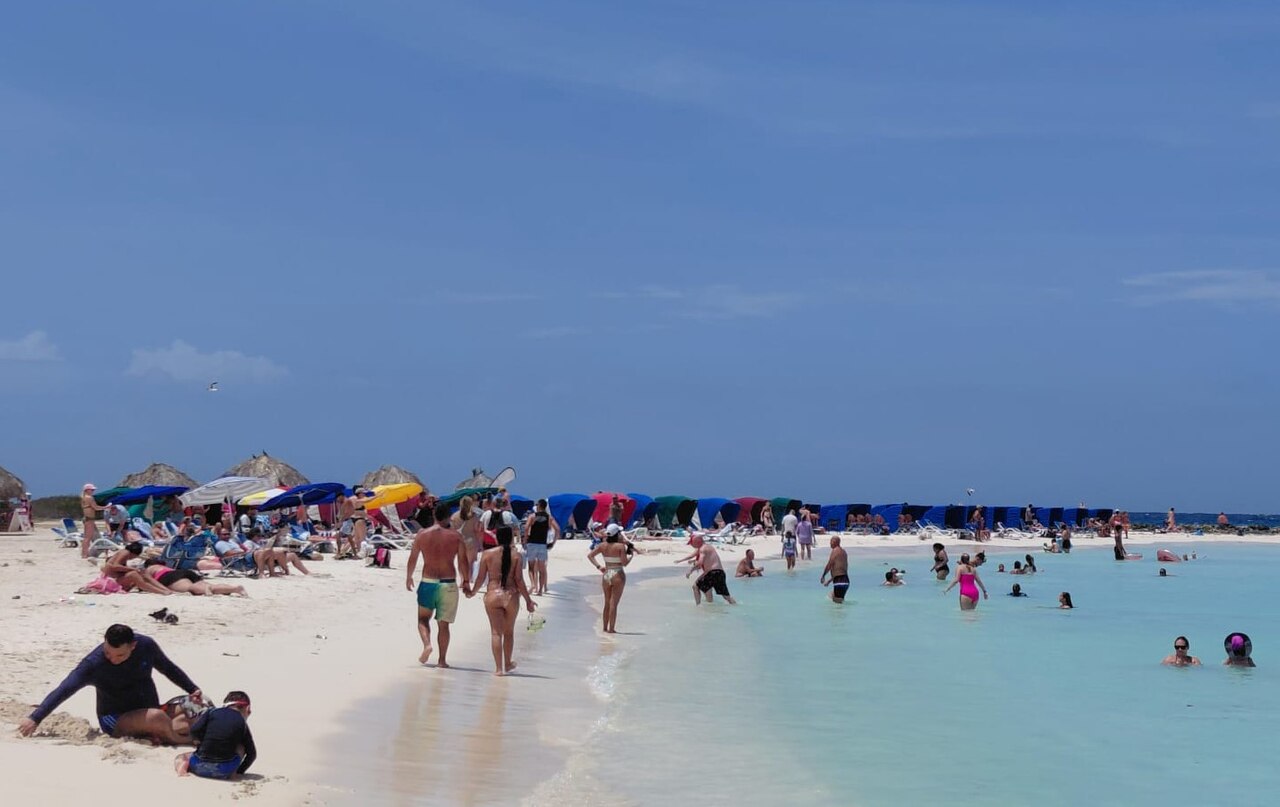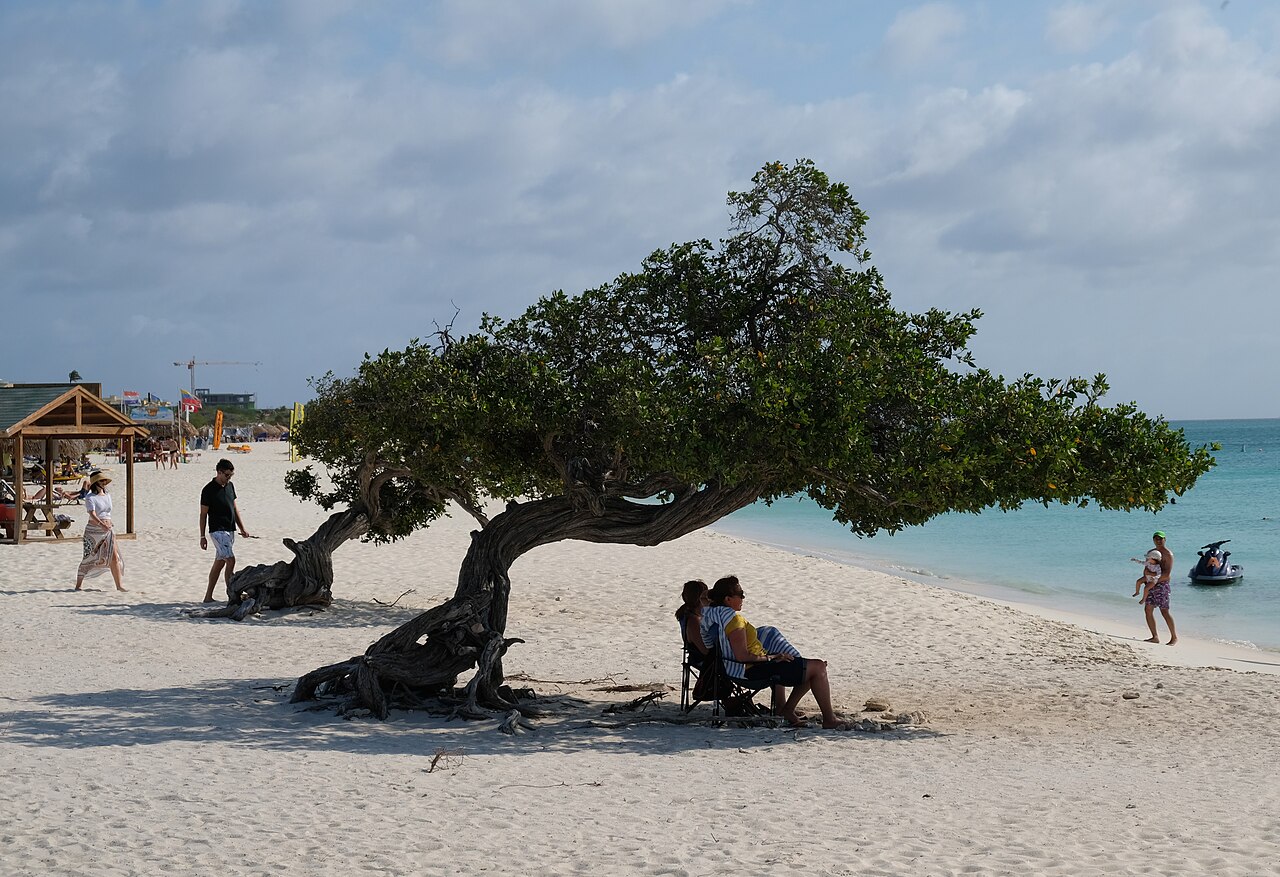
Eagle Beach is the beach most people picture when they picture Aruba. It runs for a long, easy stretch in front of the island's low-rise hotels in Noord, with soft white sand, aqua water and a sense of space that the busier high-rise strip at Palm Beach does not quite match. Nothing blocks the view, so sunsets here are wide and unobstructed. The beach is home to what VisitAruba describes as the island's most photographed fofoti tree, a wind-bent coastal tree that is now protected, and it is also a favorite nesting spot for sea turtles, so the sand is treated with care during the season. A few palapas and water sports operators dot the shoreline, but the beach is mostly open, which is part of its charm. Like every beach in Aruba it is public, so you can walk onto it from the road without staying at a hotel, and it is easy to reach by car, taxi or public bus. VisitAruba rates the swimming as excellent with relatively calm water, but it warns visitors to stay inside the designated swimming areas because the current can be surprisingly strong. Bring a hat and plenty of water, since natural shade is limited, and rent a palapa or umbrella if you plan to stay all day.
Why it works: Eagle Beach is wide, gently sloped and backed by low-rise resorts and apartment hotels rather than towers, so it feels relaxed at any hour. Mornings are quiet and perfect for a long walk along the shoreline. By midday the palapas fill up, and from late afternoon the beach turns into a sunset gathering spot, with beach bars and restaurants across the road easy to reach on foot.
Wildlife and the fofoti tree: the beach is a nesting site for sea turtles, so follow any posted guidance, keep lights and flash photography away from the nesting areas at night, and never disturb tracks or nests. The fofoti tree is the classic photograph, best in the soft light of early morning or just before sunset. Do not climb on the tree or the roots, since it is protected.
Practical notes: the sea is generally calm, but pay attention to the flags and swimming areas and avoid going out beyond them. Shade is scarce, so rent a palapa early in high season or bring an umbrella. Parking is informal near the public access points, and the bus, taxi or a short walk from most Eagle Beach hotels is simpler. Facilities are modest compared with the big resort beaches, so bring water, sunscreen and snacks, or eat at one of the nearby casual restaurants. Eagle Beach pairs naturally with Baby Beach on the quiet south side and a catamaran sail from Palm Beach for a classic three-beach day.
What to expect
The experience
A long public beach with soft white sand, a few palapas and water sports vendors, low-rise hotels behind it and the island's best-known fofoti tree along the shore.
Best time
Early morning for calm water and empty sand; late afternoon through sunset for the glowing light and the wide western horizon.
How long
Plan a few hours at minimum; most visitors make it their default beach for several days.
Tips
Stay in the designated swimming areas, rent a palapa early in busy weeks, and keep clear of any turtle nesting areas.
Quick picks
- Best for
- Anyone who wants the classic Aruba beach day with calm water, soft sand and low-rise surroundings.
- Families
- Good for older children in the calm swimming areas; watch the current and keep little ones close to shore.
- Couples
- Walk the beach at sunset, then dinner at one of the casual restaurants across the road.
- Pair with
- A Palm Beach catamaran sail, Baby Beach on the south side and the Oranjestad walking tour on a cooler morning.
- Time needed
- Half a day for a swim and a stroll; a full day if you rent a palapa.
Good questions
Is Eagle Beach free and open to everyone?+
Yes. Beaches in Aruba are public, so you can walk onto Eagle Beach without staying at a hotel. Palapas and loungers are rented separately.
Is the water safe for swimming?+
VisitAruba describes the conditions as excellent with relatively calm water. It advises staying inside the designated swimming areas because the current can be surprisingly strong.
What is the fofoti tree?+
It is a wind-bent coastal tree on the beach that VisitAruba calls the island's most photographed fofoti tree. It is protected, so photograph it but do not climb on it.
Can you see sea turtles on Eagle Beach?+
The beach is a favorite nesting spot for sea turtles, mainly during the nesting season. Keep your distance, avoid lights at night and follow any posted guidance.
How do I get to Eagle Beach?+
It is easy to reach by car, taxi or public bus from Oranjestad and Palm Beach. Most Eagle Beach hotels are within a short walk of the sand.