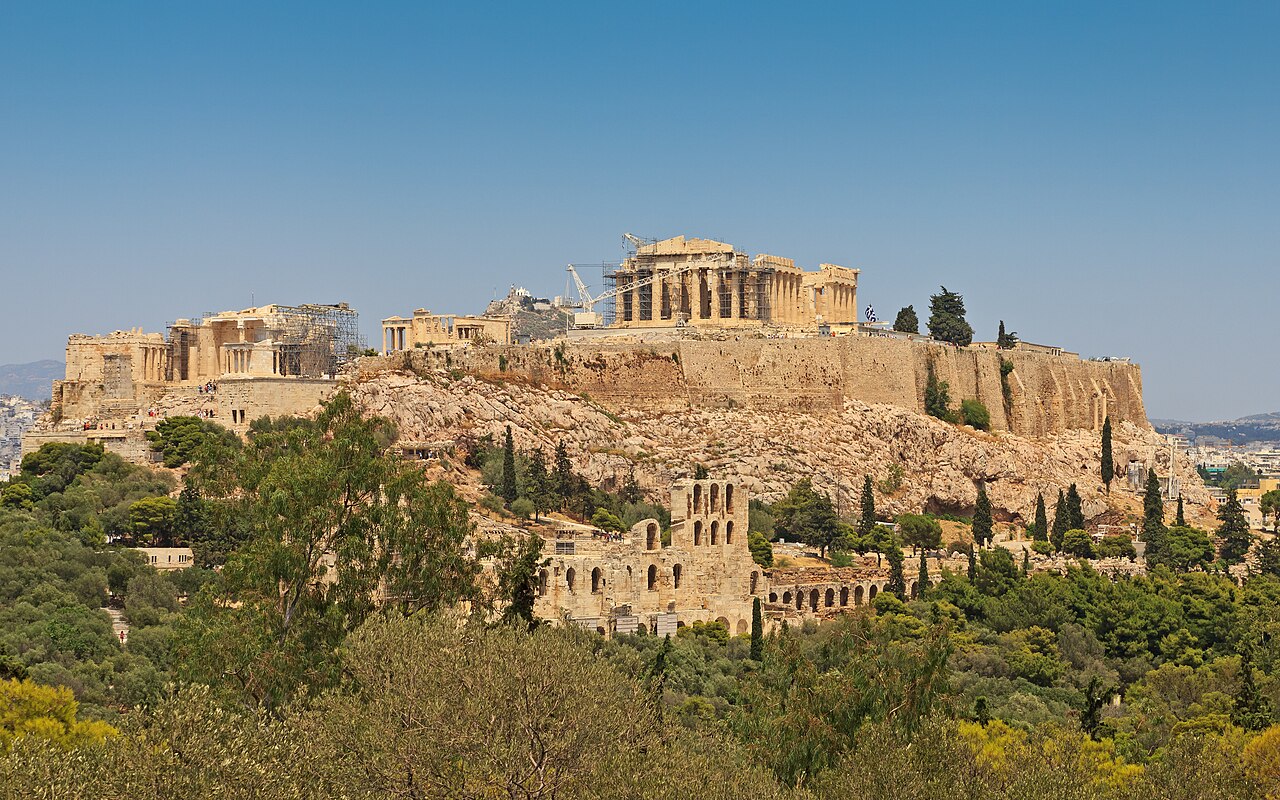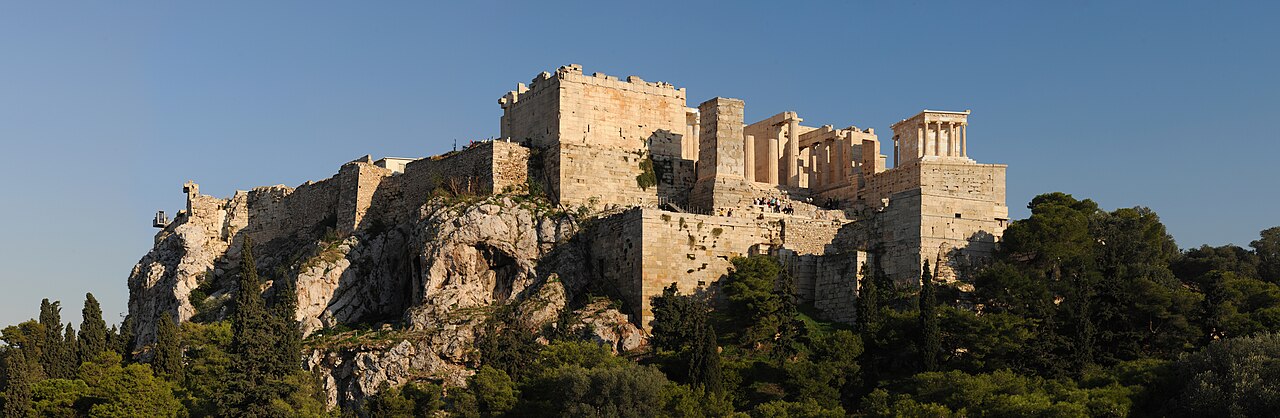
Areopagus Hill is the polished hump of grey rock you pass on the way to the Acropolis entrance, and many visitors make the mistake of walking straight past it. Climb up and you are rewarded with one of the most dramatic views in Athens: the west end of the Acropolis, with the Propylaia and the Temple of Athena Nike, towers almost directly above you, while below spreads the Ancient Agora with the Temple of Hephaestus, and beyond it the rooftops of Monastiraki, Plaka and the city stretching to Lycabettus and the mountains. The name means the Hill of Ares, and it is steeped in history and myth. In legend, Ares was tried here by the gods for killing a son of Poseidon, and in Aeschylus' play the Eumenides, Orestes is tried on this hill for the murder of his mother, in a court established by Athena herself. In historical times this was the meeting place of the Areopagus, the council of former magistrates that served as Athens' most venerable court, judging cases of homicide and later wielding wide political influence. The hill also holds a special place in Christian history: in the first century AD the Apostle Paul is said to have delivered his sermon on the Unknown God here, as recorded in the Acts of the Apostles, and a bronze plaque at the foot of the rock bears the text of the speech. Dionysius the Areopagite, a member of the council, became one of his first converts in Athens and later the city's patron saint. There is little to see in the way of ruins, just cuttings in the rock where buildings and seats once stood, but the atmosphere and the view more than make up for it. It is free, unfenced and always accessible, which makes it a favourite spot for Athenians and visitors alike at sunset.
How to get up safely: there are two ways up. The ancient steps cut into the rock are worn smooth as glass by centuries of feet and are genuinely slippery, especially when wet; a modern metal staircase alongside them is the safer option. On the top, the surface is uneven, sloping marble with no railings, so wear shoes with good grip, watch your step near the edges, and keep a close eye on children. After rain, it is best to stay on the flatter parts.
When to go: sunset is the classic time, when the marble of the Acropolis glows gold and then the monuments are floodlit, but the hill gets crowded, so arrive a little early to find a good spot on the rock. Early morning is quieter and pairs well with the first entry slot at the Acropolis, whose main west entrance is a couple of minutes' walk uphill. In summer, the hill is exposed and very hot in the middle of the day, with no shade at all. Bring a drink and perhaps a snack and settle in, as locals do.
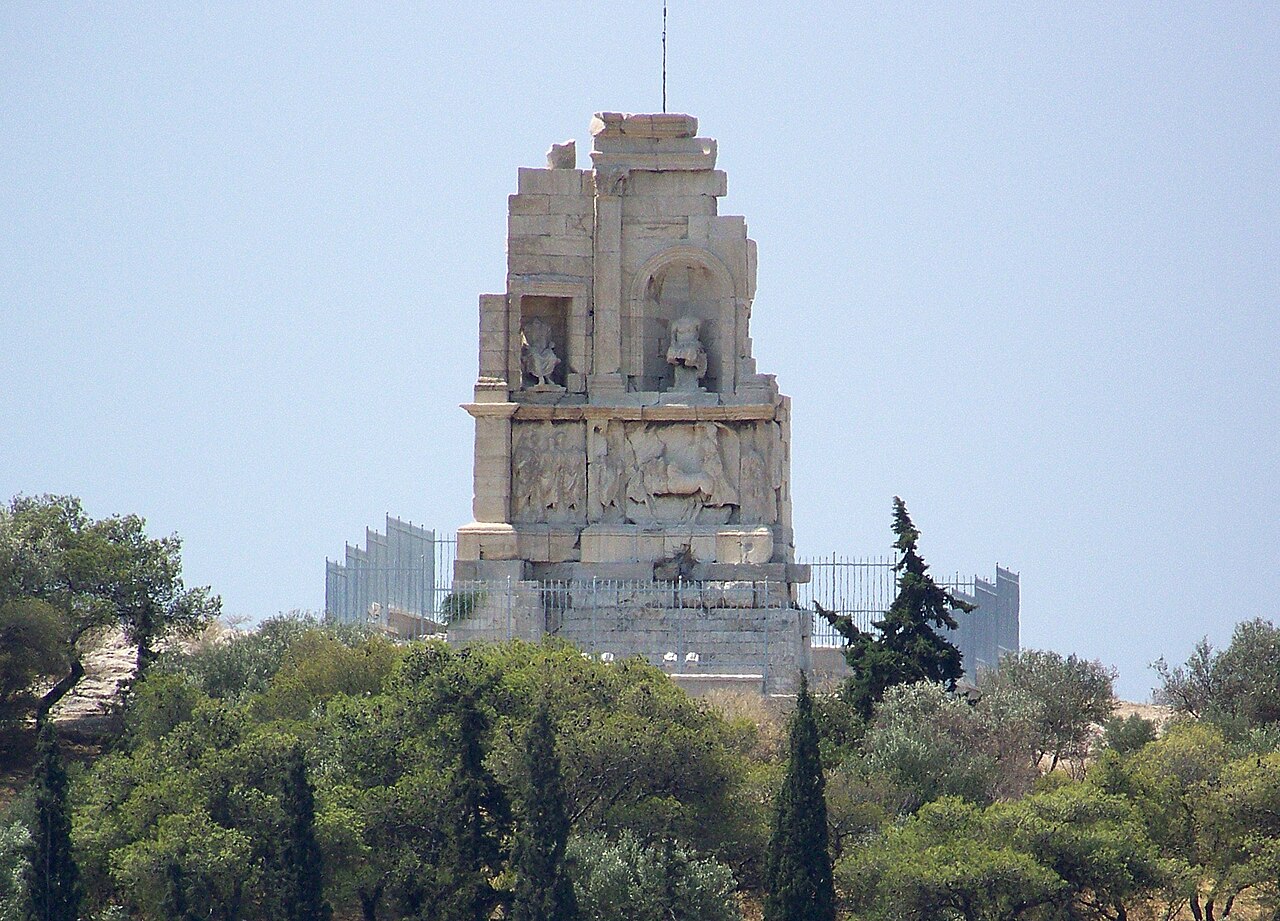
Fitting it in: the hill sits on the pedestrian route between the Acropolis entrance, the Ancient Agora and Thissio. A perfect evening walk starts at the Acropolis Museum, follows the pedestrian Dionysiou Areopagitou promenade around the south and west sides of the Acropolis, climbs the Areopagus for sunset, and then drops down to the cafes and tavernas of Thissio or Monastiraki for dinner. For a quieter alternative with an even wider view, continue to Philopappos Hill opposite.
What to expect
The experience
A free, open rocky hilltop just below the Acropolis entrance, with sweeping views over the Ancient Agora and the city, rock-cut traces of the ancient court and a bronze plaque with St Paul's sermon at the foot.
Best time
Sunset for golden light and the floodlit Acropolis, or early morning before an Acropolis slot. Avoid the midday heat in summer.
How long
Twenty to forty-five minutes.
Tips
Use the metal staircase rather than the slippery ancient steps. Wear shoes with grip, as the marble is polished and has no railings. Arrive early for sunset to claim a spot.
Quick picks
- Best for
- A free sunset with the Acropolis right above you.
- Families
- Fun to climb, but there are no railings and the rock is slippery, so hold small hands tightly.
- Couples
- Sunset on the rock, then dinner in Thissio or Monastiraki.
- Pair with
- The Acropolis entrance a few minutes uphill, the Ancient Agora below, and Philopappos Hill opposite.
- Time needed
- Under an hour.
Good questions
Is Areopagus Hill free?+
Yes. It is free, unfenced and accessible at all hours, right beside the path to the main Acropolis entrance.
Is Areopagus Hill slippery?+
Yes. The ancient rock-cut steps and the marble top are polished smooth by centuries of visitors. Use the modern metal staircase and wear shoes with good grip, especially after rain.
What happened on Areopagus Hill?+
It was the meeting place of the Areopagus, the ancient council and court of Athens, and in myth the site of the trials of Ares and Orestes. St Paul is said to have preached his sermon on the Unknown God here in the first century AD.
Is it a good place to watch the sunset?+
One of the best in Athens, with the Acropolis directly above and views across the Ancient Agora and the city. It gets busy, so arrive a little early.
How do I get there?+
Walk up from Monastiraki or Thissio toward the main Acropolis entrance; the hill is on the right just before the ticket gates, a few minutes from either metro station.