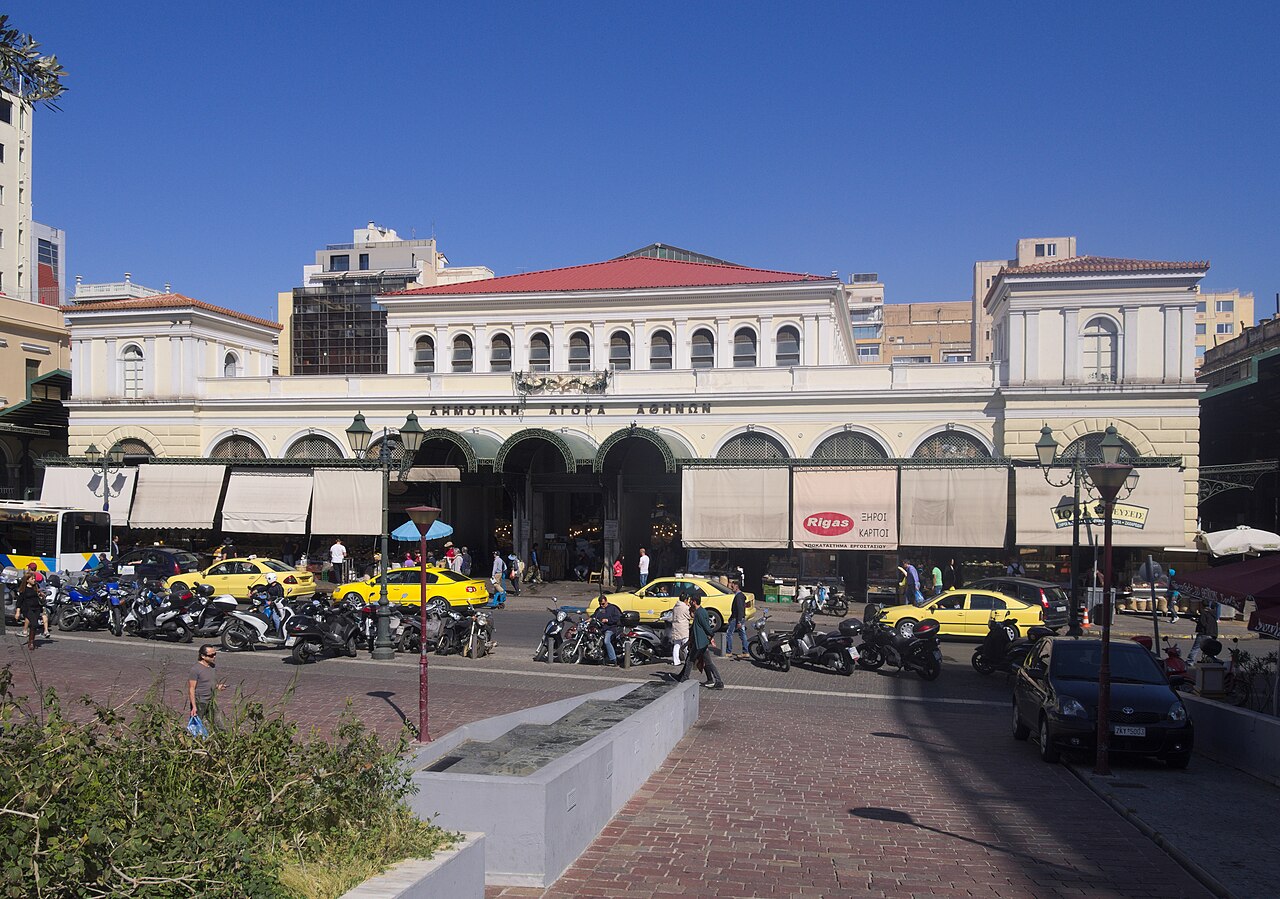
If you want to see how Athenians really eat, come to the Varvakios, the Central Municipal Market on Athinas Street, halfway between Monastiraki and Omonia. Plans for the market began in 1876 with money from the benefactor Ioannis Varvakis, after whom it is named; it opened in 1884, and its iron-and-glass roof and basements were added in 1886. Almost a century and a half later it is still a working market where restaurant owners, home cooks and grandmothers come to shop, not a polished food hall built for tourists. The main building is divided into two great halls. The fish market, under the central glass roof, is the most spectacular: long marble counters heaped with sardines, red mullet, octopus, prawns and the day's catch from the Aegean, with fishmongers calling out prices and hosing down the floors. It is often described as one of the largest fresh fish markets in Europe. Around it, the meat hall is lined with butchers' stalls hung with whole lambs and goats, especially in the weeks before Easter, which can be confronting for some visitors but is an essential part of Greek food culture. Across Athinas Street, the open-air fruit and vegetable market overflows with seasonal produce, from summer tomatoes and figs to winter citrus and wild greens. The streets around the market are just as rewarding. The surrounding blocks are packed with shops selling coffee, nuts, dried fruit, spices, eggs, honey, olives, cheese and cured meats, plus specialities from the Greek islands and further east. A few old-fashioned eateries inside and around the market serve simple, hearty food to market workers, from grilled fish to soups and daily stews, and they are some of the most authentic places to eat in central Athens.
How to visit: the market is free to enter and best in the morning, from around eight, when stalls are fullest and trading is at its liveliest. It is closed on Sundays and winds down in the afternoon, so do not leave it until late. Wear shoes you do not mind getting wet, as the fish hall floors are constantly hosed down, and keep an eye on your belongings in the crowds. Photography is generally fine, but ask before photographing individual traders up close. If you are squeamish, the fruit and vegetable side and the spice shops are gentler places to start.
What to buy and eat: the market is a great place to pick up edible souvenirs to take home, such as dried herbs like oregano and mountain tea, honey, pistachios, olives, olive oil, and vacuum-packed cheeses. Look for shops that will vacuum-seal produce for travel. For eating, the simple canteens in and around the market serve fish bought fresh that morning, grilled meats, soups and traditional dishes at local prices; some of the old canteens even stay open around the clock at weekends in the colder months. Nearby, Evripidou Street is lined with spice shops and delis, and a short walk takes you to the coffee roasters and bakeries of the area.
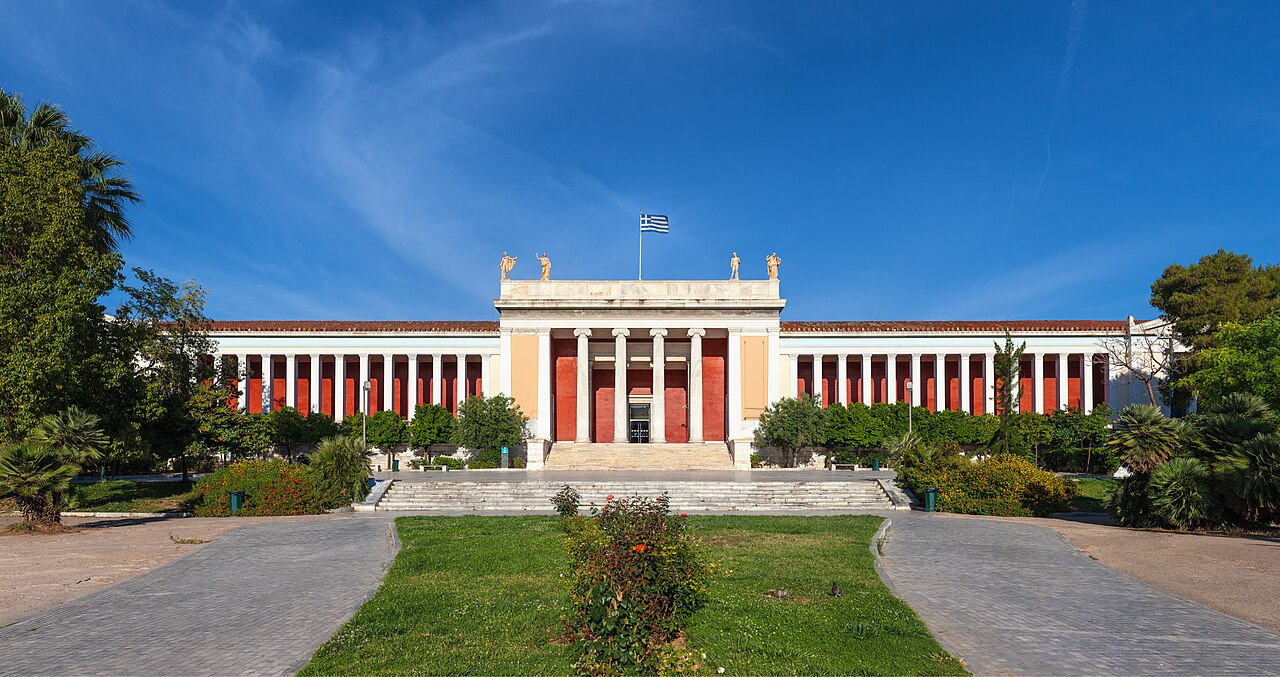
Why it matters: Athens is a food city first, and the Varvakios is where you see its raw ingredients in all their abundance. A morning here is the perfect start to a foodie day: browse the market, have a coffee and a pastry nearby, then walk down to Monastiraki and Psirri for lunch. It also pairs naturally with a guided food tour, many of which start here, or with a visit to the National Archaeological Museum, a twenty-minute walk north.
What to expect
The experience
A free-to-wander working market: the glass-roofed fish hall and meat hall of the 1880s Varvakios building, the open-air fruit and vegetable market opposite, and surrounding shops for spices, nuts, cheese, olives and honey, with simple local canteens.
Best time
Weekday or Saturday mornings, when the market is at its busiest. Closed on Sundays and quieter in the afternoon.
How long
One to two hours, including a snack or lunch.
Tips
Wear shoes that can get wet. Watch your bag in the crowds. Ask before photographing traders up close. Buy herbs, honey and nuts to take home and ask for vacuum packing.
Quick picks
- Best for
- Food lovers who want to see the real, everyday Athens.
- Families
- Exciting for curious older kids; the meat hall may upset sensitive younger children, so start with the fruit and spice sections.
- Couples
- A morning browse and coffee, then a long lunch in Psirri.
- Pair with
- Monastiraki and Psirri for lunch, or the National Archaeological Museum to the north.
- Time needed
- One to two hours.
Good questions
When is the Athens Central Market open?+
From early morning, around eight, Monday to Saturday, winding down in the afternoon. It is closed on Sundays. Mornings are the liveliest time to visit.
Is the Varvakios Market free?+
Yes. It is free to wander through the halls and the surrounding streets; you only pay for what you buy or eat.
What should I buy at the Central Market?+
Dried oregano and mountain tea, honey, pistachios, olives, olive oil, cheeses and spices make excellent souvenirs. Many shops will vacuum-pack food for travel.
Can I eat at the market?+
Yes. Simple canteens in and around the market serve grilled fish bought that morning, soups, stews and meze at local prices.
Is the market suitable for vegetarians or the squeamish?+
The fish and meat halls are raw and vivid, with whole carcasses on display. If that bothers you, explore the fruit and vegetable market across Athinas Street and the spice and deli shops instead.