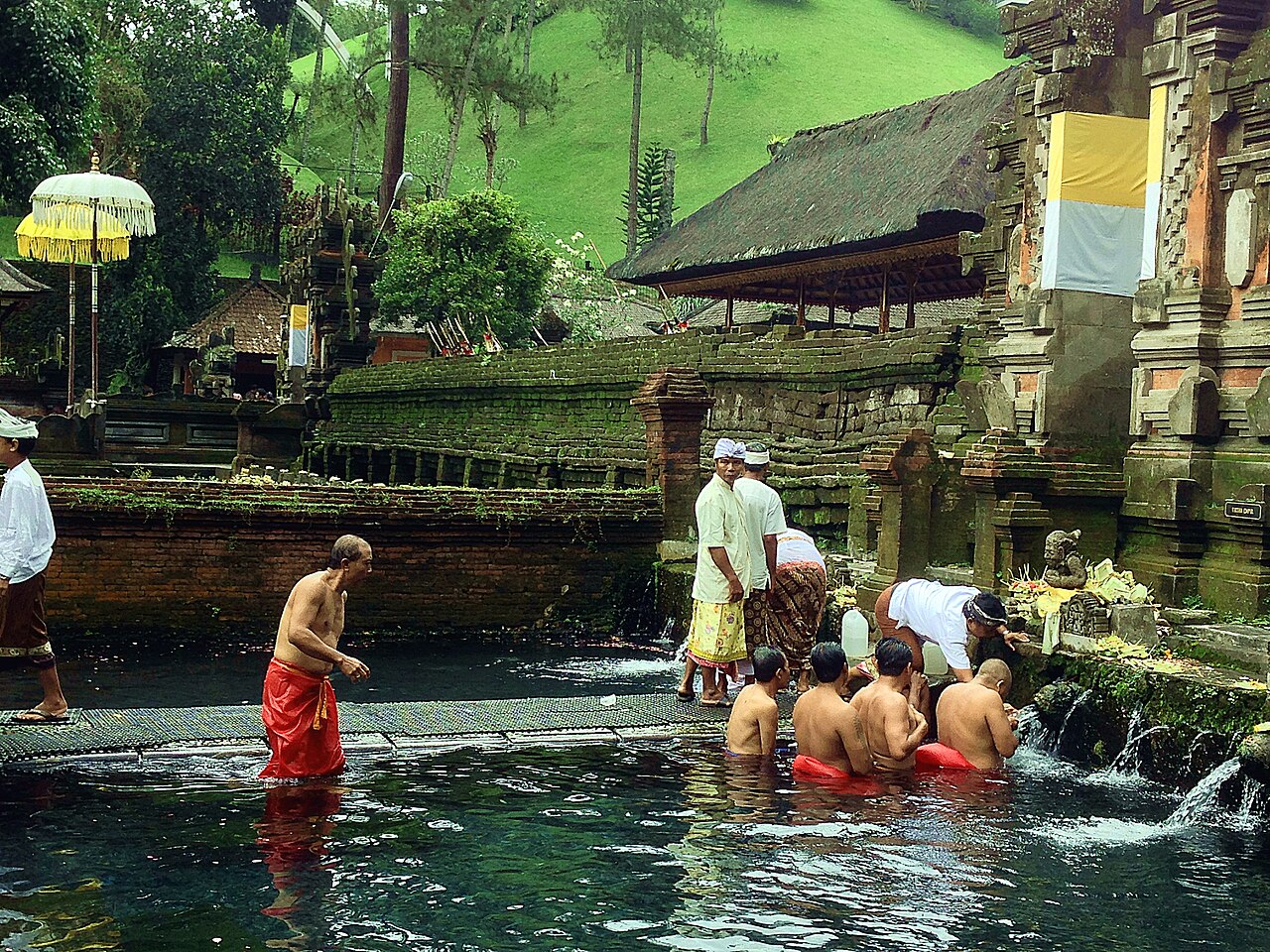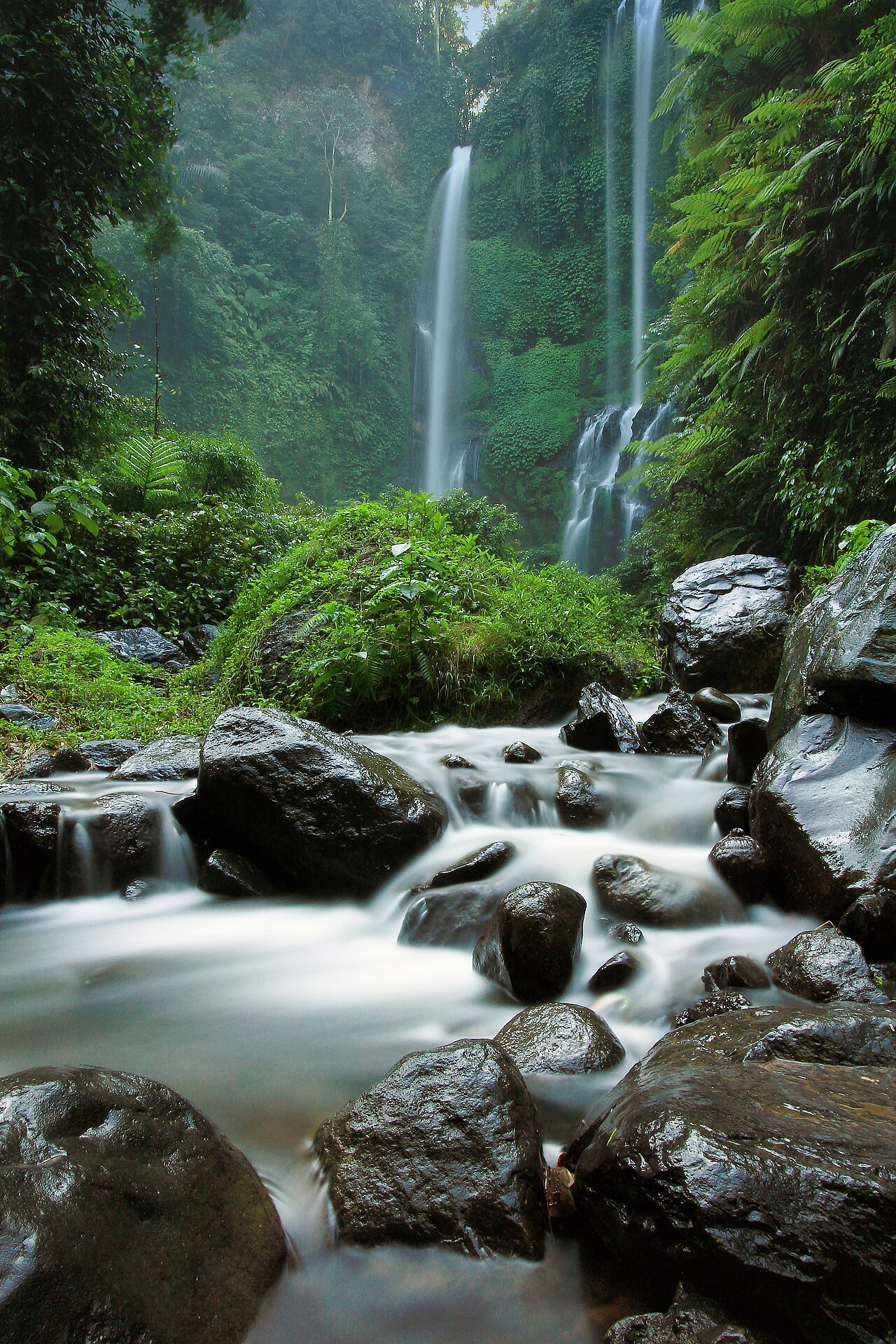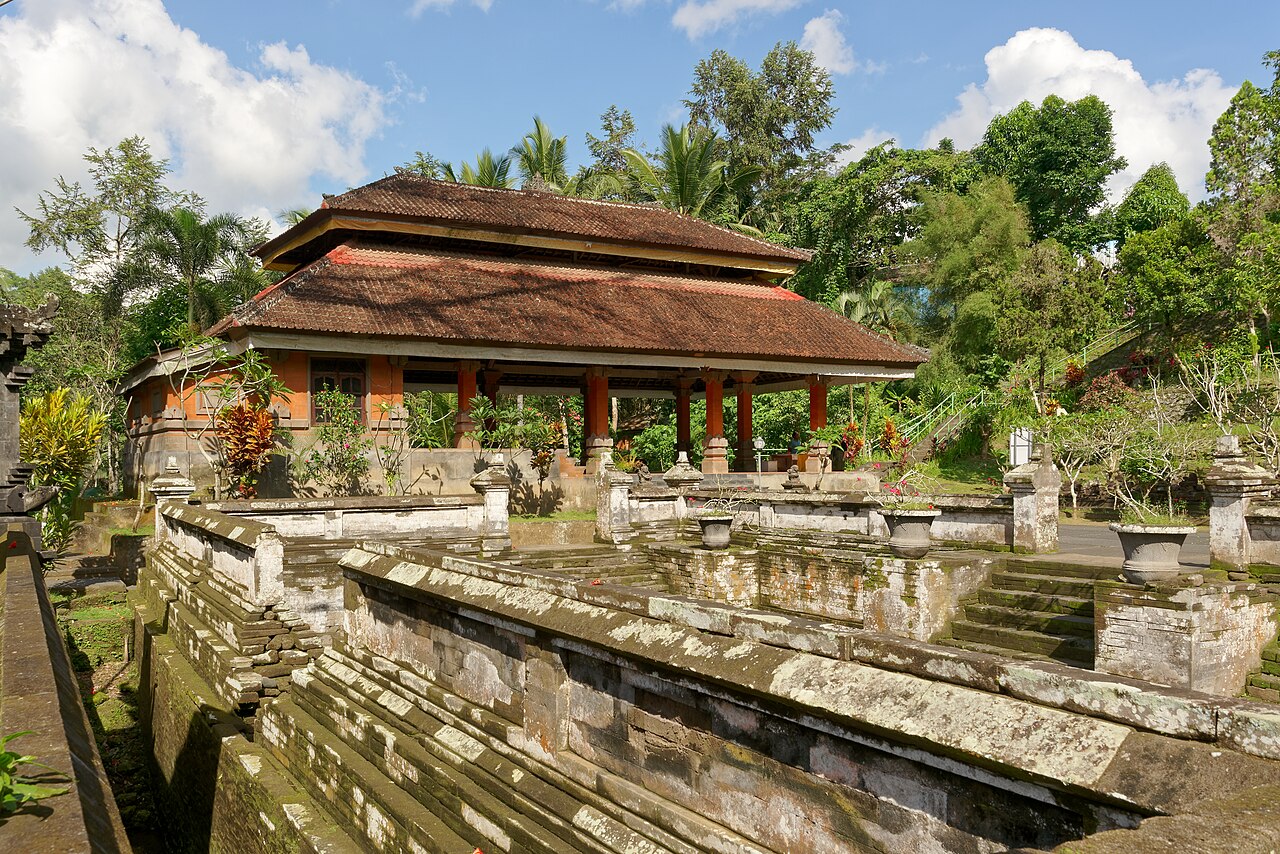
Goa Gajah, the Elephant Cave, is one of the oldest sacred sites in Bali and one of the easiest to fit into a day around Ubud. It lies in the village of Bedulu, about ten minutes east of town, in a small valley where the ancient Balinese kingdoms of the Pejeng and Bedulu area once had their centre. The site is believed to date from the eleventh century and blends Hindu and Buddhist elements, a reminder that both faiths shaped early Bali. The most famous feature is the cave entrance itself: a doorway cut into a rock face that has been carved into a huge, wild-eyed face, its mouth forming the entrance and the surrounding stone crowded with animals, foliage and figures. Inside, a short, dark, T-shaped passage leads to niches holding a statue of Ganesha, the elephant-headed god, and a set of lingga and yoni, Hindu symbols of creation. In front of the cave lies an ancient bathing area, believed by Balinese to have healing powers, with carved female figures pouring water into the pools; it was buried for centuries and excavated only in the twentieth century. Below the main courtyard, steps lead down into a lush ravine with a small river, a giant banyan, mossy remains of Buddhist stupas and quiet paths among rice fields, which many visitors miss. Goa Gajah is still an active temple, with ceremonies and offerings, and the entry fee includes the loan of a sarong. It is small, so it does not need much time, but it has a sense of mystery that bigger sites can lack, especially early in the morning before the tour groups arrive from the south.
How to visit: the entrance is right on the main road through Bedulu, with a car park and a row of souvenir stalls, and a flight of steps leads down to the temple courtyard. Buy a ticket at the counter, put on the sarong provided, and start with the cave, which is small, dim and a little humid, then the bathing pools and the courtyard shrines. Take your time over the carvings of the entrance face: the details reward a close look. Then go down to the ravine for the river, the banyan and the ruins, which are often almost empty. In total, an hour is usually enough, ninety minutes if you linger in the lower gardens.
Etiquette and practicalities: this is a place of worship, so dress modestly, keep voices low in the cave, and avoid climbing on shrines or stepping over offerings. Women who are menstruating are asked not to enter, as at other Balinese temples. The steps can be slippery after rain, and the ravine paths are uneven; wear decent footwear. Unofficial guides may offer their services at the entrance; agree a price first if you want one, as they can add useful context about the carvings and history.
Fitting it into a day: Goa Gajah sits on the classic temple route east of Ubud. Combine it with Gunung Kawi and Tirta Empul in Tampaksiring for a morning of ancient Bali, or with the nearby Yeh Pulu rock reliefs and the Pejeng temples for history enthusiasts. Families can pair it with Bali Zoo or the Safari Park, and it is an easy stop on the way to Besakih and the east coast.
What to expect
The experience
A small active temple with a carved cave entrance, ancient bathing pools and a jungle ravine with Buddhist remains, reached down a flight of steps.
Best time
Early morning, before tour buses arrive; the ravine is lush in the wet season.
How long
About an hour, ninety minutes with the lower gardens.
Tips
Do not skip the ravine below the courtyard. Wear shoes with grip, cover your shoulders and agree any guide fee before starting.
Quick picks
- Best for
- History lovers and anyone based in Ubud who wants a short, atmospheric temple visit.
- Families
- Children enjoy the monster-mouth cave; it is short enough to hold their attention.
- Couples
- Go early, then continue to Gunung Kawi and Tirta Empul for a temple morning.
- Pair with
- Gunung Kawi, Tirta Empul or Bali Zoo.
- Time needed
- An hour or so.
Good questions
How old is Goa Gajah?+
It is believed to date from the eleventh century and combines Hindu and Buddhist elements, making it one of the oldest sacred sites in Bali.
What is inside the cave?+
A short, dark passage with niches holding a statue of Ganesha and lingga and yoni symbols. The carved face around the entrance is the main sight.
Do I need a sarong?+
Yes. A sarong is lent to visitors with the entrance ticket. Cover your shoulders too.
How far is Goa Gajah from Ubud?+
About ten minutes by car east of central Ubud, in the village of Bedulu.
Is Goa Gajah worth visiting?+
Yes, especially early in the morning and if you explore the ravine below the courtyard. It is compact, so combine it with other temples nearby.