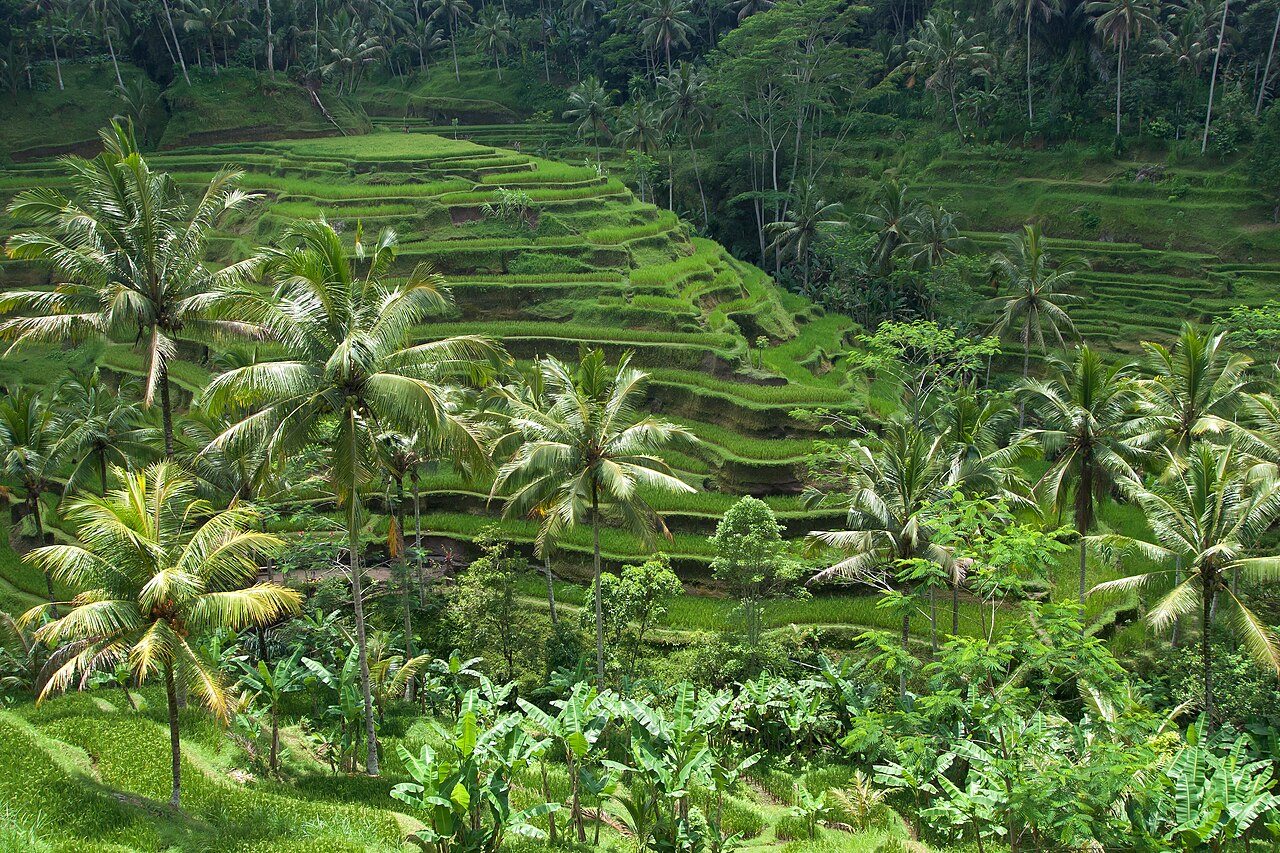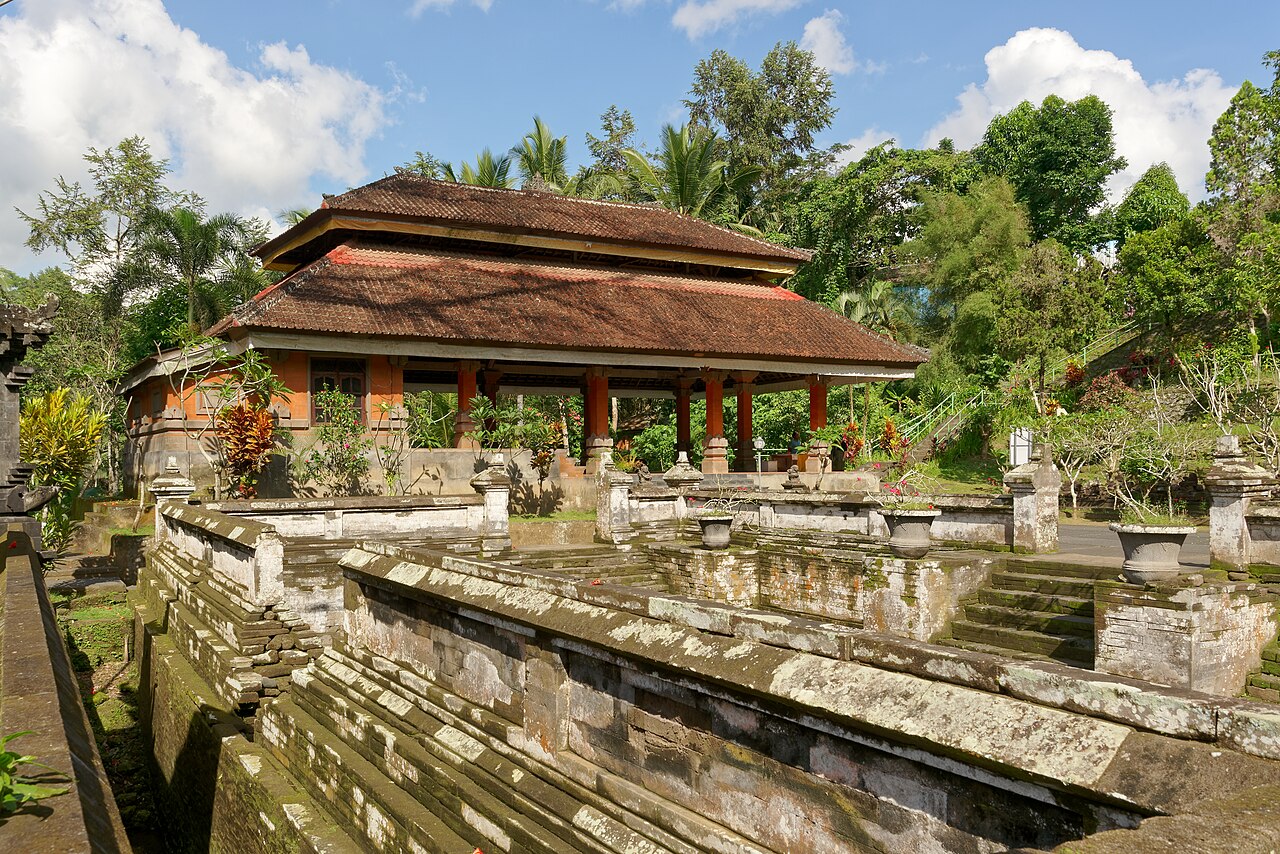
Gunung Kawi is one of the most striking archaeological sites in Southeast Asia, and yet it remains surprisingly peaceful. In a steep valley at Tampaksiring, northeast of Ubud, a group of about ten candi, or shrine facades, has been cut directly into the rock walls on either side of the Pakerisan river. Each stands in its own deep niche, roughly eight metres high, carved to look like a temple gateway. The monument is believed to date from around 1080 and is attributed to King Anak Wungsu, who dedicated it to his father, King Udayana, and to other members of the royal family, which is why it is often called the royal tombs, although no human remains have been found and the shrines are memorials rather than graves. Balinese legend tells a different story: that the whole complex was carved in a single night by the fingernails of Kebo Iwa, a giant commander with supernatural powers. Besides the shrines, the site includes stone cells and caves once used by Buddhist monks for meditation, an active temple where offerings are made, and a setting of rice terraces, palms and rushing water that is as memorable as the monument itself. Reaching it is part of the experience: from the ticket booth, a stairway of about three hundred steps winds down through a gully lined with small shops, then through rice fields, before a stone gateway opens onto the river. Gunung Kawi remains a sacred site for Balinese Hindus, so dress and behaviour rules apply. Visitors must wear a sarong and sash, which can be rented at the ticket booth, and women who are menstruating may not enter. Its anniversary celebration, the piodalan, brings the temple alive with decorations and worshippers.
How to visit: buy a ticket at the top, collect a sarong, and take the steps slowly; the climb back up in the heat is the main effort of the visit. Cross the river to see the second group of shrines on the far bank, which many visitors overlook, and take a moment at the monks' cells, simple rooms cut into the rock. Early morning is the best time, when mist sometimes hangs in the valley and the light falls on the facades. Late afternoon is pleasant too, with softer light and fewer people.
Why it is special: unlike most Balinese temples, which have been rebuilt many times, Gunung Kawi is essentially an original eleventh-century monument, carved once and still standing almost a thousand years later. It links Bali to the wider world of Hindu-Buddhist kingdoms that also produced the temples of Java, and to the Udayana dynasty, whose name lives on in the island's university and its airport road. The legend of Kebo Iwa is told across Bali; ask a local guide to tell it.
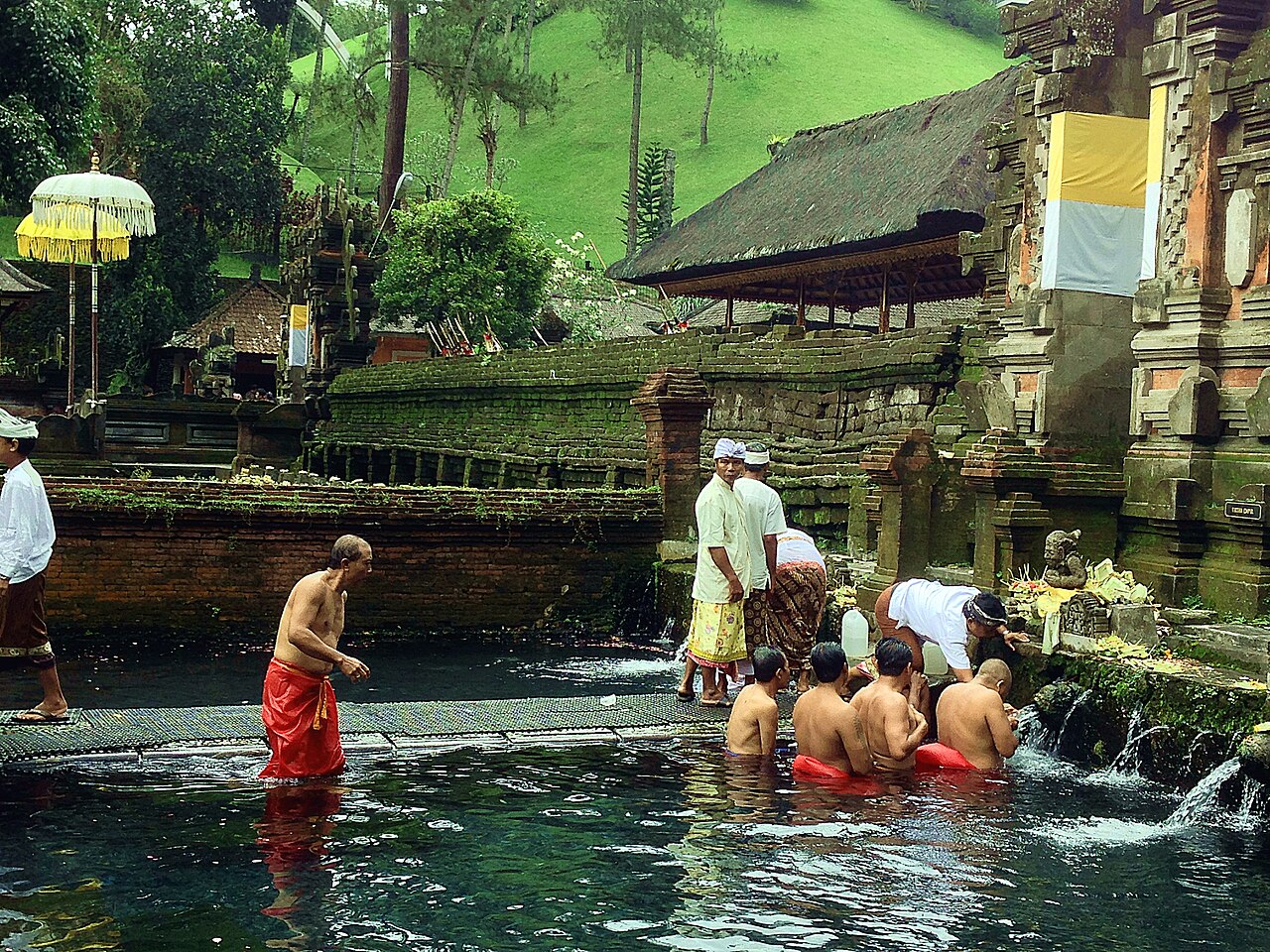
Fitting it into a day: Gunung Kawi is a few minutes from Tirta Empul, the holy spring temple, and the two are natural partners. Add Goa Gajah on the way from Ubud, and continue to Kintamani for views of Mount Batur and its lake, or to the Tegallalang rice terraces on the way back. The site's piodalan follows the Balinese temple calendar; if you happen to arrive on a ceremony day, watch from the edges and be patient with access.
What to expect
The experience
A steep walk down about three hundred steps to a river valley with ten rock-cut shrine facades, monks' cells and an active temple.
Best time
Early morning for mist and soft light, or late afternoon; avoid midday heat on the climb back up.
How long
About ninety minutes including the steps.
Tips
Rent a sarong and sash at the booth, wear sturdy shoes, carry water and cross the river to see the second group of shrines.
Quick picks
- Best for
- Travellers who love ancient sites and want a quieter, more dramatic alternative to busier temples.
- Families
- Fine for active children; the steps are tough for toddlers and anyone with mobility issues.
- Couples
- Early morning here, then Tirta Empul and lunch with a view in Kintamani or Tegallalang.
- Pair with
- Tirta Empul, Goa Gajah or the Tegallalang rice terraces.
- Time needed
- About ninety minutes.
Good questions
What is Gunung Kawi?+
An eleventh-century complex of about ten shrine facades carved into cliffs above the Pakerisan river at Tampaksiring, attributed to King Anak Wungsu in honour of his father, King Udayana.
How many steps are there?+
Around three hundred steps lead down to the river from the ticket booth. The climb back up is the hardest part, so go at a cool time of day.
Do I need a sarong?+
Yes. Visitors must wear a sarong and sash, which can be rented at the ticket booth.
Is Gunung Kawi near Tirta Empul?+
Yes, just a few minutes apart in Tampaksiring, and they make a natural combination.
Are they really tombs?+
They are known as the royal tombs, but no remains have been found. The shrines are memorials to members of the royal family rather than graves.