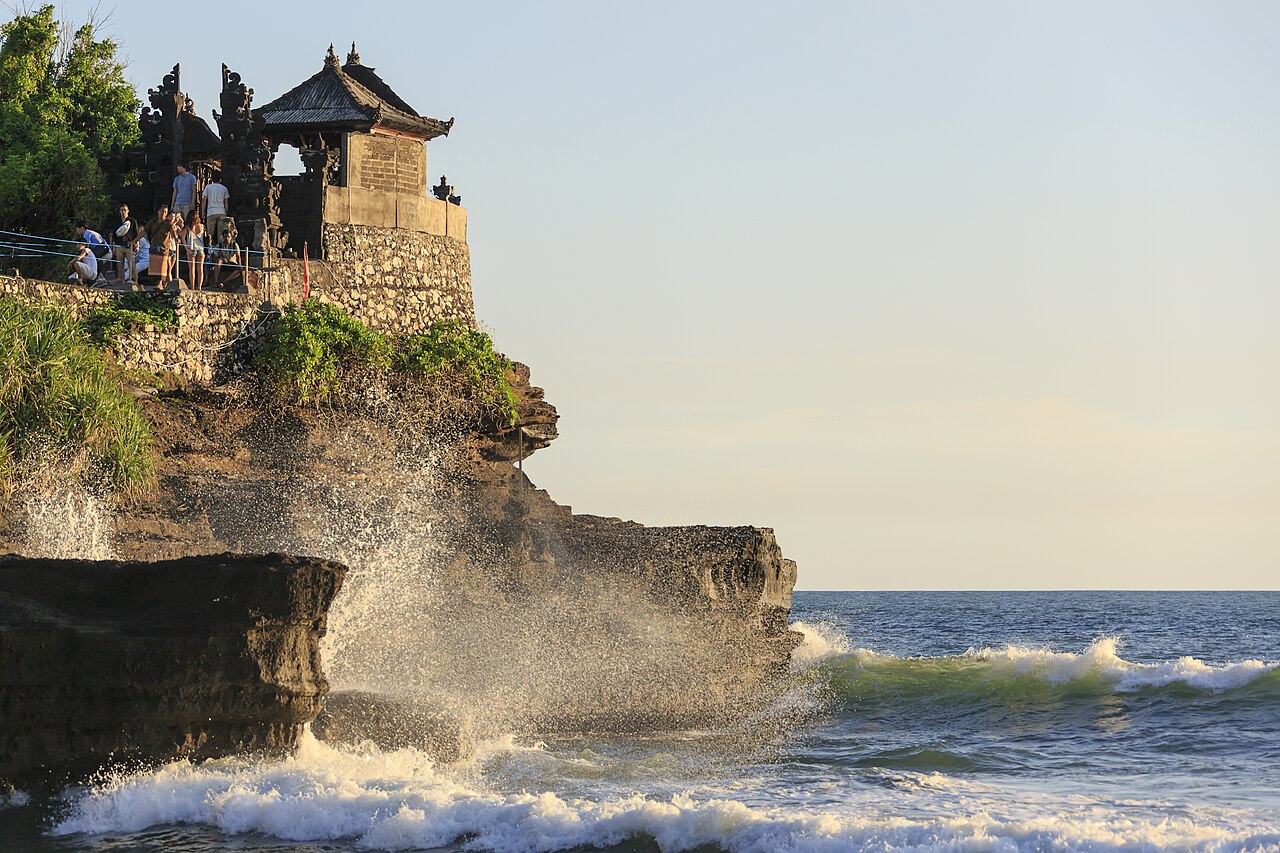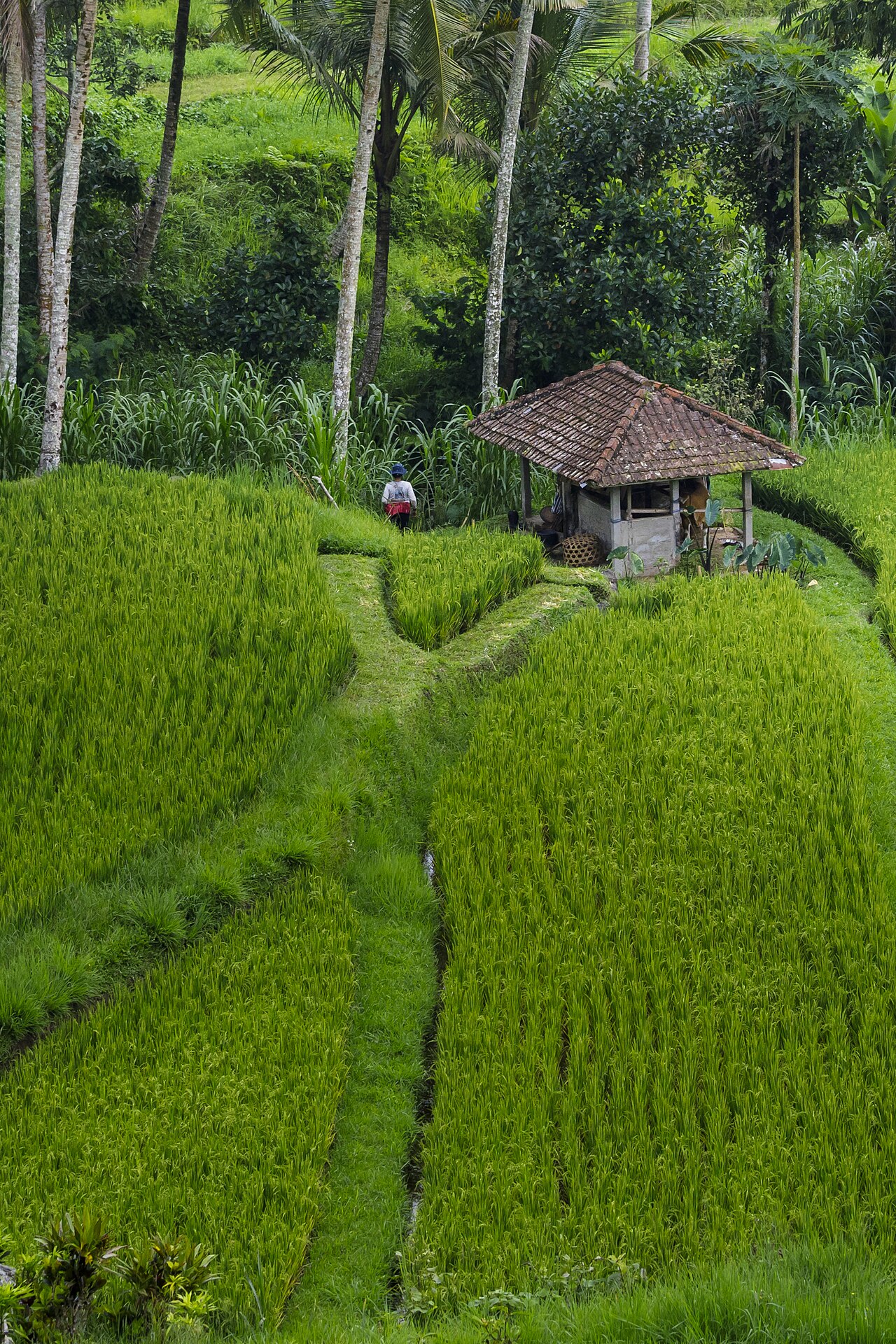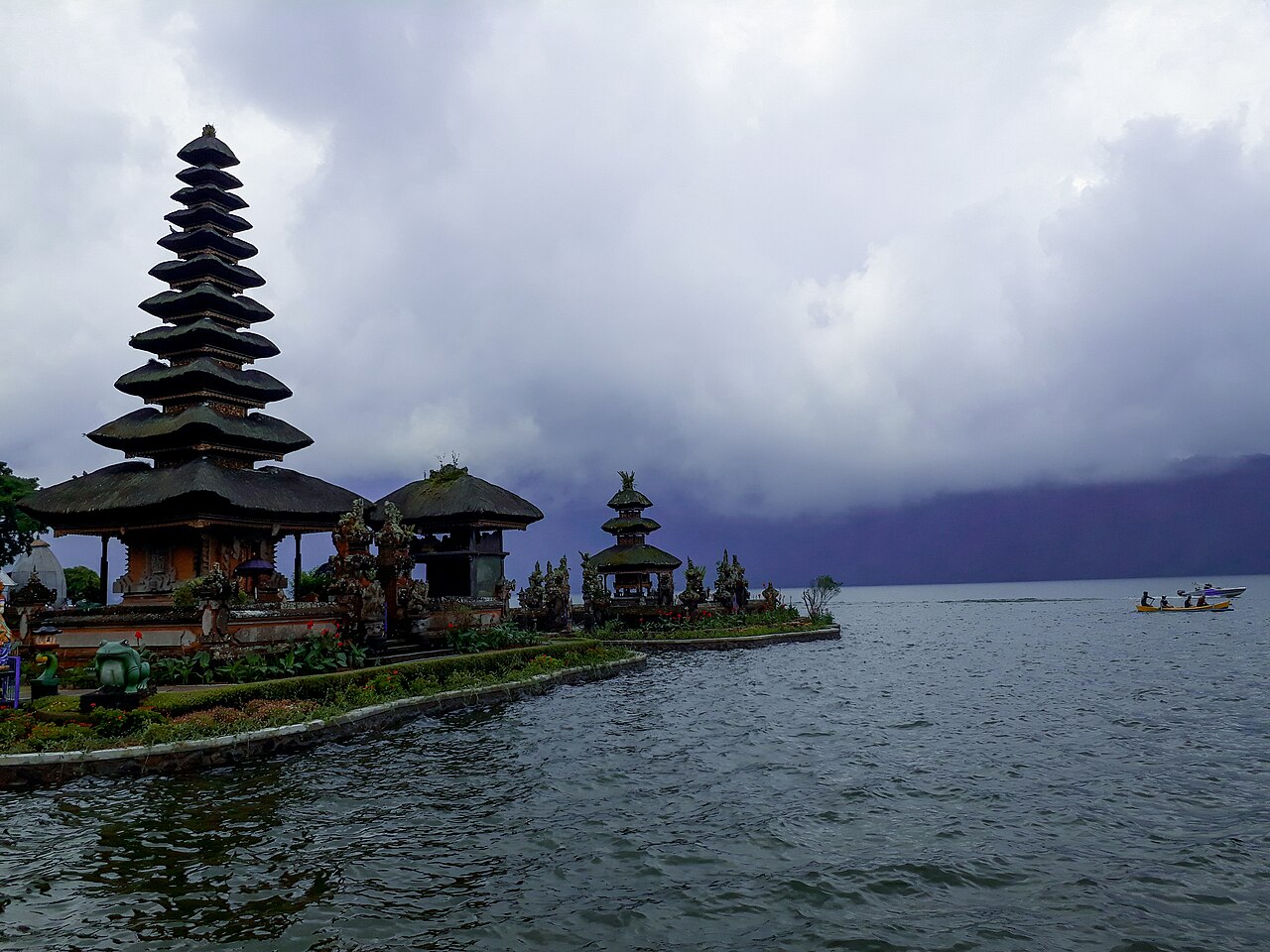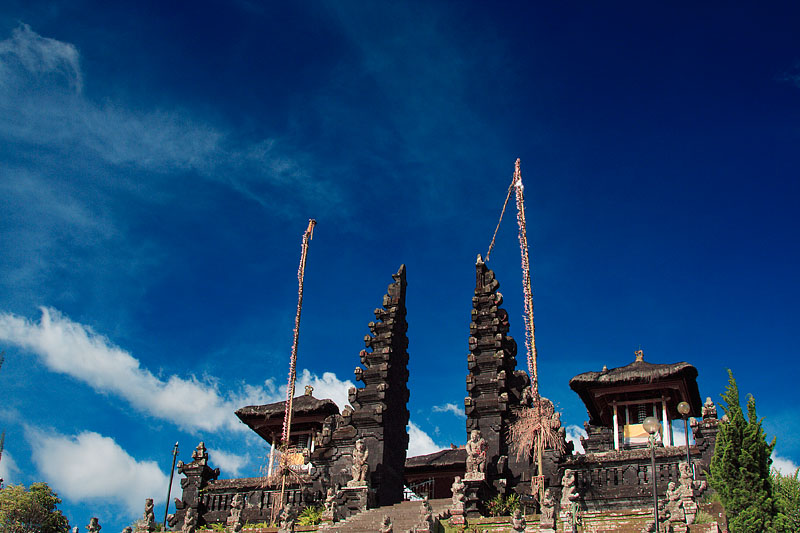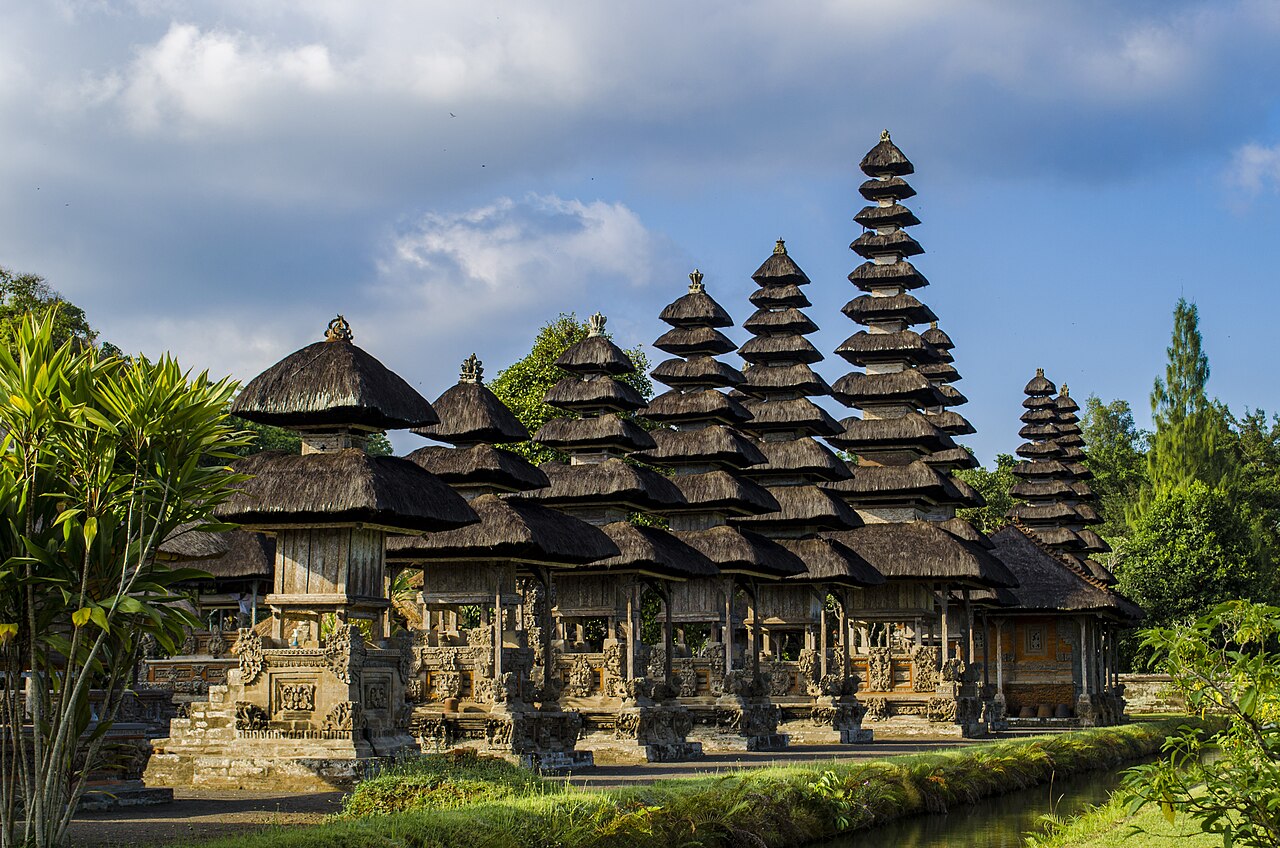
Pura Taman Ayun, whose name means beautiful garden, is one of the most elegant temples in Bali and one of the most rewarding to visit for those who want to understand temple architecture without the crowds of Tanah Lot or Uluwatu. It was built in the seventeenth century by the king of Mengwi, then one of the island's most powerful kingdoms, as the royal family temple, and it remained the state temple of Mengwi until the kingdom fell. The complex is laid out on a series of rising courtyards, each more sacred than the last, and the whole temple is surrounded by a broad moat and ponds planted with lotus, so it appears to float on water. Visitors cross a bridge through a split gate into the outer courtyard, with its lawns, frangipani and the wantilan, a large pavilion once used for cockfights and gatherings. The innermost courtyard, closed to visitors but clearly visible over a low wall that runs all the way round, is the reason to come: a row of meru towers with multiple tiers of black palm-fibre thatch rising against the sky, the tallest with eleven roofs, honouring the gods of Bali's mountains and lakes. In 2012, Taman Ayun was inscribed by UNESCO as part of the Cultural Landscape of Bali Province, the listing that recognises the subak system of water temples and irrigation cooperatives that has shaped the island's rice terraces for a thousand years. The temple's role in that system is part of its significance: the water temples, from the crater lakes to the fields, link religion, farming and community. Today Taman Ayun is still a working temple, with ceremonies, gamelan and offerings, and a visit is calm and unhurried.
How to visit: buy a ticket at the entrance, cross the bridge and walk the lawns of the outer courtyard first, then follow the path that runs all the way round the outside of the inner wall, which gives the best views of the meru towers and the shrines. The walk around the full circuit takes about thirty to forty-five minutes at a gentle pace. A small exhibition near the entrance explains the subak system and the temple's history. Mornings and late afternoons have the best light and the fewest visitors; midday can be very hot, with little shade along the walls.
Etiquette: modest dress is expected, and sarongs are available if needed. Do not attempt to enter the inner courtyards, climb on walls or step over offerings, and keep a respectful distance from ceremonies. Women who are menstruating are asked not to enter. Drones are generally not welcome at temples in Bali without permission.
Fitting it into a day: Taman Ayun lies in Mengwi, about forty-five minutes from Seminyak and Canggu and around half an hour from Ubud, on the main road to the central highlands. It works as a first stop on the way to the Jatiluwih rice terraces and Ulun Danu Beratan, or as a pause on the way to Tanah Lot for sunset. It is also a good choice on a wet-season morning, when the lotus ponds and lawns are at their greenest.
What to expect
The experience
A moated royal temple with lawns, a wantilan pavilion and a circuit path around the inner courtyard, giving views of the tiered meru towers.
Best time
Morning or late afternoon for light and fewer visitors; avoid the midday heat.
How long
About an hour, including the full walk around the inner wall.
Tips
Walk the full outer circuit for the best views of the meru, dress modestly and pair it with the highlands or Tanah Lot.
Quick picks
- Best for
- Travellers who want a graceful, uncrowded royal temple and insight into Bali's subak heritage.
- Families
- Easy with children: flat paths, lawns and fish in the moat.
- Couples
- A calm first stop on a highlands day, ending at Tanah Lot for sunset.
- Pair with
- Jatiluwih rice terraces, Ulun Danu Beratan or Tanah Lot.
- Time needed
- About an hour.
Good questions
How old is Taman Ayun?+
It was built in the seventeenth century by the king of Mengwi as the royal family temple.
Is Taman Ayun a UNESCO site?+
Yes. It is part of the Cultural Landscape of Bali Province, inscribed in 2012 for the subak water-temple and irrigation system.
Can I go inside the temple?+
You can enter the outer courtyard and walk around the inner wall, which gives clear views of the shrines and meru towers. The innermost courtyard is reserved for worship.
How far is Taman Ayun from Seminyak or Ubud?+
About forty-five minutes from Seminyak or Canggu and around half an hour from Ubud, depending on traffic.
What can I combine with Taman Ayun?+
It sits on the road to the highlands, so combine it with Jatiluwih and Ulun Danu Beratan, or with Tanah Lot for sunset.