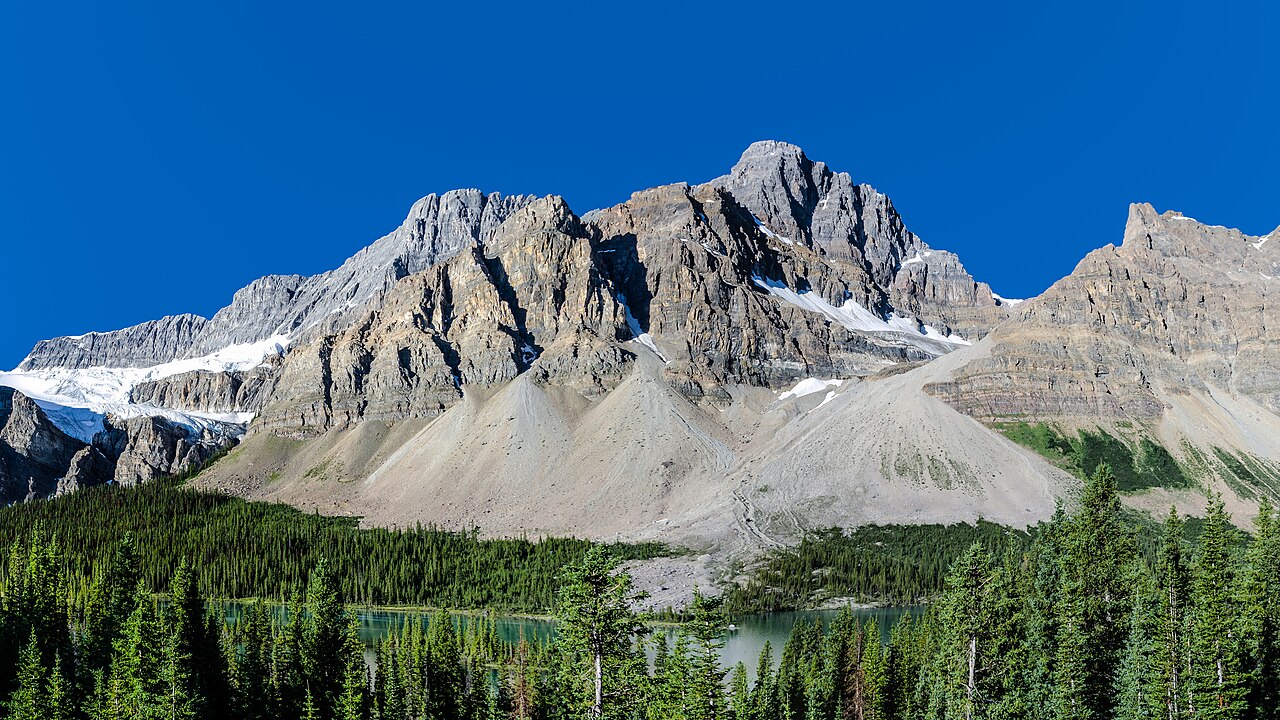
Bow Lake is the easiest of the great Icefields Parkway lakes to enjoy, because it sits right beside the road. About thirty-nine kilometres north of Lake Louise, the lake spreads out beneath Crowfoot Mountain and the Wapta Icefield, with glaciers hanging above its far shore and the turquoise water reflecting the peaks on calm summer mornings. It is the source of the Bow River, the same river that flows past the town of Banff and on to Calgary, which gives the place a satisfying sense of beginnings. In summer, a lakeside trail follows the shoreline and continues as a moderate hike to the base of Bow Glacier Falls, a tall waterfall fed by the icefield; the shoreline section alone makes a lovely easy walk with constant views. Nearby, the Crowfoot Glacier viewpoint on the Parkway shows a glacier that once had three distinct toes, now much reduced. In winter, the lake freezes and the area becomes a quiet, snowy place for short snowshoe outings along the shore, and Banff and Lake Louise Tourism describes it as worth visiting year-round. Like the rest of the Parkway, winter visits require winter tires or chains between November 1 and March 31, and there are no services or cell coverage. To protect the lake, Parks Canada does not allow motorized boats, large inflatables or fishing with waders here. Bow Lake pairs naturally with Peyto Lake, just a few kilometres further north, and both fit into a half day from Lake Louise.
Bow Lake has a long history as a stopping point for travellers in the Rockies. Early guides and outfitters camped on its shores before the road existed, and the historic lodge on the north shore dates to that era of horse travel. Today the lake is a highlight of the Icefields Parkway, but because it is so accessible, many people simply stop for a few minutes, take a photo and drive on. If you have time, walking even a short distance along the shore rewards you with quieter views and changing angles on the glaciers.
Summer and fall. Calm early mornings produce the best reflections, and the light on the glaciers is beautiful in the evening. The hike to Bow Glacier Falls takes a few hours return and includes some elevation gain at the end, along a canyon and up to the base of the falls. In fall, early snow on the peaks contrasts with the water. Canoeing and paddling with small craft is possible in summer, but the water is extremely cold.
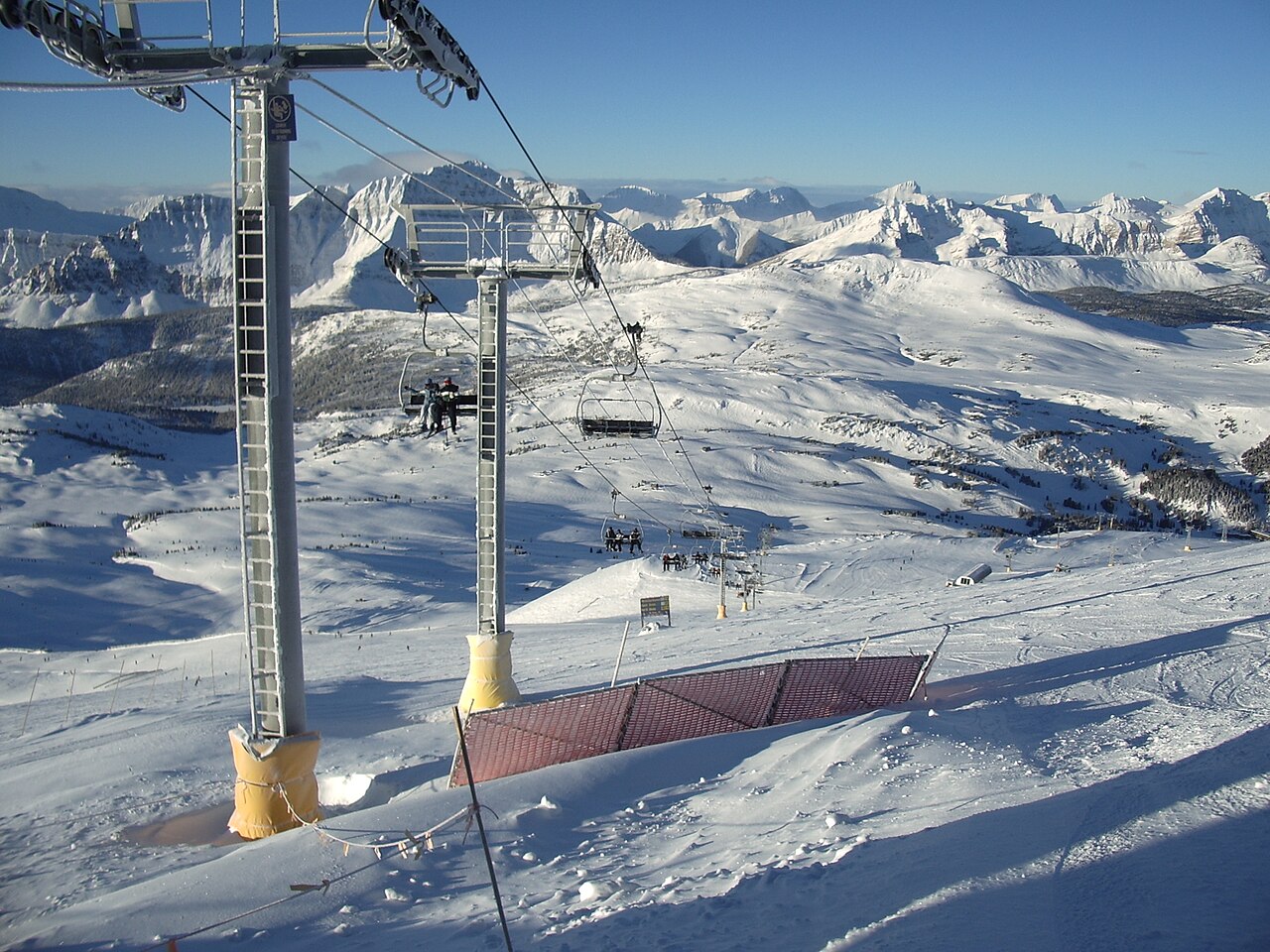
Winter. Treat winter visits as a careful outing in a remote area. Snowshoeing near the shore is the main activity; avalanche paths descend to parts of the lake from the surrounding slopes, so stay close to the parking area unless you are trained and equipped. Check the avalanche forecast and 511 Alberta, carry warm layers, food and fuel, and remember that phones do not work along the Parkway. A Parks Canada pass is required.
What to expect
The experience
A roadside glacial lake on the Icefields Parkway with a lakeshore trail, an optional hike to Bow Glacier Falls in summer and short snowshoe outings in winter.
Best time
Calm summer mornings for reflections; clear winter days for a quiet, snowy visit with good road conditions.
How long
Thirty minutes for a stop; three or four hours for the falls hike in summer.
Tips
Combine with Peyto Lake. Winter tires or chains are required on the Parkway from November 1 to March 31. No services or cell coverage. Stay clear of avalanche paths in winter.
Quick picks
- Best for
- Travellers who want a major Rockies lake without a hike or shuttle.
- Families
- Easy roadside access and shoreline walking make it great for children in summer.
- Couples
- Early-morning reflections are among the most beautiful scenes on the Parkway.
- Pair with
- Peyto Lake a few kilometres north, and Lake Louise on the way back.
- Time needed
- Half a day from Lake Louise with Peyto Lake.
Good questions
How far is Bow Lake from Lake Louise?+
About thirty-nine kilometres north on the Icefields Parkway, around forty minutes in good conditions.
Can you visit Bow Lake in winter?+
Yes. The lake freezes and is popular for short snowshoe outings near the shore. Winter driving rules apply, and avalanche terrain lies above parts of the lake.
What is the hike to Bow Glacier Falls like?+
A summer hike that follows the lakeshore, then a canyon, to the base of the falls. It takes a few hours return, with a steeper section near the end.
Is Bow Lake the source of the Bow River?+
Yes. The river that flows past Banff and through Calgary begins here, fed by the Wapta Icefield.
Are boats allowed?+
Small paddle craft are possible in summer, but motorized boats, large inflatables and fishing with waders are not permitted.