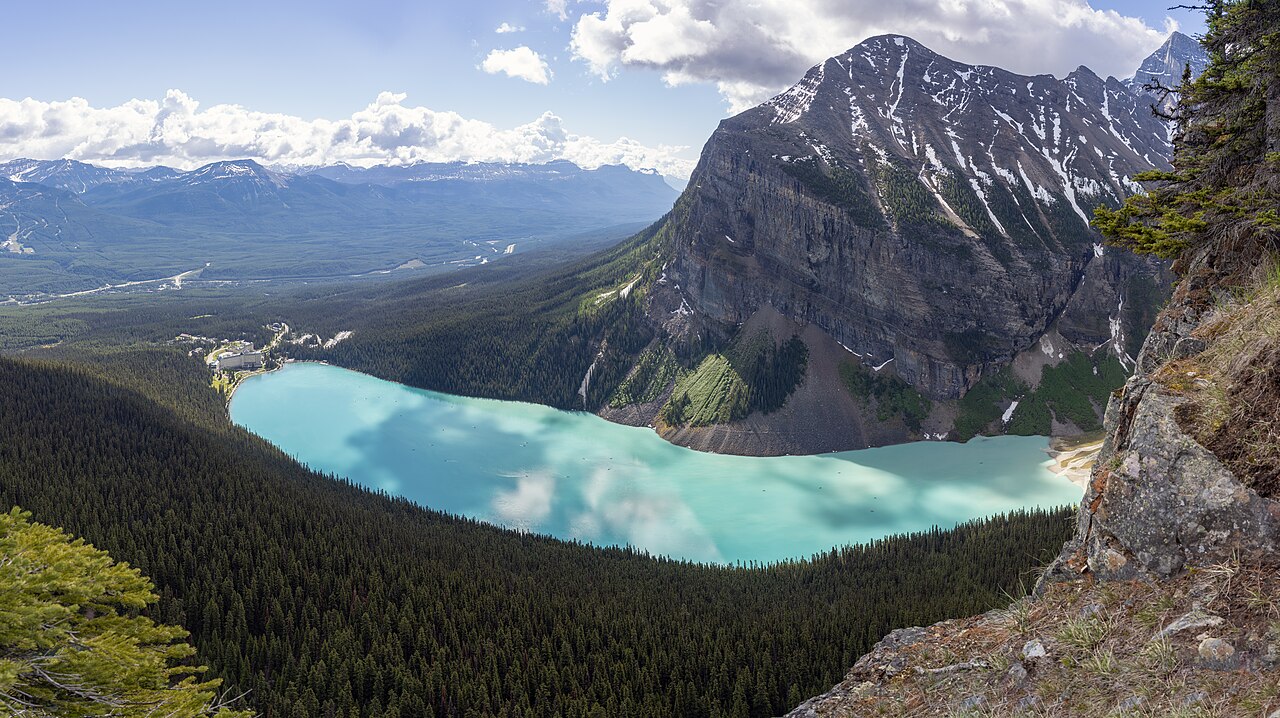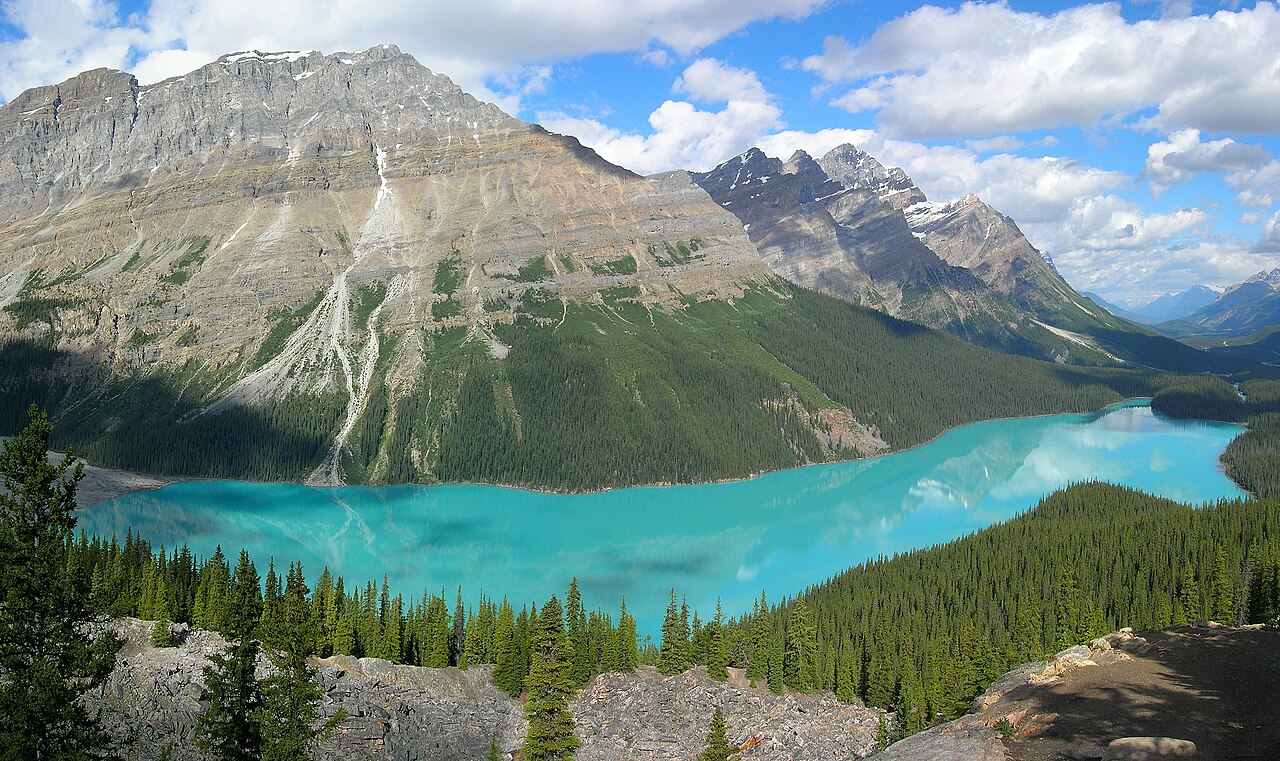
Peyto Lake is the view that appears on countless posters of the Canadian Rockies: a long, glacier-fed lake far below a viewing platform, its shape often compared to a wolf's head, framed by the Mistaya Valley and a wall of peaks. It sits beside the Icefields Parkway near Bow Summit, about forty-six kilometres north of Lake Louise and roughly a hundred kilometres from Banff, and it is one of the essential stops on any drive toward Jasper. In summer, a short walk through subalpine forest from the parking area leads to a large viewing platform, and an upper viewpoint a little further on offers a quieter angle. The famous colour comes from rock flour, fine sediment ground by glaciers and suspended in the water, which turns the lake an intense turquoise from roughly late June to September. Winter is a different experience. The lake is frozen and white, and the valley looks stark and dramatic rather than tropical, but you will share it with far fewer people. The main viewpoint is about 650 metres from the Bow Summit parking area on a trail that is often packed down in winter, though fresh snow may call for snowshoes. Winter travel on the Icefields Parkway needs real preparation: winter tires or chains are required from November 1 to March 31, there are no services along the road in winter, and there is no cell coverage. Check the 511 Alberta road report and the avalanche forecast before you go, and stay on the main trail to the viewpoint unless you have avalanche training.
The lake is named after Bill Peyto, one of the best-known early mountain guides and wardens in Banff National Park, whose reputation as a tough, eccentric outdoorsman is part of local legend. The viewing area was rebuilt and expanded in recent years to handle the crowds of the summer season, with a larger platform, better paths and an accessible route from the upper parking area for permitted vehicles. In peak summer, parking can fill by mid-morning, so arrive early or late.
Visiting in summer versus winter. Summer, especially July and August, delivers the turquoise colour that makes the lake famous, and the walk is easy for almost everyone. Shoulder seasons can be striking, with fresh snow on the peaks and the colour still visible in September. In winter, the appeal is solitude and drama rather than colour. You will park at Bow Summit and walk or snowshoe to the platform; beyond the main viewpoint, route-finding is your responsibility and avalanche terrain is nearby, so most visitors should turn back at the platform.
Combining stops. Peyto is best visited as part of an Icefields Parkway day. Bow Lake is just to the south, Mistaya Canyon is further north, and in summer the Columbia Icefield lies beyond. From Lake Louise, allow about forty-five minutes each way in good conditions. Fill your fuel tank before leaving Lake Louise, bring food and warm clothing, and carry a satellite communicator if you have one. A Parks Canada pass is required on the Parkway.
What to expect
The experience
A short walk from the Bow Summit parking area to a large viewing platform high above the lake, with an optional upper viewpoint.
Best time
Late June to September for the turquoise colour; early morning or evening to avoid crowds. In winter, go on clear days with good road conditions.
How long
An hour at the viewpoint, plus driving time from Lake Louise.
Tips
Winter tires or chains are required on the Parkway from November 1 to March 31. No services or cell coverage. Check 511 Alberta and the avalanche forecast. Stay on the main trail in winter.
Quick picks
- Best for
- Anyone driving the Icefields Parkway; it is the single most famous viewpoint on the road.
- Families
- Easy for all ages in summer; in winter, a short snowy walk with warm clothing.
- Couples
- A quiet winter visit or an early-summer morning makes for unforgettable photos together.
- Pair with
- Bow Lake on the same drive, and Lake Louise on the way back.
- Time needed
- Half a day from Lake Louise with Bow Lake.
Good questions
Can you visit Peyto Lake in winter?+
Yes, with preparation. Park at Bow Summit and walk about 650 metres to the main viewpoint on a trail that is often packed down. Bring snowshoes after fresh snow, and do not go beyond the platform without avalanche training.
When is Peyto Lake turquoise?+
From about late June to September, when glacial meltwater carries rock flour into the lake. In winter the lake is frozen and white.
How far is Peyto Lake from Lake Louise?+
About forty-six kilometres north on the Icefields Parkway, roughly forty-five minutes each way in good conditions.
What do I need for winter driving on the Parkway?+
Winter tires or chains are required from November 1 to March 31. There are no services and no cell coverage, so carry fuel, food, warm clothing and a way to call for help.
Why is it called Peyto Lake?+
It is named after Bill Peyto, a legendary early guide and park warden in Banff National Park.