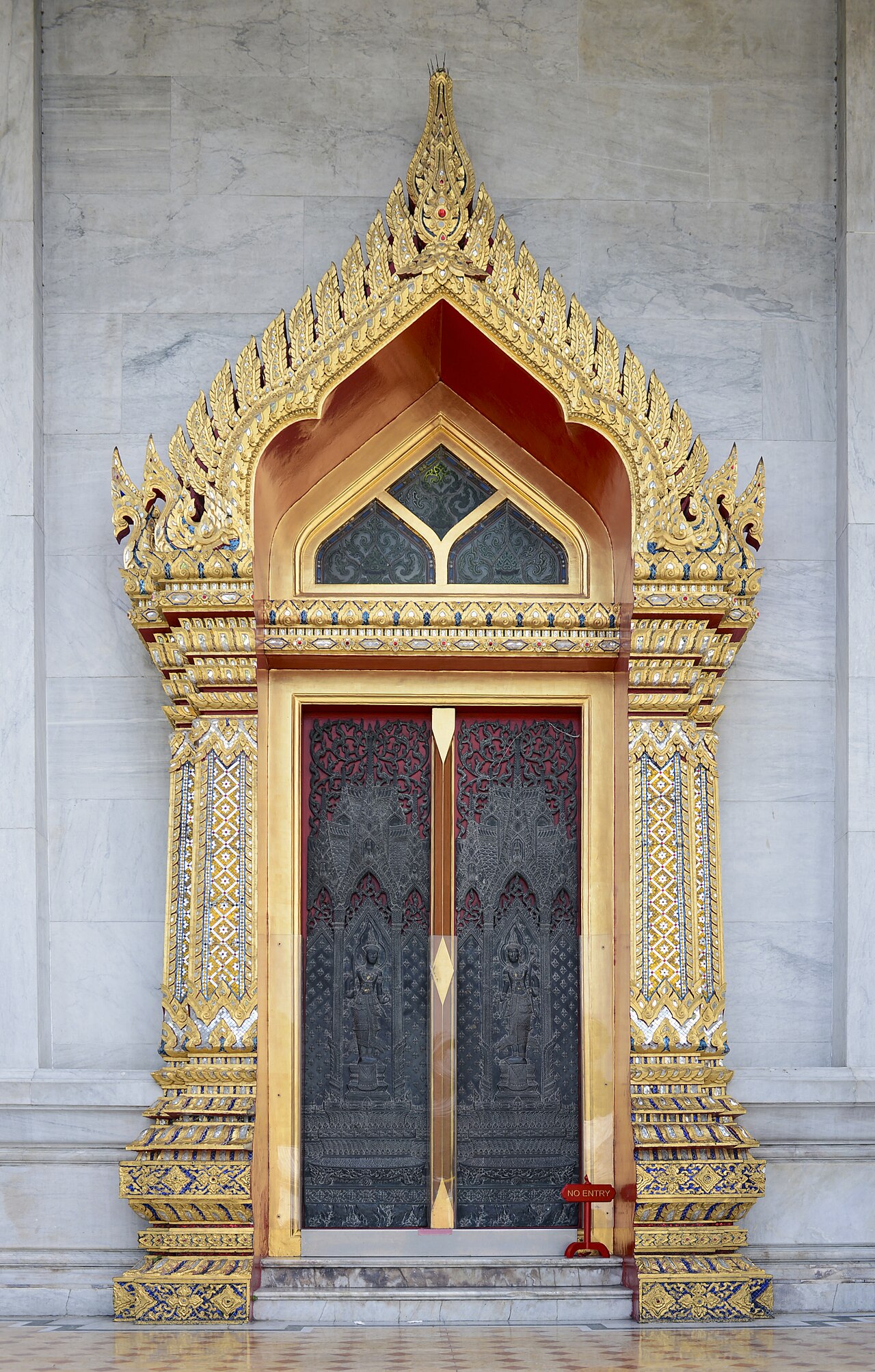
Wat Benchamabophit, known to visitors as the Marble Temple, is the most elegant temple in Bangkok and one of the least crowded of the major ones. It stands in Dusit, the royal district of broad avenues and parks north of the old town that King Chulalongkorn, Rama V, laid out at the turn of the twentieth century, and the temple was built under his patronage as part of that vision. The ordination hall is the masterpiece: designed by the king's half-brother Prince Naris, one of Thailand's greatest architects, it is clad in white Carrara marble shipped from Italy, with tiered roofs of golden-orange Chinese tiles, gilded gables and guardian lions at the door. Inside, the hall blends Thai and European ideas in a way that perfectly captures the modernising spirit of the age: stained-glass windows depicting Thai angels, a richly decorated ceiling, and a gleaming bronze replica of the revered Phra Phuttha Chinnarat image from Phitsanulok, with the ashes of King Chulalongkorn interred beneath its base. Behind the hall, a marble-floored cloister holds an extraordinary collection of more than fifty Buddha images, originals and faithful copies representing styles from across Thailand and Asia, from Indian and Burmese to Japanese and Sri Lankan, each labelled: a gentle, free-flowing art history lesson. The grounds are calm, with a canal crossed by small red bridges, shady trees and turtles in the water. The temple appears on the back of the Thai five-baht coin. Entry carries a small fee for visitors, and the temple opens early in the morning until late afternoon. It is not close to the other major temples, and its compact size means you can see it in under an hour, but its beauty and calm make it one of the most rewarding stops in the city.
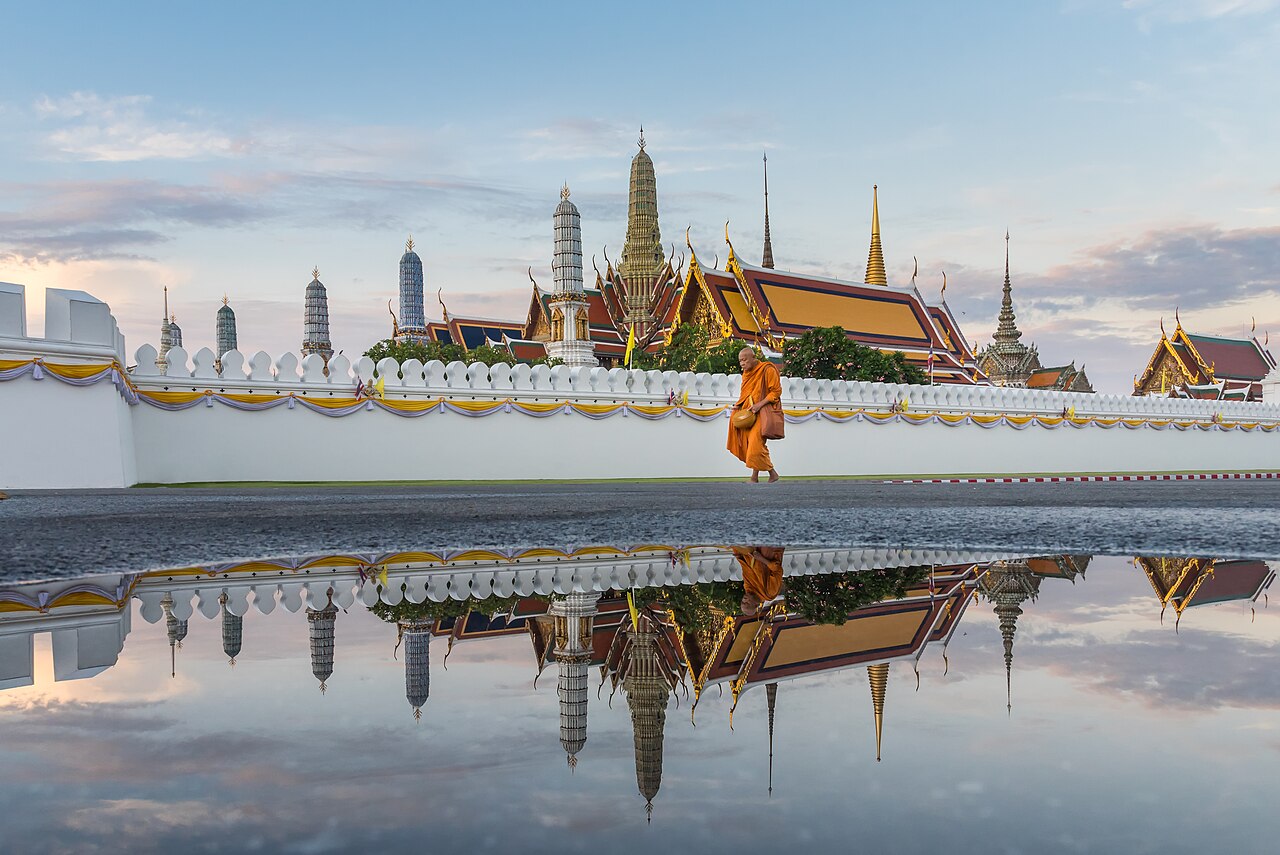
When to go: early morning is the magic hour. Wat Benchamabophit is famous for its morning alms round, when monks traditionally line up along the road outside the temple to receive offerings, reversing the usual pattern of monks walking through the streets; arrive soon after dawn to see it, and stand back respectfully without blocking the monks or using flash. The light on the white marble is also softest early and late in the day. As at all temples, cover shoulders and knees and remove shoes before entering the ordination hall; staff may lend wraps.
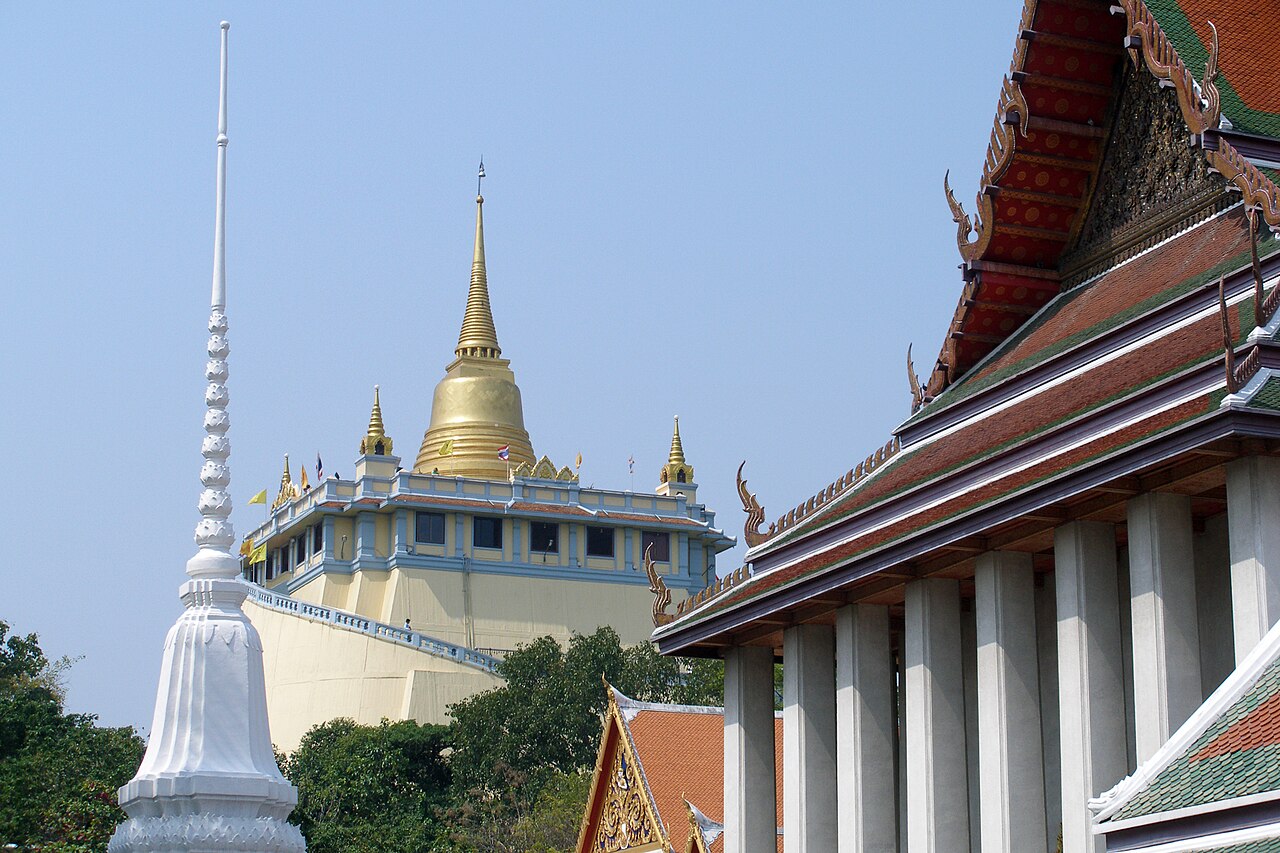
Combining it with Dusit: the temple sits on Rama V Road, a short walk from the Dusit district's royal and government buildings and from the green spaces around the old Dusit Palace grounds, many of which have been closed or repurposed in recent years, so check what is open before you plan around them. The Marble Temple is not on the BTS or MRT network, so take a taxi or ride-hailing car from the old town, about fifteen minutes in light traffic, or combine it with a canal or river boat to the Thewet pier and a short walk. Pair it with the Golden Mount and the Loha Prasat in the afternoon for a lovely, less-touristed temple day, or with Khao San and Banglamphu for dinner.
Who it suits: architecture lovers and photographers above all, couples looking for a peaceful, beautiful temple, and first-time visitors who have already seen the Grand Palace and Wat Pho and want something calmer. Families will find it short and pleasant, especially the turtles in the canal. On the floods and royal ceremonies: Dusit, with its royal and government buildings, may see heightened security and traffic changes around the December 2026 royal cremation period; check before setting out.
What to expect
The experience
A compact royal temple: the marble ordination hall with its stained glass and Phra Phuttha Chinnarat replica, a cloister of Buddha images from across Asia, and peaceful canal-side grounds.
Best time
Just after dawn for the monks' alms round and soft light; otherwise mornings before the heat.
How long
Forty-five minutes to an hour.
Tips
Arrive early for the alms round and keep a respectful distance. Cover shoulders and knees. Take a taxi: there is no Skytrain or MRT station nearby.
Quick picks
- Best for
- The most elegant and peaceful of Bangkok's major temples.
- Families
- Pleasant and short, with turtles in the canal and plenty of space.
- Couples
- A calm, photogenic morning among white marble and red bridges.
- Pair with
- The Golden Mount and Loha Prasat, or Khao San and Banglamphu for lunch.
- Time needed
- About an hour, plus travel by taxi.
Good questions
Why is it called the Marble Temple?+
Its ordination hall, built under King Chulalongkorn at the turn of the twentieth century, is clad in white Carrara marble shipped from Italy.
Is there an entry fee?+
Yes, a small fee for foreign visitors. Check the current price at the gate.
Can I see the monks' alms round?+
Traditionally yes, early in the morning, when monks line up outside the temple to receive offerings. Arrive soon after dawn, keep back and do not use flash.
How do I get there?+
By taxi or ride-hailing car, about fifteen minutes from the old town in light traffic. There is no BTS or MRT station nearby.
What is in the cloister behind the main hall?+
More than fifty Buddha images, originals and copies, representing styles from across Thailand and Asia, each labelled with its origin.