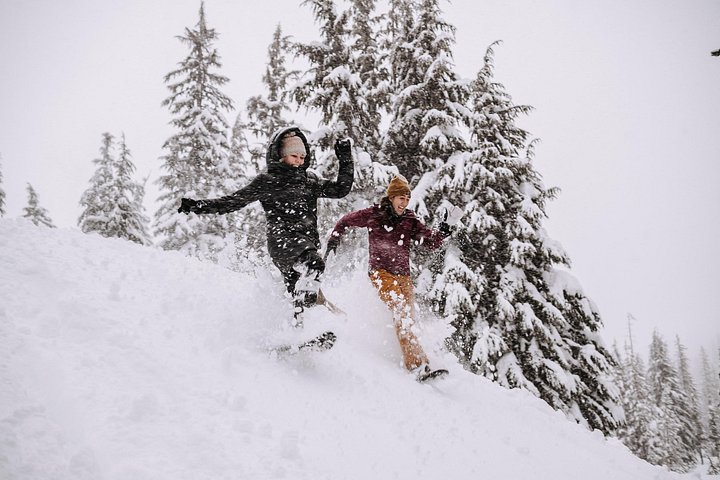
Snowshoeing is the friendliest winter sport in the Cascades. There is little to learn, no lift ticket to buy and almost no barrier to entry, and a guided tour from Bend takes care of the rest. You meet your guide in town, ride to a trailhead in the forest west of Bend, strap on snowshoes and set off through quiet woods where the snow muffles every sound. Guides know where the snow is best, where the views open out over frozen lakes and volcanic peaks, and how to interpret the tracks of snowshoe hares, martens and coyotes that cross the trail. It is a different Bend from the one most summer visitors see, and many people find it more peaceful. The pace is easy and the routes are chosen for the conditions of the day. On a clear morning you might climb gently through hemlock and fir to a viewpoint where Mt. Bachelor and the Three Sisters stand out against a deep blue sky. On a stormy day, the trees shelter the group and the snowfall itself becomes the show. Tours often include time to rest, drink something hot and talk about winter ecology, the way heavy snow loads shape the forest and the way animals adapt to the cold. Equipment such as snowshoes and poles is generally included, which means you only need warm clothes and boots.
Dress is the key to enjoyment. Wear moisture-wicking layers, an insulating mid-layer and a waterproof outer shell, plus warm socks, waterproof boots, gloves, a hat and sunglasses or goggles. You will warm up quickly while moving, so choose layers that you can add and remove. Sunscreen is important because snow reflects strong sunlight even on cold days. Bring water and a snack, and keep a spare pair of gloves if you tend to get cold hands.
Physical demands are modest but real. Snowshoeing uses different muscles than walking, and even gentle slopes feel harder at altitude, so you may find yourself breathing deeply on the uphill sections. Guides adjust the route to the group, and you can take as many breaks as you need. Most healthy adults and active children can manage a beginner outing, but check minimum ages and any health considerations when you book. If you have knee or hip issues, poles help with balance.
Winter conditions change quickly. The tour season generally runs from late autumn through spring, depending on snowfall, and trips may be rescheduled or altered if there is not enough snow or if storms make travel unsafe. Roads can require traction devices, so allow extra time. Mornings tend to be calmest. If you want a different atmosphere, ask about moonlight or starlight snowshoe outings, which offer a magical hush and are a favorite for couples.
Snowshoeing pairs well with a day at the mountain or in town. Skiers sometimes swap a day on the lifts for a quiet tour, and non-skiers who accompany friends to Mt. Bachelor find it a good way to enjoy the snow. After the outing, head back to Bend for a hot meal; brewpubs and cafes are used to people arriving in snow boots. The combination of a peaceful morning and a cozy evening is what makes winter in Central Oregon appealing.
What to expect
The experience
A guided snowshoe walk in the Cascade forest with equipment, instruction and commentary on winter ecology and mountain scenery.
Best time
Winter and early spring, when there is reliable snow.
How long
About three hours including transport and breaks.
Tips
Wear waterproof boots and layers, bring sun protection and water, and allow extra time for winter roads.
Quick picks
- Best for
- Beginners and non-skiers who want a gentle winter adventure.
- Families
- Good for active children; check the operator minimum age.
- Couples
- Quiet and scenic, with a moonlit option for extra romance.
- Pair with
- A brewpub dinner or a soak after the outing.
- Time needed
- Half a day.
Good questions
Do I need experience?+
No. Snowshoeing is easy to learn and guides provide instruction.
Is equipment included?+
Typically snowshoes and poles are provided. Confirm with the operator.
What if there is no snow?+
Tours may be rescheduled or altered if snow is insufficient.
What should I wear?+
Layers, waterproof boots, gloves, a hat and sun protection.
Is it hard?+
It is moderate exercise at altitude, but the pace is adjusted to the group.