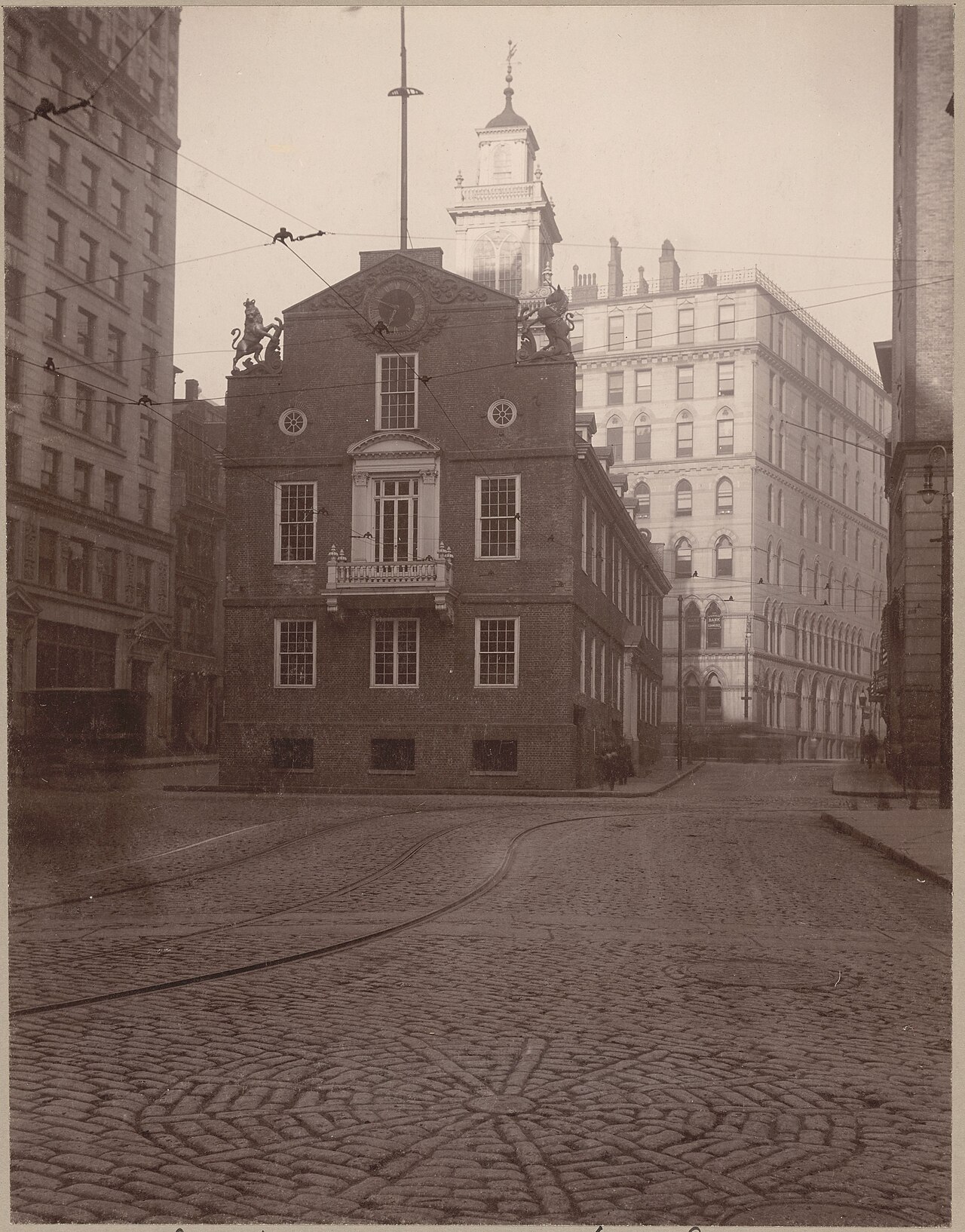
The Old State House, completed in 1713, is the oldest surviving public building in Boston and one of the most important stops on the Freedom Trail. It served as the seat of the colonial government and, later, of the state, and it stands at the head of the street where the Boston Massacre took place in 1770. Today it is a museum of Revolutionary history, with exhibits on the people, protests, and debates that led to independence.
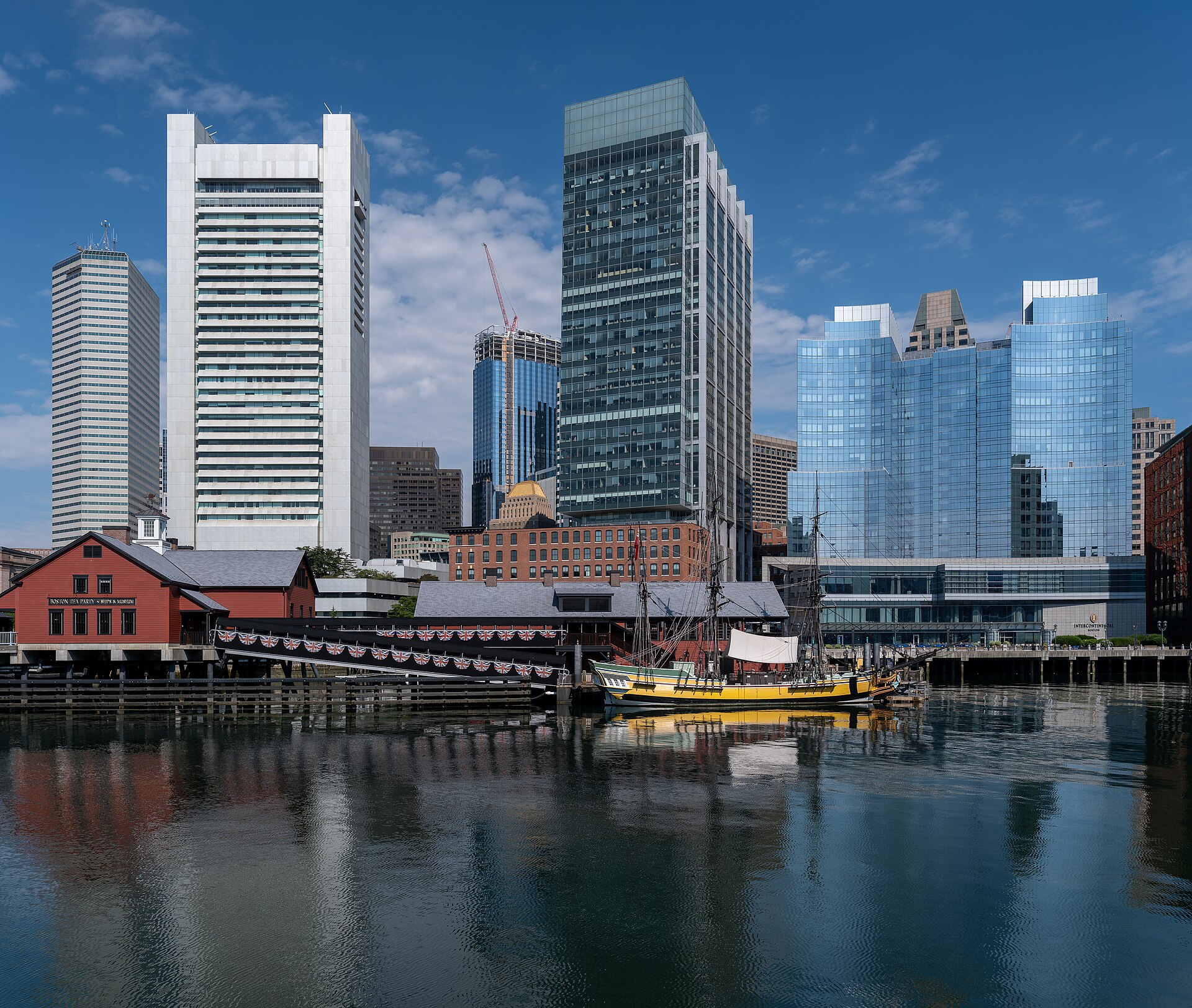
The building stands in the heart of the financial district, now overshadowed by skyscrapers but unmistakable with its curved gables and the lion and unicorn, symbols of British rule, that decorate its roofline. Inside, the colonial legislature debated the policies that pushed the colonists toward rebellion, and outside, in March 1770, a confrontation between British soldiers and a crowd led to the deaths of five colonists, an event that became the Boston Massacre. A ring of cobblestones in the plaza below marks the spot, and it is one of the most photographed markers on the Freedom Trail.
On July 18, 1776, the Declaration of Independence was read from the building’s balcony to the people of Boston, an event still commemorated each year by a public reading. The museum inside tells these stories through artifacts, documents, and interactive displays, and its collection includes objects connected to the Tea Party, the Massacre, and the city’s revolutionary figures. Compared with the large national museums, it is compact and focused, which makes it easy to visit in an hour or so between other stops.
The museum is operated by a nonprofit and typically offers a combined admission with the Old South Meeting House, which makes it a good pair for a single pass. Hours and special programs can vary by season, so check the venue’s website before you go. Inside the building, a subway station sits below the entrance, so it is trivial to reach by the T, and the entire Freedom Trail runs past the door. Allow extra time in busy summer months and during the annual July reading, when the plaza fills with visitors.
What to expect
The experience
A self-guided museum inside the 1713 Old State House, with exhibits on colonial Boston and the Revolution, and the Boston Massacre site outside the door.
Best time
Weekday mornings for fewer crowds; check seasonal hours before you go.
How long
About an hour inside, longer if you add the Old South Meeting House on a combined ticket.
Tips
Look for the lion and unicorn on the roofline, step outside to the Massacre marker, and consider a combined admission with the Old South Meeting House. The T station is directly below.
Quick picks
- Best for
- History fans and anyone walking the Freedom Trail.
- Families
- Compact and interactive, with stories that hold the attention of school-age children.
- Couples
- A short, stimulating stop on a day of walking the old city.
- Pair with
- Old South Meeting House, Faneuil Hall, and the Granary Burying Ground are all within a short walk.
- Time needed
- About an hour.
Good questions
What is the Old State House?+
The oldest surviving public building in Boston, completed in 1713, once the seat of colonial government and now a museum.
Where is the Boston Massacre site?+
In the plaza directly outside the building, marked by a ring of cobblestones.
When was the Declaration of Independence read here?+
On July 18, 1776, from the building’s balcony, and it is commemorated each year with a reading.
Can I combine it with the Old South Meeting House?+
Yes. A combined admission is typically offered for both.
How do I get there?+
The T station sits directly below at State, and the building is on the Freedom Trail.