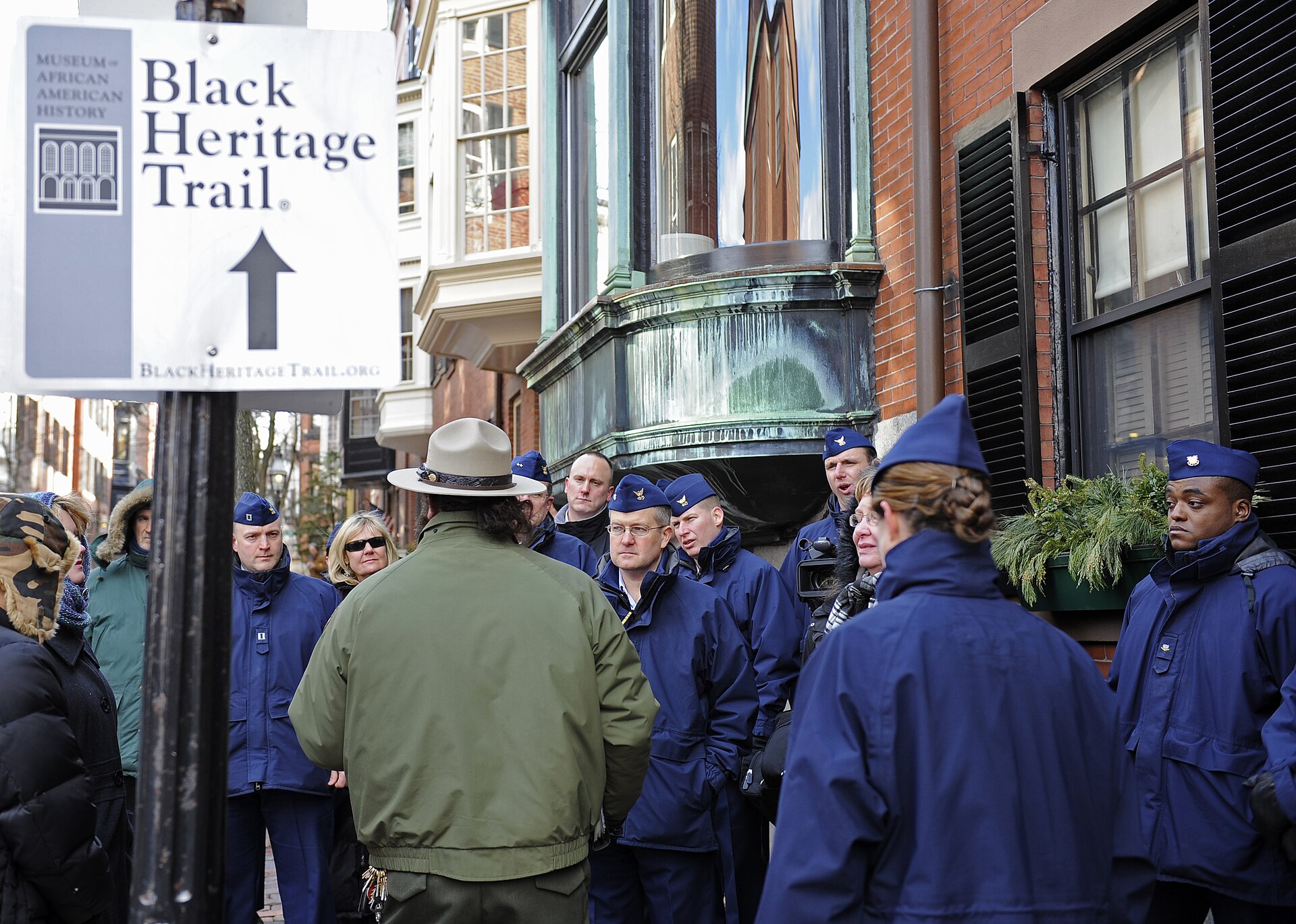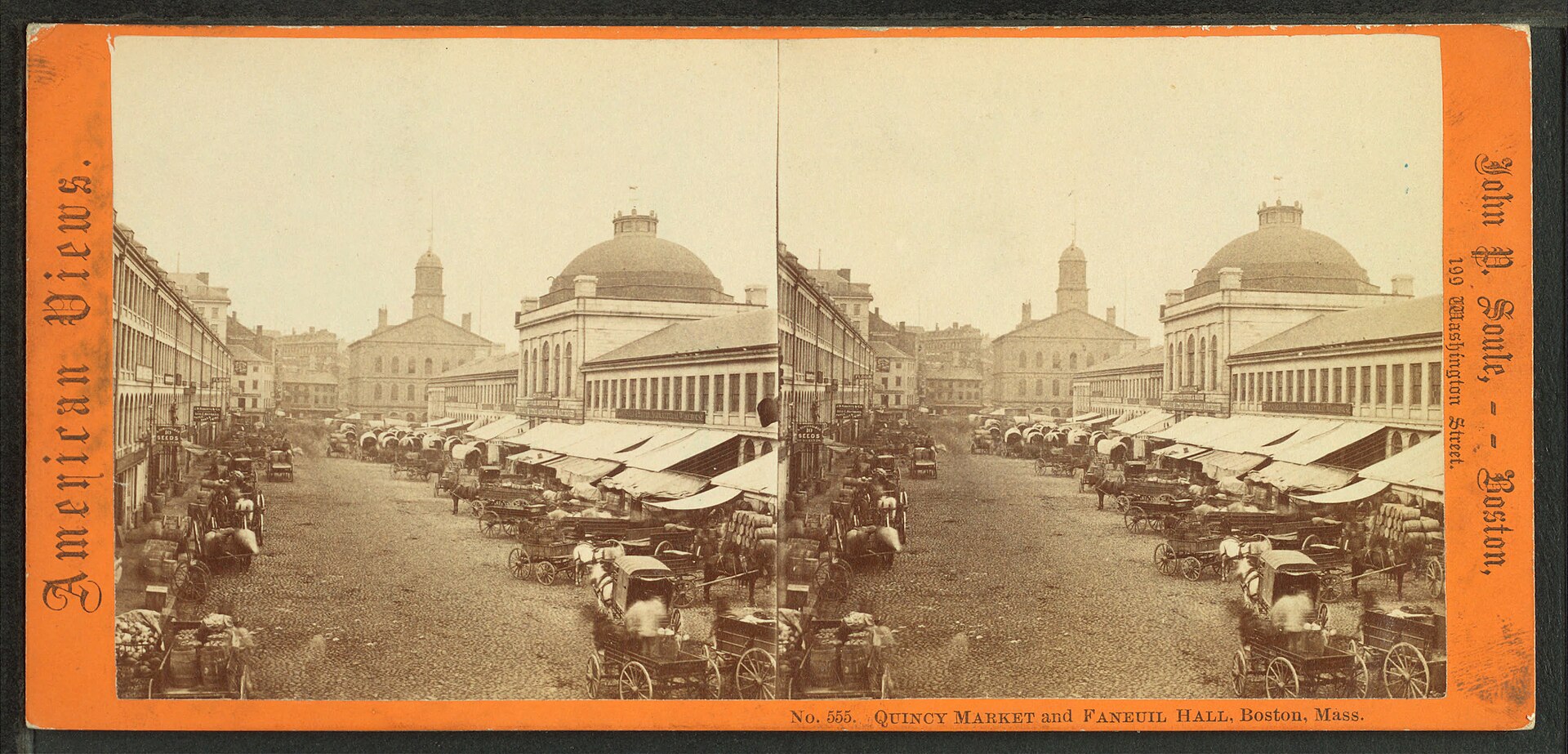
The Paul Revere House is the Freedom Trail's most intimate stop: the small timber-framed dwelling on North Square — built around 1680, making it downtown Boston's oldest surviving building — that Paul Revere owned from 1770 to 1800, raised his famously enormous family in (sixteen children across two marriages; the guides have fun with the arithmetic), and left on the April night in 1775 that Longfellow turned into national mythology. The self-guided visit runs the restored rooms — the 17th-century hall's dark post-and-beam bones, the Revere-era chambers upstairs furnished with period pieces including family-owned items (the upstairs chamber's furniture descended through Reveres), interpreters stationed to answer everything from silversmithing to the ride's actual route — and the courtyard adds the signature artifact: a bronze bell cast by Revere's own foundry, the trade that made him prosperous beyond the engravings and the ride. It is deliberately small: 30-45 minutes, low ceilings, tight colonial stairs — and that is the point: after the Trail's monuments and churches, this is the stop where the Revolution shrinks to a kitchen, a workshop ledger, and a man who had to be up at midnight. North Square sits two blocks off the Trail's North End stretch between Faneuil Hall and Old North Church — the cannoli corridor of Hanover Street runs beside it — and the modest admission plus steady line both move quickly.
The house's survival is its own story: built circa 1680 on the site of the Second Church parsonage (Increase Mather's home, burned 1676), it passed through merchant and tenement centuries — by the 1890s a dilapidated immigrant boarding block with a cigar factory at street level — until Revere's great-grandson led the 1905-08 rescue: one of America's first historic-house preservation campaigns, stripping Victorian accretions back to the 17th-century frame. The restoration choices (the medieval-feeling hall representing the 1680 house; the upstairs representing Revere's 1770-1800 tenancy) give the visit its two-century double exposure, and the adjacent brick Pierce/Hichborn House (Revere's cousin's 1711 Georgian, tourable on combined tickets) extends the architectural lesson.
The interpretation does Revere the working man: the silver shop's output (teapots to tankards; the museum cases hold originals), the foundry years casting bells and cannon (the courtyard's 1804 bell rang in a New England church for a century), the copper-rolling mill that sheathed the Constitution's hull and the State House dome — the ride gets its due (the real route, the other riders, what Longfellow invented) but the house's quiet argument is that the Revolution was made by tradesmen with mortgages. Kids do well here: the scale is house-sized, the interpreters are patient, and the sixteen-children arithmetic lands every time.
Practicals and fit
North Square, two minutes off Hanover Street's cannoli spine — slot it between Faneuil Hall and Old North Church on any Trail walk; modest admission (cash-friendly, lines move fast), 30-45 minutes inside, no interior photography, tight stairs (babes-in-arms over strollers). Fit: Trail walkers wholesale (this is the human-scale stop the monuments need), families (short, story-rich, cannoli after), and anyone who wants one Revolutionary interior that is the genuine article rather than a reconstruction.
What to expect
The experience
A self-guided walk through the 1680 house Revere owned for thirty years — restored rooms with family furnishings, stationed interpreters, and his foundry's bell in the courtyard.
Best time
Mid-morning on a Trail walk, between Faneuil Hall and Old North Church; lines move fast at this small scale.
How long
Thirty to forty-five minutes.
Tips
Ask the interpreters about the foundry and copper mill — Revere the industrialist outearns the rider. Tight colonial stairs; carry the littles. Hanover Street's cannoli run two minutes away.
Quick picks
- Best for
- Trail walkers wanting the Revolution at kitchen scale — the Trail's most human stop.
- Families
- House-sized, story-rich, and short — with the sixteen-children arithmetic as the hook.
- Couples
- The 30-minute history stop that earns the North End lunch after.
- Pair with
- Old North Church up the Trail; Hanover Street's pastry counters between.
- Time needed
- One unhurried Trail pause.
Good questions
Is it really his house?+
Genuinely — Revere owned it 1770-1800 and left from here on the midnight ride. Built circa 1680, it is downtown Boston's oldest surviving building, rescued by his great-grandson in 1905.
What is inside?+
Restored 17th-century and Revere-era rooms with period and family-descended furnishings, silver-shop originals in cases, and interpreters who handle everything from the ride's real route to foundry economics.
How long does it take?+
Thirty to forty-five self-guided minutes — deliberately small, which is its power after the Trail's monuments.
Did he really shout the British are coming?+
No — ask inside for the real script and the other riders' story; the interpreters enjoy correcting Longfellow with affection.
Where is it on the Trail?+
North Square in the North End, two blocks off Hanover Street, between Faneuil Hall and Old North Church — the natural mid-walk stop.