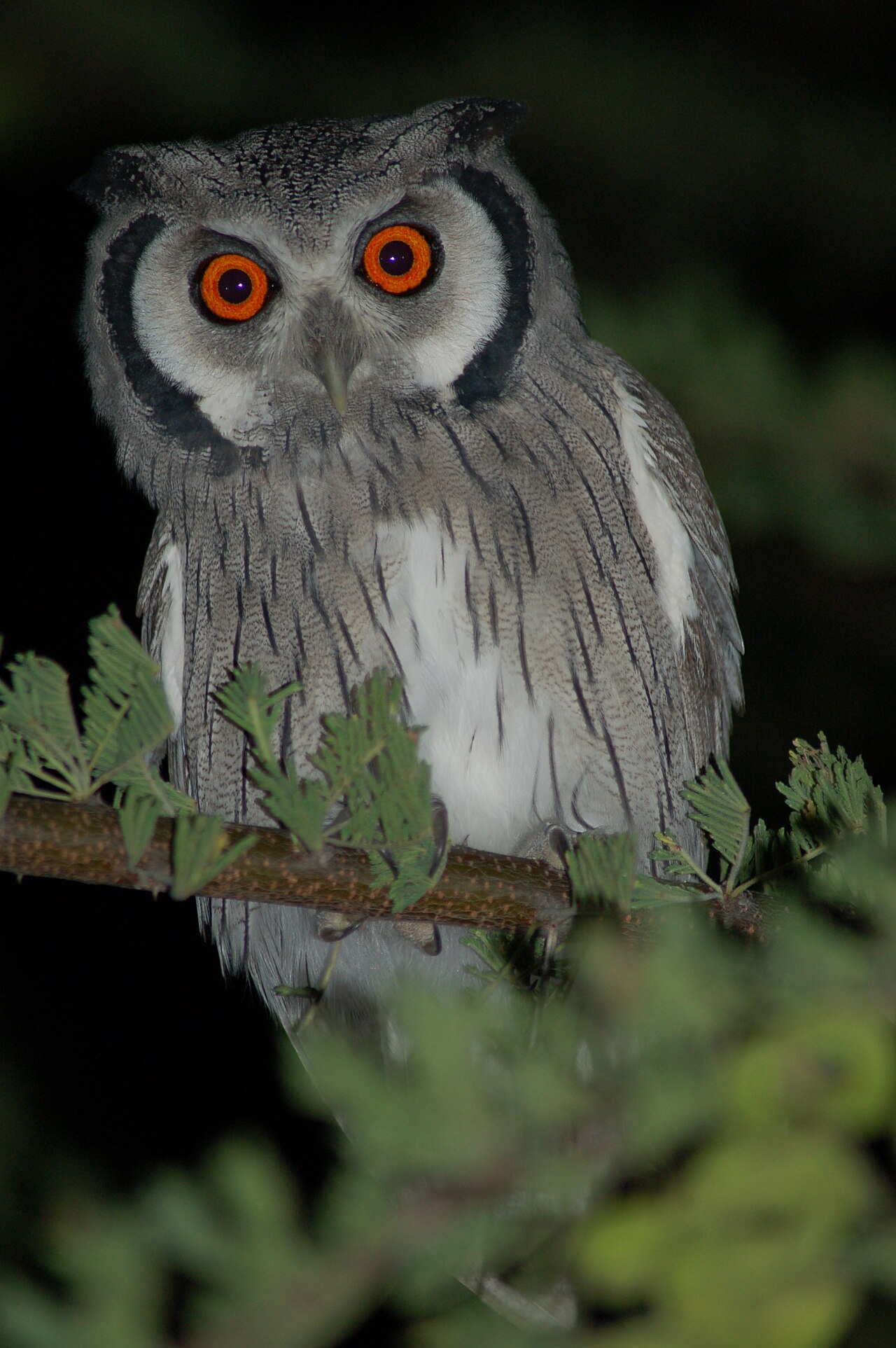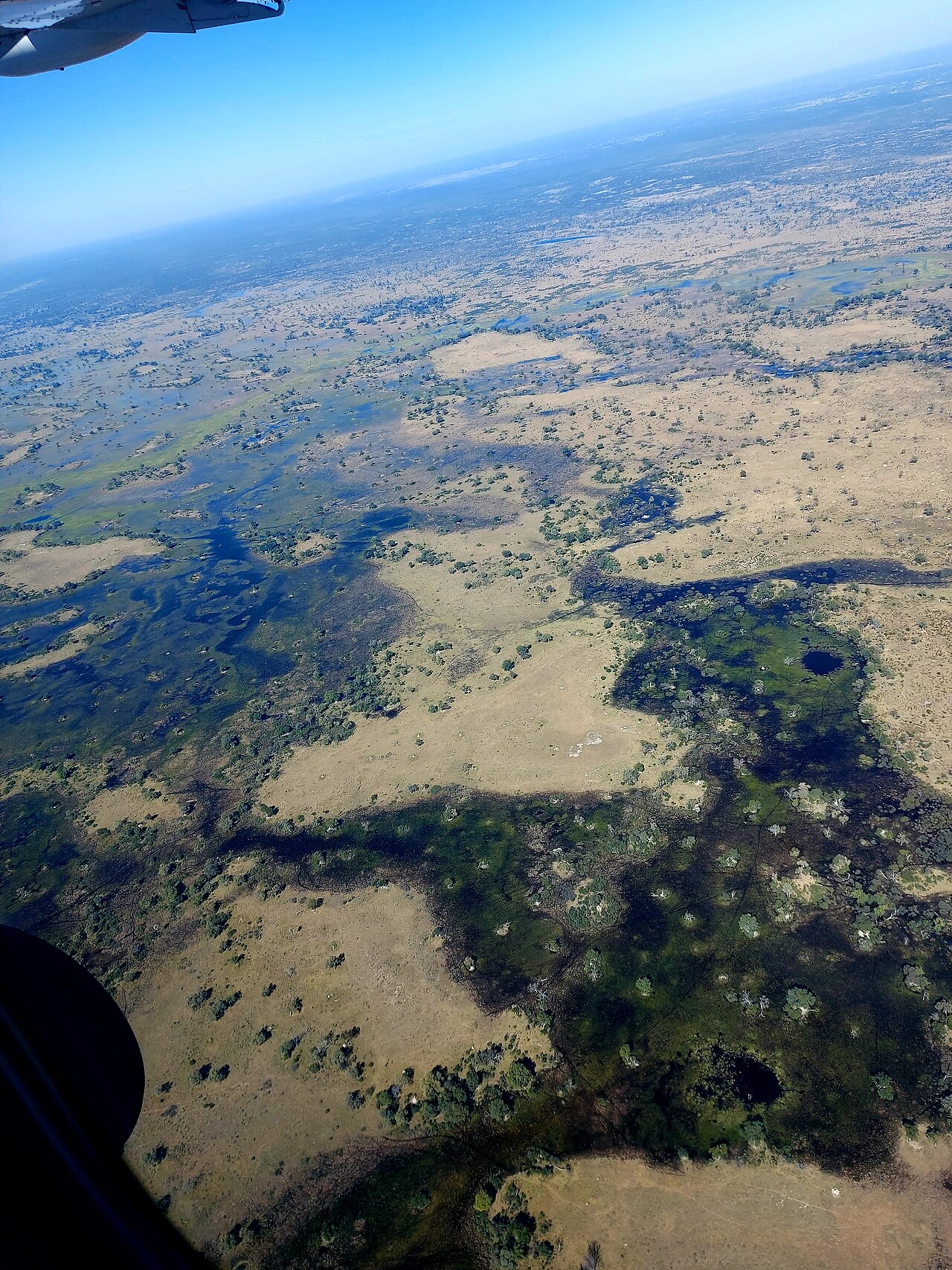
The Okavango Delta is the reason most people come to northern Botswana, and it is worth understanding before you book anything else. The river rises in the Angolan highlands, crosses Namibia's Caprivi Strip and then, instead of flowing to an ocean, spreads out across the Kalahari sands of north-western Botswana. UNESCO describes it as Africa's largest endorheic delta, a place where permanent swamp of roughly 600,000 hectares is surrounded by seasonally flooded grassland that can reach 1.2 million hectares, within an inscribed property of more than two million hectares. The wildlife is on a matching scale. UNESCO counts 130 mammal species and 482 birds in the property, including cheetah, black and white rhino, wild dog and lion, and Botswana's elephant population of around 130,000 is centred on the Delta. Maun, on the south-western edge, is the gateway town. From here you can enter the Delta in a hand-poled mokoro, on a game drive in the Moremi Game Reserve, or from the air on a scenic flight, which is the only way to grasp the whole pattern of channels and islands at once.
The key to the Delta is the flood, and it surprises people. Rain falls in Angola in the wet season, from roughly November to March, but the water takes months to travel down the river and across the flat Delta. It reaches the Maun area in the dry winter, and the flood peaks around June to August, when the sky is blue, the days are mild and the land around the water is parched. Animals concentrate on the islands and channel edges, which is why the dry months are the classic safari season, and why the same trip in the green wet season looks and feels completely different.
Choosing how to enter: a mokoro trip from Maun gives you the quiet, water-level experience, and is the best first taste. A game drive in the Moremi Game Reserve gives you the big mammals on land. A scenic flight, offered by light-aircraft and helicopter operators around Maun, shows the Delta as a living map. Because water levels vary year to year and by channel, a mokoro station may start from a different place than the one in the brochure, and a good operator will tell you honestly what is possible on your dates. Late in the year, channels can run low before the rains arrive.
Practical points: the Delta is remote and expensive compared with most of Africa, so book ahead for the dry season. Bring neutral clothing, a hat, sun protection, insect repellent and a refillable bottle, and expect to be poled, walked and driven rather than rushed. Malaria is a risk in the north, so take medical advice before travelling. Respect the rules: guides will brief you on distance from animals, and in the water the golden rule is to sit still and follow their instructions.
What to expect
The experience
A planning overview of the Delta as a whole: what the flood is, when it peaks, and how to see it from the water, from the bush or from the air out of Maun.
Best time
June to August for the flood peak and cooler days; November to March for the green season, birdlife and fewer visitors.
How long
A day trip from Maun is enough for a taste; two or three nights gives you a proper Delta stay.
Tips
Ask your operator what the water level is on your dates, take malaria advice, and book dry-season trips well ahead.
Quick picks
- Best for
- Anyone who wants to understand the Delta before choosing between a mokoro, a game drive and a flight.
- Families
- Day trips from Maun suit older children; check minimum ages on every product.
- Couples
- A scenic flight plus a night on a palm island is the classic Delta romance.
- Pair with
- A mokoro day trip from Maun, a Moremi day trip and a few nights at a Maun lodge.
- Time needed
- At least one full day; three nights is better.
Good questions
When is the Okavango Delta flooded?+
The floodwater arrives in the dry winter and peaks around June to August in the Maun area. The rain that feeds it falls in Angola months earlier.
Is the Delta worth visiting in the wet season?+
Yes, if you like green landscapes, birdlife and quieter camps, but expect heat, storms and thicker bush. Game viewing is generally easier in the dry months.
How do I see the Delta from Maun?+
By mokoro on the water, by game drive in Moremi, or from the air on a scenic flight. Many visitors combine two of the three.
Is it safe with crocodiles and hippos?+
Guides follow strict routines and know the channels well, and mokoro trips are routine. Listen to the briefing and stay seated.
Do I need malaria tablets?+
Northern Botswana is a malaria area, particularly in the wet season, so speak to a travel clinic before you go. Repellent and covered clothing at dusk help too.