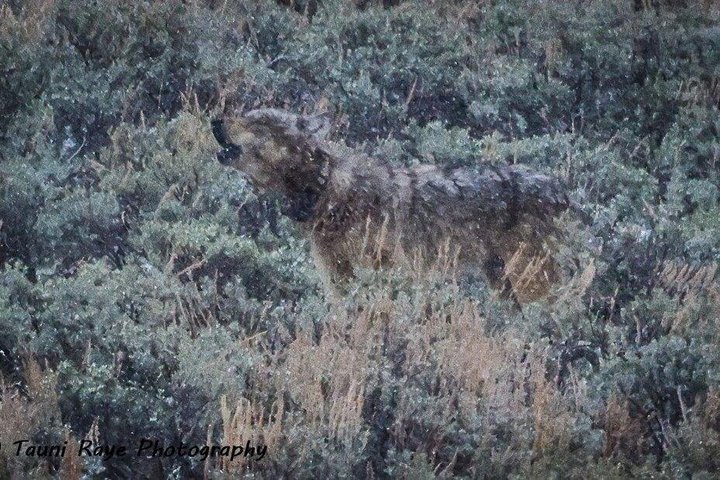
Yellowstone is one of the few places in the lower forty-eight states where wolves live wild and can be watched from a roadside pullout, and the northern range of the park is where most of that watching happens. A private wolf and wildlife safari from Bozeman is built around that idea. Instead of racing between geyser basins, the day is organized around the animals: early starts when wildlife is most active, long pauses at promising viewpoints, spotting scopes set up on a ridge and a guide who talks quietly about pack behavior, territory and the history of reintroduction. The vehicle and guide are exclusive to your group, which matters more on a wildlife day than on almost any other. Animal watching is a patient activity. Someone has to be willing to sit for forty minutes beside a river while a distant dot on a hillside resolves into a pack, and a private group can choose to do that without worrying about a coach full of impatient strangers. It also means conversation can be as technical or as casual as you like, from tracking tips and photography settings to the ecology of the valley. Expect a long day that begins well before breakfast in the busier seasons. The route heads south from Bozeman to the park, then follows the northern road toward the open valleys where bison, elk, pronghorn and sometimes bears and wolves are seen. Sightings can never be promised, and good guides will say so plainly. What they can promise is skill, equipment and a search carried out by someone who does it every week.
Wildlife viewing here follows a rhythm. Dawn and dusk are the best times, because animals move, feed and travel in the cooler light, while the middle of the day is quiet and the valleys fill with traffic. A private safari can be timed around that rhythm, with a very early departure, a long break at midday and a return to the best spots in the late afternoon. Ask the operator how they plan the day and whether an earlier pickup is possible.
The equipment makes a difference. Guides usually carry binoculars and spotting scopes, and a scope turns a faint shape on a far slope into a clear view of an animal. If you own binoculars, bring them, and if you photograph wildlife, a long lens and a spare battery are worth packing. Dress warmly in layers, since mornings are cold in nearly every season, and wear footwear you can stand in for a long time. Bring snacks, water and something hot to drink, particularly outside high summer.
Season shapes the experience. Spring brings young animals and an active landscape, though some roads may still be closed. Summer has the longest days and the heaviest traffic. Autumn has crisp air, rutting elk and fewer visitors. Winter is a very different park, with snow-covered valleys that make animals easier to spot against the white, although most roads are closed to ordinary vehicles and the days are short and cold. Ask the operator what to expect on your date and how they adapt the route to conditions.
Be realistic about results. Wolves are wide-ranging and elusive, and some visitors see them on the first morning while others never do. Bison, elk, pronghorn, bighorn sheep and a range of birds are far more reliable, and a skilled guide makes those sightings interesting rather than routine. Bears appear in some years and seasons, and the rules about keeping a safe distance are strict. Your guide will explain them and will keep the group at a respectful distance from every animal.
Compare this with the other ways of seeing the park. A shared day tour is much less expensive and covers a broad range of sights, while a private wildlife safari trades breadth for depth and flexibility. If you have only one day and want to see animals above all else, it is a strong choice. If the geysers matter most to you, the Lower Loop is a better fit.
Before booking, check what is included, such as park entry, snacks and optical equipment, and confirm the pickup point in Bozeman and the maximum group size. Ask what happens if the weather turns, because storms and road closures can alter plans. Treat the day as a quiet, patient adventure rather than a checklist, and you are likely to remember it long after the photographs have been sorted.
What to expect
The experience
A private wildlife-focused day with a guide, spotting scopes and long stops at viewpoints.
Best time
Dawn and dusk in any season; winter is excellent for visibility.
How long
A full day, often starting very early.
Tips
Dress in warm layers, bring binoculars and a camera, and keep expectations realistic.
Quick picks
- Best for
- Wildlife lovers and photographers.
- Families
- Good for patient older children.
- Couples
- A quiet, memorable shared day.
- Pair with
- A relaxed dinner in Bozeman afterward.
- Time needed
- A full day.
Good questions
Will we see wolves?+
Possibly, but never guaranteed; bison, elk and other wildlife are more reliable.
What is the best time of day?+
Dawn and dusk.
Is the tour private?+
Yes, the vehicle and guide are for your group.
Do I need binoculars?+
Guides usually carry scopes, but your own binoculars help.
Does it run in winter?+
Winter wildlife trips are common; ask about road conditions for your date.