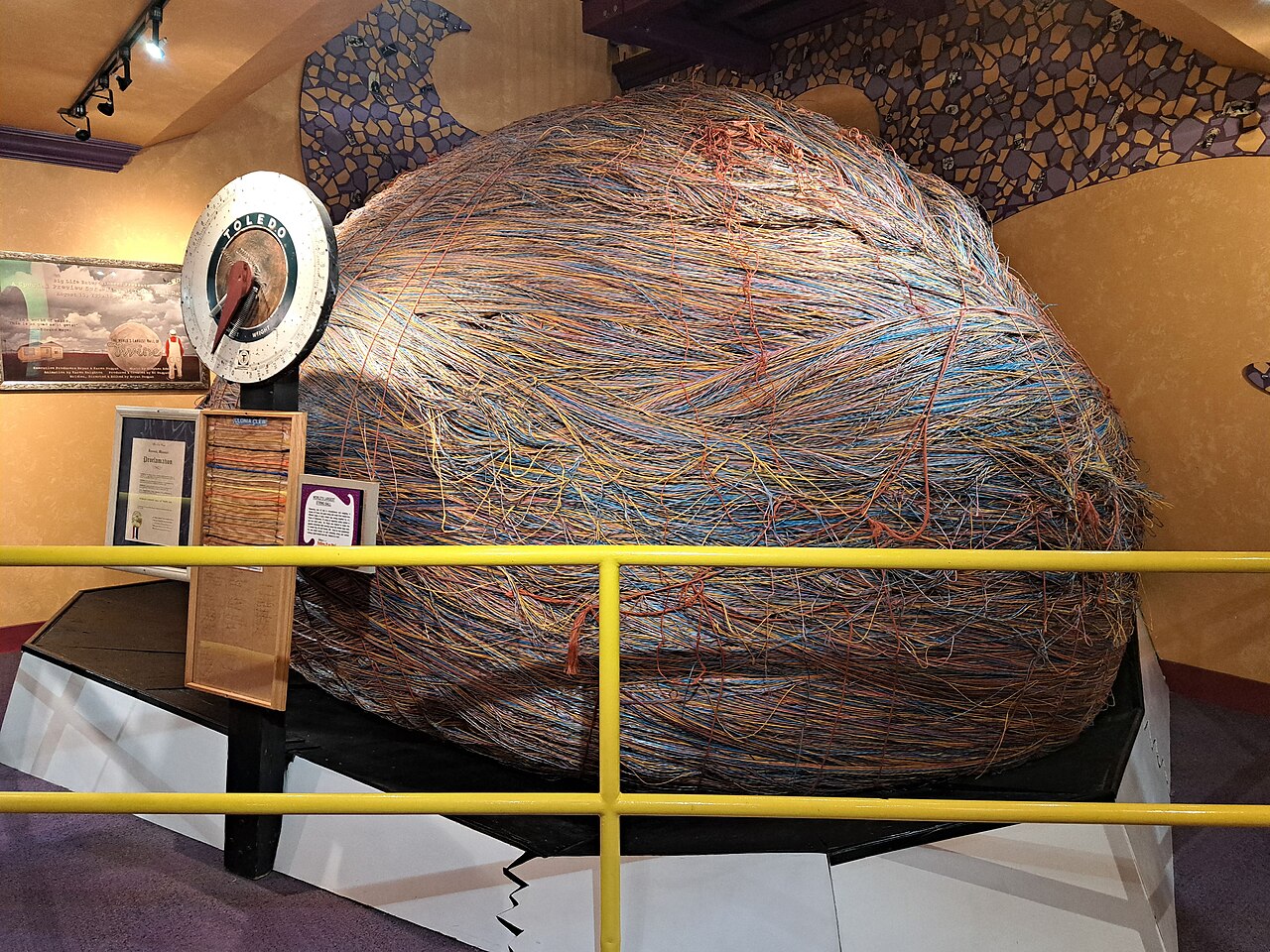
Ripley's Believe It or Not! holds down the Strip's weirdness franchise from a building that looks freshly bisected — the facade's giant crack commemorating the New Madrid quakes in architectural humor — and inside runs the classic odditorium formula the brand has polished for a century: galleries of authenticated strangeness from Robert Ripley's collecting tradition and its successors. The Branson edition's cases deliver the canon: shrunken heads with their anthropological context, the two-headed calf taxidermy that anchors every visitor's retelling, matchstick and toothpick masterworks (a Rolls Royce, cathedral-scale builds) representing obsession as art form, vampire-killing kits and sideshow history, space oddities and world-record ephemera, interactive illusion stations (the spinning vortex tunnel reliably re-calibrates inner ears), and the rotating acquisitions that keep the chain's collectors employed. It is a tight, well-themed hour-and-a-half — smaller than WonderWorks' half-day footprint, pitched at the same families but faster — and the correct slot is exactly that: the between-meals-and-shows filler that over-delivers, the rainy morning's first stop, or the teen-approved detour while slower partygoers browse the Grand Village shops nearby. The link books direct entry; combo tickets with the brand's other Branson operations (the Super Fun Zone arcade among them) suit arcade-inclined crews. Believe the two-headed calf; the kids will anyway.
The franchise's lineage is half the charm: Robert Ripley — cartoonist, radio star, and the twentieth century's most famous collector of the verified-strange — built the Believe It or Not! brand on documented oddity (his researchers' standards were real; the "believe it or not" dare assumed skeptics would check), and the odditorium chain his estate grew maintains acquisition teams that keep galleries rotating. The Branson house (one of the brand's long-running locations) leans the collection toward the crowd-pleasing core: ethnographic artifacts (the shrunken-head cases run the Jivaro context straight), natural-history anomalies (the two-headed calf, polydactyl and albino taxidermy), folk-obsession masterworks (the matchstick Rolls, grain-of-rice engraving, bottle-cap and gum-wrapper constructions), sideshow and circus history, and the interactive floor's illusions — vortex tunnel, infinity wells, optical galleries — that photograph the visit into the family feed.
The building itself does marketing duty
The split-facade design (the crack running roof to foundation, interior floors playing along with tilted sightlines) nods to the 1811-12 New Madrid earthquakes — the Missouri seismic history most visitors learn at the ticket desk — and the exterior is among the Strip's mandatory photo stops regardless of entry. Inside, pacing is the product's quiet skill: galleries run short and dense, placards write to both the nine-year-old and the adult reading over their shoulder, and the ninety-minute sweet spot means it slots where bigger attractions cannot.
Practicals
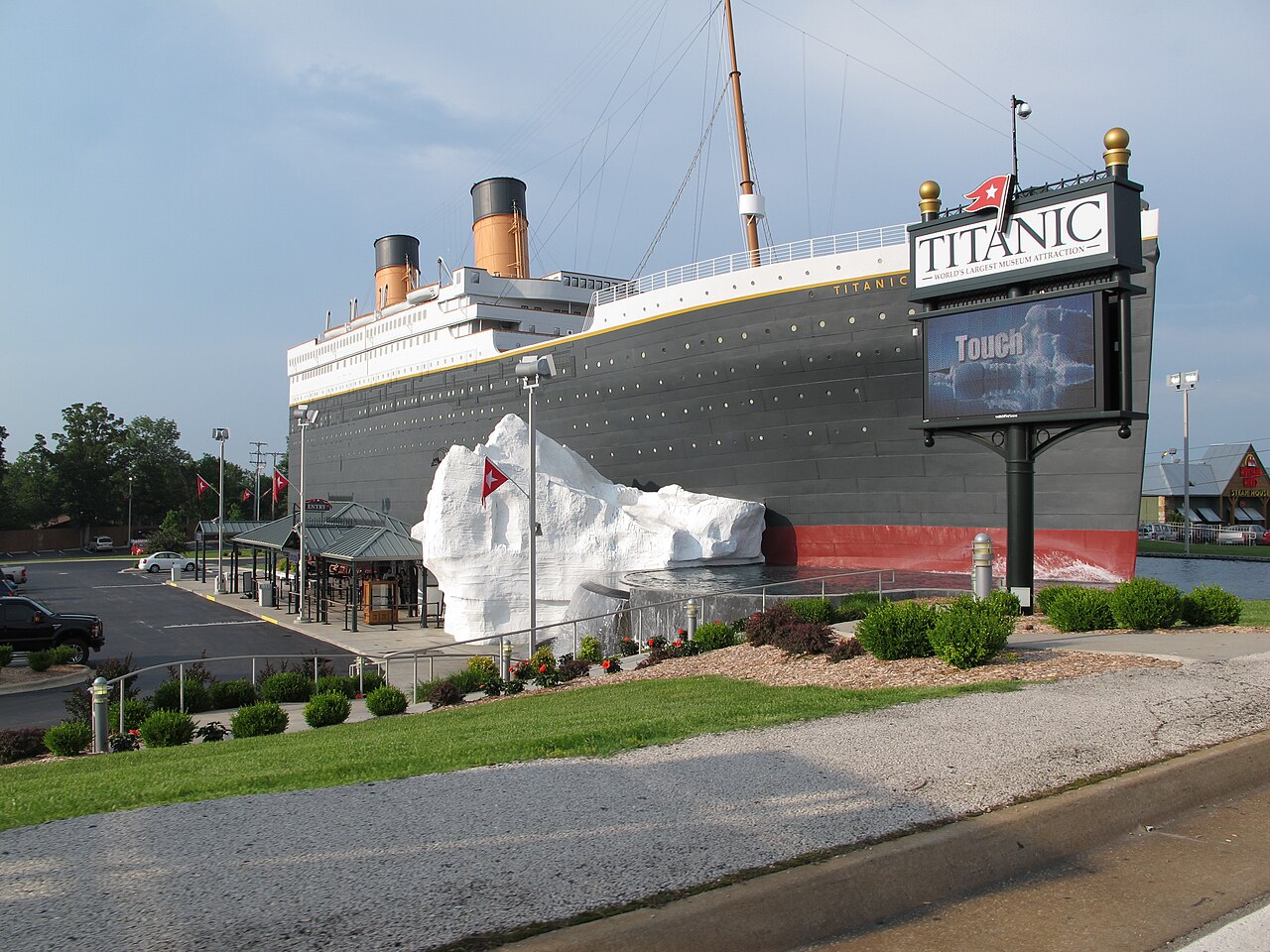
Mid-Strip at the 3300 block of 76, open daily year-round with evening hours in season; crowds track the Strip's rain-and-heat pattern (the all-weather cluster — Ripley's, WonderWorks, Titanic, Hollywood Wax — shares one surge schedule); the entry is walk-up flexible. Fit: the filler-slot champion — between a matinee and dinner show, the first hour of a wet morning, or the teen detour — and the natural half of a weirdness double with the Titanic Museum or WonderWorks. The gift shop's oddity inventory is genuinely browsable, which for the genre counts as a compliment.
What to expect
The experience
A classic Ripley's odditorium — shrunken heads, two-headed calf, matchstick masterworks, sideshow history, and interactive illusions — behind the Strip's famous cracked facade.
Best time
The filler slots: wet mornings, between-show afternoons. Daily year-round; shares the all-weather cluster's surge pattern.
How long
A dense ninety minutes.
Tips
Read the placards — the research tradition is real and the nine-year-old register is deliberate. The vortex tunnel resets inner ears; take the handrail. Facade photo from across 76, crack centered.
Quick picks
- Best for
- The between-slots hour that over-delivers — weirdness with a century of curation behind it.
- Families
- Kids narrate the two-headed calf for the rest of the trip; the illusion floor burns the wiggles.
- Couples
- A gleeful shared hour; the matchstick galleries reward actual looking.
- Pair with
- WonderWorks or the Titanic for the all-weather double; the Super Fun Zone arcade for token-driven crews.
- Time needed
- Ninety minutes, filler-slot perfect.
Good questions
Is the stuff real?+
The brand's century-old standard — Ripley's researchers documented the strange precisely because the dare assumed checking. Shrunken heads, calf, and matchstick builds carry their provenance on the placards.
Why is the building cracked?+
A architectural joke on the 1811-12 New Madrid earthquakes — Missouri's great seismic history — with interior tilts playing along. It is the Strip's second-most photographed facade.
How does it compare to WonderWorks?+
Half the footprint, twice the pace — Ripley's is the dense ninety-minute oddity hour; WonderWorks is the half-day hands-on science burn. Families with time do both; the double never bores.
Is it scary for little kids?+
Odd rather than frightening — the shrunken heads are the one calibration point, and squeamish crews route around that case easily.
When should we go?+
Exactly when nothing else fits — wet mornings, the pre-show gap. It shares the Strip's all-weather surge, so sunny middays run easiest.