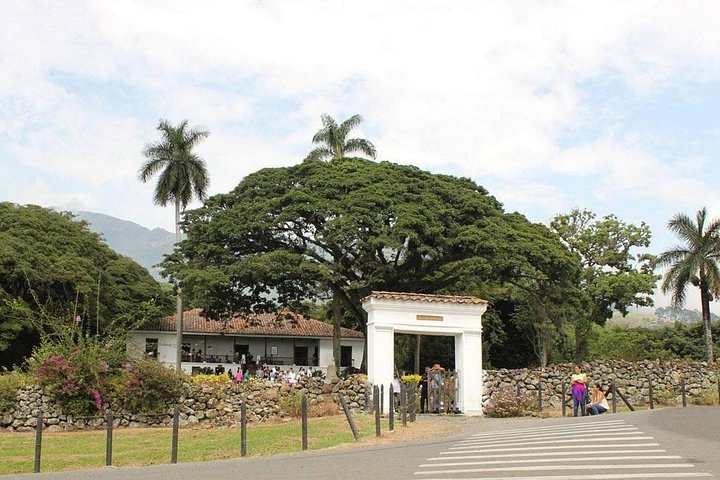
The flat valley around Cali is one of Colombia's great sugar-cane regions, and Hacienda El Paraiso, near El Cerrito, is its most famous country house. The long, low estate is closely linked to the nineteenth-century novel Maria by Jorge Isaacs, which is set in the Cauca valley and is a classic of Latin American romanticism. The hacienda is preserved as a museum, with period furniture, family rooms, a chapel and a veranda that gives you a sense of the rural life of the time. The gardens and trees around the house, and the views over the green cane fields, make the visit pleasant even for those who have not read the book. The tour we link combines the hacienda with a wider introduction to the valley's nature and sugar-cane story, which can include a look at how cane is cut, pressed and processed into panela and sugar. Travelers learn why sugar shaped the region's economy, architecture and society, and why the haciendas matter to local identity. The trip is a good choice for history lovers and literature fans, as well as anyone who wants a quiet day outside the city.
Practical details
The hacienda is roughly an hour from Cali by road, so the tour usually includes transport, which is simpler than finding your own taxi. Check the opening days of the museum when you book, since country houses often close on certain weekdays. Plan for a full or partial day, and bring a hat and sun protection, as there is little shade in the cane fields.
Background reading
Jorge Isaacs's Maria is available in English translation, and a few pages before the trip can transform the visit. The novel tells a story of love, family and loss on a country estate very much like this one. Even without reading it, you will leave with a good sense of the romantic image of the valley that Colombians carry.
Extras
Some tours include a local lunch, a sugar-cane drink or a stop in a nearby town. Pair the day with the coffee plantation experience for a taste of the region's two great crops, or with the Buga basilica for a full countryside circuit. Remember that the valley is hot, so drink water frequently, and bring small bills for entrance fees, souvenirs and tips.
The estate has a human story that deserves attention. Sugar was produced on haciendas like this one by a large workforce, including enslaved Africans and their descendants during the colonial and early republican period, and this history helps explain the cultural makeup of the Cauca valley and the strength of Afro-Colombian traditions in Cali today. A good guide will tell the story honestly, connecting the architecture and the novel to the social history of the land.
Look for details such as the thick walls, the deep verandas that keep the house cool and the furnishings that reveal family life. Walk the gardens slowly, and if the tour allows it, ask about sugar-making tools and the process of turning cane juice into panela. Bring a camera for the rolling cane fields. On the way, your guide may point out roadside stands selling fresh cane juice, fruit and cheese, which are worth a short stop if the schedule allows.
What to expect
The experience
A guided day trip with transport to a colonial estate museum, gardens and cane country, sometimes with a look at sugar processing.
Best time
Any dry day; mornings are cooler for the gardens.
How long
Five to seven hours with travel; confirm with the operator.
Tips
Bring a hat and water, check museum opening days and read a little about Maria before you go.
Quick picks
- Best for
- History and literature lovers who like countryside and old houses.
- Families
- Suitable for families; the gardens give children room to explore.
- Couples
- A quiet, romantic day out of the city.
- Pair with
- The coffee plantation experience or the Buga basilica.
- Time needed
- Most of a day.
Good questions
Why is Hacienda El Paraiso famous?+
It is linked to Jorge Isaacs's novel Maria, a classic romantic story set in the Cauca valley.
How far is it from Cali?+
Roughly an hour by road. The tour usually includes transport.
Do I need to read the book?+
No, but a little background makes the visit richer.
Is the museum open every day?+
Opening days vary. Check when you book.
Will I see sugar being made?+
Some tours include a look at cane processing. Confirm the program.