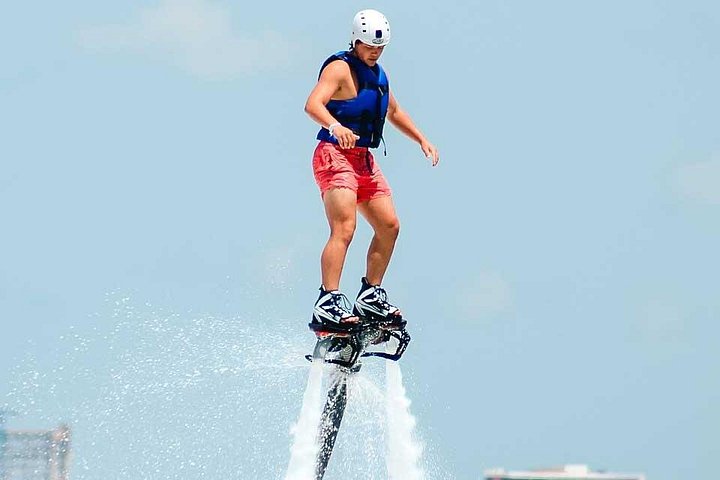
A flyboard looks impossible and turns out to be achievable. You strap boots to a board that is connected by a long hose to a jet ski, the jet ski pushes water down through the board and you rise above the lagoon. An instructor controls the engine and shouts guidance while you learn to balance, steer and hover, and within a few minutes most people are standing above the water and grinning. Sessions are short but intense, and the rush comes from the combination of height, motion and the sensation of standing on a column of spray. The Nichupte Lagoon is sheltered, so the water is flatter and safer than the open sea, and a briefing and safety equipment are part of the package.
The learning curve is gentle but real. Expect to spend the first few minutes in the water, working with the instructor on balance and body position, then to rise gradually as the controls become familiar. Many beginners wobble, fall and laugh, and the warm water makes that painless.
By the end of the session some riders are hovering and turning, and the more athletic may attempt flips if the operator allows it. Because you control the board with your body while the instructor manages the thrust, it feels like a partnership, which keeps the learning safe and rewarding.
Fitness requirements are modest. You need to be comfortable in water, able to follow instructions and reasonably strong in the core and legs, but you do not need to be an athlete. Age and weight limits apply, as do health restrictions for pregnancy, recent injuries and heart conditions, so read the rules carefully.
Wear a swimsuit, secure sunglasses and reef-safe sunscreen, and leave valuables ashore. The operator supplies a helmet, a life jacket and boots. Photo and video packages are often available for an extra fee, and given the visual appeal of rising over the lagoon, they can be worth considering.
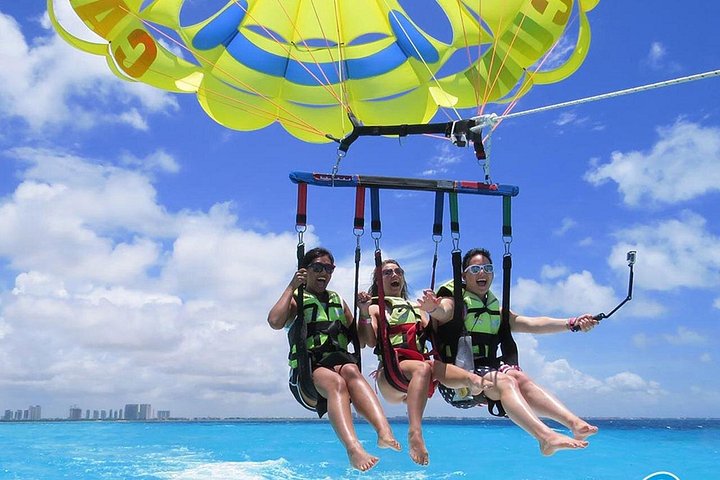
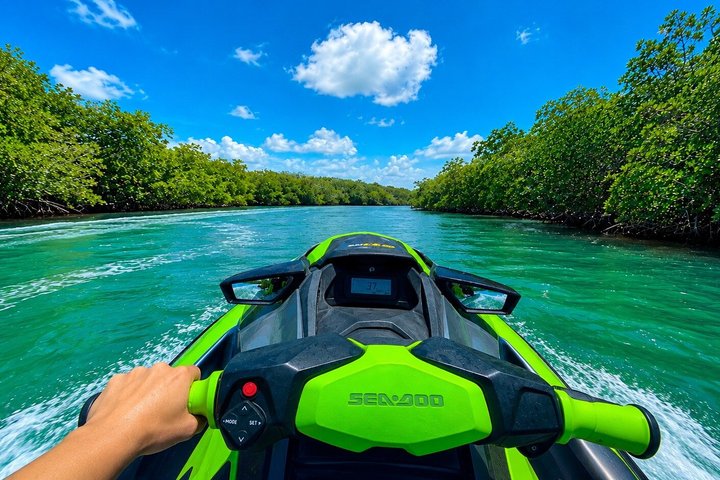
Compared with other Cancun water sports, flyboarding is more athletic and more distinctive than parasailing or a jet ski ride, and it is shorter, so it fits easily into a morning or an afternoon. It makes a good companion to the jetpack flight, which uses similar technology with a different harness, and to a lagoon kayak or a mangrove jet ski tour.
It is an excellent pick for friend groups, teenagers and travelers who like a challenge. Choose a calm day, ideally in the morning before the wind rises, and be ready to spend part of your time laughing as you fall back into the lagoon.
What to expect
The experience
A coached flyboard session on the Nichupte Lagoon with a briefing, safety gear and an instructor controlling the jet ski.
Best time
Mornings usually have calmer water and lighter wind.
How long
About an hour including the briefing, with a shorter flight time in the water.
Tips
Wear a swimsuit and secure sunglasses, check age and health limits, and consider a photo package.
Quick picks
- Best for
- Thrill-seekers and groups who want a standout activity.
- Families
- Good for teens and adults within the age and weight limits.
- Couples
- A playful challenge to share, with plenty of laughs and photos.
- Pair with
- The jetpack flight, a mangrove jet ski tour or a lagoon kayak.
- Time needed
- Two hours including check-in.
Good questions
Is flyboarding hard?+
It takes a few minutes to find your balance, but most beginners rise above the water in their first session.
Do I need to swim?+
You should be comfortable in water; a life jacket and helmet are provided.
Are there age or health limits?+
Yes. Age, weight and health restrictions apply, so check before booking.
How long do I fly?+
Flight time is shorter than the whole session; the rest is briefing, learning and setup.
Can I get photos?+
Many operators offer photo and video packages.