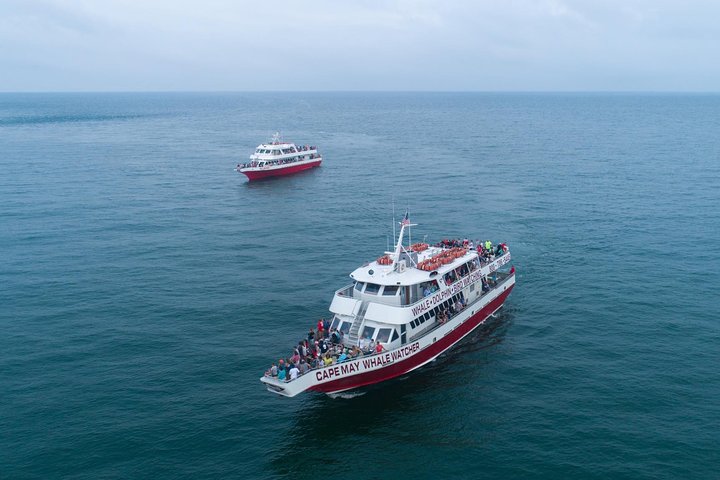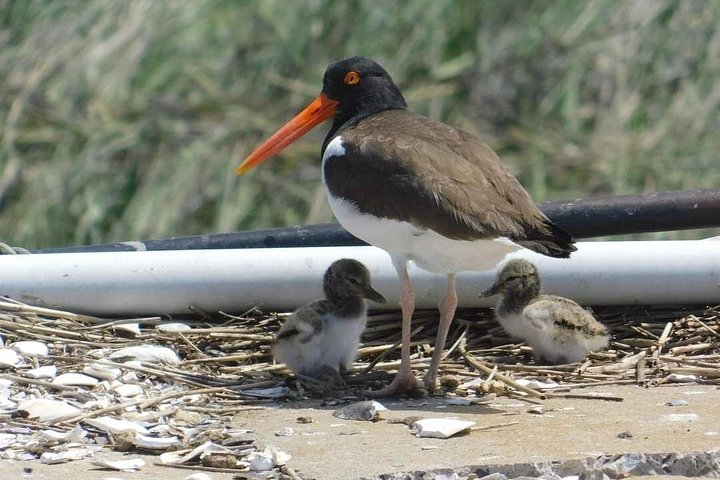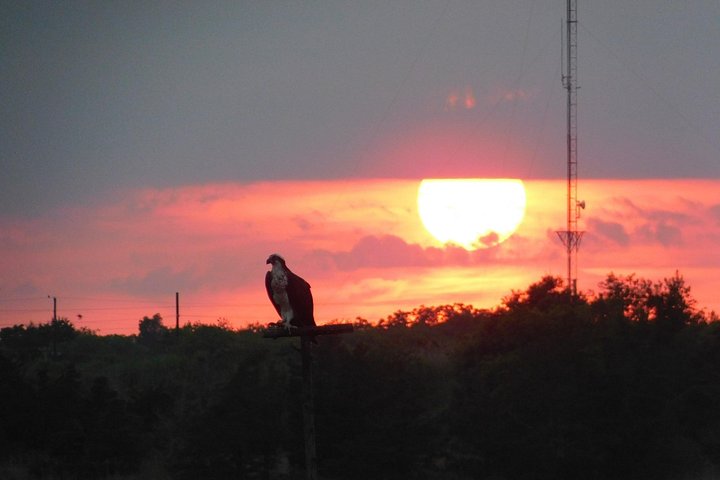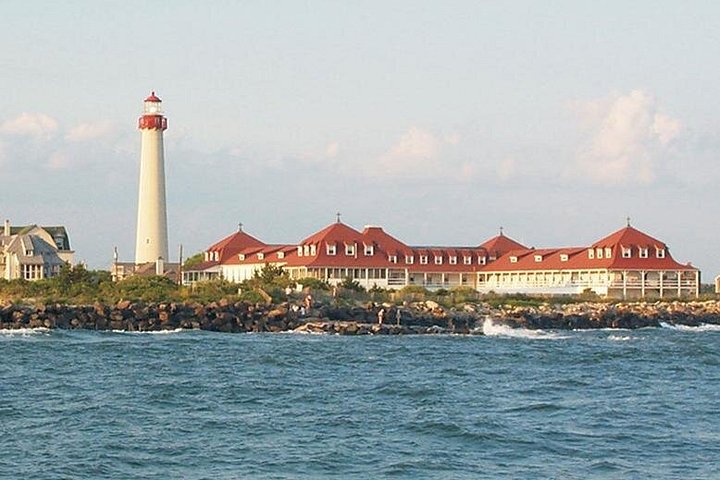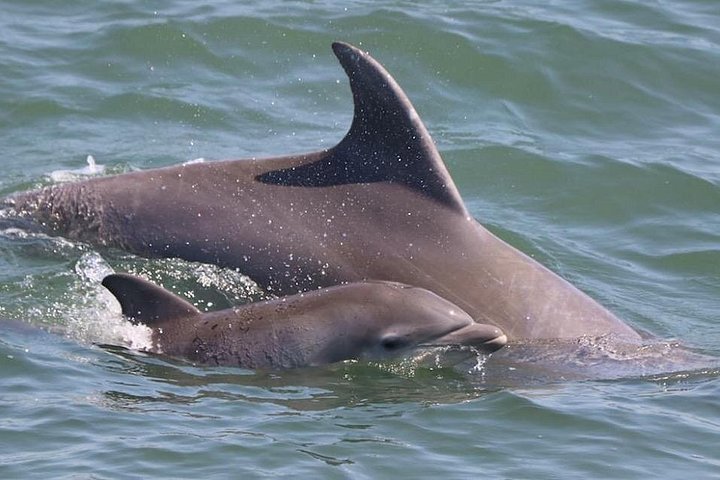
Cape May is famous as one of the great birding crossroads of North America, and the ecotour cruise brings that reputation onto the water. Compared with the big double-deck sightseeing boats, an ecotour usually carries fewer passengers, moves at a more thoughtful pace and puts more emphasis on interpretation. The guide explains why this spot matters to wildlife: the peninsula funnels migrating songbirds, raptors and shorebirds between Delaware Bay and the Atlantic, and the same nutrient-rich water feeds fish, which in turn draw bottlenose dolphins into the channels and rips near the harbor. On a typical trip the boat visits the dolphins' feeding grounds, then drifts or idles near jetties, bars and island edges where gannets, terns, cormorants, gulls and shorebirds gather. Depending on the season, there may be chances to see larger seabirds, diving birds or migrants on their way through, and the best guides are happy to adjust the route to whatever is most active. This is a good choice for travelers who enjoy learning as they look, and it offers a nice middle ground between a pure family sightseeing cruise and a specialist birding charter. Binoculars are helpful, and if you have your own, bring them; some operators also have a few to borrow.
What to expect
Departures leave from the Cape May harbor and usually last around two hours or a little more. The boat travels out toward the inlet and bay, with stops where wildlife is concentrated. Expect commentary on fish, birds and marine mammals, and on the role of local conservation groups and the state park in protecting habitats.
Dolphin sightings are common in the warm months but not guaranteed, and bird activity changes with the migration calendar, so the experience will differ from one week to another. Weather and tides drive the route, and the crew will make the call if conditions are too rough.
Practical advice
Wear layers and flat, non-slip shoes, apply sunscreen before boarding and bring a hat. A camera with a zoom lens is useful, but be ready to enjoy the experience without a screen between you and the animals. Early morning and late afternoon trips often have calmer water and better light. Because the boat is smaller than the main sightseeing vessels, check beforehand whether there are restrooms on board and how accessible the dock and deck are for anyone with limited mobility.
Who it suits
Birders and curious visitors, couples, school-age children who enjoy nature, and anyone who wants to understand the ecology rather than only tick off a sighting. Pair it with a visit to the hawk watch platform at the state park or a morning at the bird observatory for a full nature day. For the quietest and most intimate wildlife experience, consider the marsh-focused eco cruises that explore the tidal creeks instead.
Choosing between boats
If you mainly want a family outing with seating and a snack bar, the large sightseeing boat is simpler. If you want to understand what you are seeing, an ecotour with a small group is more rewarding, since the guide has time to answer questions and adapt the route to the birds that are active. Tell the crew at the start about your interests, for example gannets, terns or dolphin behavior, and they will usually try to include them where conditions allow.
What to expect
The experience
A guided ecotour on a smaller boat, combining dolphin watching with birding around the inlet, bay and jetties.
Best time
Spring and autumn for migration; summer for the most dependable dolphin sightings.
How long
About two hours on the water.
Tips
Bring binoculars, layers and sunscreen, and ask about restrooms and accessibility before booking.
Quick picks
- Best for
- Nature lovers and birders who want interpretation as well as sightings.
- Families
- Good for school-age children who like animals; very young children may find the pace slow.
- Couples
- A quiet, thoughtful outing on the water.
- Pair with
- The hawk watch platform or a morning at the bird observatory.
- Time needed
- Half a morning or afternoon.
Good questions
How is an ecotour different from a regular dolphin cruise?+
Ecotours tend to be smaller and slower, with more emphasis on explaining the ecology and watching birds as well as dolphins.
Do I need binoculars?+
They are not essential for dolphins, but they help with birds. Ask the operator whether any are available on board.
Is a sighting guaranteed?+
No. Wildlife sightings depend on weather, tides and season, but guides work to find animals and adjust the route.
How long does the trip last?+
Plan on about two hours on the water, plus time to arrive and board.
When is the best time to go?+
Warm months for dolphins and the spring and autumn migration seasons for the widest variety of birds.