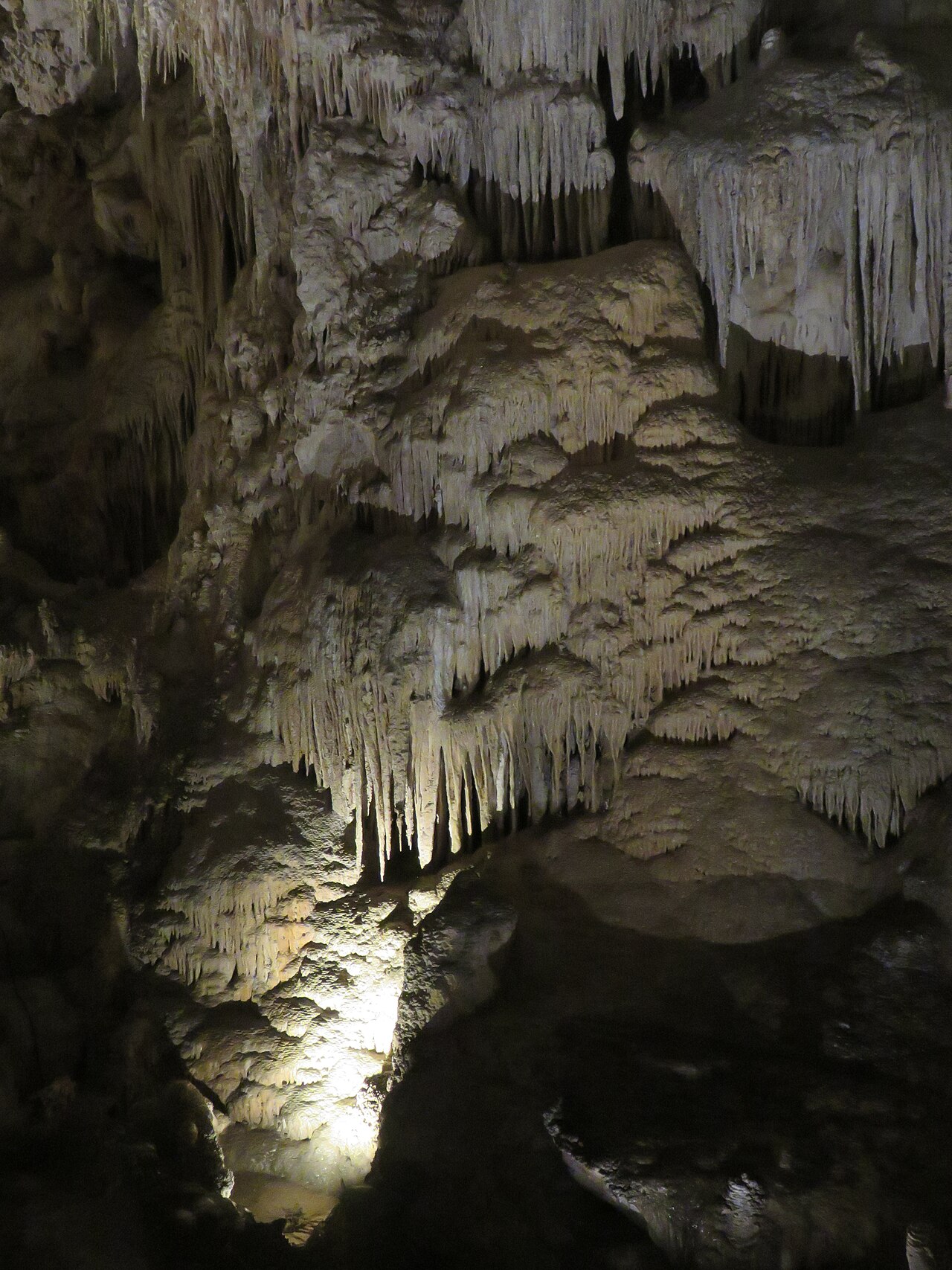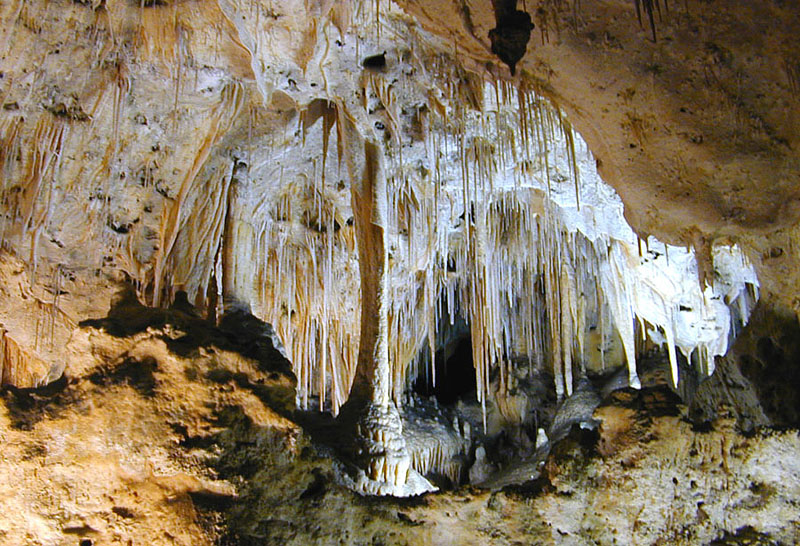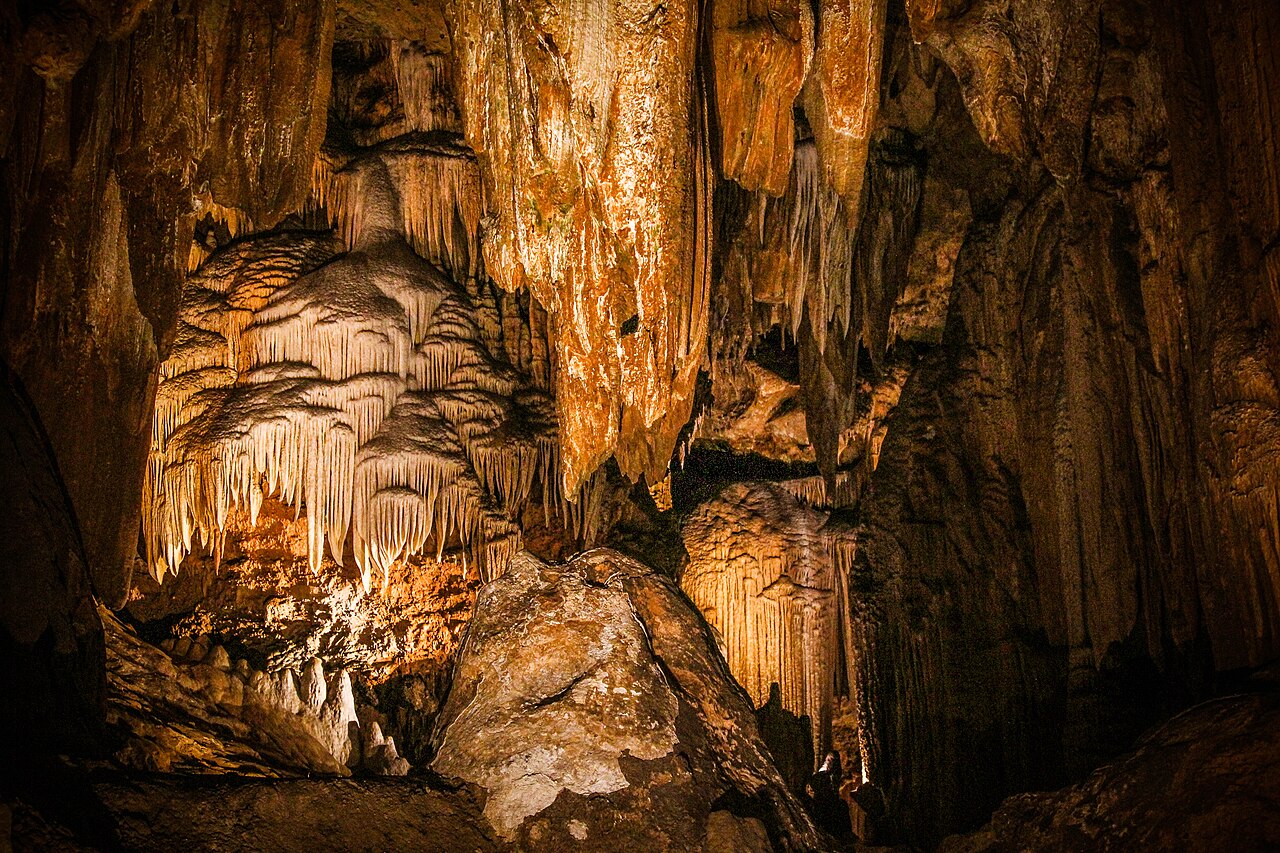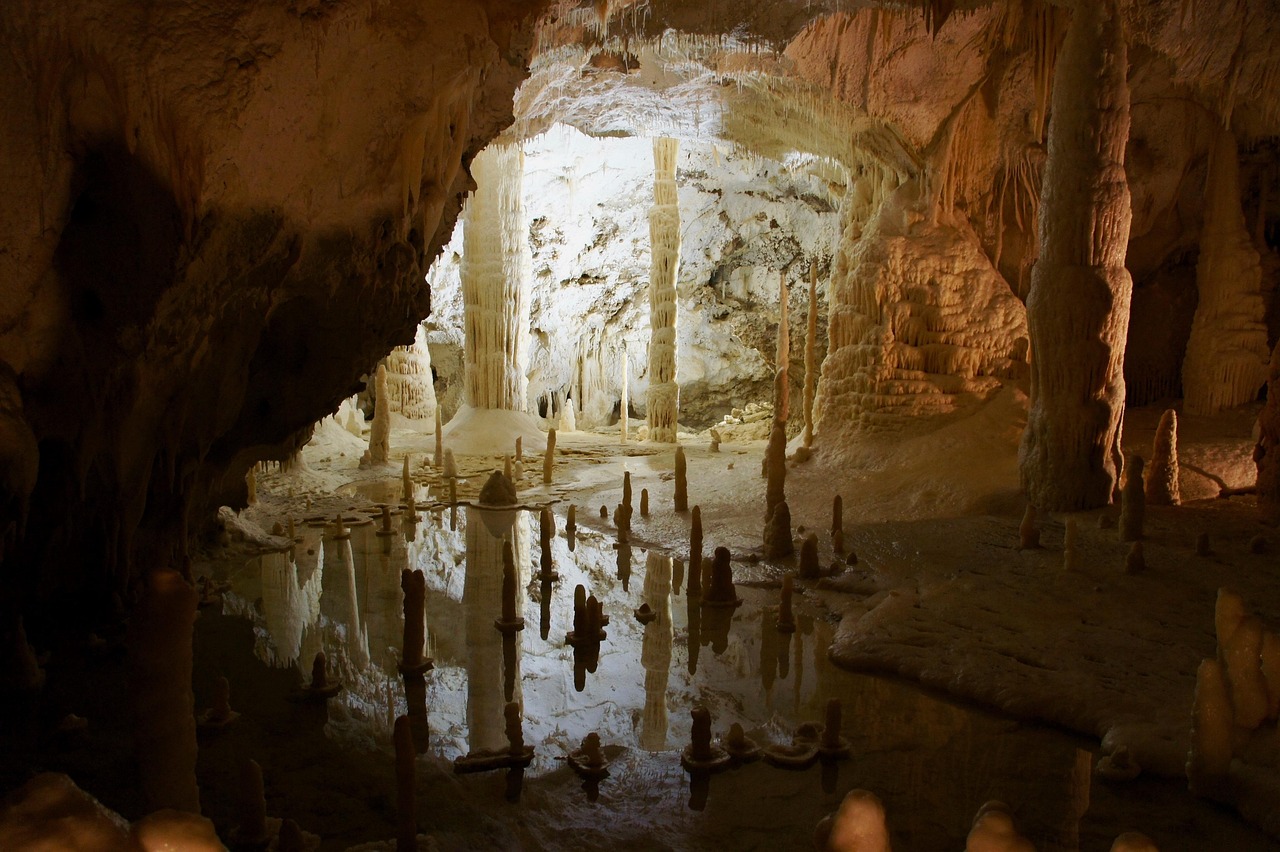
Blanchard Springs Caverns is the thirteen's whispered recommendation: deep in Arkansas's Ozark National Forest, the only show cave the U.S. Forest Service operates — developed in the 1960s-70s, decades after the barnstorming era, with the restraint that timing bought — tours living chambers that specialists routinely rank among the continent's most beautiful. The Dripstone Trail, the signature hour, elevator-drops into the upper level's two vast rooms where the decoration runs essentially perfect: flowstone cascades still wet and building, soda-straw ceilings, the Coral Room's massed white, calcite glowing under lighting the developers designed to flatter nothing (nothing needed it). The Discovery Trail (seasonal) walks the lower stream level's wilder mile — the watercourse that built the system, the natural entrance's bat flyway — and the Wild Cave tier crawls beyond. Above, the springs themselves pour from the mountain into swimming-hole country, with forest campgrounds and Mirror Lake completing the Ozark idyll. Mountain View (Arkansas's folk-music capital) sits fifteen minutes south; crowds, blessedly, never found it. The connoisseur detour, worth the miles.
The late development is the cave's luck: while the private barnstormers wired their caverns in the 1920s, Blanchard's system — known locally from its spring and pit entrances — waited until Forest Service exploration in the 1950s-60s confirmed the upper chambers' scale, and the agency's 1973 opening came with federal-project engineering (the elevator shaft, wide graded trails, lighting laid by people who'd seen other caves' mistakes) and conservation defaults decades ahead of the industry. The result underground is the category's cleanest canvas: the Cathedral Room and Coral Room — the Dripstone Trail's twin vaults, among the larger decorated chambers in mid-America — carry formations essentially unbroken and unsooted, the flowstone running wedding-cake white, the soda-straw fields intact at densities touring caves rarely keep.
The two-trail structure splits the experience honestly: Dripstone (year-round, about an hour, gentle grades and 0.4 miles of the good stuff) is the showcase — the one specialists mean when they rank the cave nationally — while the Discovery Trail (summer seasons, two-plus hours, 700 stairs' worth of effort) follows the active stream level: the underground river's sculpted course, the natural entrance where the summer bat colony exits, and the geology-in-progress narration the upper level's finished rooms only imply.
The Wild Cave tours (helmets, headlamps, the undeveloped middle level) book through the forest's visitor center for the committed. All of it runs 58 degrees, ranger-and-concession led, at National Forest pricing that undercuts every private rival in the thirteen.
The surface completes the argument
Blanchard Springs pours from the mountainside a half-mile from the cave entrance (the swimming hole below is an Ozark institution), Mirror Lake's trout water and the forest campgrounds stack the outdoor day, and Mountain View — the self-declared Folk Music Capital, courthouse-square pickers nightly in season — sits fifteen minutes south as the evening's culture (this market's road-trip guide runs the full Ozark loop). The fit among the thirteen: Blanchard is the pristine-sleeper pick — the cave for travelers who've seen the famous names and want the one the cavers themselves drive for, uncrowded because Arkansas, unmissable because of it.
What to expect
The experience
The Forest Service's only show cave — the Dripstone Trail's elevator drop into cathedral-white twin chambers (year-round, gentle), the seasonal Discovery Trail's stream-level miles, and Wild Cave crawls beyond, all at federal pricing in Ozark forest.
Best time
Any season for Dripstone; summer opens Discovery and the springs' swimming hole. Weekdays run near-private — the crowds never found it.
How long
An hour for Dripstone; a half day with Discovery or the springs.
Tips
Dripstone is the ranked hour — take it first. Discovery's 700 stairs mean it. The swimming hole below the springs is the summer reward. Mountain View's courthouse pickers close the evening right.
Quick picks
- Best for
- The connoisseur detour — the cave the cave people drive for, at half the famous names' prices.
- Families
- Elevator access, gentle showcase trail, and a swimming hole after — the Ozarks' easiest great day.
- Couples
- Near-private weekday chambers and folk music on the square by night — the sleeper romance of the thirteen.
- Pair with
- Mountain View's folk scene fifteen minutes south, and the Ozark loop this market's road-trip guide maps.
- Time needed
- A half day, plus the drive it deserves.
Good questions
Why do specialists rank it so high?+
Late, careful federal development preserved what the barnstorming era broke elsewhere — the Dripstone chambers run essentially pristine, white, and still growing, at a polish private caves spend fortunes imitating.
Dripstone or Discovery?+
Dripstone is the year-round ranked showcase — an easy hour in the twin vaults. Discovery (summer) adds the wild stream level at 700 stairs of honest effort. Both, if the season allows.
How remote is it?+
Ozark National Forest remote — fifteen minutes from Mountain View, a couple of hours from Little Rock or Branson — which is exactly why the chambers stay uncrowded. The drive is the admission's real price.
What's above ground?+
The springs pouring from the mountain, the swimming hole below, Mirror Lake's trout, forest campgrounds — and Mountain View's nightly courthouse-square folk pickers as the cultural dessert.
Is it really that cheap?+
Forest Service pricing undercuts every private cave in the thirteen — the category's best value by a margin, for arguably its prettiest hour.