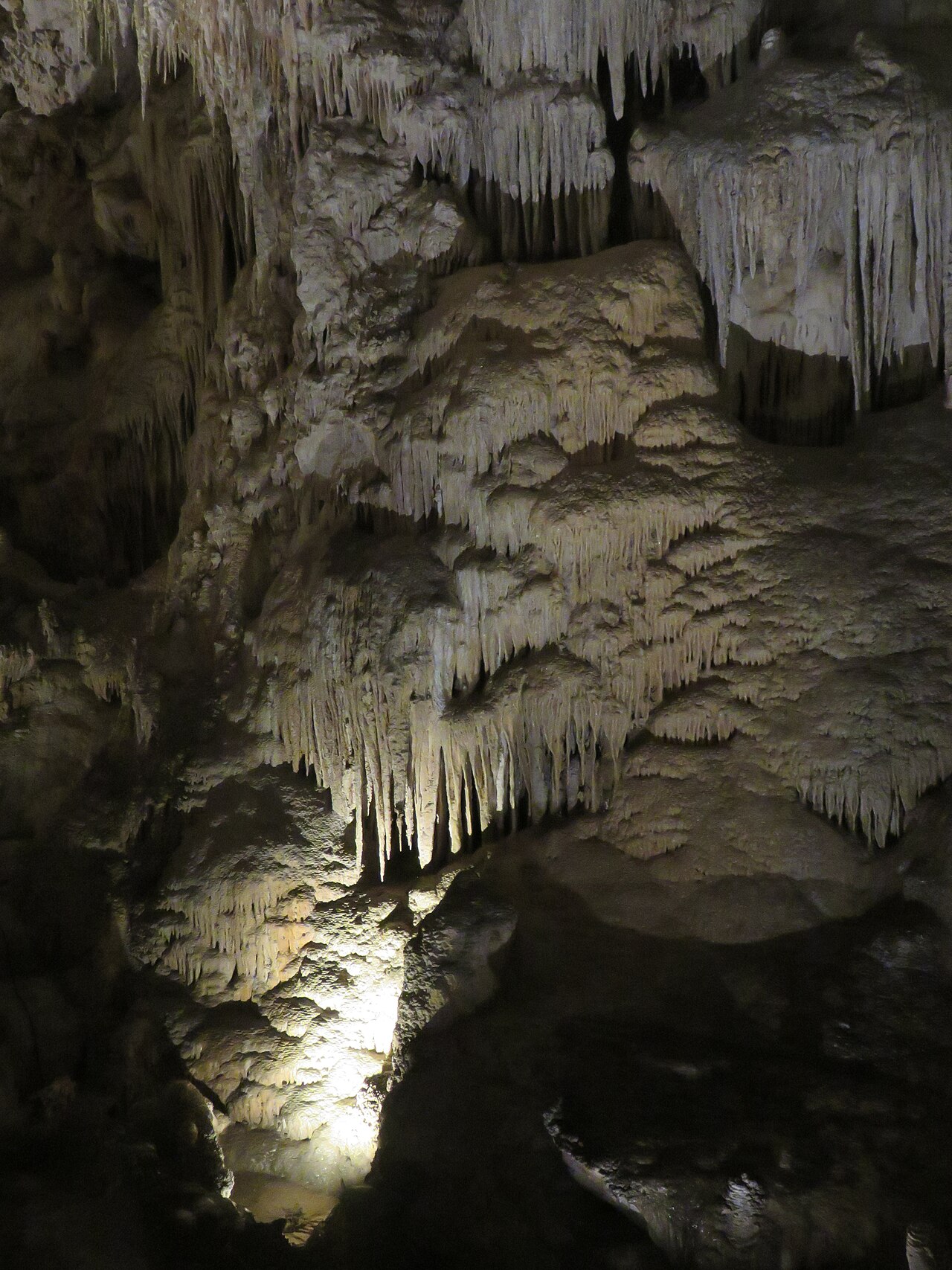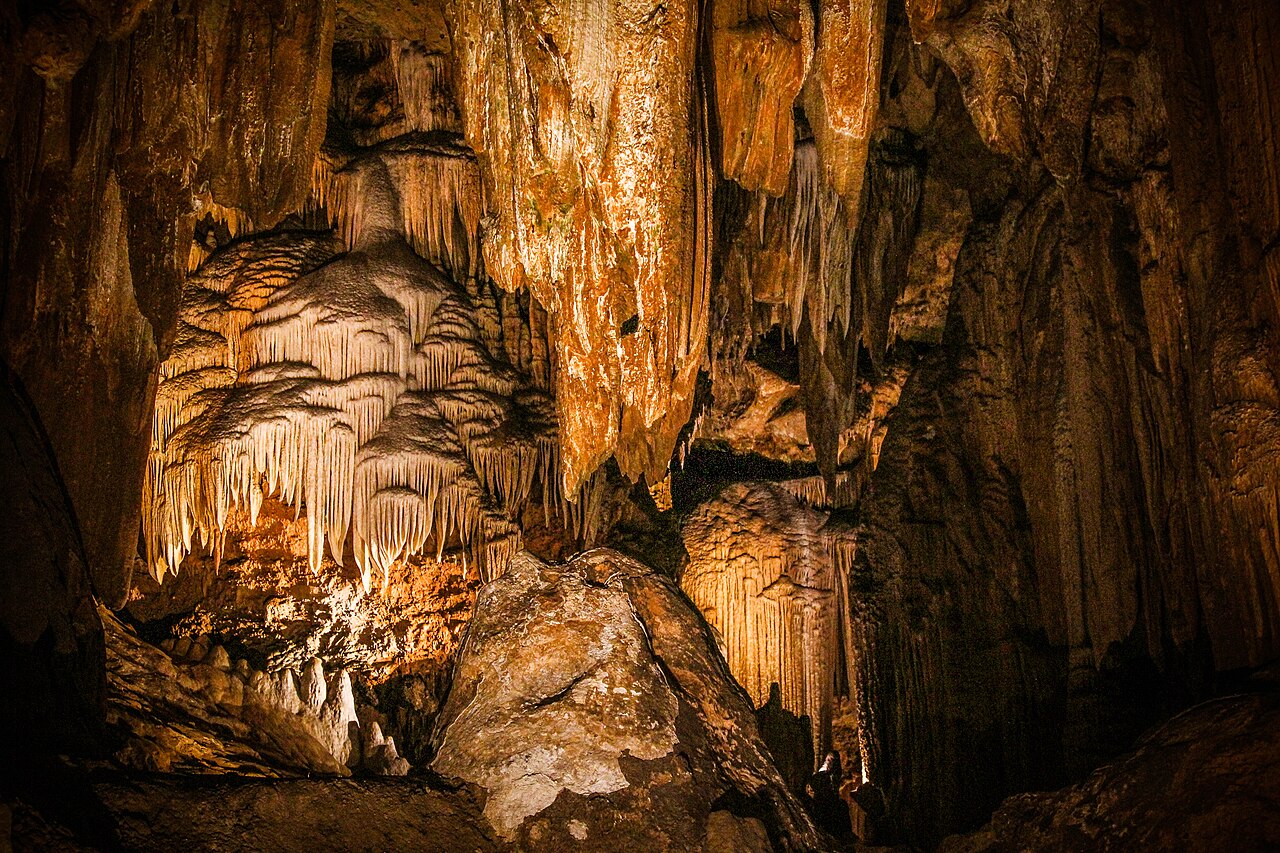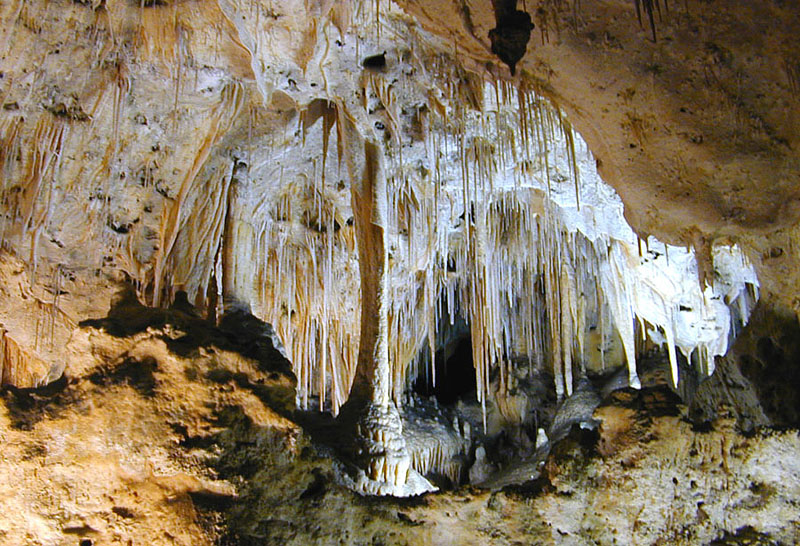
Oregon Caves National Monument and Preserve sits in the forested Siskiyou Mountains of southwest Oregon, not far from the California line. Most caves are made of limestone; this one formed in marble, which gives it a distinct look and a reputation as the Marble Halls of Oregon. The ranger-led tour goes through narrow passages and up and down many stairs, with ducking and squeezing in places. The reward is a close look at a cave that feels wild even with lights and handrails, set within an old-growth forest that is worth a walk on its own.
The tour is one of the more physical show-cave experiences in the West. The route climbs and descends hundreds of steps through tight passages, and guides ask visitors to take care with head clearance and wet surfaces. There is a minimum height requirement for the standard tour and age rules for some options, so check the park page before you plan a trip with young children.
The cave temperature stays cool all year, so a jacket is welcome, and closed shoes with good grip are essential. Rangers explain how the marble formed, how water carved the passages and why the cave is home to a surprising range of wildlife, including bats and unusual small invertebrates.
Above ground, the setting is as much a draw as the cave. A winding mountain road climbs through conifers to the monument, where trails lead through old-growth forest and along ridgelines. A historic chateau, built in the 1930s in a rustic style with a creek running through its dining room, has long been a symbol of the place, and its seasonal operation shapes how people plan overnight stays. The monument is also a good base for hikes that mix big trees, wildflowers and mountain views, and for picnics beside the creek in warmer months.
Because tour group sizes are limited and the season is weather-dependent, it pays to reserve in advance and check road and tour conditions before the drive. Allow time for the mountain road, which is slow, and for the walk back through the forest. Many visitors pair Oregon Caves with the redwood coast to the west, the Rogue River valley, or Crater Lake to the northeast, which makes a strong Pacific Northwest loop. Bring a layer, water and a sense of adventure: this is a cave that asks you to move and rewards you for it.
A few notes will help you plan. Cell service is weak around the monument, so download directions and confirm your tour reservation before leaving the highway. The cave is home to bats and has strict rules about clothing and gear used in other caves, a measure meant to prevent the spread of white-nose syndrome, so follow the park's instructions on what to bring.
Strollers and large backpacks are generally not allowed on the tour, and children must be able to walk the full route themselves. After the tour, take one of the forest loop trails or a short walk to the creek for a quieter look at the landscape that surrounds the cave.
Photographers should plan for low light and close quarters, and a small camera or phone is easier to handle than a large setup. Those who like seasonal timing should know that wildflowers peak in late spring and the forest turns quiet and golden in early autumn, which suits a slower itinerary.
What to expect
The experience
A ranger-led tour through a marble cave with many stairs and tight passages. Reserve ahead through the park's reservation system.
Best time
Late spring through early autumn, when roads and tours are most reliable. Weekday mornings are quieter.
How long
The tour takes about ninety minutes; allow three to four hours with the drive and forest walks.
Tips
Wear sturdy shoes, bring a jacket and watch your head. Check height and age requirements before booking. Allow extra time for the winding mountain road.
Quick picks
- Best for
- Adventurous visitors who want a wild-feeling cave in a forest setting.
- Families
- Great for older kids who meet the height rule and enjoy a challenge; not a stroller-friendly cave.
- Couples
- Cool forest air, a historic chateau and a hands-on cave tour make a good day out.
- Pair with
- The Redwood coast, Rogue River valley and Crater Lake.
- Time needed
- Half a day.
Good questions
Why is this cave unusual?+
Most show caves form in limestone. This one formed in marble, which gives it a distinctive look.
Is the tour strenuous?+
Yes. The route involves many steps and tight spots, so it suits people who are comfortable climbing and ducking.
Is there a height requirement?+
A minimum height applies to the standard tour, so check the park page before bringing young children.
Is the road difficult?+
The mountain road is winding and slow rather than hazardous. Allow extra time, and check conditions in shoulder seasons.
Is there a place to stay?+
A historic chateau operates seasonally at the monument, and nearby towns offer other lodging.