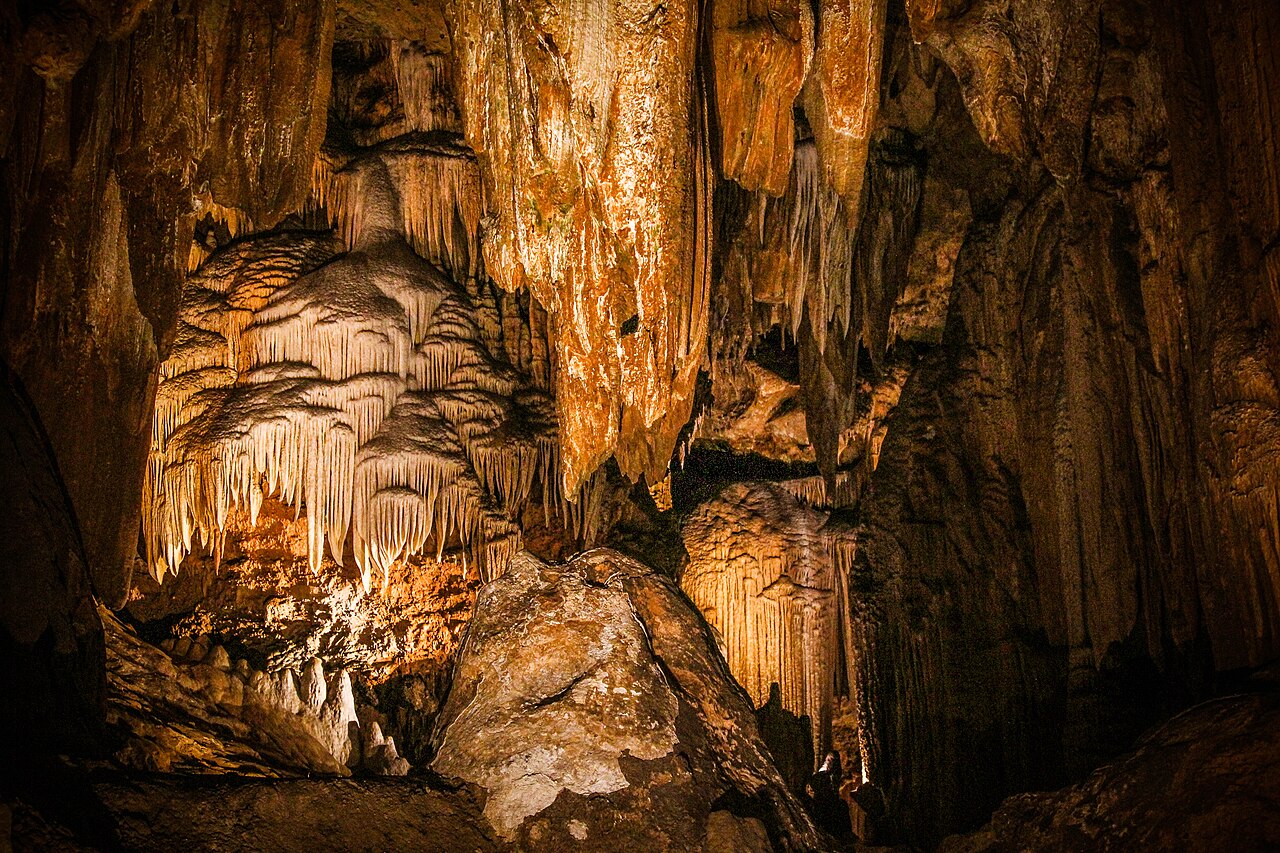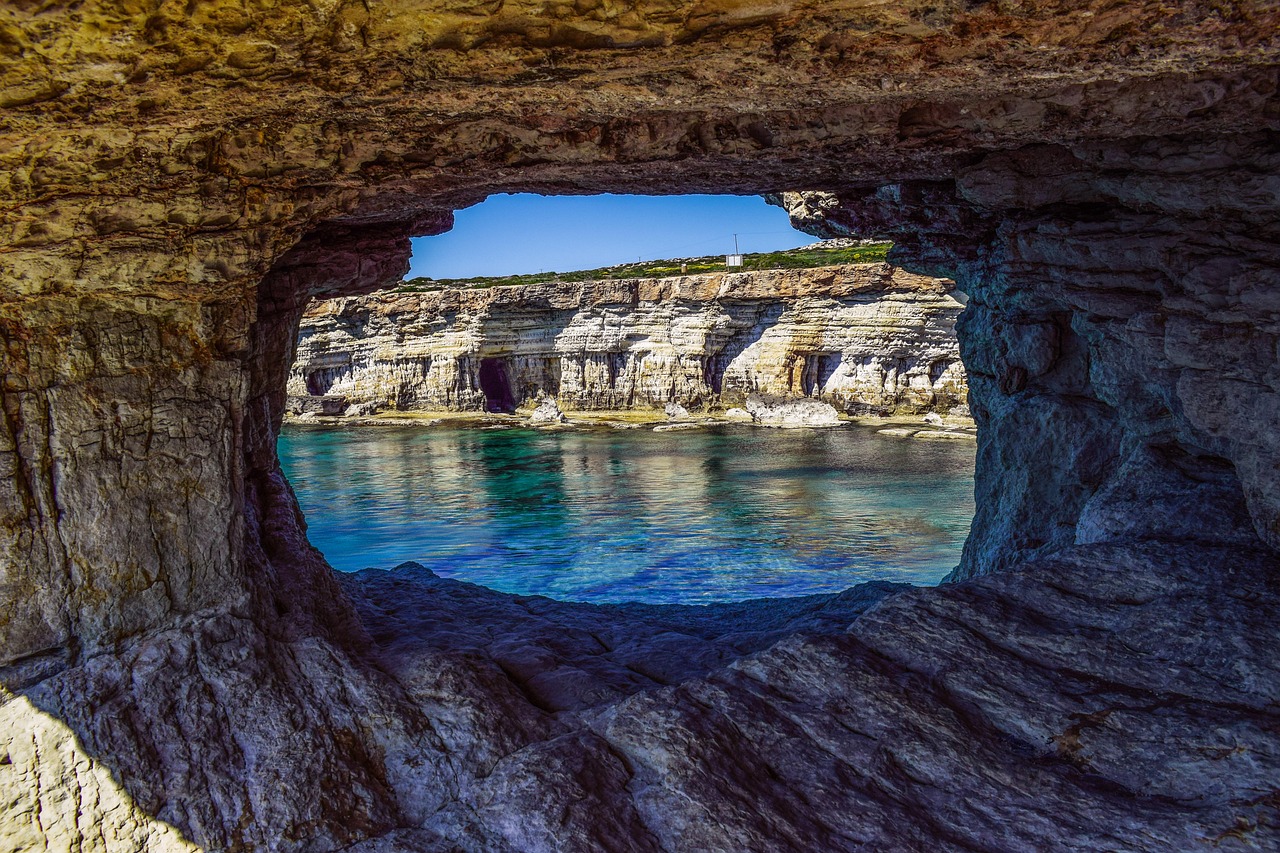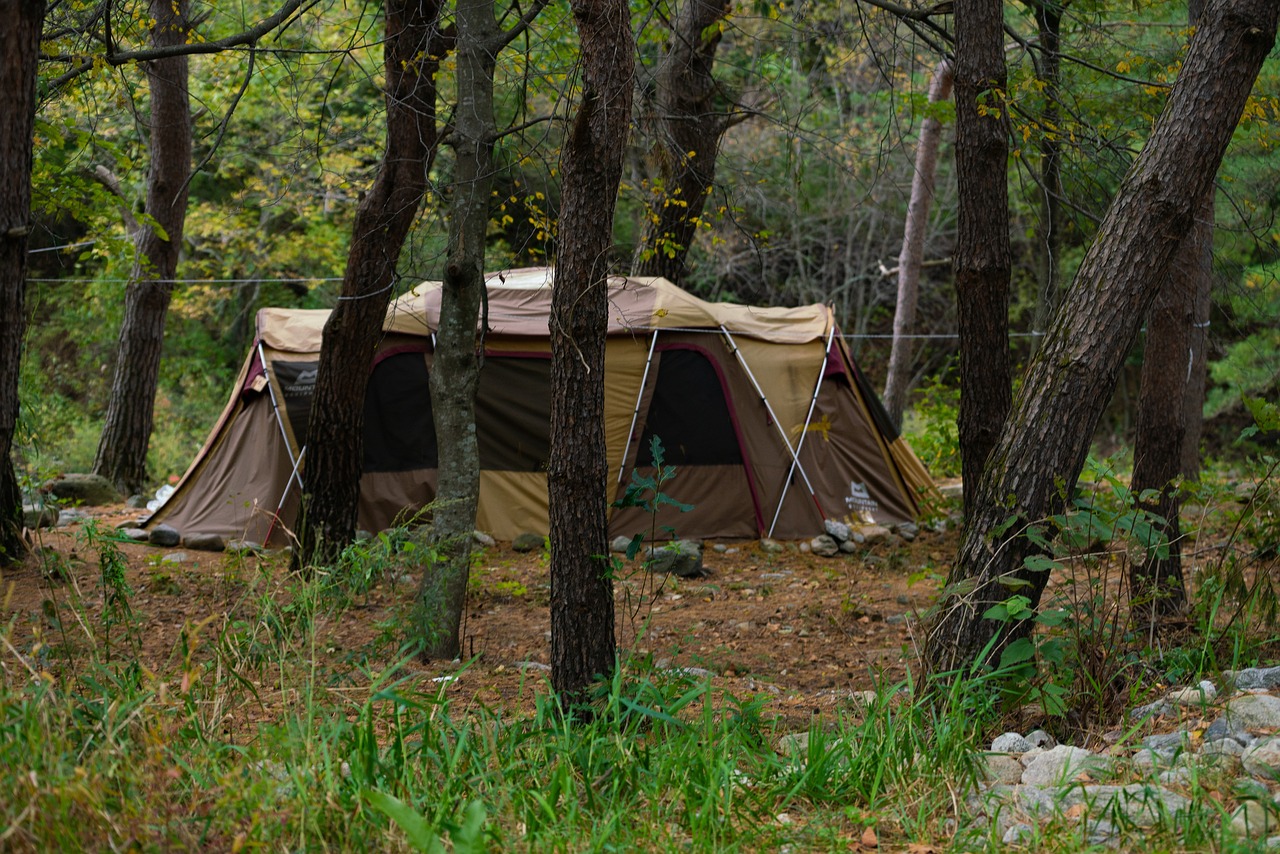
Russell Cave is the human chapter of America's cave story and costs nothing to visit: a small national monument in the hills of northeast Alabama, just south of the Tennessee line, protecting the broad mouth of a limestone cave that served as a shelter for people for more than ten thousand years. Excavations in the 1950s, backed by the National Geographic Society, dug down through layer after layer of hearths, tools, weapon points, pottery and bones — a continuous record of seasonal occupation stretching from the Ice Age's end to recent centuries — and the site became a national monument as a result. The visit is short and contemplative. A boardwalk leads from the Gilbert Grosvenor Visitor Center to the cave shelter, where you stand beneath the high limestone overhang and look into the dark beyond. Touring inside the cave itself is not offered or permitted — a stream flows out of it, and the passages beyond are for researchers — so set expectations accordingly: this is a place to understand how and why people used caves, not a show cave. The visitor center museum displays artifacts from the excavations, rangers offer programs on primitive skills and the site's archaeology, a 1.2-mile nature trail loops through the hardwood forest, and there is a small picnic area. There is no entrance fee. Fit: history-minded families, teachers and homeschoolers, road-trippers between Chattanooga and Huntsville, and anyone who wants to add depth to a Ruby Falls or Cathedral Caverns trip.
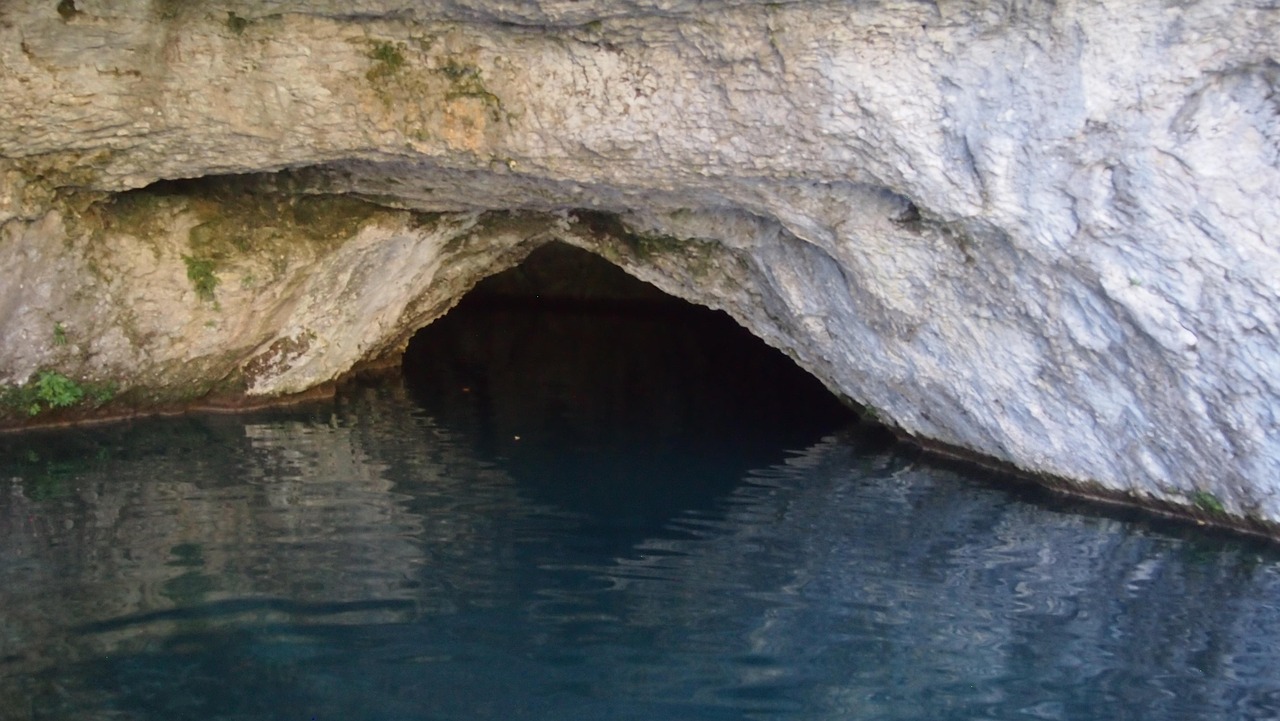
The shelter makes the archaeology vivid. Standing under the overhang, it is easy to see why people returned here for millennia: the cave mouth faces away from the worst weather, a stream runs out of it, and the surrounding valley was rich in game, nuts and plants. The museum exhibits show what the excavations revealed in each layer — how tools changed, how pottery appeared, how the seasonal rhythm of use persisted — and the rangers are good at turning bits of chert and charcoal into stories about daily life.
The site also shows how much water a karst cave can carry: the park notes that thousands of acres drain into the cave, and in heavy rain the stream can rise dramatically.
Doing it right
Start in the visitor center museum, then walk the boardwalk to the shelter, then take the nature trail if you have an hour. Check the park schedule for ranger programs and demonstrations, which run more often in warmer months and on special event days. The visit takes one to two hours. It is quiet, uncrowded and well suited to a gentle stop between bigger attractions.
The setting is the rural corner where Alabama, Tennessee and Georgia meet, about forty-five minutes from Chattanooga. That puts it within easy reach of Ruby Falls and the Lost Sea for a Chattanooga cave weekend, and about an hour from Cathedral Caverns for a two-cave Alabama day. Fit: families with school-age kids, history and archaeology fans, and any cave trip that wants a sense of the people who came underground first.
What to expect
The experience
A free visit to a prehistoric cave shelter — visitor center museum of excavated artifacts, a short boardwalk to the cave mouth and a 1.2-mile woodland trail. No entry into the cave itself.
Best time
Year-round; warmer months bring more ranger programs. A peaceful stop any day between larger attractions.
How long
One to two hours with the museum, boardwalk and trail.
Tips
See the museum first for context, then the shelter. Check for ranger demonstrations. Pair with Ruby Falls, the Lost Sea or Cathedral Caverns on the same trip.
Quick picks
- Best for
- The people side of cave history — ten thousand years of shelter, free.
- Families
- Short, easy and genuinely educational, with artifacts that bring the past to life.
- Couples
- A quiet, reflective stop between Chattanooga's big attractions.
- Pair with
- Ruby Falls, the Lost Sea and Cathedral Caverns.
- Time needed
- One to two hours.
Good questions
Can we go inside Russell Cave?+
No — touring inside the cave is not offered or permitted. A boardwalk takes you to the large shelter at the cave mouth, which is the site's focus.
Is there an entrance fee?+
No. Russell Cave National Monument is free, and no entrance pass is required.
Why is it a national monument?+
Excavations in the 1950s uncovered a long, layered record of people using the shelter for more than ten thousand years, one of the most complete such records in the Southeast.
How long should we plan?+
One to two hours for the museum, boardwalk and the 1.2-mile nature trail, longer if a ranger program is running.
What is nearby?+
Chattanooga, with Ruby Falls and the Lost Sea, is about forty-five minutes away, and Cathedral Caverns State Park is roughly an hour to the southwest.