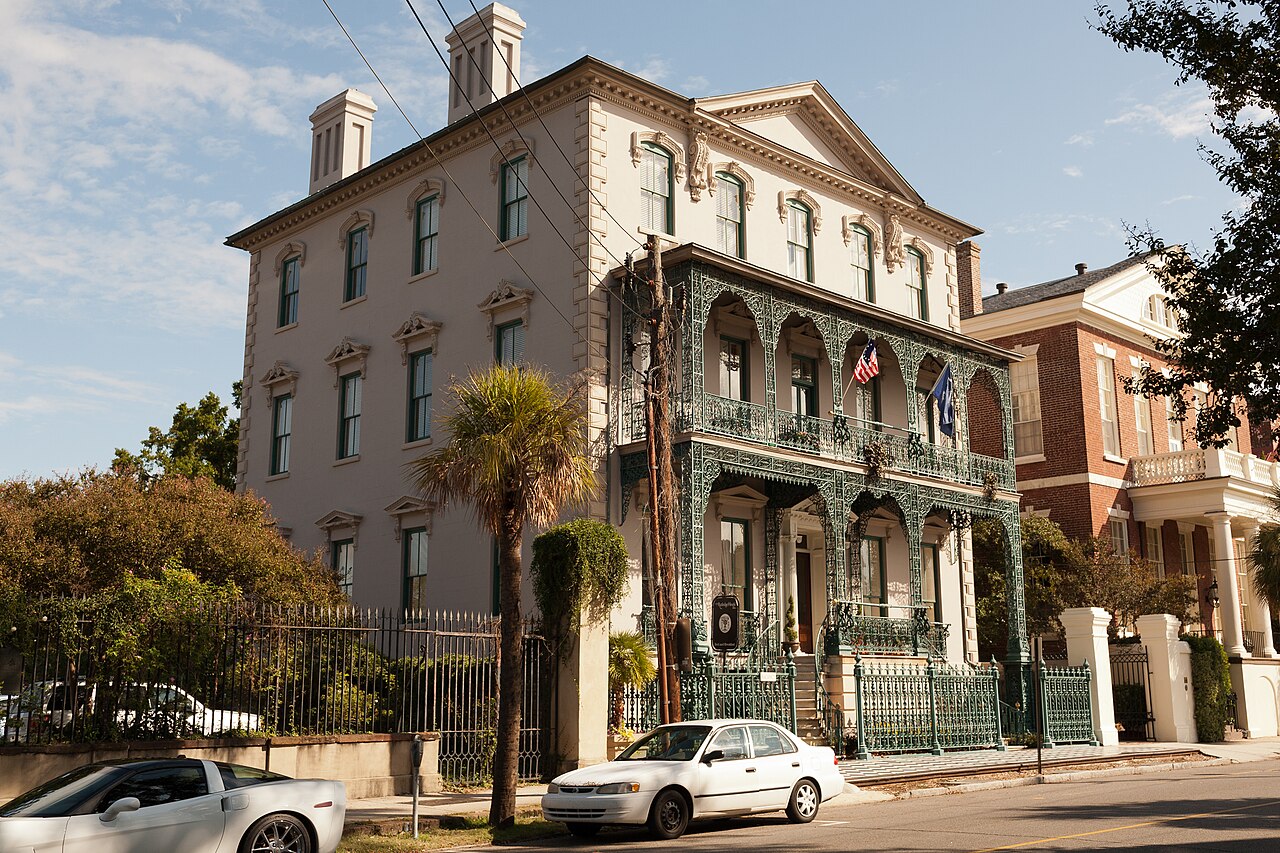
The John Rutledge House Inn is Charleston's deepest historical sleep: the 1763 mansion John Rutledge built for his bride — where the future signer of the U.S. Constitution, South Carolina governor, and Supreme Court justice lived, worked, and hosted the founding generation (George Washington took breakfast here in 1791, the plaque notes without blinking) — operating as a 19-room inn whose fabric is the museum: the famous ironwork balcony's palmetto-and-eagle motifs (added 1853 and the stair-rail standard Charleston measures against), Italian marble mantels, parquet floors, and plasterwork ceilings in the second-floor ballroom suites where the proportions alone narrate the eighteenth century. The inn liturgy runs full: afternoon tea and sherry in the drawing room (wine-and-cheese by season's rhythm), evening port and brandy at the sideboard, breakfast to the room or courtyard, and nightcap turndown with the house's history card — service in the white-tablecloth-inn register the National Trust's Historic Hotels roster recognizes. Rooms split between the mansion's grand tiers (the ballroom suites' soaring originals are among the city's great sleeps) and the carriage houses' quieter comforts. The Broad Street address sits in the lawyer-and-gallery blocks — the Four Corners a block east, the Battery an eight-minute walk south — placing guests inside the museum district they came to walk. Fit: history-first travelers, anniversary trips, and anyone who wants the Constitution drafted one floor below their four-poster. Book the mansion tiers; that is the point.
The house's résumé is founding-era primary source: Rutledge built it in 1763 (the marriage-gift mansion of Charleston lore), and his career ran through its rooms — wartime governor (the state's "Dictator John" emergency executive), delegate whose Committee of Detail work drafted constitutional language (scholars trace clauses to this address), Supreme Court appointment — making the building one of a handful of surviving signers' homes operating as lodging anywhere. The fabric's nineteenth-century layer added the signature: the 1853 ironwork by Christopher Werner (the palmetto-eagle balcony among Charleston iron's masterpieces) and the high-Victorian interior flourishes riding atop Georgian bones; the twentieth century's uses (residence, offices, decline) ended in the late-1980s restoration that returned mansion and dependencies to hospitality with preservation-award care — original mantels, floors, and the ballroom's plaster crowns conserved rather than replicated.
The stay's texture runs museum-warm
The drawing room's tea-and-sherry afternoons under portraits, the second-floor suites' fourteen-foot ceilings and window seats over Broad Street's law-office rhythm, carriage-house tiers wrapping the courtyard for travelers trading grandeur for hush, and a staff fluent in the house's footnotes (ask for the Washington-breakfast telling and the ironwork tour). Breakfast-and-turndown rituals hold the inn register; the absence of bar-restaurant apparatus is the format (the city's tables surround).
Fit and craft
The history pinnacle — constitutional pilgrims, anniversary couples, Historic-Hotels collectors — with calibrations honest: mansion tiers are the product (carriage rooms are lovely and miss the thesis), historic fabric means stairs and quirk (elevators partial; ask by mobility), and the register is hushed-formal rather than social. Book ballroom suites for the proportions, azalea and fall far ahead, and take the evening ritual seriously: port at the sideboard where the founding generation argued, then up the Werner stair to sleep in the argument's house.
Why stay here
- ✓1763 signer’s mansion, fabric intact
- ✓Werner ironwork balcony
- ✓Ballroom suites, 14-foot ceilings
- ✓Afternoon tea and evening port
- ✓Washington-breakfast history
- ✓Four Corners one block
- ✓Carriage-house quiet tiers
- ✓Historic Hotels of America roster
Good questions
Is the history real?+
Primary-source real — Rutledge built it in 1763, drafted constitutional language in it, and Washington breakfasted here in 1791. It is among the only signers' homes anywhere you can sleep in.
Which rooms carry the thesis?+
The mansion's ballroom suites — fourteen-foot plaster ceilings, original mantels, Broad Street window seats. Carriage-house tiers trade grandeur for courtyard hush.
What is the daily rhythm?+
Afternoon tea and sherry in the drawing room, evening port at the sideboard, breakfast to room or courtyard — the full inn liturgy under portraits, with the staff's history tour on request.