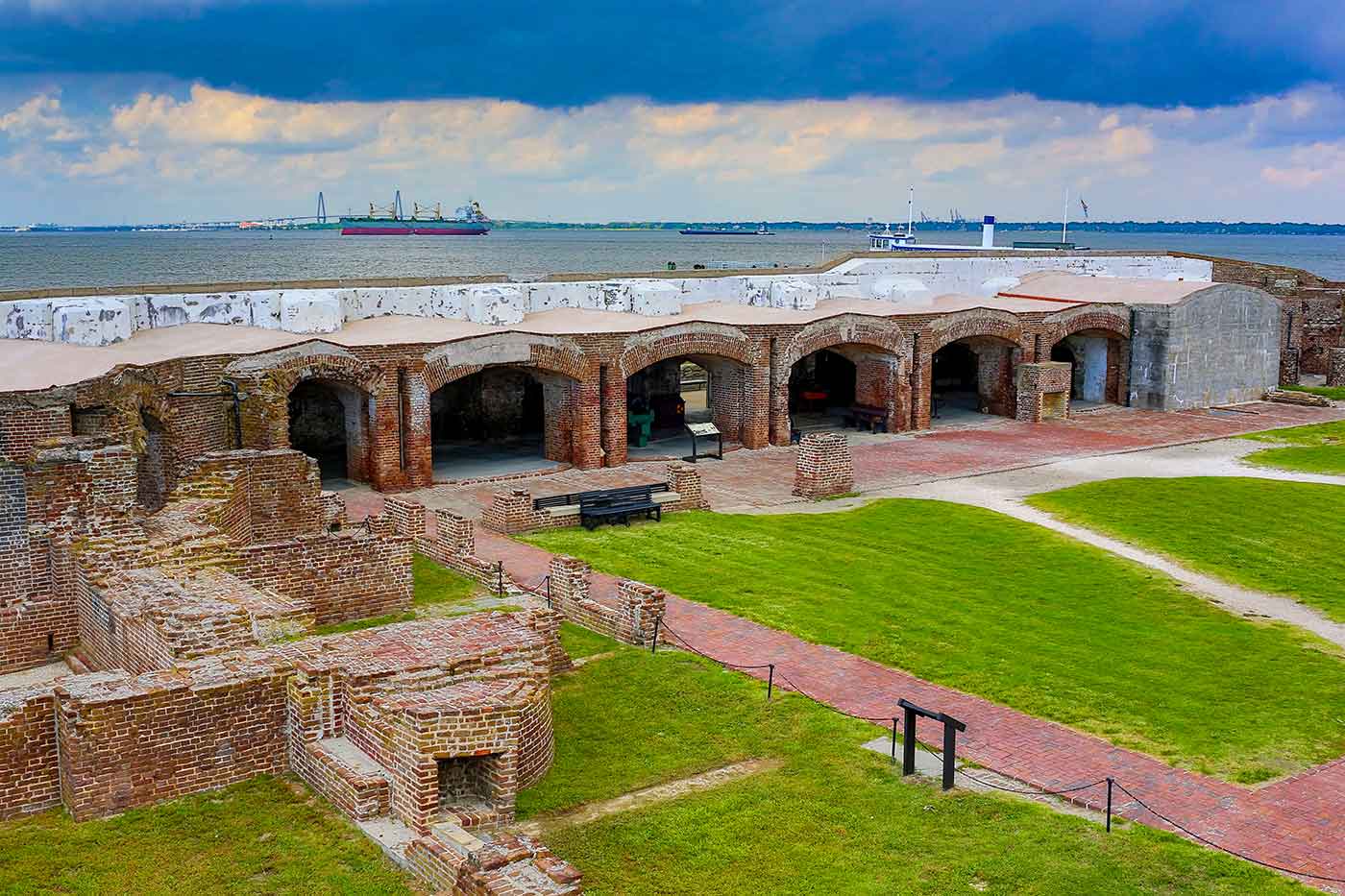
The Vendue wears two identities Charleston loves: the art hotel — its two 18th-century-warehouse buildings on Vendue Range curated like a working museum, with rotating exhibitions (painting, sculpture, photography mounted gallery-grade through lobbies, corridors, and rooms), artist-in-residence programming, and docent-style art tours for guests — and the original rooftop: The Rooftop at the Vendue, the bar that invented the city's roof-drinking tradition and still runs its best harbor sightline, Fort Sumter's silhouette to the Ravenel's cables over Waterfront Park's oaks (public and popular; guests skip the weekend queue). The position underneath is the French Quarter's waterfront corner — the pineapple fountain and the park's swings at the block's end, the galleries of Queen and Broad streets around it, the Market five minutes, the Battery ten — making it the harbor-walking trip's natural base. Rooms split personalities by building: the main house's historic-bones tiers (exposed brick and beams, the warehouse register) and the annex's contemporary-gallery calm, both running boutique-plush with art-program pieces in every key. The food-and-drink stack keeps the identity (the Drawing Room's art-wrapped dining, rooftop kitchen upstairs), and the fit lands precisely: art-literate couples, harbor romantics, and travelers who want the French Quarter's gallery blocks to continue past their room key. Book harbor-side uppers and sunset rooftop tables ahead in season.
The art program is curated rather than decorative: the hotel's partnership-driven exhibitions rotate on gallery calendars (openings, artist talks, the residence program's working studio), the collection hangs museum-labeled through both buildings, and the guest art tours run docent-sincere — the identity attracting the Spoleto-season crowd (Charleston's arts festival makes the Vendue its unofficial lobby) and the gallery-district clientele the French Quarter position feeds. The buildings carry the second register: 1780s-era warehouse fabric (ship chandlery and cotton bones) renovated into the main house's brick-and-beam tiers, with the across-the-lane annex running smoother contemporary lines — the booking choice is texture versus calm, both art-hung.
The Rooftop's institution status is historical fact: the city's first rooftop bar claimed the view before height-cap politics made roofs precious, and the deck's harbor panorama — Waterfront Park's live oaks below, the harbor's church-steeple frame, Sumter on the horizon — remains the standard the newcomers chase; the operational notes matter (public access makes weekend sunsets dense; the guest elevator priority and table reservations are the workarounds, and shoulder-season weekday sunsets belong to you). The Drawing Room restaurant runs contemporary-Lowcountry beneath the collection; breakfast-through-cocktails keep the art-salon register.
Fit and craft
The harbor-and-galleries base — art-first couples, Spoleto pilgrims, photographers monetizing the pineapple fountain's dawn — with calibrations plain: the rooftop's popularity is the amenity and its crowd (guests skip lines, not people), room character varies by building (ask for brick-and-beam or annex-calm by preference, harbor-side uppers regardless), and families fit better at the chain-polish tiers. Book Spoleto weeks and fall months out, reserve sunset rooftop tables with the room, and work the position: fountain at dawn, galleries by day, Sumter silhouette at golden hour — the French Quarter's whole argument, stacked vertically at one corner.
Why stay here
- ✓Rotating gallery exhibitions
- ✓The Rooftop harbor bar (the original)
- ✓Waterfront Park at the corner
- ✓Artist-in-residence program
- ✓Brick-and-beam historic tiers
- ✓Drawing Room dining
- ✓Guest art tours
- ✓Gallery-district position
Good questions
Is the art serious?+
Gallery-grade and rotating — curated exhibitions with openings and artist residencies, museum-labeled through both buildings, plus docent-style guest tours. Spoleto season treats it as a festival venue.
How is the rooftop?+
The city's original and still its best harbor sightline — Sumter to the Ravenel over Waterfront Park. Public and popular: guests skip queues, and sunset tables reserve ahead in season.
Which building should we book?+
The main house for exposed brick-and-beam warehouse character, the annex for contemporary calm — both art-hung; harbor-side uppers either way.