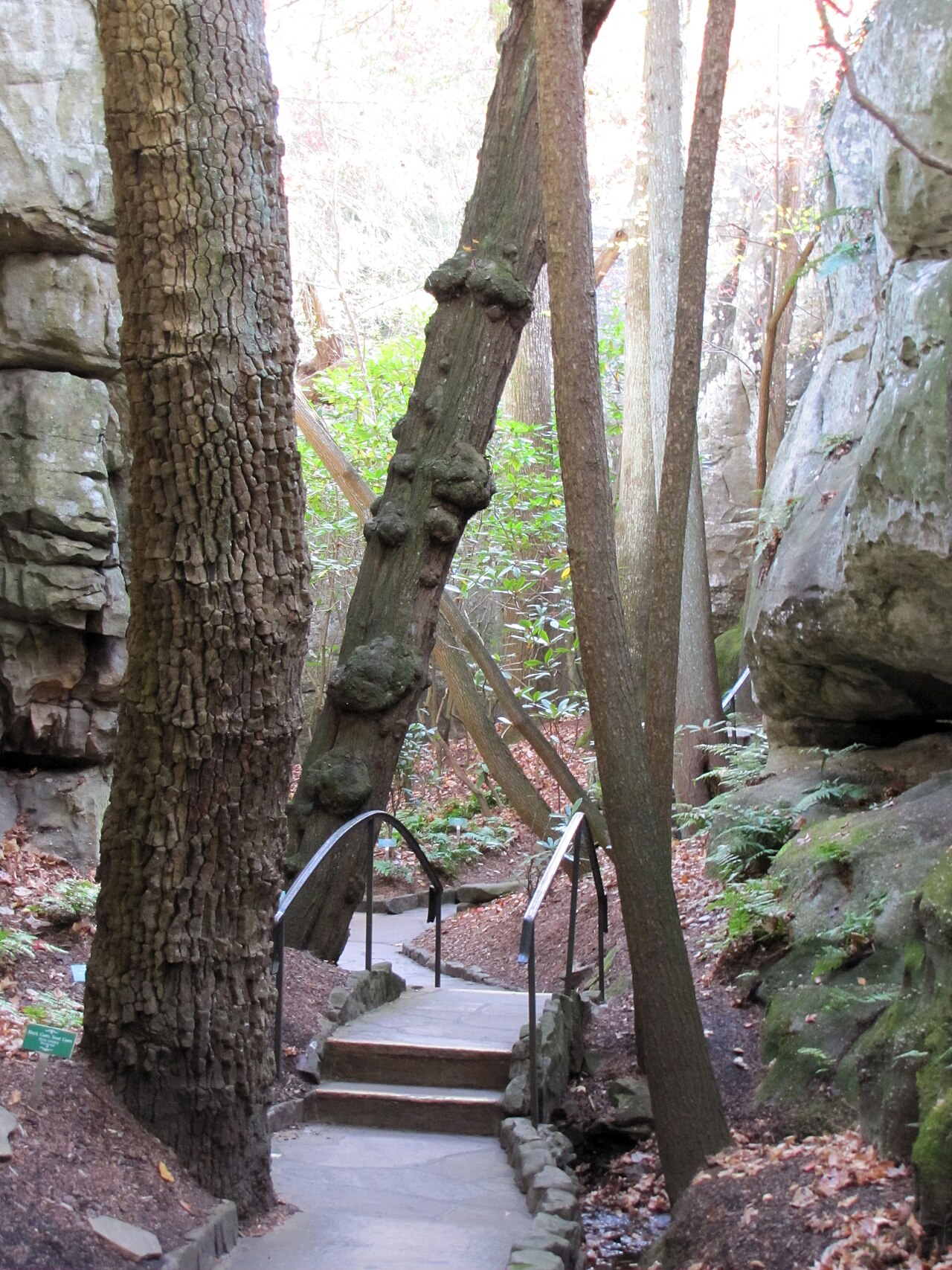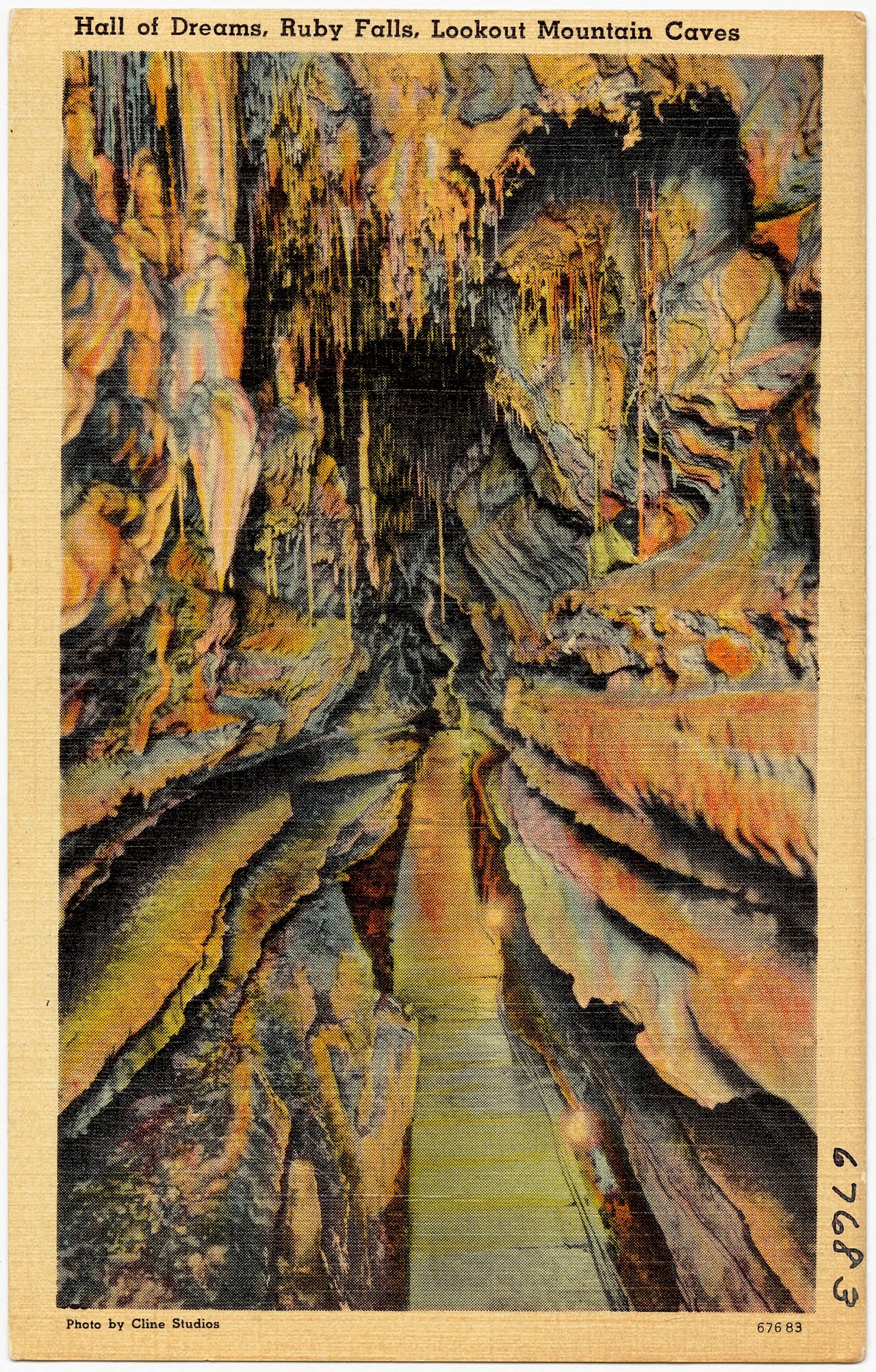
Ruby Falls is the roadside-attraction era's masterpiece that happens to be real: 1,120 feet inside Chattanooga's Lookout Mountain, at the end of a corridor of formations, a 145-foot waterfall pours through a dome of darkness — the tallest underground waterfall open to the public in America — revealed in a light-and-sound moment the operation has staged since 1930 and still lands. The visit runs tight and theatrical: the glass-front elevator drops 260 feet through the mountain, guides walk the level, lit passage past the formation roster (bacon-strip draperies, the leaning tower, steak-and-potatoes humor included), and the falls finale fills its chamber with mist and color before the walk back. Discovered by accident in 1928 — Leo Lambert drilling an elevator shaft to a different cave hit a crawlway, followed it for seventeen hours, and named what he found for his wife — it has barnstormed ever since (the SEE RUBY FALLS barns and birdhouses are Southern highway folklore). Timed tickets online; the mountain stacks with Rock City and the Incline for Chattanooga's classic triple. An hour-plus underground, all ages, zero weather.
The discovery story is the attraction's founding myth and entirely true: Lambert's 1928 company was drilling an elevator shaft to reopen the historic Lookout Mountain Cave (closed by a railroad tunnel) when the drill broke into an unknown void 260 feet down; Lambert squeezed into the eighteen-inch crawlway, explored by lantern for most of a day, and returned raving about a waterfall deep in the mountain — then brought his wife Ruby to see it and made the christening a marriage memorial. The Depression-era showmanship that followed built the category's promotional legend: the castle-styled entrance building above, the painted SEE RUBY FALLS barn roofs spreading across the South, and a tourism formula — elevator, corridor, revelation — that has run essentially unchanged and essentially perfectly for nearly a century.
The modern experience keeps the theater and upgrades the craft: timed entries meter the corridor, the guides' patter balances geology with the formation-naming vaudeville tradition (the cave's signatures — bacon strips backlit to translucence, the Leaning Tower, Cactus and Candle — invite it), and the falls chamber's reveal runs a choreographed light-and-music sequence that modern LED work has made genuinely beautiful: the water pouring 145 feet from an unseen source (the stream's origin remains partly mysterious — rainfall and springs feeding through the mountain), mist drifting the dome, colors cycling the plunge. The walk runs level and paved beyond the elevator — among the gentlest in the category — and the return corridor gives the formations their second look. Above ground, the castle tower's overlook adds the Tennessee Valley panorama, and the Lantern Tour evenings (flashlights-off, guide-led) run the connoisseur variant seasonally.
Fit and craft
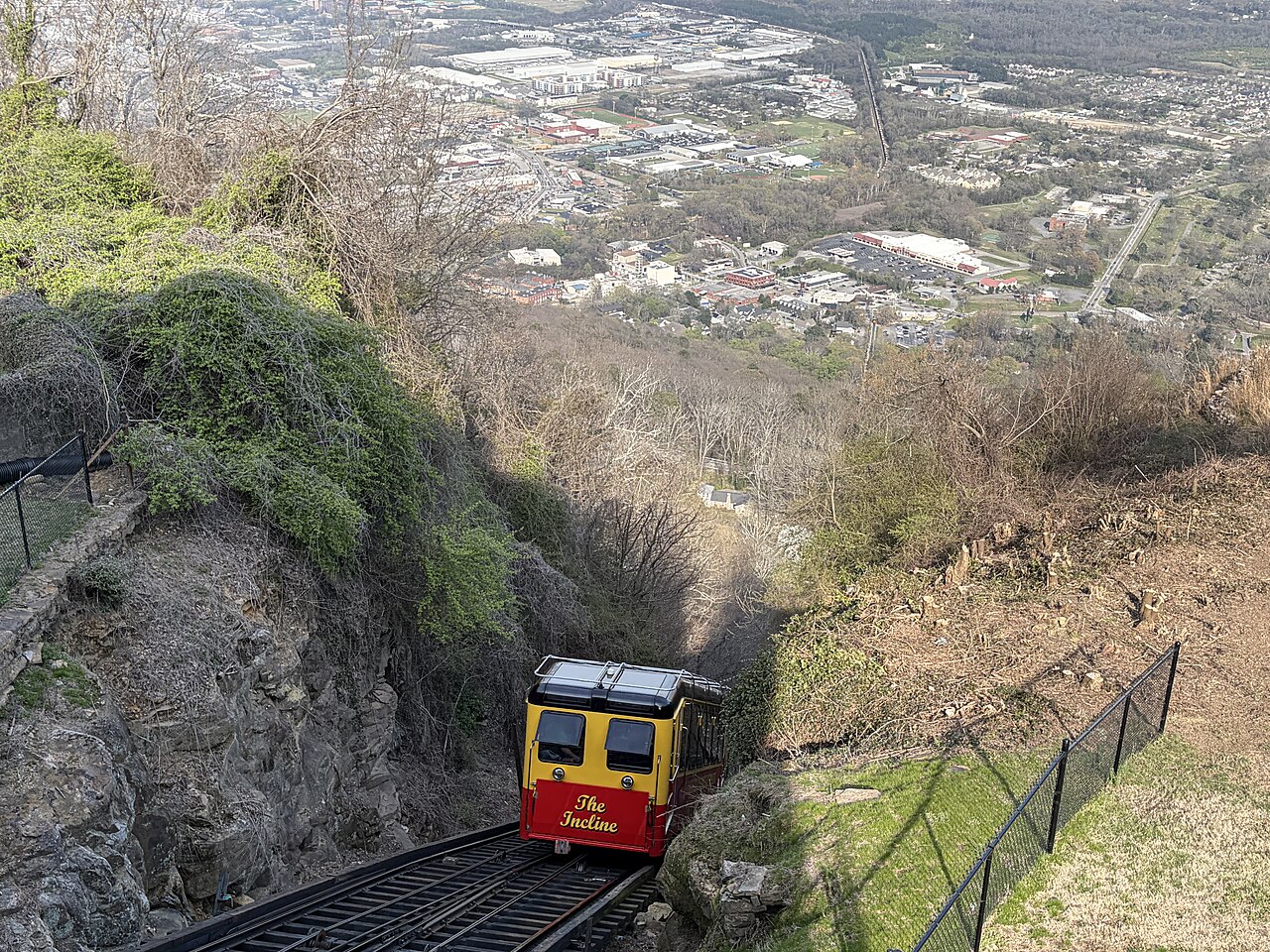
Ruby Falls is the category's best pure-theater hour and Chattanooga's anchor ticket — stack it with Rock City's gardens and the Incline Railway for the Lookout Mountain triple the city invented, and book the first morning slots in summer (the corridor meters, but middays queue). The operation runs all ages easily (strollers manage to the elevator; the cave walk is level), 60 degrees year-round, and the falls' flow rides the season's rainfall — spring pours strongest. Chattanooga's riverfront (and this market's Read House anchor) sits fifteen minutes below; the Lost Sea's underground lake runs an hour north for the cave-country double this guide's road trips map.
What to expect
The experience
The 1930 classic perfected — a glass elevator 260 feet into Lookout Mountain, a level formation corridor, and the 145-foot falls finale's light-and-mist reveal. Timed tickets; castle tower overlook above; all ages easily.
Best time
First morning slots beat summer's midday queues; spring rainfall pours the falls strongest. Seasonal evening lantern tours run the connoisseur variant.
How long
Ninety minutes door to door.
Tips
Book timed entry online. The level walk is the category's gentlest — bring grandparents. Spring for maximum water. Stack Rock City and the Incline for the mountain's classic triple; the barns on the drive are the folklore.
Quick picks
- Best for
- The theater hour — the roadside era's best promise, kept for nearly a century.
- Families
- Glass elevator, bacon-strip formations, a waterfall light show — the under-10 conversion is instant and total.
- Couples
- The seasonal lantern evenings — the corridor by handheld light, the falls in the dark — are the sleeper booking.
- Pair with
- Rock City and the Incline Railway — Lookout Mountain's invented-here attraction triple.
- Time needed
- Half a day with the mountain's neighbors.
Good questions
Is the waterfall real?+
Entirely — 145 feet of mountain stream pouring through the dome, fed by rain and springs, strongest after wet seasons. The lights stage it; the water means it.
How was it found?+
By accident in 1928 — Leo Lambert's elevator drill broke into an unknown crawlway, he explored seventeen hours by lantern, and named the falls for his wife Ruby. The barn-roof ads did the rest.
How strenuous is it?+
The category's gentlest hour — elevator down, level paved corridor, same way back. Strollers to the elevator; grandparents throughout.
When should we book?+
Timed entries online, first slots in summer — the corridor meters but middays queue. Spring visits catch the heaviest flow.
What pairs with it?+
Lookout Mountain's triple — Rock City's gardens and the Incline Railway — with Chattanooga's riverfront below and the Lost Sea an hour north for cave-country's double.