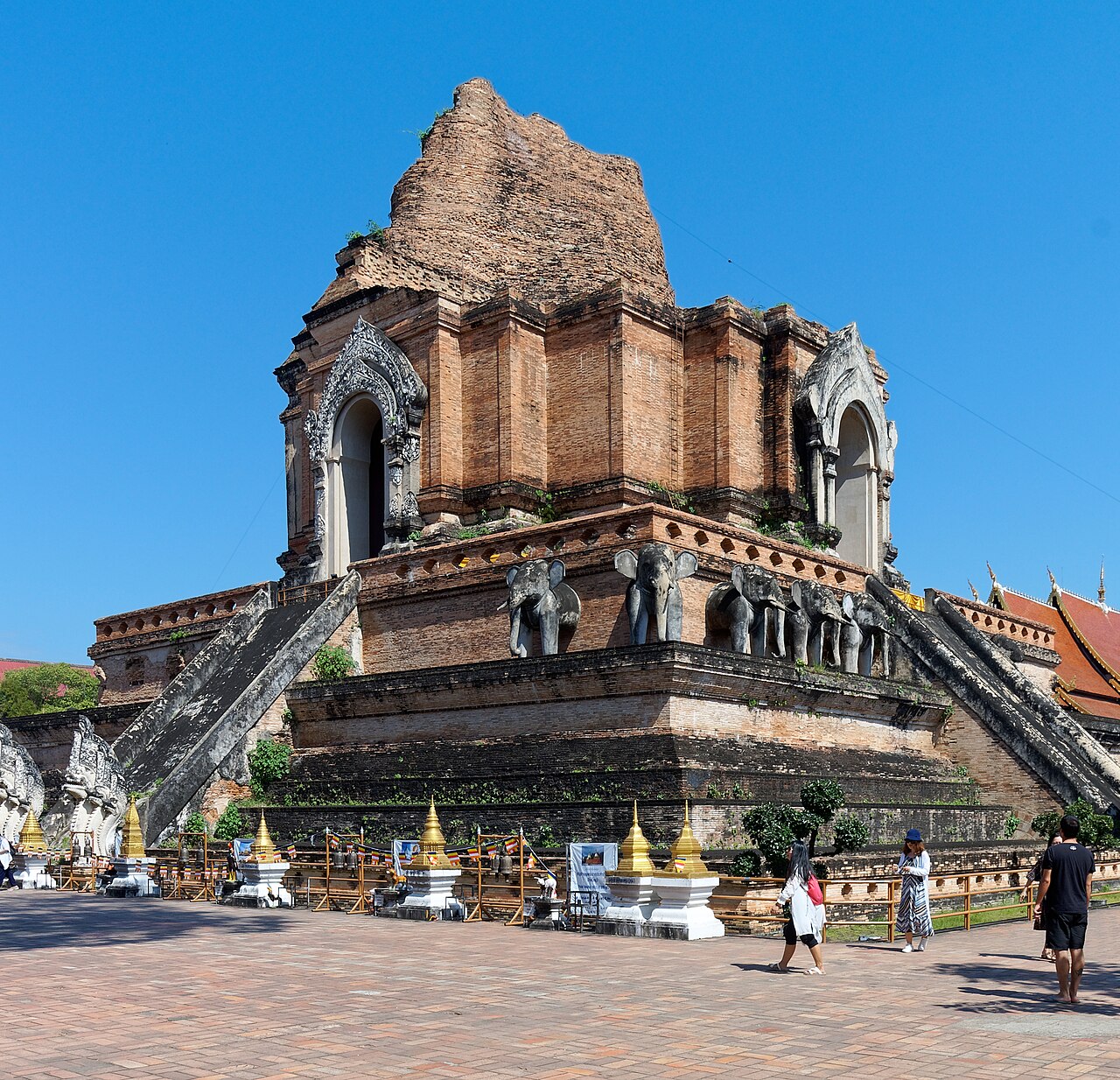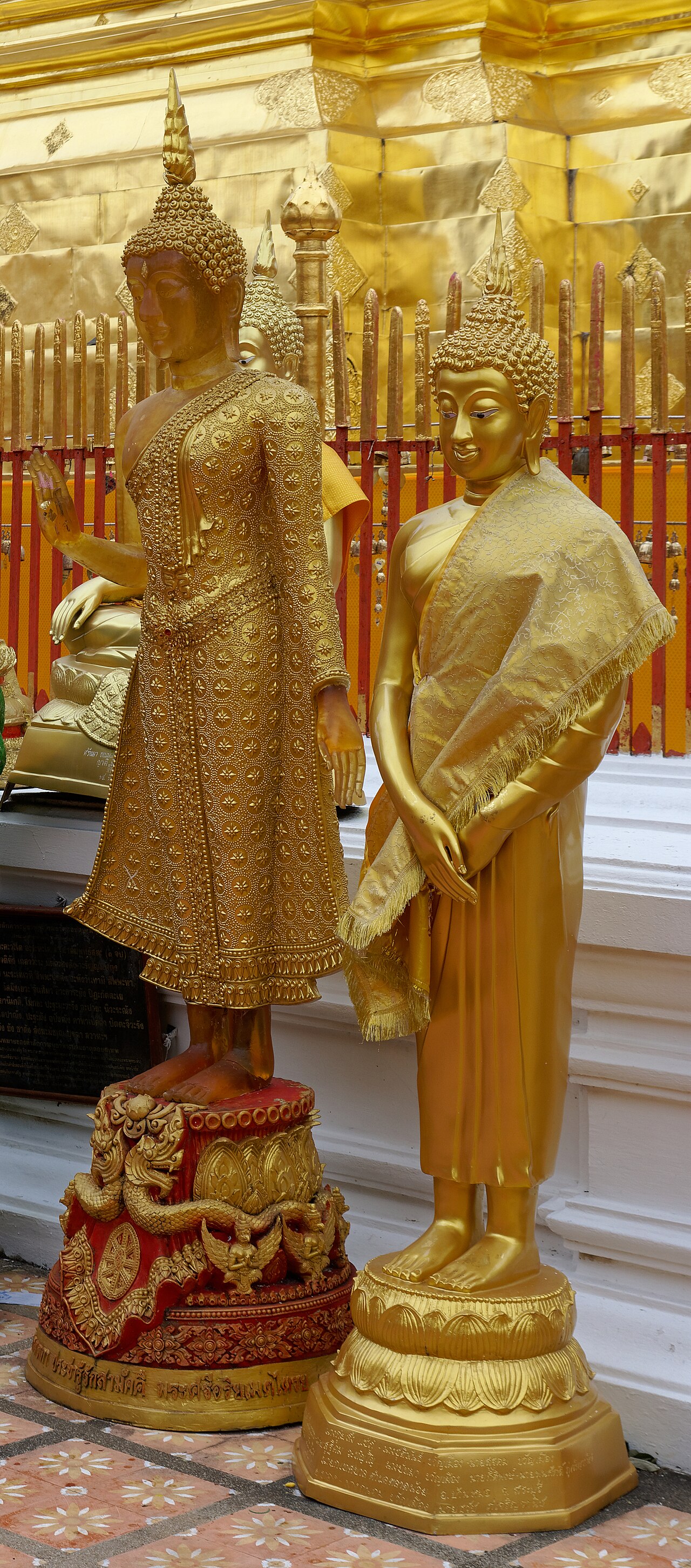
Wat Phra That Doi Suthep is the sight that most visitors mean when they say they have seen Chiang Mai. The temple sits on the slope of Suthep mountain, a short drive northwest of the old city, and its gold-plated chedi is visible from the valley on a clear day. Legend dates the shrine to the late fourteenth century, when a white elephant carrying a relic of the Buddha is said to have climbed the mountain and stopped here. You reach the terrace by a long staircase guarded by naga serpents, or by a cable car beside it if your knees object. At the top, barefoot monks and worshippers circle the chedi, bells ring along the cloister wall, and the terrace looks out over the city and the plain beyond. Entry to the grounds is inexpensive for foreign visitors, and there is a separate small charge for the cable car. It is a working temple, so expect chanting, incense and the occasional ceremony, and keep your voice low.
The best way to see Doi Suthep is to treat the temple as the centre of a half day rather than a quick photo stop. The road up from the city climbs through forest, the air cools noticeably near the top, and the terrace is most atmospheric either early in the morning, when the light is soft and the tour buses have not arrived, or around sunset, when the chedi glows and the lights of the city come on. Tiqets sells small-group guided tours that combine the temple with Wat Pha Lat, a quiet forest monastery reached on foot, or with Wat Umong in the evening, which adds context a solo visit lacks.
Practical points: cover your shoulders and knees, remove your shoes before entering the inner terrace and any hall, and do not point your feet at Buddha images or touch monks. Red shared songthaew trucks run up the mountain from the city and are the budget option; a ride-hailing car or a tour is easier if you have limited time. The staircase is long but manageable for most people, and the cable car removes the climb entirely. Weekends and Thai holidays are the busiest. During the burning season from roughly February to April, haze can hide the view, so the cool, clear months from November to February are the best time to come.
Doi Suthep pairs naturally with the old-city temples, which show the lowland Lanna style in the same visit, and with a Doi Inthanon day trip for those who want more mountain scenery. It is not a hike you can do in flip-flops, but it is one of the few major sights in northern Thailand that works for almost every age and fitness level.
What to expect
The experience
A guided half-day tour or a self-guided visit: a drive up the mountain, a climb or cable-car ride to the terrace, and time to circle the gilded chedi and look out over the city.
Best time
Early morning for soft light and fewer crowds, or late afternoon into dusk for the glow on the chedi; the cool months from November to February give the clearest views.
How long
Plan two to four hours including the road up, the staircase, the terrace and the drive back; sunrise and evening tours run closer to four or five hours with a second stop.
Tips
Cover shoulders and knees, bring a light layer for the cooler air, carry small change for donations, and keep your voice low on the terrace because the temple is a place of daily worship.
Quick picks
- Best for
- First-timers who want the single most iconic view and shrine in Chiang Mai.
- Families
- Fine for school-age children; use the cable car for small legs and hold hands near the stairs and the terrace edge.
- Couples
- Go for sunset or a sunrise tour, then dinner back in the old city.
- Pair with
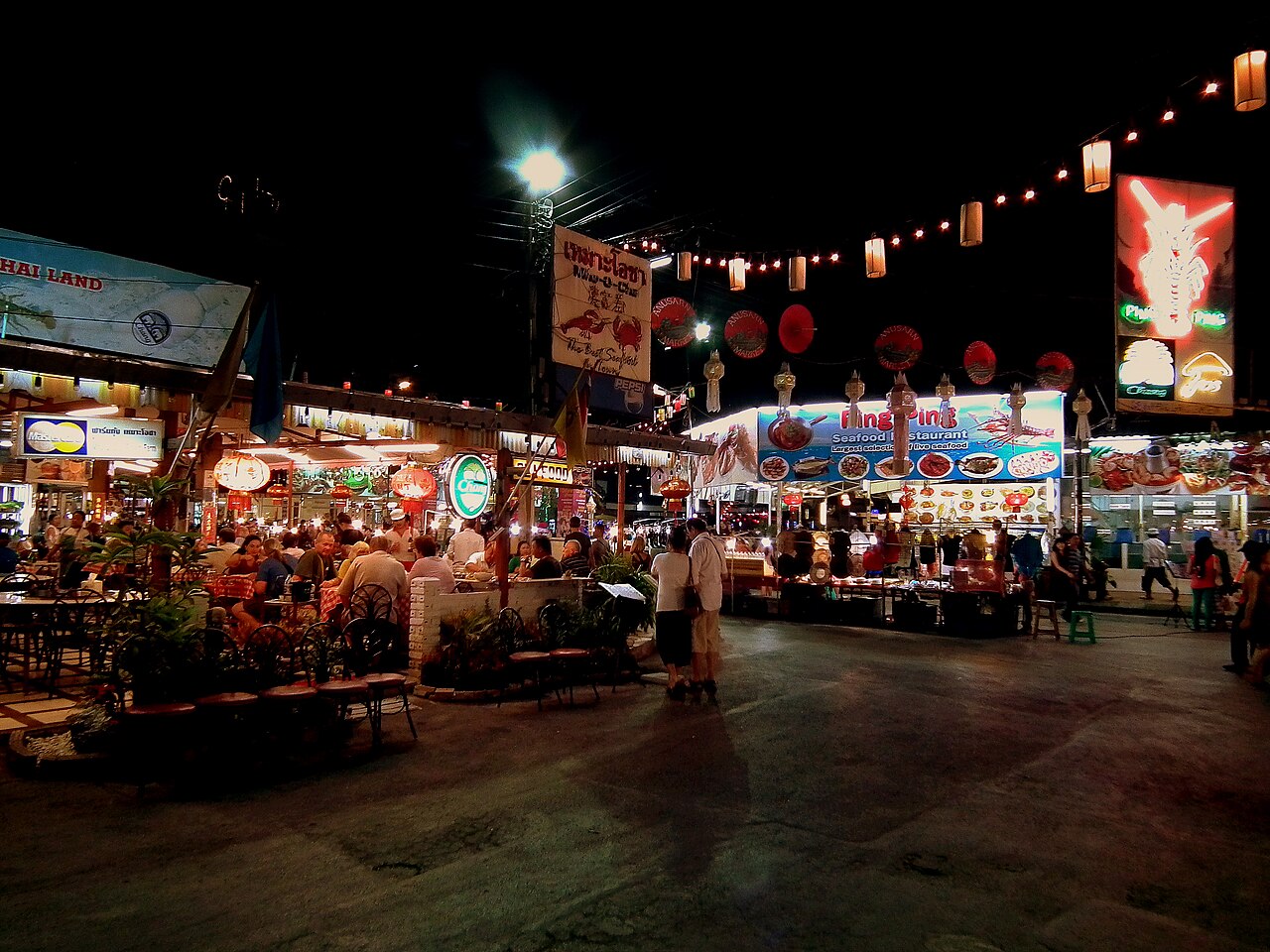
- Wat Pha Lat on the same tour, the old-city temples, or an evening at the Night Bazaar.
- Time needed
- Half a day with transport, a little less if you go by ride-hailing car.
Good questions
How do I get to Doi Suthep from the old city?+
Red songthaew trucks, ride-hailing cars and tour vans all make the roughly half-hour drive up the mountain. A guided tour bundles transport and often adds a second temple.
Do I have to climb the stairs?+
No. A cable car runs beside the naga staircase for a small fee, so you can ride up and skip the climb. Most visitors manage the stairs slowly with a few rests.
What should I wear?+
Cover your shoulders and knees and wear shoes you can slip off easily, since you remove them before the inner terrace. Shawls and sarongs can usually be borrowed or bought at the entrance.
Is there an entrance fee?+
Foreign visitors pay a modest fee for the grounds, and the cable car costs extra. Guided tours may or may not include it, so check the inclusions when you book.
When is the best time to visit?+
Early morning or around sunset, in the cool and clear season between November and February. Haze from burning can cloud the view from about February to April.