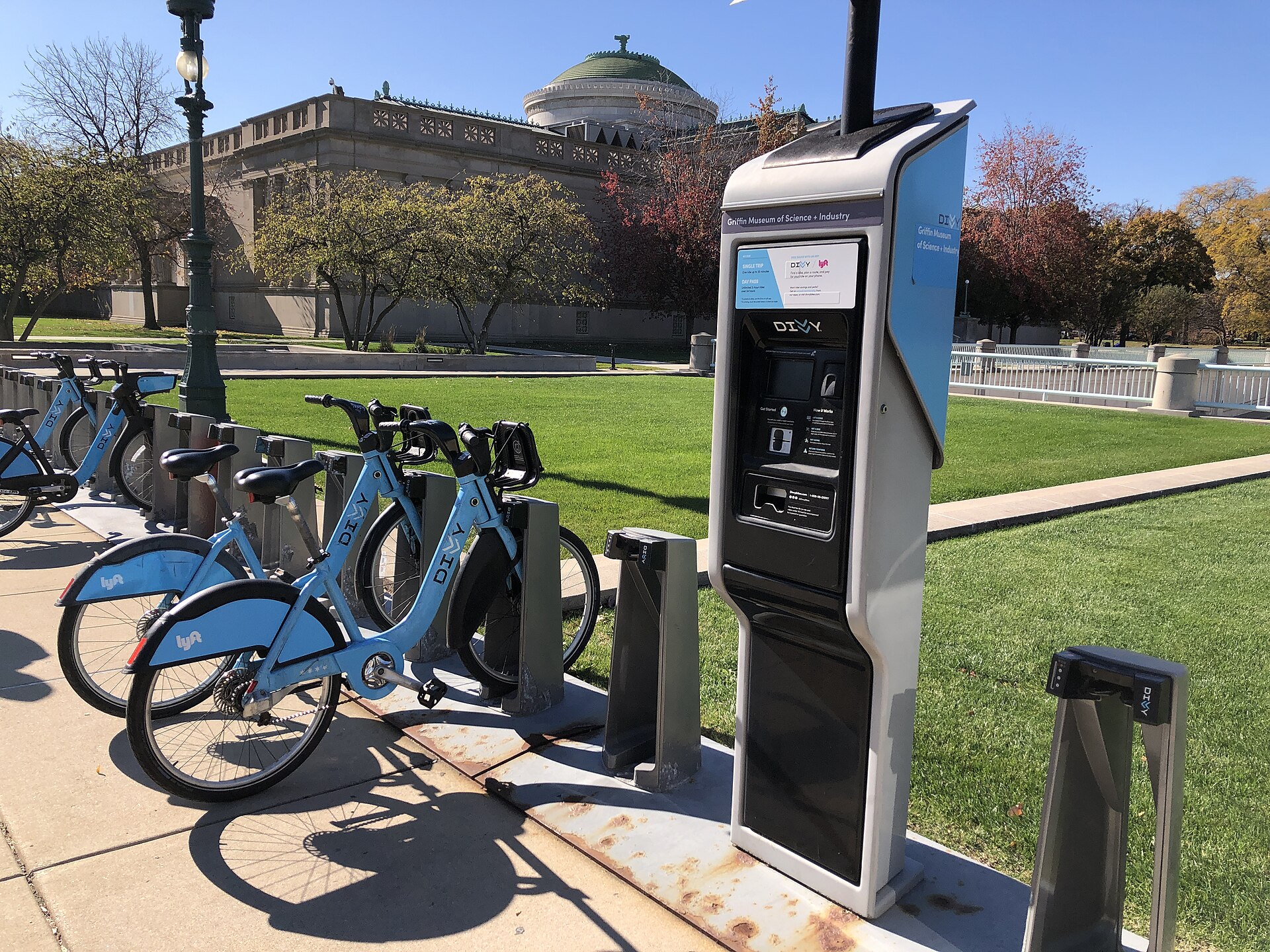
The Robie House is the Prairie style's definitive sentence: the 1910 residence Wright built for bicycle manufacturer Frederick Robie on a Hyde Park corner lot — the long, low composition of Roman brick and limestone whose cantilevered rooflines (the west eave floating twenty feet past its last support, steel secretly doing what looks impossible) made the horizontal line a manifesto, and whose interior delivers the style's full argument: the second-floor living level as one continuous space split only by the central hearth (the famous see-through fireplace with its skylit gap), wrapped in 174 art-glass windows and doors whose geometric patterning turns the walls to screens, with Wright-designed furniture, fixtures, and rugs completing the total-design thesis. UNESCO World Heritage listing (one of eight Wright works inscribed), the "cornerstone of modern architecture" epithet, and the building's rescue history (twice nearly demolished — the 1957 threat prompting 90-year-old Wright himself to picket — then decades of restoration to 1910 exactness) give the tours their stakes, and the Trust's interpretation runs the full story: the Robie family's brief tenure, the house's boarding-school decades, and the craftsmanship recovered (the art glass alone justifies the visit — afternoon light through the west windows is the tour's held breath). Logistics: Hyde Park's university blocks (the campus gothic surrounding it is its own walk; the Museum of Science and Industry sits ten minutes east — the natural pairing), timed guided tours booked ahead, 45-60 minutes inside, and the Oak Park double for the committed. In the city whose chip reads architecture, this is the single most important house.
The design's radicalism still reads
On a narrow corner lot Wright abandoned the house-as-box entirely — the plan slides two long volumes past each other (the "battleship" nickname the neighbors coined was not admiring), entry hides at the rear shadow (finding the front door is the style's joke and thesis at once), the ground floor's playroom-and-billiards level lifts the living floor to the piano nobile, and the great room runs prow to prow: dining at one end, living at the other, the hearth's pierced mass between, the band of art glass dissolving the south wall into pattern and light. The engineering carried the poetry — the cantilevers' channel steel let the eaves fly and the corners vanish — and the details compound: the art-glass program's 174 variations on the angled motif, the couch built into the inglenook, the ship-tight service spaces, and the garage (among the first attached ones anywhere, for Robie's automobiles) timestamping the client as modern too.
The survival story the docents tell well: the Robies held the house barely a year (family finances collapsing), the Chicago Theological Seminary's boarding decades ground it down, and demolition plans in 1941 and 1957 were beaten back — Wright's own 1957 protest visit producing the line that a building's destruction proves nothing but the destroyer's poverty — before the University of Chicago's stewardship and the Trust's millimeter-grade restoration (completed across the 2000s-2010s) returned the 1910 reading: original finishes recovered under paint layers, art glass conserved pane by pane, and the furniture program reproduced to Wright's drawings.
Practicals and fit
58th and Woodlawn on the University of Chicago campus (the Metra Electric or the drive; garage parking at the university), timed tours daily with weekend sellouts (book with the MSI pairing in mind — ten minutes apart, the classic Hyde Park double), 45-60 minutes guided, photography permitted without flash. Fit: the architecture chip's essential ticket, couples on the art-glass afternoon, students of anything design-adjacent — and the honest note that under-tens endure rather than enjoy; the MSI next door is their half of the Hyde Park bargain.
What to expect
The experience
A timed, guided hour through the 1910 Prairie masterpiece — the hearth-split great room, the art-glass walls, the impossible eaves — restored to millimeter exactness on the University of Chicago campus.
Best time
Afternoon tours catch west light through the art glass; book ahead for weekends and pair with the Museum of Science and Industry ten minutes east.
How long
Forty-five to sixty minutes inside.
Tips
Find the front door yourself before the docent shows you — the hunt is the thesis. The west eave cantilevers twenty feet; stand under it. MSI next door squares the family bargain.
Quick picks
- Best for
- The architecture trip's single most important house — the Prairie style's definitive sentence.
- Families
- Teens with design leanings engage; under-tens take the MSI half of the Hyde Park double.
- Couples
- Afternoon light through 174 art-glass panes — the city's most beautiful hour of glass.
- Pair with
- The Museum of Science and Industry ten minutes east; Oak Park's laboratory for the full Wright day.
- Time needed
- One timed hour, afternoon-lit.
Good questions
Why is it called the cornerstone of modern architecture?+
The 1910 composition — floating rooflines, the continuous hearth-split living floor, walls dissolved into art glass — codified the Prairie style and seeded everything horizontal that followed. UNESCO inscribed it among eight Wright works.
Was it really almost demolished?+
Twice — 1941 and 1957, the latter drawing 90-year-old Wright himself to protest. The university's stewardship and the Trust's decades-long restoration returned the 1910 reading.
What is special about the glass?+
174 art-glass windows and doors on one angled geometric motif, conserved pane by pane — the south band turns the wall to screen, and west-light afternoons are the tour's held breath.
How does it pair with Oak Park?+
As the masterpiece to the laboratory — the committed run Oak Park's Home & Studio in the morning and Robie in the afternoon for the complete Wright day.
Is it kid-friendly?+
Design-minded teens yes; under-tens endure — the Museum of Science and Industry ten minutes east is their half of the Hyde Park bargain.