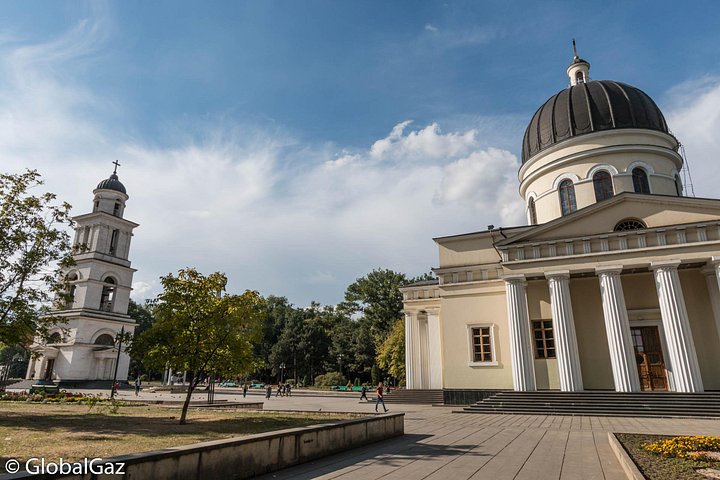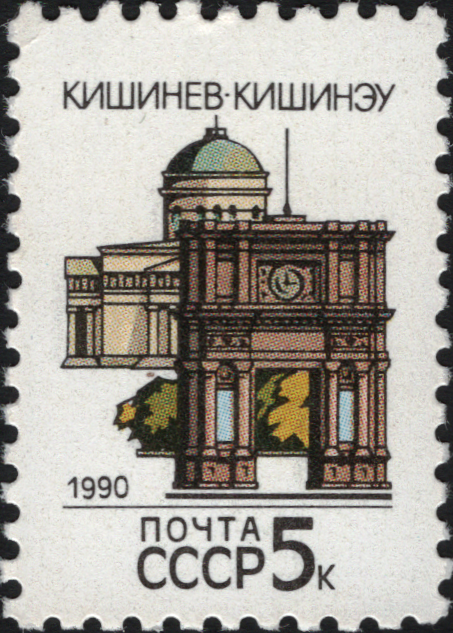
The Nativity Cathedral is the main Orthodox cathedral in Chisinau and one of the oldest landmarks in the city centre. Built in the nineteenth century in a neoclassical style, it stands in a park beside the Great National Assembly Square, with a separate bell tower and the Triumphal Arch close by. The cathedral has a white facade, green domes and a calm interior with icons and candles. The arch, completed in the same period, commemorates a military victory of the Russian Empire and now frames the view toward the government buildings and the statue of Stephen the Great. Together, the three monuments form the symbolic centre of the capital. Visits are free, and the area is open all day, so it fits any schedule.
The cathedral and arch work as a starting point for understanding Chisinau. The square is where national events, celebrations and protests happen, and the park around the cathedral is where families, couples and students meet. Locals use the space daily, which gives it a lived-in feel.
Inside the cathedral, behave as in any active church. Dress modestly, with covered shoulders and knees, and avoid loud conversation. Women may cover their heads, though rules are relaxed for visitors. Photography may be restricted during services, so ask first. The bell tower is a prominent feature, and the arch is best photographed in the morning or evening light. Candles can be bought for a small donation.
Plan to spend thirty minutes to an hour, longer if you want to sit in the park. The area is easily combined with a walking tour, a stroll to the central park and a coffee in a nearby cafe. The cathedral is open daily, though hours vary around services and religious holidays. Easter and Christmas are especially atmospheric, and the weeks around them bring crowds. The square also hosts events and markets through the year, so check what is happening.
At night, the monuments are lit and the area feels safe and lively. Use the visit to orient yourself: from here you can see the main boulevard, the parliament and the park. Ask your hotel for walking routes. It is a simple, free and rewarding stop that gives context for everything else in the city, and a reminder that the capital is as much about daily life as about monuments. Pair it with the central park for a short, scenic walk.
For photographers, the best angles are from the park looking back at the bell tower, from the square with the arch framing the cathedral and from the boulevard at dusk when lights come on. Listen for the bells, which ring at set times and add atmosphere. Nearby are small cafes, a few museums and the main government buildings, so you can extend the visit into a longer walk.
Bring a layer for the interior, which can be cool even in summer, and keep small coins for candles. If you visit during a major religious holiday, expect queues and a festive mood, and be patient with services.
If you want a quiet moment, visit on a weekday morning outside service times, when the park is nearly empty and the cathedral interior is calm. Weekends bring weddings and baptisms, which are joyful but can limit access, and you should keep a respectful distance during ceremonies. In summer, shade in the park is limited near the square, so bring a hat. Evening is a good time to see the lit facade, then walk down the boulevard for dinner.
What to expect
The experience
A self-guided visit to the cathedral, bell tower, arch and square.
Best time
Morning or evening for light and fewer crowds.
How long
About an hour.
Tips
Dress modestly and avoid service times for photographs.
Quick picks
- Best for
- Every visitor to the capital.
- Families
- Easy, free and flat.
- Couples
- A pleasant evening walk.
- Pair with
- The central park and a walking tour.
- Time needed
- An hour.
Good questions
Is the cathedral free?+
Yes, entry is free and donations are welcome.
When is it open?+
Daily, with hours varying around services.
Can I take photos?+
Outside yes; inside ask first.
Where is it?+
In the centre of Chisinau, next to the Great National Assembly Square.
What is the arch for?+
It commemorates a military victory of the nineteenth century.