Cologne began as a Roman city, Colonia Claudia Ara Agrippinensium, the capital of the province of Lower Germany, and the Romano-Germanic Museum is where that story is told. Its main building on Roncalliplatz, beside the cathedral, was built over the spot where the famous Dionysus mosaic was found, but it is closed for a long renovation, and the mosaic and the towering Poblicius tomb cannot be visited for now. In the meantime the museum has moved a large selection of its collection to the Belgian House at Cäcilienstraße 46, near Neumarkt, a ten-minute walk from the cathedral. Across three floors you see how people lived in Roman Cologne: everyday objects, tableware, jewellery, coins and children’s toys, finds from the early settlements of the Rhineland and, above all, the Roman glass collection, one of the finest anywhere, with delicate vessels that survived nearly two thousand years. It is compact, inexpensive and ideal for a focused hour or two. This page links to the museum’s official information page.
How to visit: the Belgian House exhibition is open Wednesday to Monday from 10:00 to 18:00 and closed on Tuesdays, and on the first Thursday of the month it stays open until 22:00. Admission is modest, with a reduced price for students and free entry for everyone under 18. The KölnCard gives a discount. Take the tram to Neumarkt or walk from the cathedral along the Hohe Straße and Schildergasse shopping streets.
What to expect: this is an interim display, so it is smaller and more concentrated than the old museum, but the quality of the objects is outstanding, especially the glass. Labels are clear, and the building is easy to navigate. Ask at the desk about current events and guided tours.
Making the most of it: see the museum first, then look for traces of Roman Cologne in the city, such as sections of the Roman wall and the Roman arch fragments near the cathedral. Check the museum’s news before you go, because reopening plans for the Roncalliplatz building and its mosaic may change what is on show.
What to expect
The experience
A compact interim exhibition on three floors of the Belgian House, focused on daily life in Roman Cologne and the museum’s famous glass.
Best time
Any weekday morning; avoid Tuesdays, when it is closed.
How long
One to two hours.
Tips
Go to Cäcilienstraße 46, not Roncalliplatz, and remember that under-18s enter free.
Quick picks
- Best for
- History lovers who want to understand Cologne’s Roman roots in a short, focused visit.
- Families
- Free for under-18s, with Roman toys, coins and everyday objects that children can relate to.
- Couples
- Pair the glass collection with a stroll down to Neumarkt and the Romanesque church of St. Aposteln.
- Pair with
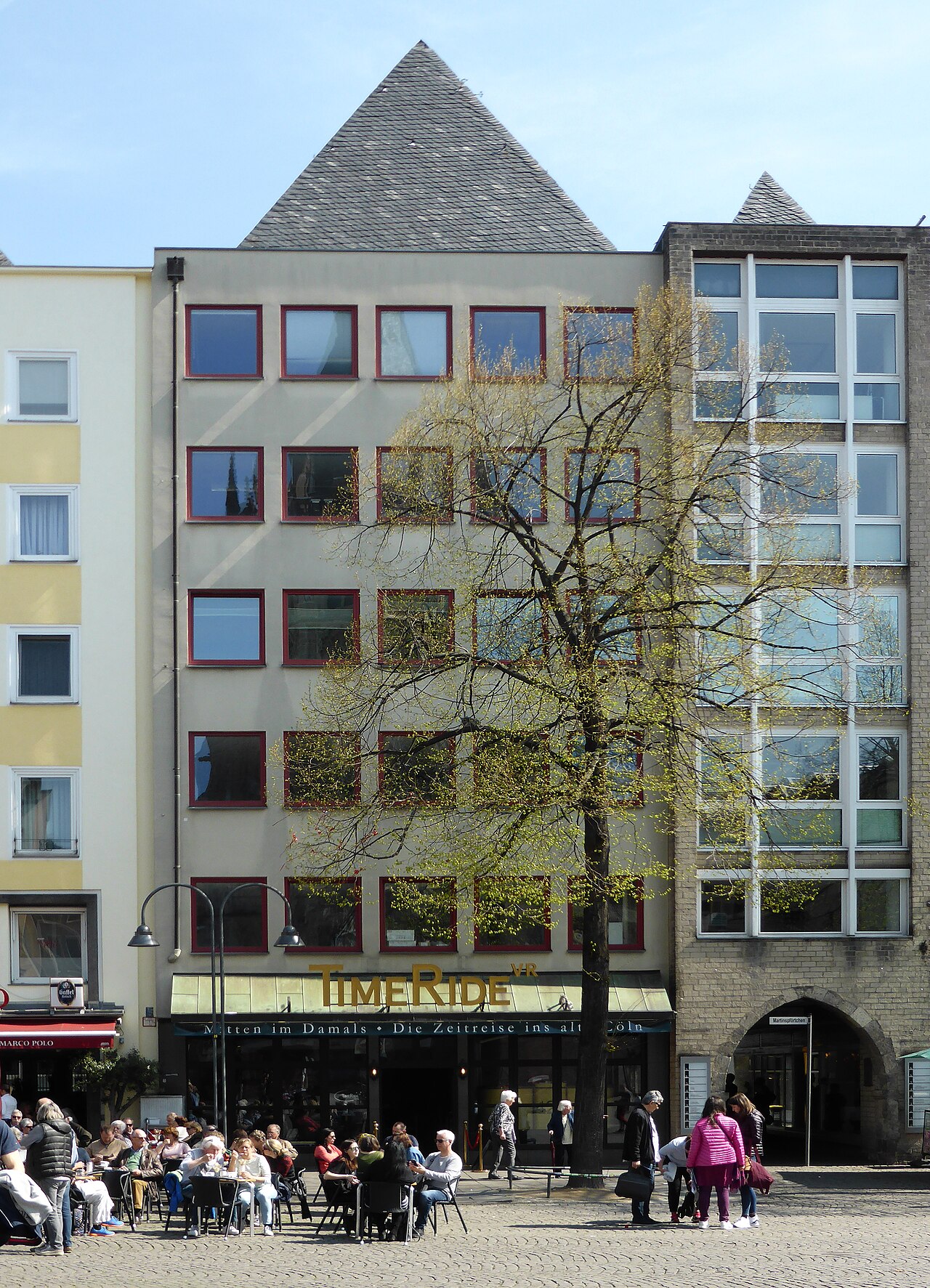
- Museum Ludwig for a day of art and history, or TimeRide for a very different journey into the past.
- Time needed
- One to two hours.
Good questions
Where is the Romano-Germanic Museum now?+
While the Roncalliplatz building is renovated, the collection is shown in the Belgian House at Cäcilienstraße 46, near Neumarkt. It is about ten minutes on foot from the cathedral.
Can you see the Dionysus mosaic?+
Not at the moment, because the Roncalliplatz building with the mosaic and the Poblicius tomb is closed for renovation. Check the museum’s news for reopening plans.
When is the Romano-Germanic Museum open?+
The Belgian House exhibition opens Wednesday to Monday from 10:00 to 18:00 and is closed on Tuesdays. On the first Thursday of the month it stays open until 22:00.
How much does the Romano-Germanic Museum cost?+
Admission is modest, with a reduced rate for students. Everyone under 18 enters free.
What can you see in the interim exhibition?+
Three floors of Roman everyday life, from tableware, jewellery and coins to toys and early Rhineland finds. The Roman glass collection is the highlight.