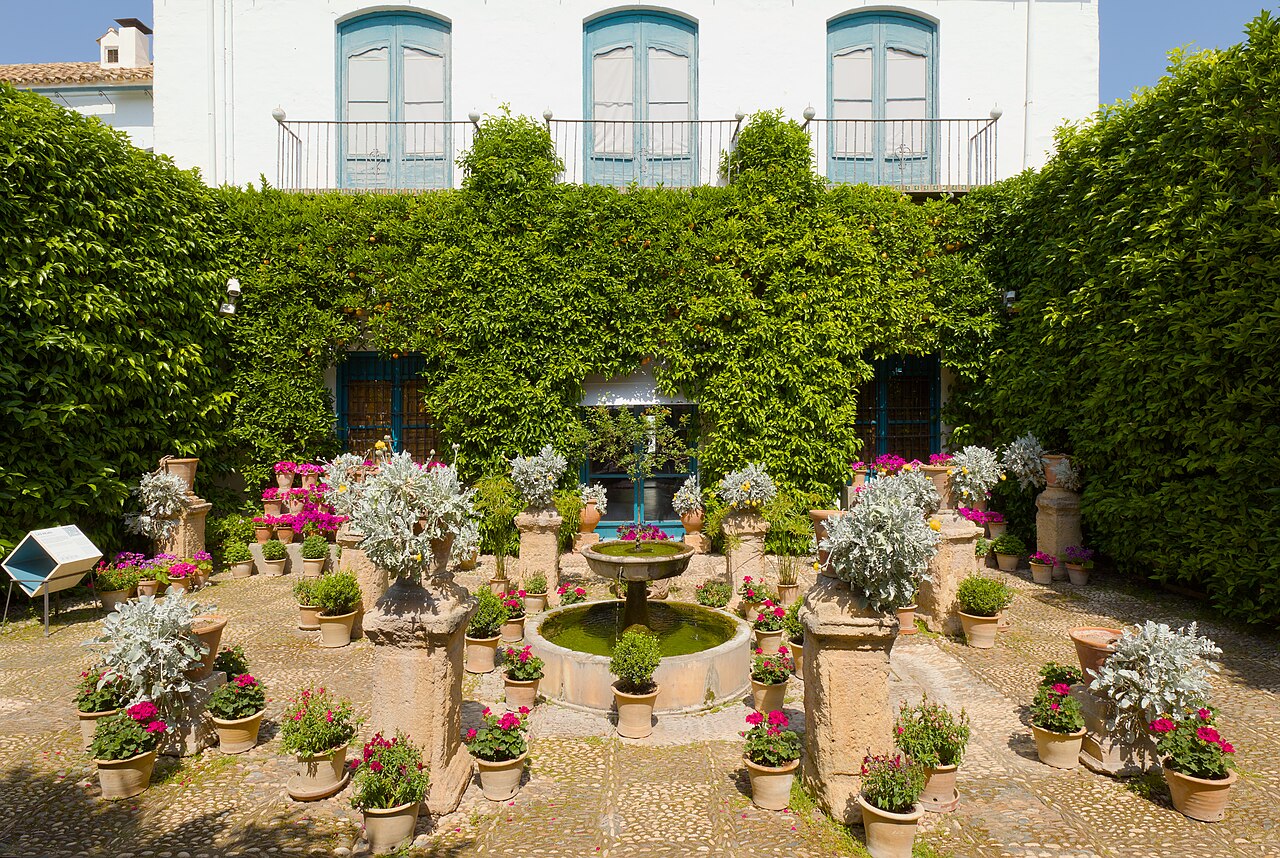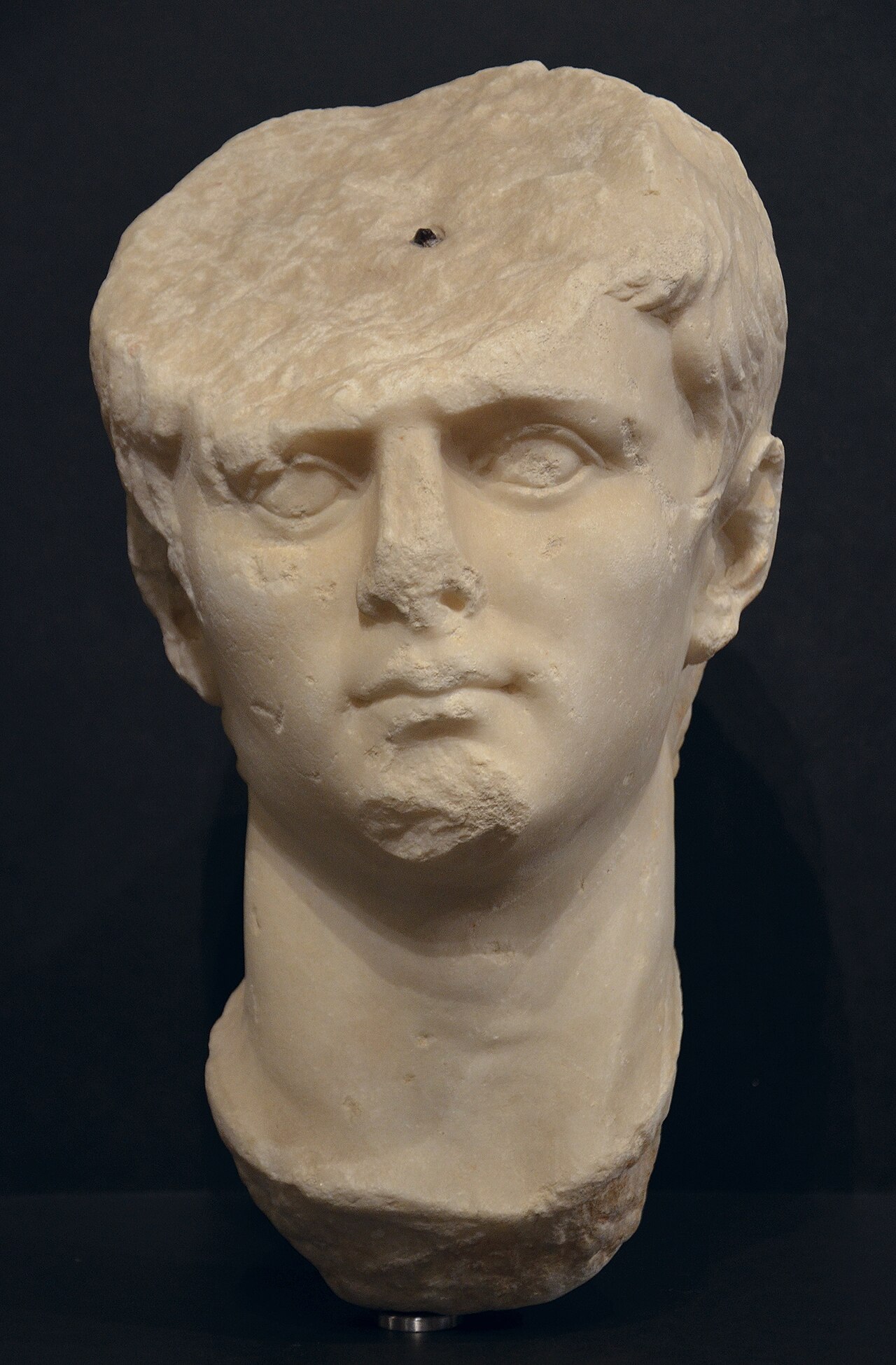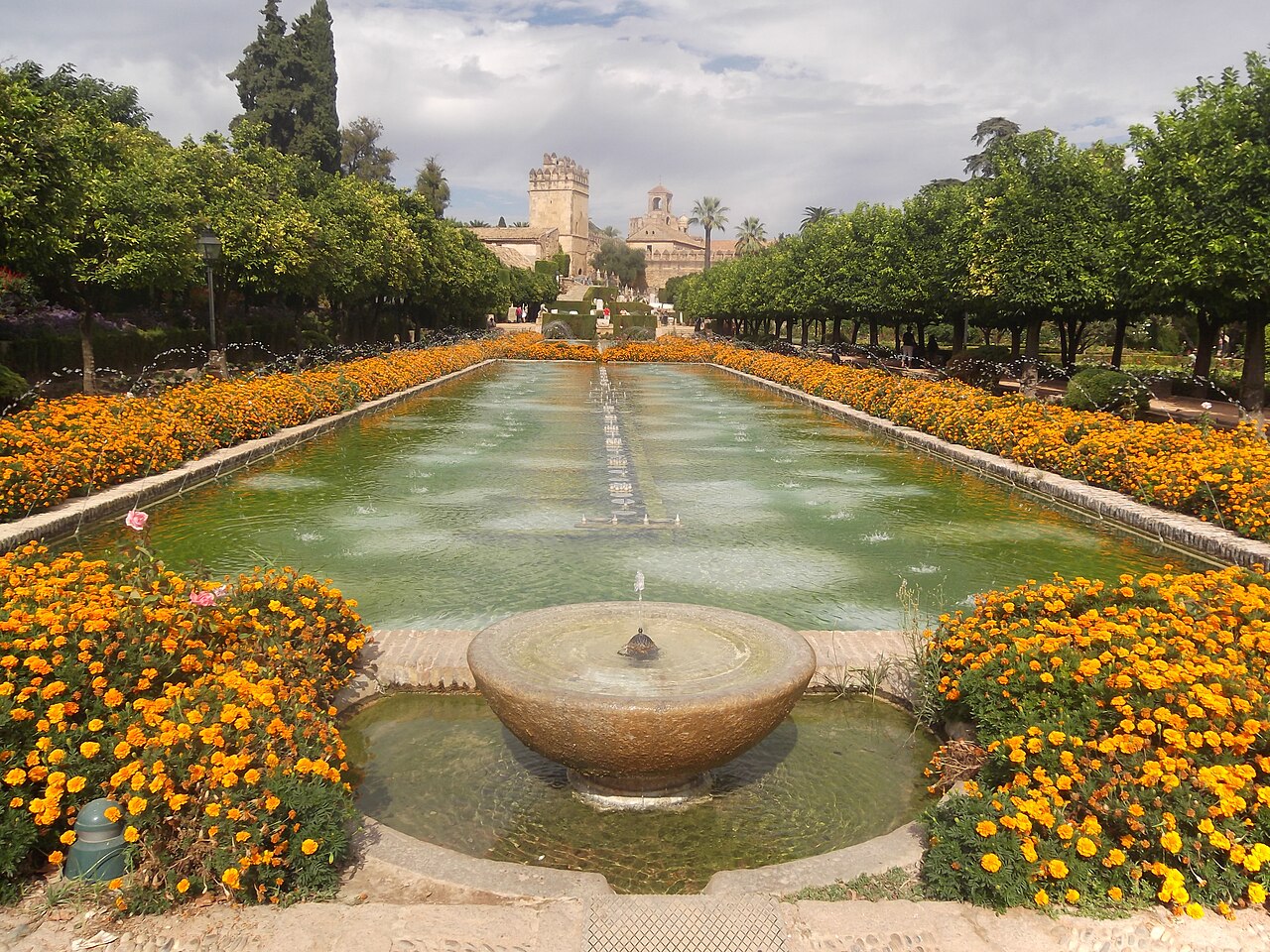
The Alcázar of the Christian Monarchs stands a few minutes west of the Mezquita, close to the river, on ground that has held a fortress since Roman and Moorish times. The present building was raised in the fourteenth century under Alfonso XI of Castile, a compact, square fortress with crenellated walls and sturdy towers, and its later history is a roll call of Spanish history. Ferdinand and Isabella lived here for years during the campaign against the Nasrid kingdom of Granada, and it was in Córdoba that they received Christopher Columbus as he sought backing for his voyage. Later the building served the Inquisition, and later still a prison. Inside, the highlight is the Hall of Mosaics, where Roman floor mosaics found in the city hang on the walls, alongside a Roman sarcophagus, and the old baths and the towers, which you can climb for views over the gardens, the river and the Mezquita. The gardens are the reason many people come: terraces of long rectangular pools, fountains, orange trees and clipped cypresses, with statues of the Catholic Monarchs and Columbus. This page links to the Tiqets venue page, where the main product is a guided visit of about 75 minutes in English or Spanish.
What is new: the gardens closed in January 2026 for conservation works, in which the ponds were waterproofed, the fountain pumps and diffusers renewed and the cabling buried, and they reopened on 16 June 2026. In summer the opening hours were cut to the morning because of the heat; in autumn and winter the Alcázar returns to its longer winter timetable, Tuesday to Sunday, so plan around the Monday closure. Tickets bought locally are sold at a totem by the entrance, the kiosk on the Campo Santo de los Mártires and online through the city museums page; the Tiqets guided visit saves you from working that out.
How to visit: start inside, with the mosaics and the towers, while you are fresh, then give the gardens at least half an hour. The towers involve narrow stairs, and the reward is the view across the garden terraces to the Mezquita and the bell tower. The gardens are most beautiful when the low winter sun catches the water and the orange trees are heavy with fruit.
Why go: after the intensity of the Mezquita, the Alcázar is a calmer, greener visit, and it adds two chapters to the Córdoba story, the Roman city and the Castilian monarchy. It is a short walk to the Caliphal Baths, the Roman bridge and the riverside walk, so it fits easily into a morning or late afternoon in the old town. Families appreciate the space in the gardens after the crowded lanes of the Jewish quarter.
What to expect
The experience
A guided or self-guided visit of the fortress rooms, the Hall of Mosaics and the towers, followed by a stroll through the terraced gardens of pools and fountains.
Best time
First thing in the morning or the last hours of the afternoon, Tuesday to Sunday, when the gardens are quieter and the light is soft.
How long
About an hour and a half including the gardens.
Tips
Remember the Monday closure, climb a tower for the view to the Mezquita and save time for the lower garden terraces.
Quick picks
- Best for
- Garden lovers and anyone wanting a calm, green counterpoint to the Mezquita.
- Families
- Space to roam, fish in the pools and towers to climb; a good break for children.
- Couples
- The pools and cypresses in the late afternoon light are among the most romantic spots in the city.
- Pair with
- The Mezquita a few minutes away and the Roman bridge along the river.
- Time needed
- One and a half to two hours.
Good questions
Is the Alcázar of Córdoba open on Mondays?+
No, the Alcázar is closed on Mondays and opens Tuesday to Sunday. Hours change with the season, so check the city museums page for your date.
Are the Alcázar gardens open?+
Yes, the gardens reopened on 16 June 2026 after works that began in January. The ponds and fountains were restored during the closure.
What is inside the Alcázar?+
The Hall of Mosaics with Roman floor mosaics and a sarcophagus, old baths, rooms of the medieval fortress and towers with views. Most visitors spend as much time in the gardens as inside.
Did Columbus meet the Catholic Monarchs here?+
Ferdinand and Isabella spent long periods in the Alcázar during the Granada campaign, and they received Columbus in Córdoba. Statues in the gardens commemorate the meeting.
Is a guided visit worth it?+
A guide explains the Roman, Moorish and Castilian layers of the site, which are easy to miss alone. Independent visitors can explore at their own pace with a standard ticket.