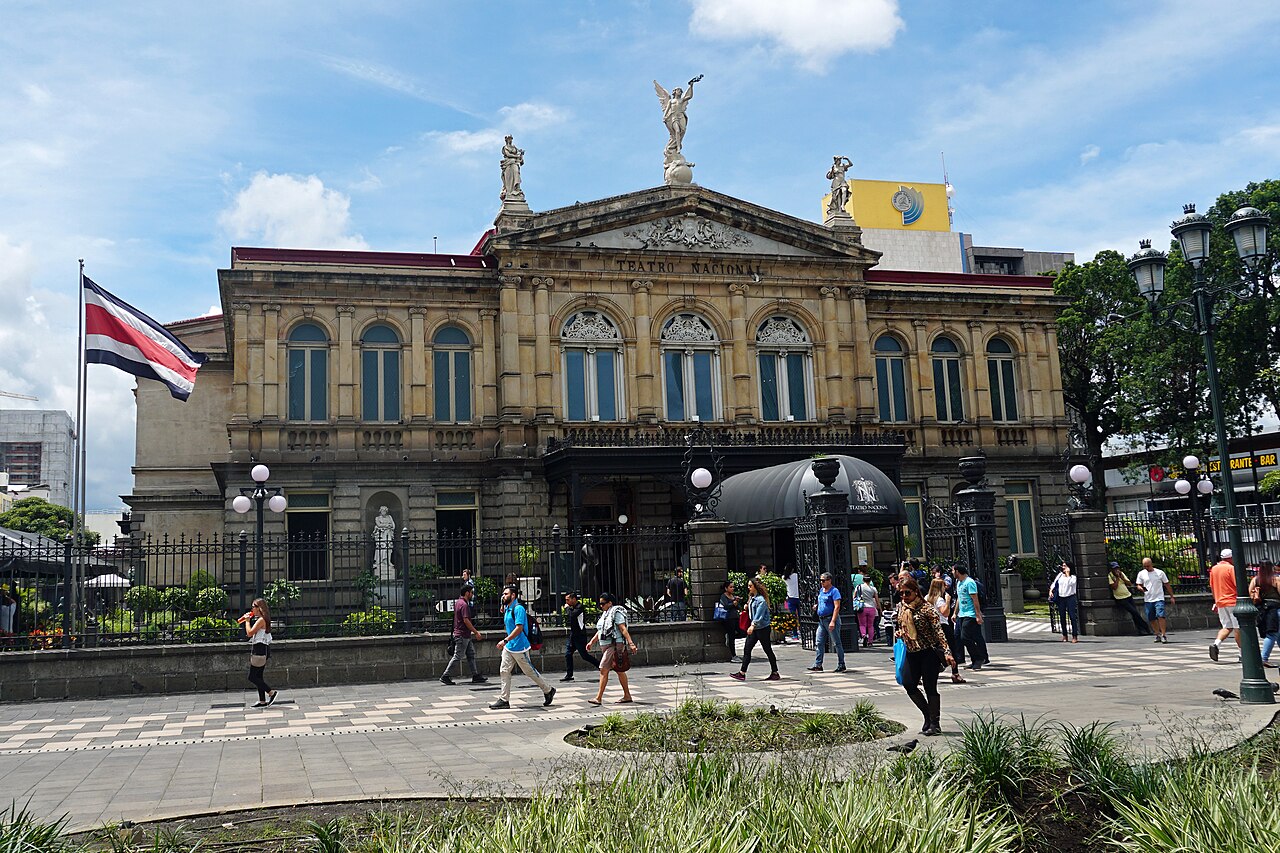
The Teatro Nacional is the jewel of San José and the building that best tells the story of nineteenth-century Costa Rica. When coffee made the country’s growers rich, they wanted a theatre to match the opera houses of Europe, and a tax on coffee exports helped fund the building, which was inaugurated in 1897. The result is a small, exquisite palace on Plaza de la Cultura, with a Neo-classical facade, marble staircases, gilded foyers and painted ceilings imported from Europe, including a famous allegory of coffee and bananas that once appeared on a Costa Rican banknote. The horseshoe auditorium still hosts the national symphony, dance and theatre. You can visit on a guided tour, offered in Spanish and English, with a modest fee for foreign visitors, a lower one for Costa Ricans and free entry for children under twelve. Afterwards, the theatre café is one of the most elegant places in the city for coffee and cake.
How it works: guided visits run through the day from Tuesday to Sunday, starting on the hour from the morning to mid-afternoon. Tickets are sold by the theatre, and individual visitors may be grouped with others; organised groups of eight or more should request a slot in advance through the theatre’s form. Fees are charged in colones and are low by international standards. For an evening performance, check the programme and buy through the theatre’s box office.
What to expect: the tour leads you through the entrance hall, up the marble staircase to the gilded foyer and into the auditorium, with the guide explaining the coffee-era history, the European artists and craftsmen involved, and the symbolism of the paintings. Groups are capped at fifteen people per guide, so the visit feels personal even when the theatre is busy.
Making the most of it: visit in the morning, then cross Plaza de la Cultura to the Gold Museum. If you can, return for a concert; seeing the hall full and lit is the best way to feel its magic. Dress smartly for evening performances.
What to expect
The experience
A guided visit in Spanish or English through the foyer, staircase and auditorium of the 1897 theatre on Plaza de la Cultura.
Best time
A weekday morning, when tours are quieter, followed by coffee in the theatre café.
How long
About an hour for the guided visit, plus time for the café or a stroll around the plaza.
Tips
Remember the theatre is closed to tours on Mondays, and return for an evening concert if the programme allows.
Quick picks
- Best for
- Anyone spending a day in San José who wants to see the city’s most beautiful interior.
- Families
- Children under twelve visit free, and the gold, marble and paintings impress all ages.
- Couples
- Book an evening performance and dinner nearby for a classic night out in the capital.
- Pair with
- The Pre-Columbian Gold Museum, just across Plaza de la Cultura.
- Time needed
- One to two hours with the café.
Good questions
When was the National Theatre of Costa Rica built?+
The theatre was inaugurated in 1897, during the coffee boom. Coffee growers helped fund it to give San José an opera house worthy of Europe.
Are guided tours available in English?+
Yes, the theatre offers guided visits in both Spanish and English. Individual visitors may be combined with other small groups.
How much does a tour cost?+
Foreign visitors pay a modest fee in colones, Costa Ricans pay less, and children under twelve go free. Fees are low by international standards.
Which days can I visit?+
Guided visits run from Tuesday to Sunday, from the morning to mid-afternoon. The theatre does not offer tours on Mondays.
Can I see a performance?+
Yes, the theatre hosts concerts, dance and drama through the year. Check the programme and buy tickets through the theatre box office.