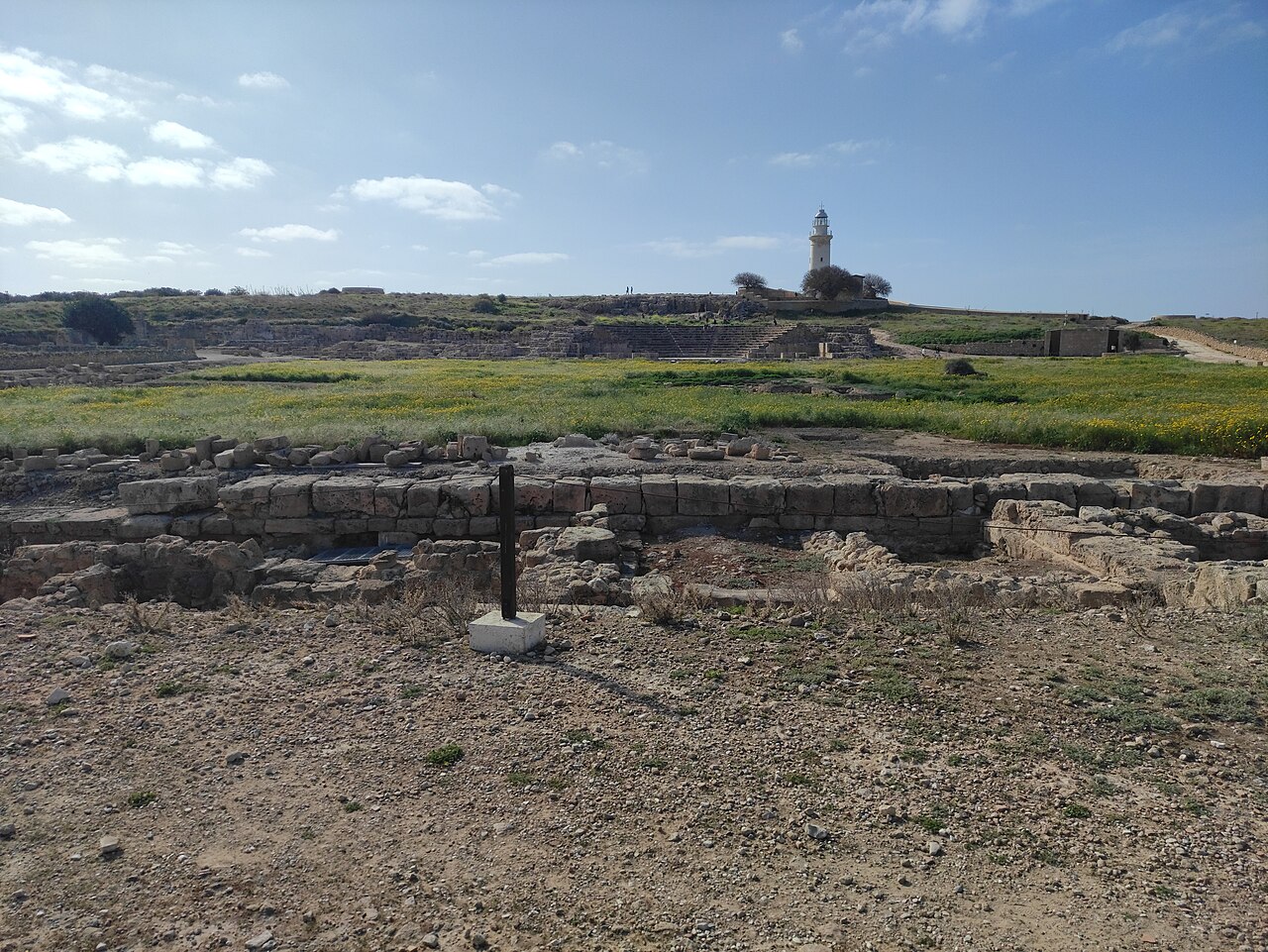
The Kato Paphos Archaeological Park is the single most important sight in Paphos and the reason the town is on the UNESCO World Heritage list, where it has been since 1980. In Roman times Paphos was the capital of Cyprus, and the wealthy built themselves large villas close to the harbour. Four of them, known as the Houses of Dionysos, Theseus, Aion and Orpheus, have mosaic floors depicting scenes from Greek mythology, and they are among the finest Roman mosaics anywhere in the eastern Mediterranean. Around them the park takes in the Odeon, the Agora and the Asklepieion, the sanctuary of the god of medicine, plus the jumbled ruins of Saranta Kolones, the Forty Columns castle, and the remains of the Early Christian basilica of Limeniotissa. Entry is paid at the gate for a modest fee, and the park is open every day of the year except Christmas Day, New Year’s Day and Orthodox Easter Sunday. No partner sells tickets, so we link to the official Visit Cyprus page.
How it works: walk in from the harbour end of Kato Paphos and buy your ticket at the entrance. Winter hours, from mid-September to mid-April, run from half past eight in the morning to five in the afternoon; in summer the park stays open until half past seven in the evening. The Department of Antiquities also sells one-, three- and seven-day cards that cover all its museums and monuments, which is worth it if you also plan to see the Tombs of the Kings, Kourion and Limassol Castle.
What to expect: the mosaic houses are under protective roofs with raised walkways, so you look down on the floors as their owners did. The House of Dionysos is the usual first stop and the busiest, with vivid hunting and wine scenes; the House of Aion has some of the most refined panels. Beyond the villas the site opens into a wide, windswept headland of columns, foundations and wild flowers, with the small reconstructed Odeon used for occasional summer performances and the Paphos lighthouse standing over it all.
Making the most of it: give it two to three hours, and come at opening time, when the light is soft and the walkways are quiet. There is little shade, so carry water and a hat even in the cooler months, and wear shoes for uneven ground. Paphos harbour, its fort and the seafront cafés are a few minutes away for lunch afterwards.
What to expect
The experience
A self-guided walk around an open archaeological park, with roofed walkways over the mosaic floors of four Roman villas and ruins spread across the headland.
Best time
Opening time in the morning, when the mosaic houses are quiet and the low sun brings out the colours of the floors.
How long
Two to three hours for the mosaic houses, the Odeon and the castle ruins, longer if you like to read every panel.
Tips
Bring water and a hat since there is almost no shade, and consider a Department of Antiquities multi-day card if you will visit several sites.
Quick picks
- Best for
- Anyone visiting Paphos for the first time, since the mosaics are the town’s great treasure and its reason for UNESCO status.
- Families
- Children enjoy spotting the gods and animals in the floors, and the open headland gives them room to roam between the villas.
- Couples
- Come late in the afternoon in winter, then walk to the harbour for a drink as the sun drops over the sea.
- Pair with
- The Tombs of the Kings a short drive north, or a long lunch on Paphos harbour a few minutes’ walk away.
- Time needed
- Half a day, including a coffee at the harbour.
Good questions
Do I need to book tickets in advance?+
No, tickets are sold at the entrance and there is no timed entry. Queues are rarely long outside the summer cruise and coach peaks.
What are the opening hours in November?+
Winter hours apply from mid-September to mid-April, from half past eight in the morning to five in the afternoon, every day. The park closes only on Christmas Day, New Year’s Day and Orthodox Easter Sunday.
Which mosaics should I not miss?+
The House of Dionysos is the largest and most famous, and the House of Aion holds some of the finest panels. The Houses of Theseus and Orpheus are quieter and well worth the extra walk.
Is the park accessible?+
The main walkways over the mosaic houses are raised and fairly level, but much of the headland is rough, uneven ground. Visitors with limited mobility should focus on the House of Dionysos and the nearby villas.
Is the Tombs of the Kings included in the ticket?+
No, the Tombs of the Kings has its own small entry fee. A Department of Antiquities day card covers both, as well as other state sites such as Kourion.