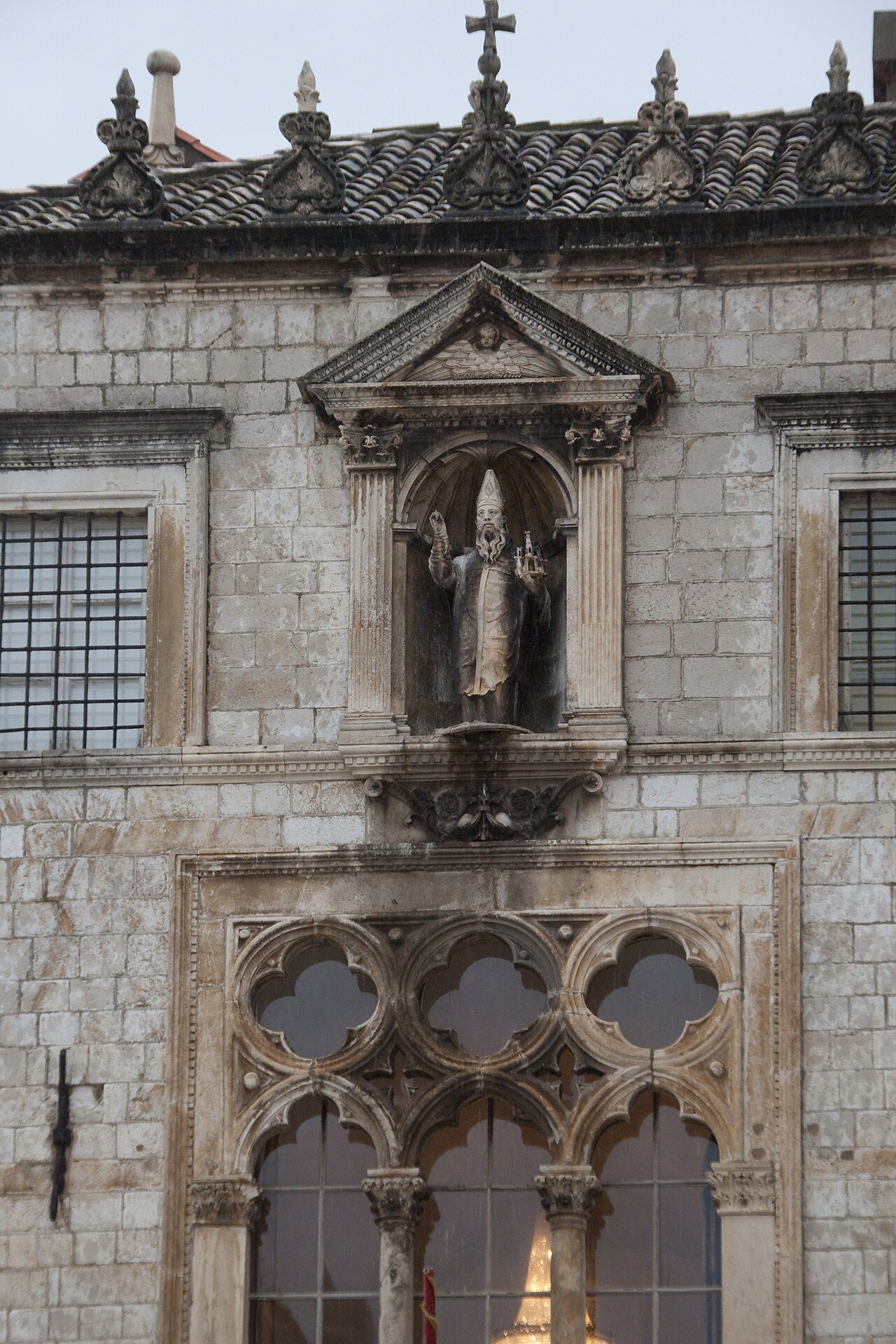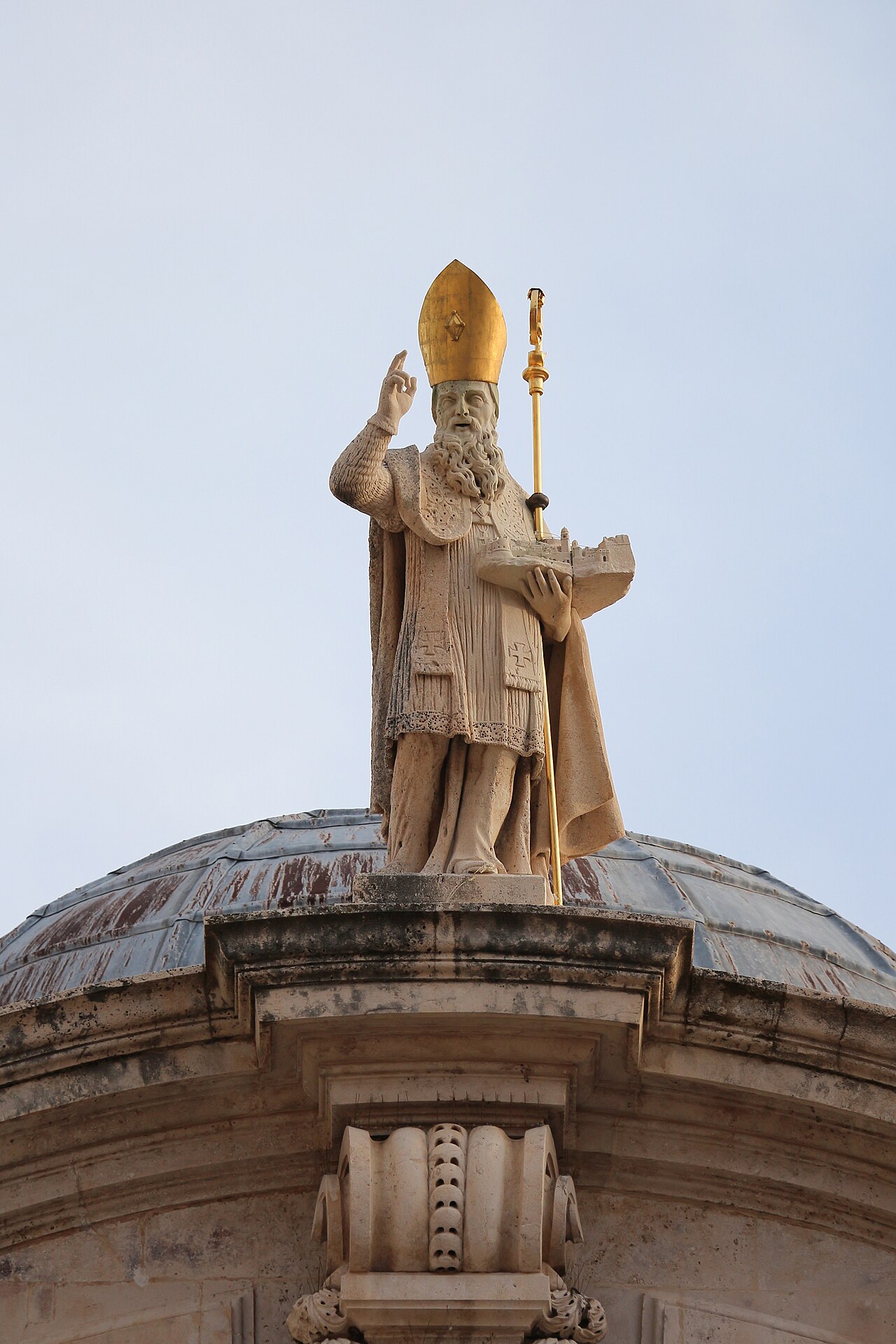
If Dubrovnik has a spiritual centre, it is this small, richly decorated church at the eastern end of Stradun. St Blaise has been venerated in the city since the tenth century, when, according to local chronicles, he appeared in a vision to a priest named Stojko and warned of a planned Venetian attack, and he has been Dubrovnik's patron ever since. You will see him everywhere once you start looking: as an elderly bishop with a white beard, mitre and staff, set into the walls, the gates and the towers. The church you see today was built between 1706 and 1715 to a design by the Venetian architect Marino Gropelli, commissioned by the Senate to replace a fourteenth-century Romanesque church that had been damaged in the earthquake and then destroyed by fire in 1706. Almost everything in the old church burned, but the gilded silver statue of St Blaise survived, which was taken as a miracle. The statue is still the treasure of the church, standing on the high altar, and the saint holds a model of the city that shows Dubrovnik as it looked before the 1667 earthquake, a precious record of lost buildings. The interior is Venetian Baroque, with marble altars and stained glass, and the steps outside are one of the city's favourite meeting places. Every year on 3 February, the Feast of St Blaise, also the official Day of the City, fills the square with processions, flags and pilgrims, in a celebration recognised by UNESCO as intangible cultural heritage.
A visit takes ten or fifteen minutes and costs nothing, but the church rewards a closer look. Go up to the altar to see the statue and find the model of the city in the saint's hand: the walls, the towers and the rooftops are all there, including buildings that fell in 1667. The church is still a place of worship with regular masses, so dress modestly, keep your voice down, and avoid visiting during services if you just want to look around.
If you are in Dubrovnik at the start of February, plan your trip around the Festa of St Blaise. The celebration opens with the release of white doves and the raising of the saint's flag on Orlando's Column, and on the feast day itself the relics of St Blaise are carried in procession through the Old Town, with parishes from around the region arriving in traditional dress. It is a winter highlight and one of the best times to see Dubrovnik as a living city rather than a summer resort. Note that the city museums close on the feast day.
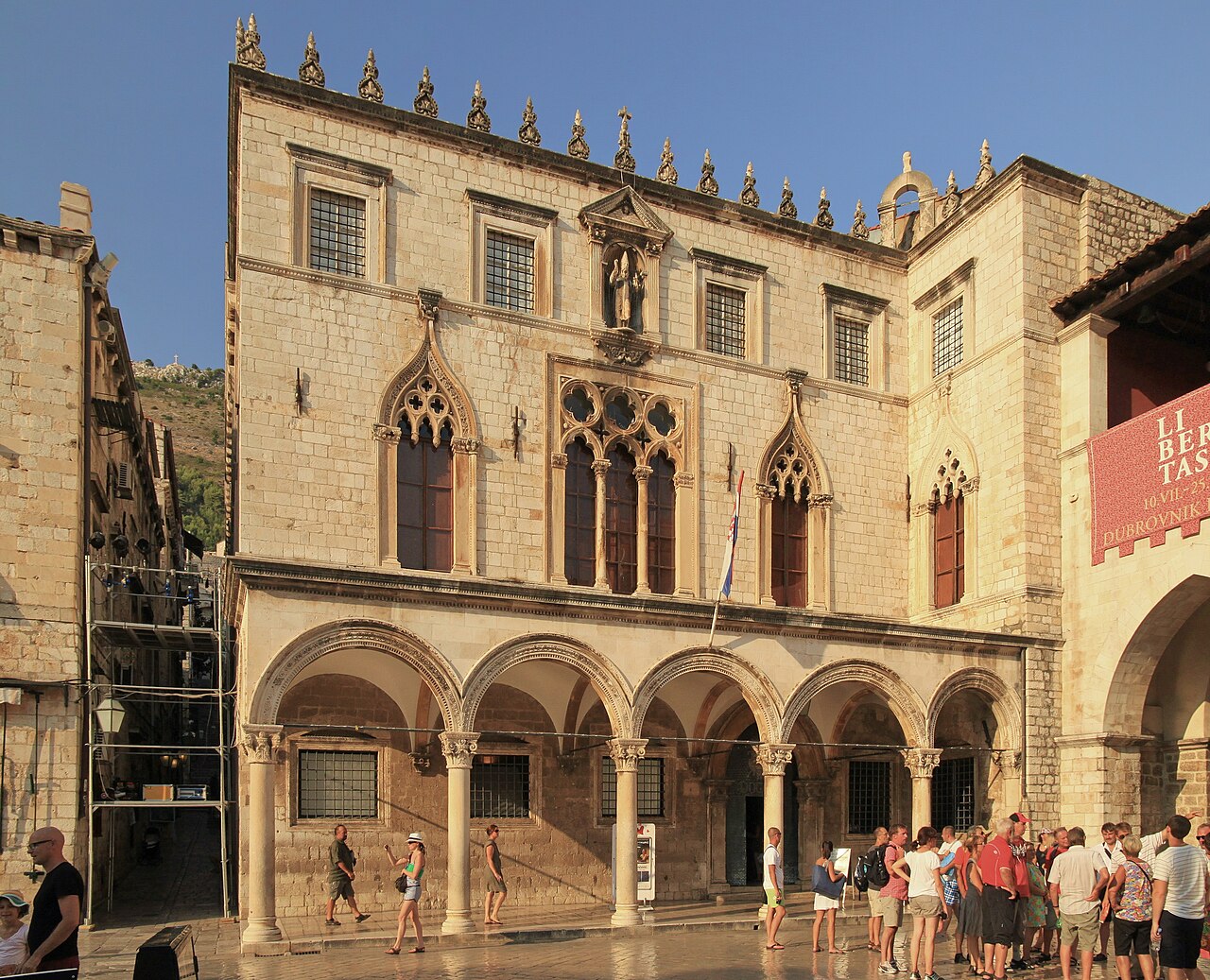
Who should go: everyone, since it lies on the main route through the Old Town; history buffs who want to see the pre-earthquake city in miniature; and winter visitors who can catch the Festa. Combine it with Sponza Palace across the square, Orlando's Column and the city bell tower, and the Rector's Palace and Cathedral a few steps to the south. In the evening, the steps of St Blaise are a good place to sit and watch the life of Stradun.
What to expect
The experience
A free visit to a working Baroque church on Luža Square, centred on the silver statue of St Blaise with its model of the medieval city.
Best time
Mornings outside service times, or the Feast of St Blaise on 3 February for the full festival.
How long
Ten to fifteen minutes.
Tips
Look for the model of the city in the saint's hand. Dress modestly and avoid mass times if you only want to look around.
Quick picks
- Best for
- Understanding why St Blaise is on every gate and tower in the city.
- Families
- Short, free and central; children enjoy spotting St Blaise statues around the walls afterwards.
- Couples
- Sit on the church steps in the evening and watch the life of Stradun.
- Pair with
- Sponza Palace, the Rector's Palace and the city bell tower.
- Time needed
- Fifteen minutes.
Good questions
Who is St Blaise?+
The patron saint of Dubrovnik, venerated since the tenth century. Legend says he warned the city of a planned Venetian attack.
Is the Church of St Blaise free?+
Yes. It is a working church, so dress modestly and avoid visiting during mass if you only want to look around.
What is special about the statue?+
The gilded silver statue survived the 1706 fire that destroyed the old church, and the saint holds a model of Dubrovnik as it looked before the 1667 earthquake.
When is the Feast of St Blaise?+
On 3 February, which is also the Day of the City. It includes processions with the saint's relics through the Old Town.
Who designed the church?+
The Venetian architect Marino Gropelli. It was built between 1706 and 1715.