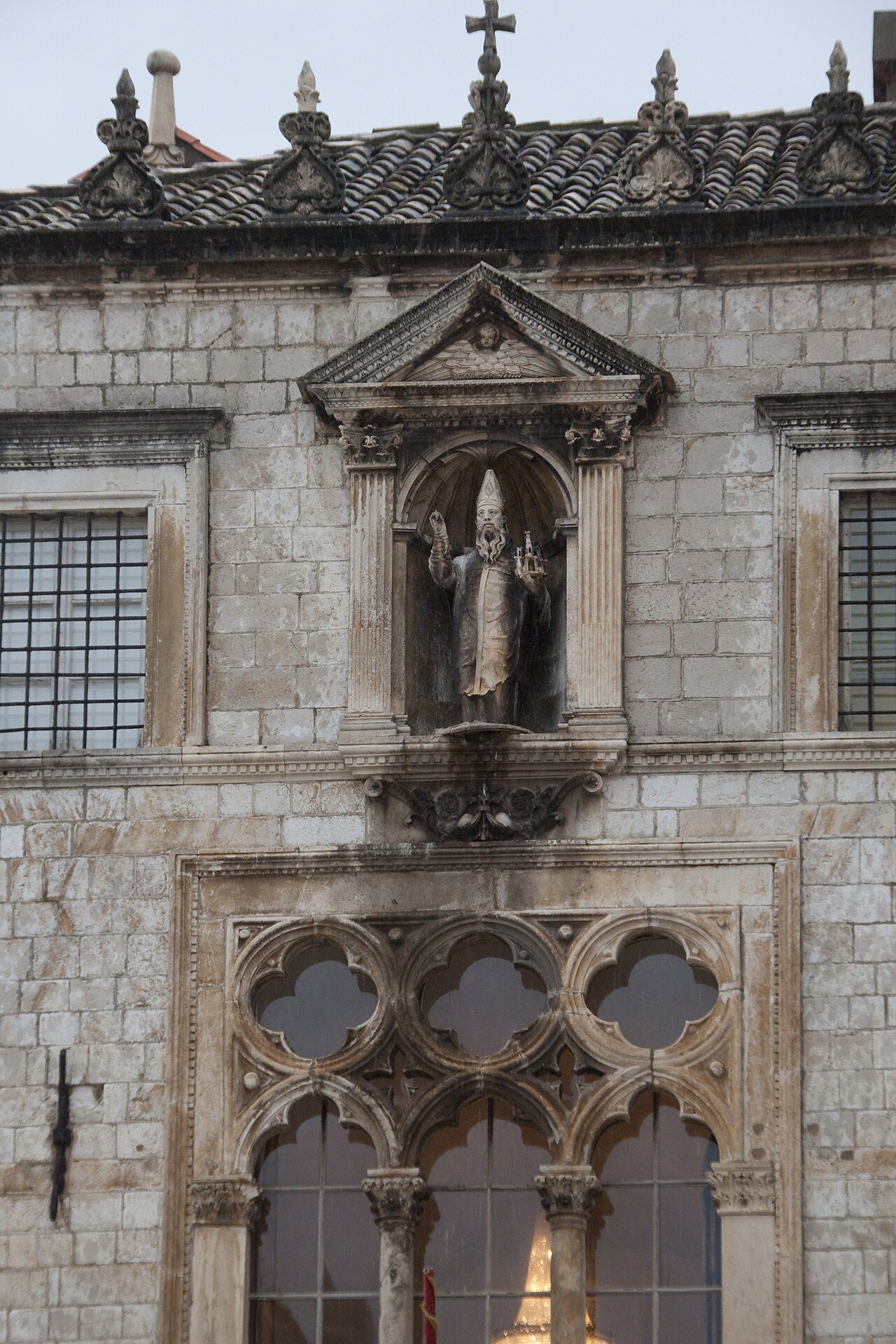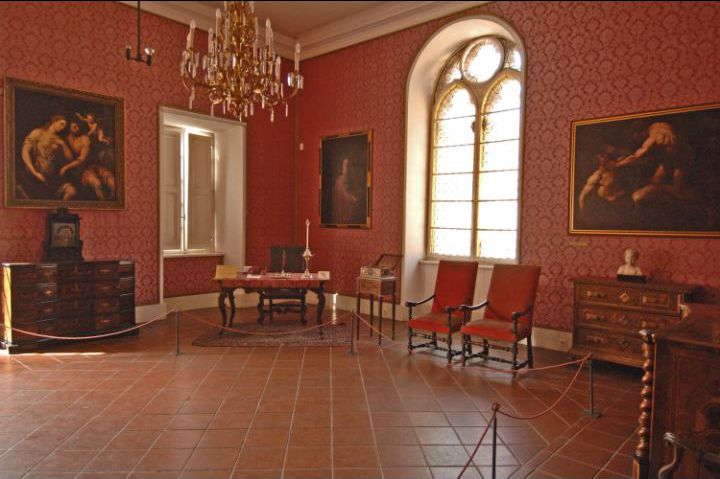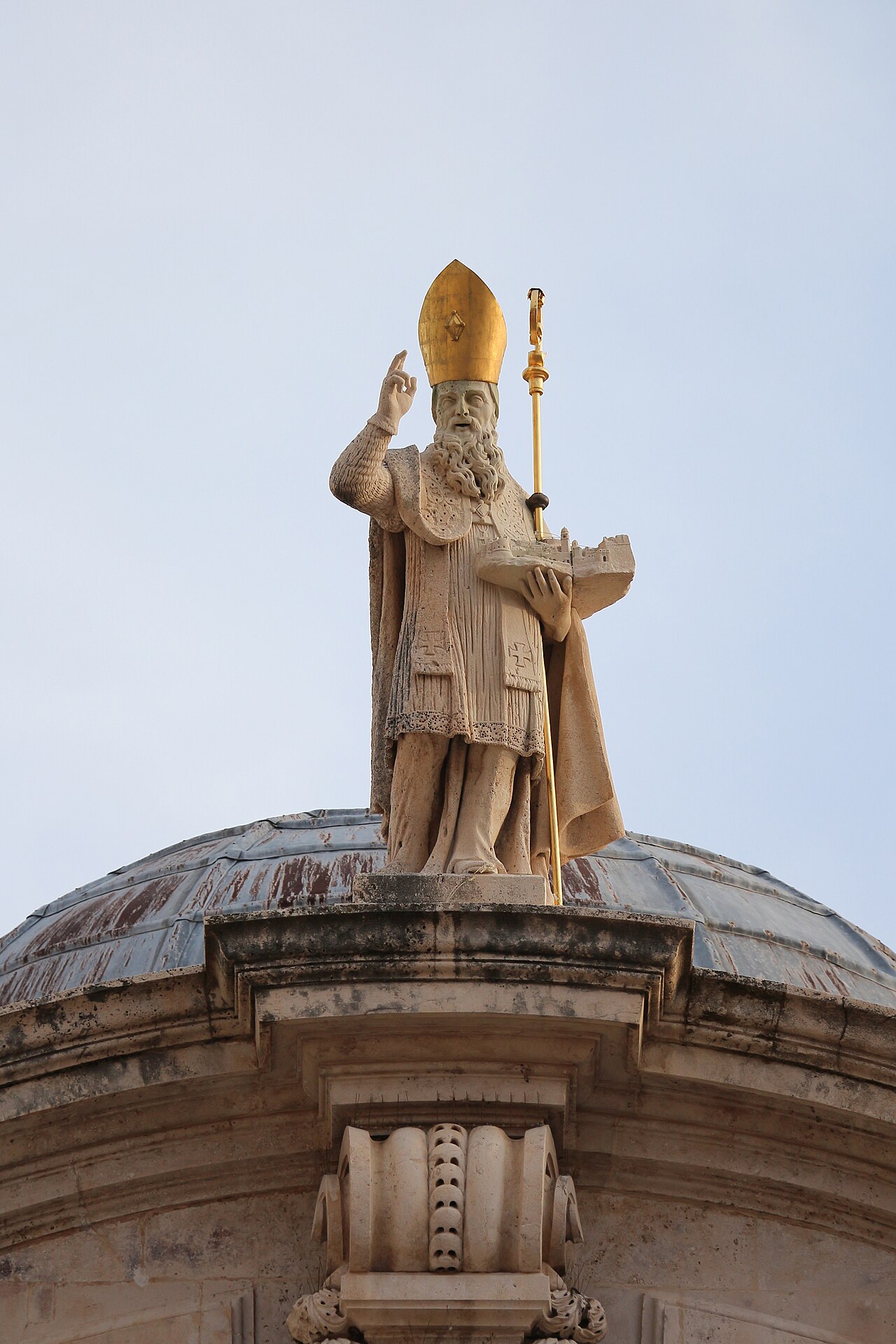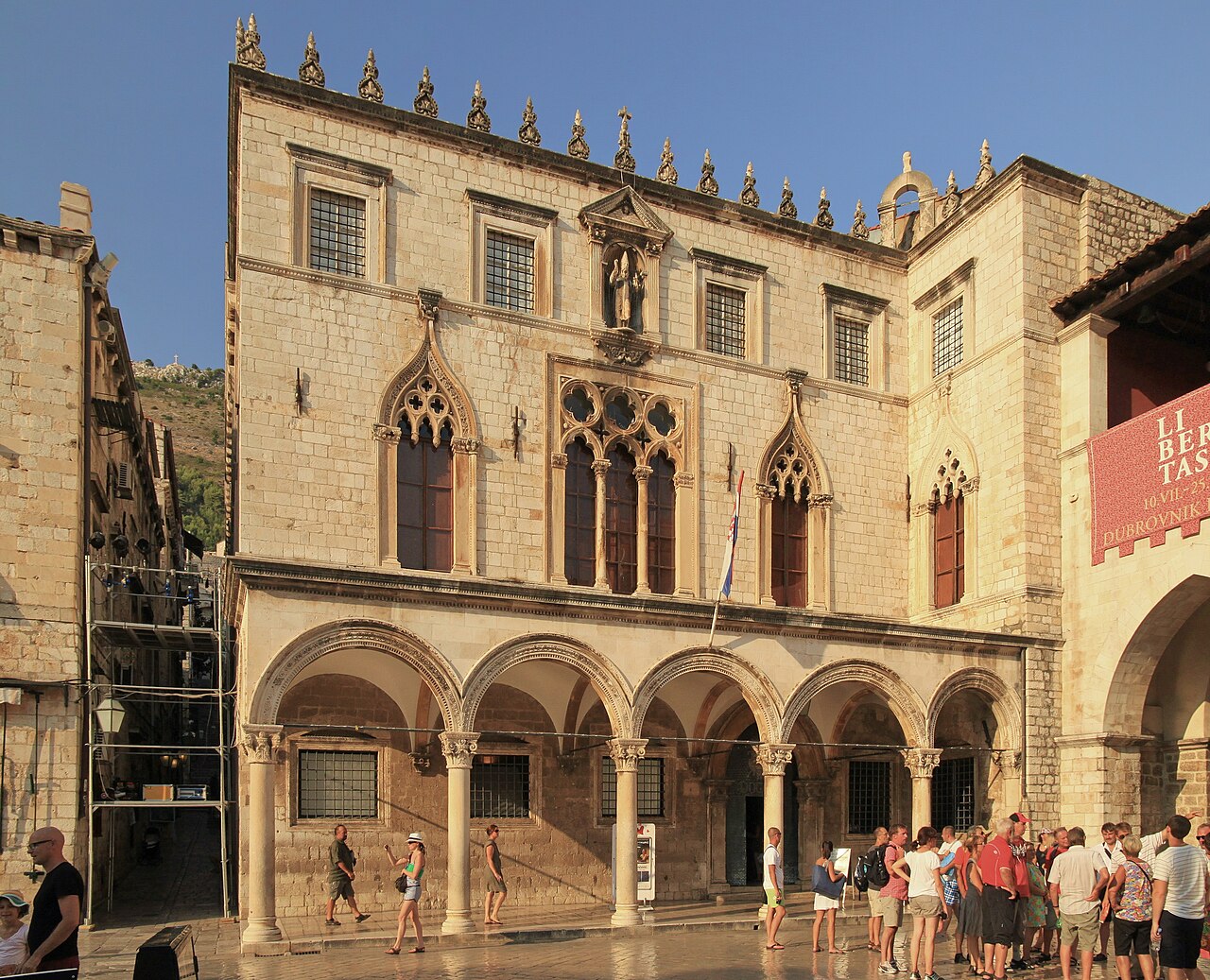
Sponza Palace is the most elegant building on Luža Square and one of the few that survived the 1667 earthquake intact, which means it shows you what Dubrovnik looked like before the great rebuilding. It stands at the eastern end of Stradun, beside the city bell tower, and was built in the sixteenth century to designs by Paskoje Miličević, with much of the carved stonework by the Andrijić brothers, a family of Korčula masons. The style is a graceful mix: a Renaissance portico of round arches on the ground floor, Gothic windows on the first floor, and a Renaissance loggia and statue of St Blaise above. Its formal name, the Customs Palace or Divona, tells you its first job. Every cargo that entered the city passed through here to be weighed, taxed and stored, and the building also housed the mint, the state treasury and the arsenal at different times, making it the commercial heart of the Republic. On the arch of the atrium, a Latin inscription warns that cheating with weights is forbidden, because when you weigh goods, God weighs you too. In the seventeenth century the palace became the meeting place of the Academy of the Learned, a society of local scholars and writers. Today it holds the State Archives of Dubrovnik, one of the richest archives in Europe, with records of the Republic going back many centuries. Visitors can walk freely into the atrium, which hosts exhibitions and summer festival events, and the building also houses a memorial room dedicated to the defenders of Dubrovnik who died in the war of the early 1990s.
The atrium is the part everyone can enjoy. Step out of the crowds on Luža Square into the arcaded courtyard, look up at the carved capitals and the inscription on the arch, and you get a sense of the sober, business-minded culture that ran the city. During the Dubrovnik Summer Festival, the atrium becomes one of the most atmospheric stages in the Old Town, and the Feast of St Blaise in February centres on the square outside. Exhibitions in the atrium change through the year, and some carry a small fee.
The memorial room for the defenders of Dubrovnik is a quiet, moving space with photographs of those who died defending the city in 1991 and 1992. It is a natural companion to the Homeland War Museum on Mount Srđ, and many visitors find it one of the most affecting moments in the Old Town. The archives themselves are a working research institution, so the stacks are not open to casual visitors, but they are the reason historians know so much about how the Republic operated.
Who should go: everyone passing Luža Square, since a look into the atrium costs nothing and takes ten minutes; history buffs, who will want to read the inscription and the memorial room; and festival-goers. Pair it with the Church of St Blaise across the square, the Rector's Palace a few steps south, and the old harbour beyond the Ploče side of the square. Early morning and evening are the calmest times to see the facade without crowds.
What to expect
The experience
A free walk into the arcaded atrium of the Republic's customs palace, with changing exhibitions and a memorial room to the city's war defenders.
Best time
Early morning or evening, when Luža Square is calmer. Summer festival evenings for performances in the atrium.
How long
Fifteen minutes for the atrium, longer for exhibitions and the memorial room.
Tips
Find the Latin inscription about honest weights on the atrium arch. Some exhibitions charge a small fee. Combine with St Blaise church and the Rector's Palace.
Quick picks
- Best for
- A quick, free look at the building that ran the Republic's trade.
- Families
- Short and free; children can hunt for the inscription and the statue of St Blaise.
- Couples
- A summer festival performance in the atrium is a memorable evening.
- Pair with
- The Church of St Blaise, the Rector's Palace and the old harbour.
- Time needed
- Fifteen to forty-five minutes.
Good questions
What was Sponza Palace used for?+
It was the Republic's customs house, and over time also housed the mint, the treasury and the arsenal. Today it holds the State Archives of Dubrovnik.
Is Sponza Palace free to visit?+
The atrium is free to enter. Some temporary exhibitions charge a small fee.
Did Sponza survive the 1667 earthquake?+
Yes. It is one of the few major buildings that came through intact, which is why it shows the city's pre-earthquake style.
What does the inscription in the atrium say?+
In Latin, it warns against cheating with weights, because when you weigh goods, God weighs you as well.
Is there a war memorial in Sponza?+
Yes. A memorial room honours the defenders of Dubrovnik who died in the war of the early 1990s.