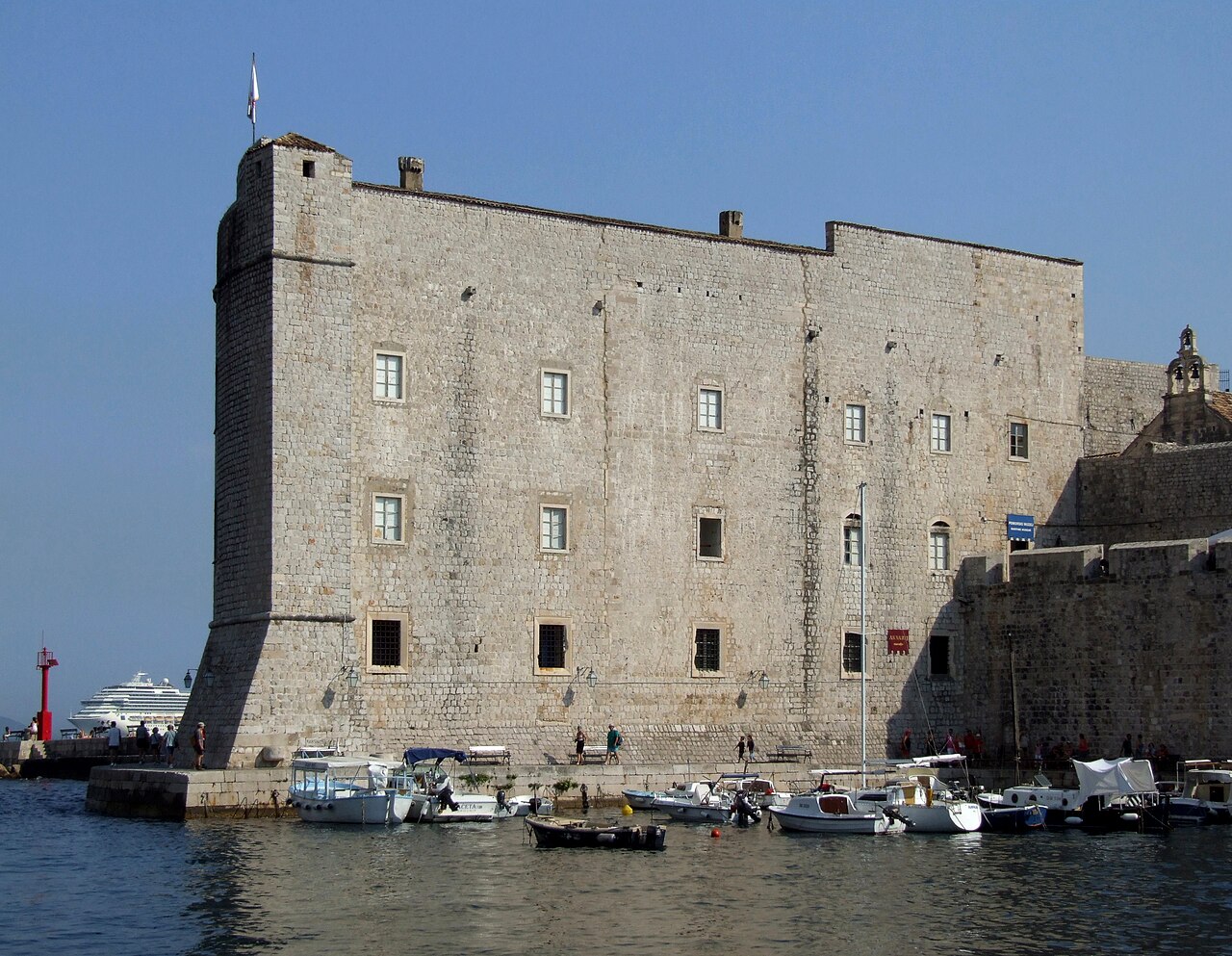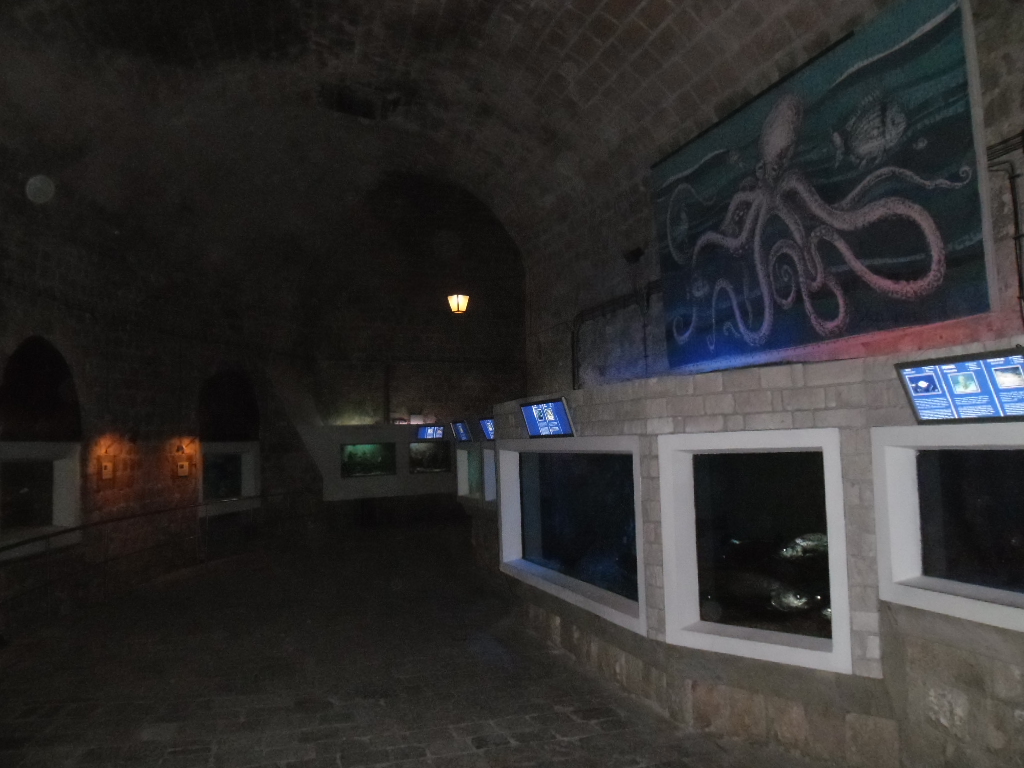
The Dubrovnik Aquarium is not a modern mega-attraction, and that is part of its charm. It is run by the Institute for Marine and Coastal Research of the University of Dubrovnik, a research institution whose roots in the city go back to the years after the Second World War, and it fills the stone-vaulted ground floor of St John Fortress at the edge of the old harbour. There are thirty-one tanks, and fresh seawater pumped from the harbour runs through them continuously, which is why the fish look healthy and the water clear. The focus is entirely on the Adriatic, which makes it genuinely useful before a day of snorkelling or a boat trip: you will see the fish you are likely to meet off the rocks at Banje or Lokrum, including gilthead sea bream, sea bass, dentex, mullet, scorpionfish, triggerfish, eels and a moray, along with an octopus, seahorses, spiny lobster, sponges, anemones, corals, starfish, sea urchins and crabs, and one oddity worth finding, the green spoon worm, Bonellia viridis. The setting adds atmosphere, with dim light, thick walls and the cool of the fortress on a hot day. The institute also manages the botanical garden on Lokrum. The limits should be clear up front: it is small, signage is basic, and the visit takes thirty to forty-five minutes. But for families with younger children, or anyone caught by a summer storm or the midday heat, it is a reliable and inexpensive stop right inside the Old Town.
Treat the aquarium as a short, satisfying add-on rather than a destination. The best way to use it is to pair it with the Maritime Museum on the upper floors of the same fortress, so that older children get the ships and younger ones get the fish, or to drop in on the way back from the old harbour after a boat trip to Lokrum. Children like the touch of recognition when they see a scorpionfish or an octopus they spotted while snorkelling, so it works well either before or after a day in the water.
The institute lists opening from Tuesday to Sunday, with Monday closures, and daytime hours. Times can change with the season and the institute's own schedule, so check before you make a special trip, especially in winter. Tickets are bought at the door and are modestly priced. The entrance is on the harbour side of St John Fortress, a few minutes' walk from the Ploče Gate or the end of Stradun, and the rooms are on the ground floor, although the old stone floors can be uneven.
Who should go: families with children under about ten, who will happily spend half an hour here; snorkellers who want to put names to the fish they have seen; and anyone looking for shelter on a rainy or very hot day. Adults travelling without children who have limited time can skip it in favour of the Maritime Museum upstairs. After the visit, walk out along the harbour to watch the Lokrum boats come and go, or continue to the Porporela breakwater for a swim in summer.
What to expect
The experience
A compact aquarium of thirty-one seawater tanks in the vaulted ground floor of a medieval fortress, focused entirely on Adriatic species.
Best time
Midday heat or a rainy morning. Closed on Mondays.
How long
Thirty to forty-five minutes.
Tips
Combine with the Maritime Museum upstairs. Look for the octopus, the seahorses and the green spoon worm. Check hours in winter before making a special trip.
Quick picks
- Best for
- Families with young children and snorkellers curious about what they saw underwater.
- Families
- One of the most reliable short stops for small children in the Old Town.
- Couples
- Only as a quick add-on to the Maritime Museum; otherwise skip it.
- Pair with
- The Maritime Museum upstairs, the old harbour and a boat to Lokrum.
- Time needed
- Under an hour.
Good questions
Where is the Dubrovnik Aquarium?+
On the ground floor of St John Fortress at the old harbour, inside the Old Town walls. The Maritime Museum is upstairs in the same building.
Is the aquarium worth visiting?+
For families with younger children and for snorkellers, yes. It is small and simple, so adults on a short trip may prefer other sights.
When is the aquarium open?+
The institute lists daytime opening from Tuesday to Sunday with Monday closures. Hours can change by season, so check before a special trip.
What can you see there?+
Thirty-one tanks of Adriatic species, including octopus, moray, scorpionfish, seahorses, spiny lobster, sea urchins, anemones and corals.
How long does a visit take?+
Usually thirty to forty-five minutes.