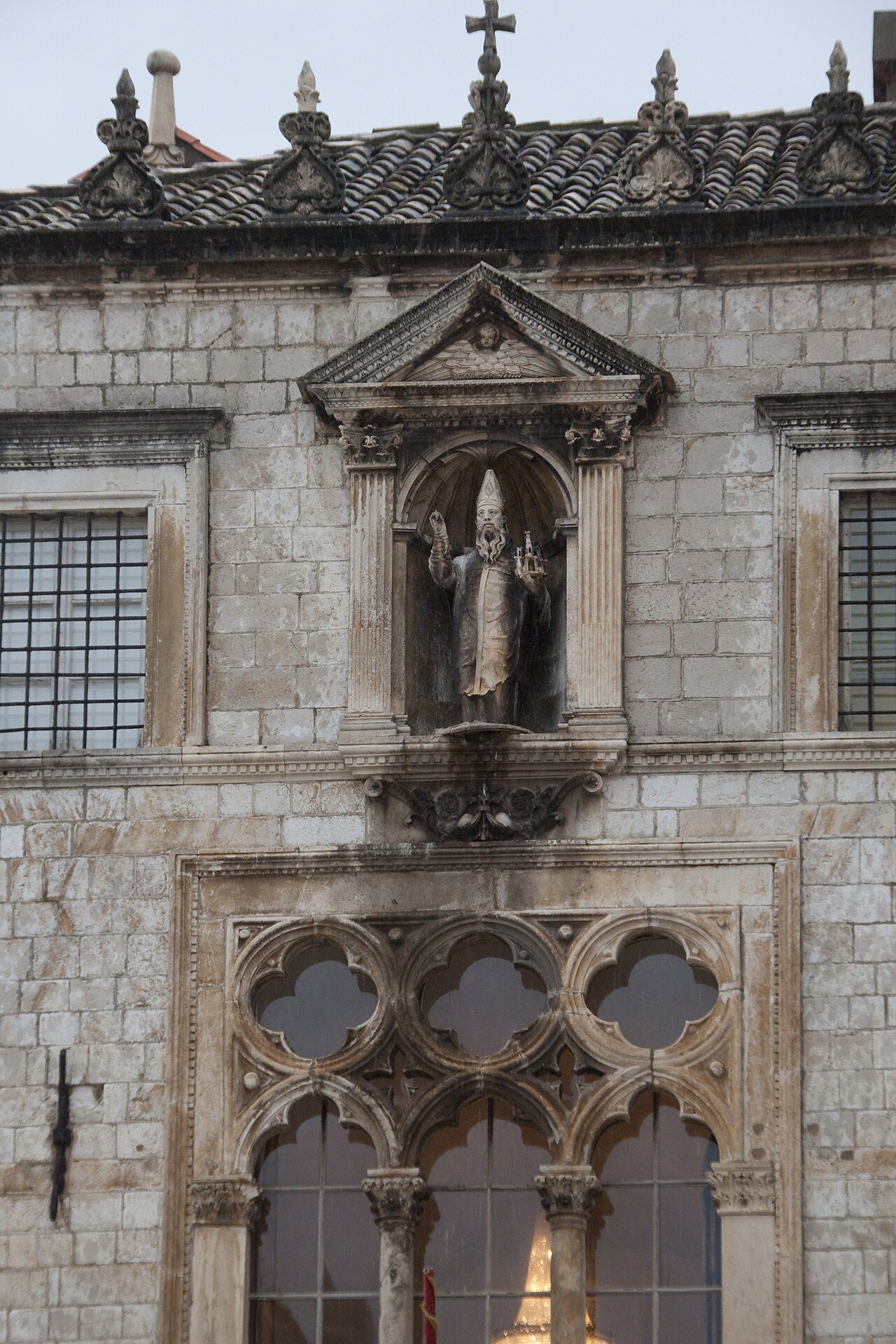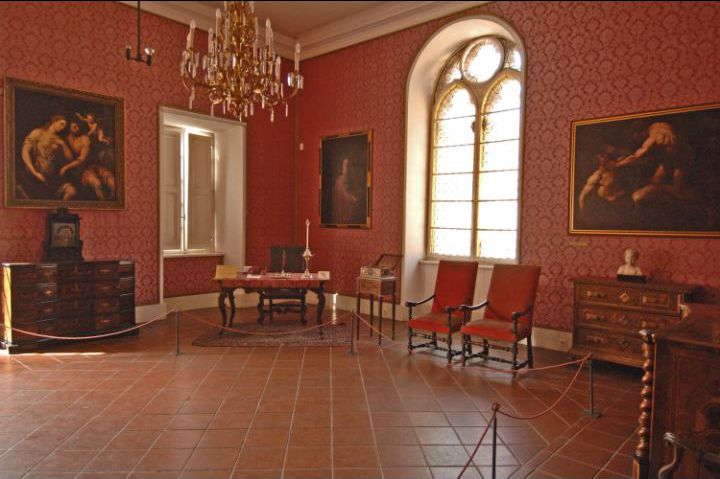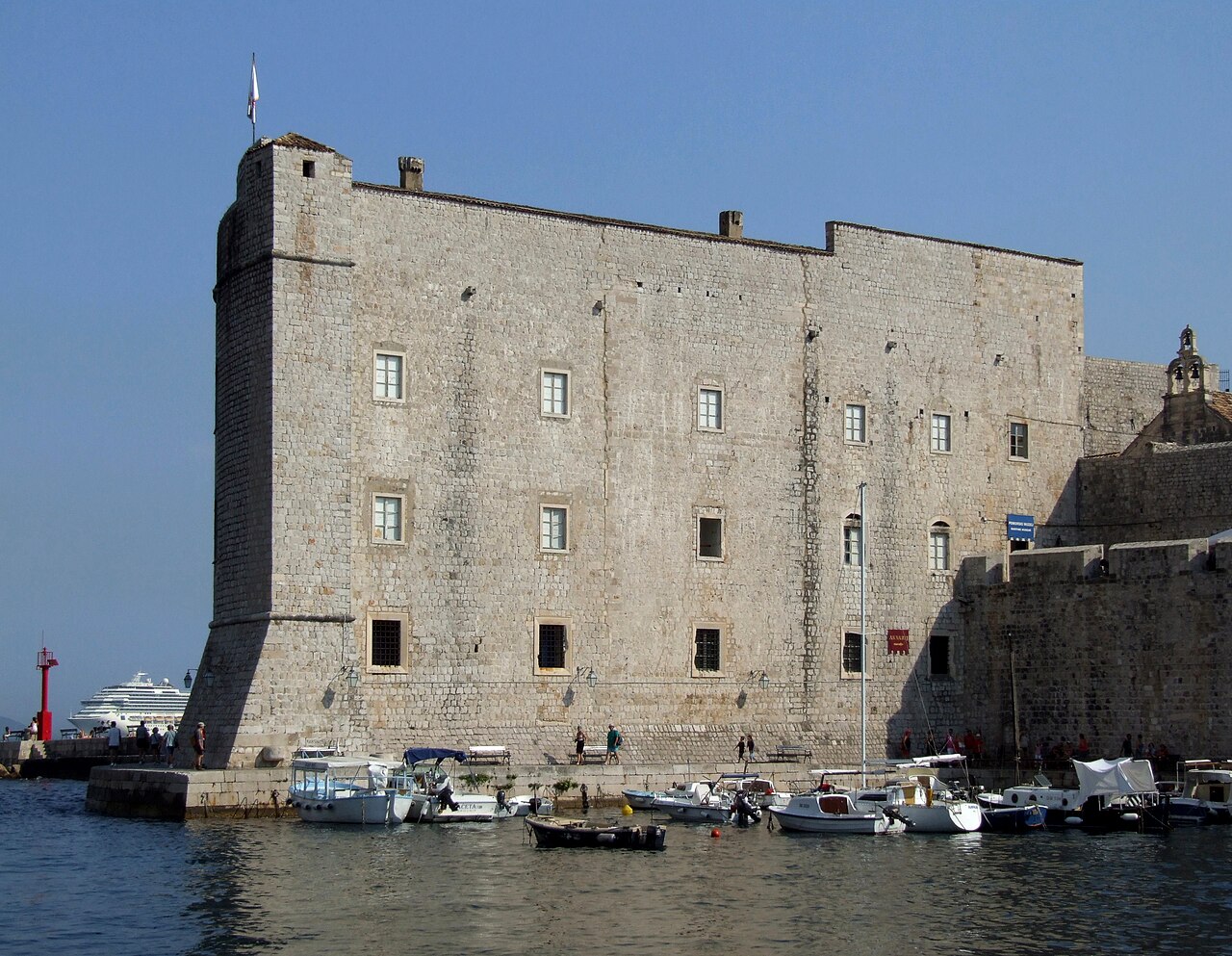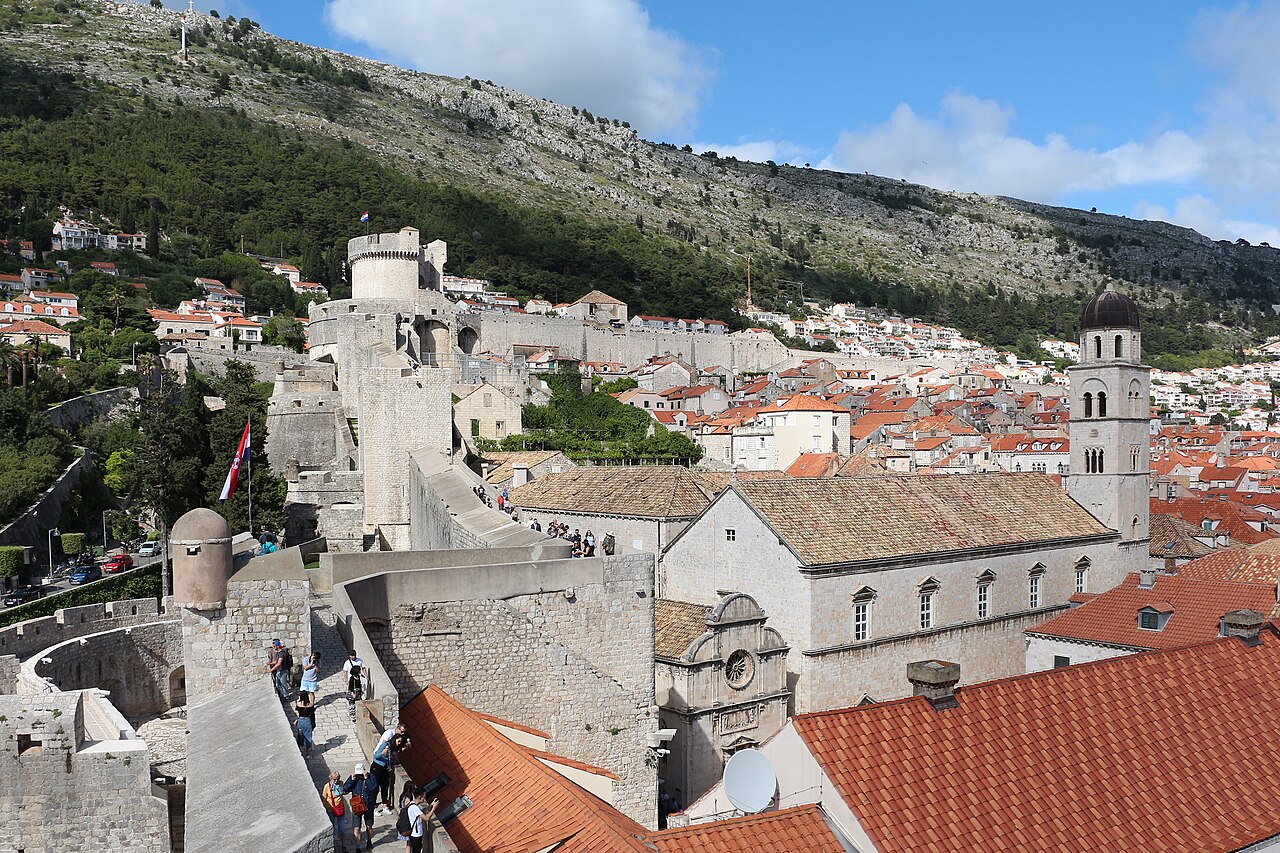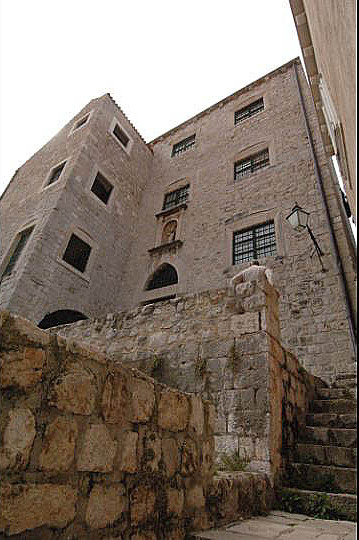
The Ethnographic Museum is one of the least crowded paid sights inside the walls, and the building alone justifies the climb. It occupies the Republic of Ragusa's public granary, known as Rupe, which means the holes, after the fifteen underground grain pits carved into the ground floor. The granary was built in 1590 as a four-storey building, badly damaged in the earthquake of 1667, and rebuilt with the three storeys you see today. Storing grain was a matter of survival for a city-state with little farmland, and the Republic kept strict control over supplies to protect against famine and siege; on the ground floor you can look down into the pits and see how the grain was kept dry and cool. The upper floors hold the museum's collection of more than ten thousand objects of ethnographic heritage from the Dubrovnik region, Croatia and neighbouring countries. The first floor covers traditional economic life and rural architecture, and the second floor the festive and holiday dress for which the region is famous, especially the costumes of Konavle, the Dubrovnik littoral, the Elaphiti islands, Mljet, Lastovo, Pelješac and Korčula, along with nineteenth-century textiles and needlework. The permanent display opened in 1991. It is part of Dubrovnik Museums and is covered by the Dubrovnik Pass and the combined museum ticket. Rupe sits in the western upper part of the Old Town, a short climb from Stradun up the stepped lanes.
What makes the visit worthwhile is the link between the building and the city's history. The walls kept enemies out, but grain kept the people alive, and Rupe is the most direct physical evidence of how the Republic thought about security. The pits are deep and impressive, and the explanation of how grain was dried, stored and distributed tells you a great deal about the careful, bureaucratic state that ran Dubrovnik for centuries. Upstairs, the costumes are a reminder that the city was surrounded by a rich rural culture, and the Konavle embroidery in particular is exceptional; if you are heading to Cavtat or the Konavle valley, it is a good primer.
Plan around the closing day. Dubrovnik Museums keeps winter hours from November to March, when Rupe opens in the morning and early afternoon and is closed on Tuesdays; in summer it opens longer but still closes on Tuesdays. All the city museums close on Christmas Day, New Year's Day and the Feast of St Blaise. Payment is cashless. Most people need forty-five minutes to an hour. The approach involves steps, as does almost everything in the upper Old Town.
Who should go: travellers using the Dubrovnik Pass who want something quieter than the Rector's Palace, people interested in textiles and folk traditions, and anyone exploring the upper lanes on the western side of the Old Town. It is not a first-day essential, but it is one of the best ways to escape the crowds on Stradun while staying inside the walls. Combine it with a walk along the upper lanes toward the Buža Gate and the cliff-side bars beyond the walls.
What to expect
The experience
A self-guided museum in the Republic's 1590 granary, with the grain pits on the ground floor and folk costumes, crafts and rural life upstairs.
Best time
Late morning or midday, when Stradun is busiest. Closed on Tuesdays all year, with shorter winter hours.
How long
Forty-five minutes to an hour.
Tips
Use the Dubrovnik Pass or the combined museum ticket. Look into the grain pits before going upstairs. Expect steps on the approach.
Quick picks
- Best for
- A quiet museum hour inside the walls, away from the crowds.
- Families
- Children like the deep grain pits; the costume floors suit older kids.
- Couples
- A calm stop on a wander through the upper lanes toward the Buža Gate.
- Pair with
- The Rector's Palace, the Maritime Museum and the cliff bars beyond the Buža Gate.
- Time needed
- About an hour.
Good questions
What is Rupe in Dubrovnik?+
The Republic's public granary, built in 1590, named for the fifteen underground grain pits on its ground floor. It now houses the Ethnographic Museum.
When is the Ethnographic Museum closed?+
On Tuesdays throughout the year, and on Christmas Day, New Year's Day and the Feast of St Blaise. Winter hours are shorter.
Is it included in the Dubrovnik Pass?+
Yes, it is part of Dubrovnik Museums and covered by the pass and the combined museum ticket.
What will I see?+
The original grain pits, plus folk costumes, embroidery, textiles and displays on rural life and architecture from the Dubrovnik region and beyond.
Is it hard to reach?+
It is in the upper western part of the Old Town, a short but stepped climb from Stradun.