Most visitors come to Eureka Springs for the ghost stories, the galleries and the scenery, and only gradually realize that the town itself is the main exhibit. The streets follow the ravines and springs rather than a grid, the buildings were fitted into the hillside as they were needed, and the entire downtown is on the National Register of Historic Places. If you know a little about how it came to look this way, a simple walk becomes a much richer experience. This guide explains the story in plain terms and then turns it into a self-guided route you can complete in a few unhurried hours.
A town built around water
Eureka Springs grew up around its springs, more than sixty of them, which were believed to have healing properties. Word spread, visitors arrived in search of cures, and a resort town sprang up almost overnight in the Victorian era. Hotels, bathhouses and boarding houses were built as fast as builders could manage, on slopes where no planner would have placed a town. That explains the famous quirks: streets that cross at odd angles, buildings whose ground floor on one street is the third floor on another, and staircases that serve as public lanes. The town did not follow a plan; it followed the water.
Why the buildings look the way they do
The district is dominated by Victorian architecture in stone and brick, with decorative details that were meant to impress guests arriving by rail. Balconies, bay windows, stone steps and ornamental trim are everywhere. Many structures were built for visitors rather than residents, which is why the downtown feels so much like a stage set: hotels, bathhouses, shops and theaters were all competing for attention. Look up as you walk, because the best details are above the storefronts.
The decline and the second life
When medical fashions changed and travel patterns shifted, the spa trade faded, and many resort towns of this kind lost their buildings to neglect or demolition. Eureka Springs kept most of its architecture, partly because the steep terrain made redevelopment difficult and partly because later generations of artists, craftspeople and preservation-minded residents recognized what they had. The result is the town you see today, where historic hotels, galleries and restaurants occupy buildings that were already old when your grandparents were young. The ghost-story reputation grew out of the same preservation: old buildings, long histories and plenty of stories.
A self-guided route
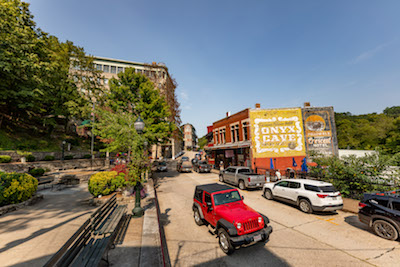
Begin at the Eureka Springs Historical Museum at the south end of Main Street, which sets out the spring-water boom and the town's early years with local artifacts. It is the best primer for everything that follows, and it takes less time than most visitors expect. From there, walk north along Main Street, noticing how the storefronts step up and down the slope. Continue to Basin Spring Park, the heart of the district, and pause to look at the plaza, the spring and the buildings stacked above it. The Basin Park Hotel, built into the hillside, shows how different floors can open onto different streets.
Climb to the upper lanes
From the plaza, head up onto Spring Street and the lanes above it. These narrower streets hold some of the district's best houses, cottages and stairways, and they reveal how the town's residents lived, away from the commercial core. Take your time on the slopes and use the benches. The reward is views down across the rooftops that you cannot get from the main street.
See the bath tradition
The Palace Hotel and Bath House puts the town's founding purpose into a single address, and other historic buildings along Main Street were also built to serve bathers. Even if you do not book a treatment, the exteriors and lobbies tell the story of why people came. If you do book, a massage or soak in a historic setting is the most direct connection to the past that the town offers.
Look up at the ridge
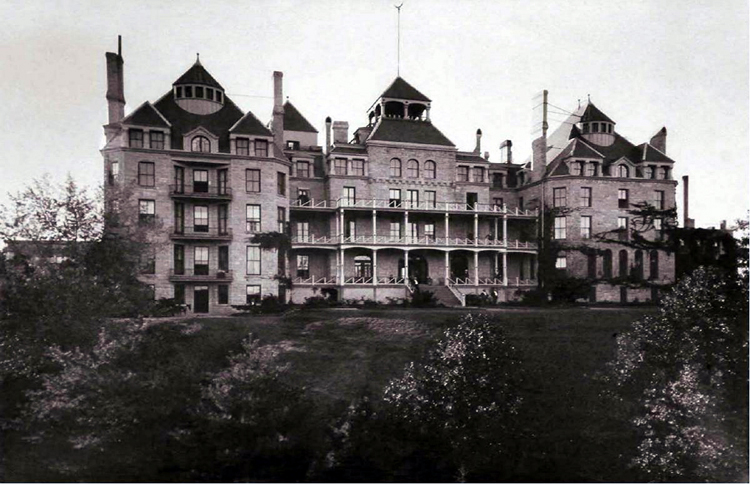
The 1886 Crescent Hotel and Spa sits on a ridge above downtown and shows the grander side of Victorian resort ambition. It was designed to be seen from a distance, and it still dominates the skyline. Even a short visit for the grounds and the view makes sense of how the town was meant to be approached. Its long haunted reputation is part of the same story, and a tour inside brings the building's many chapters to life.
Add the later landmarks
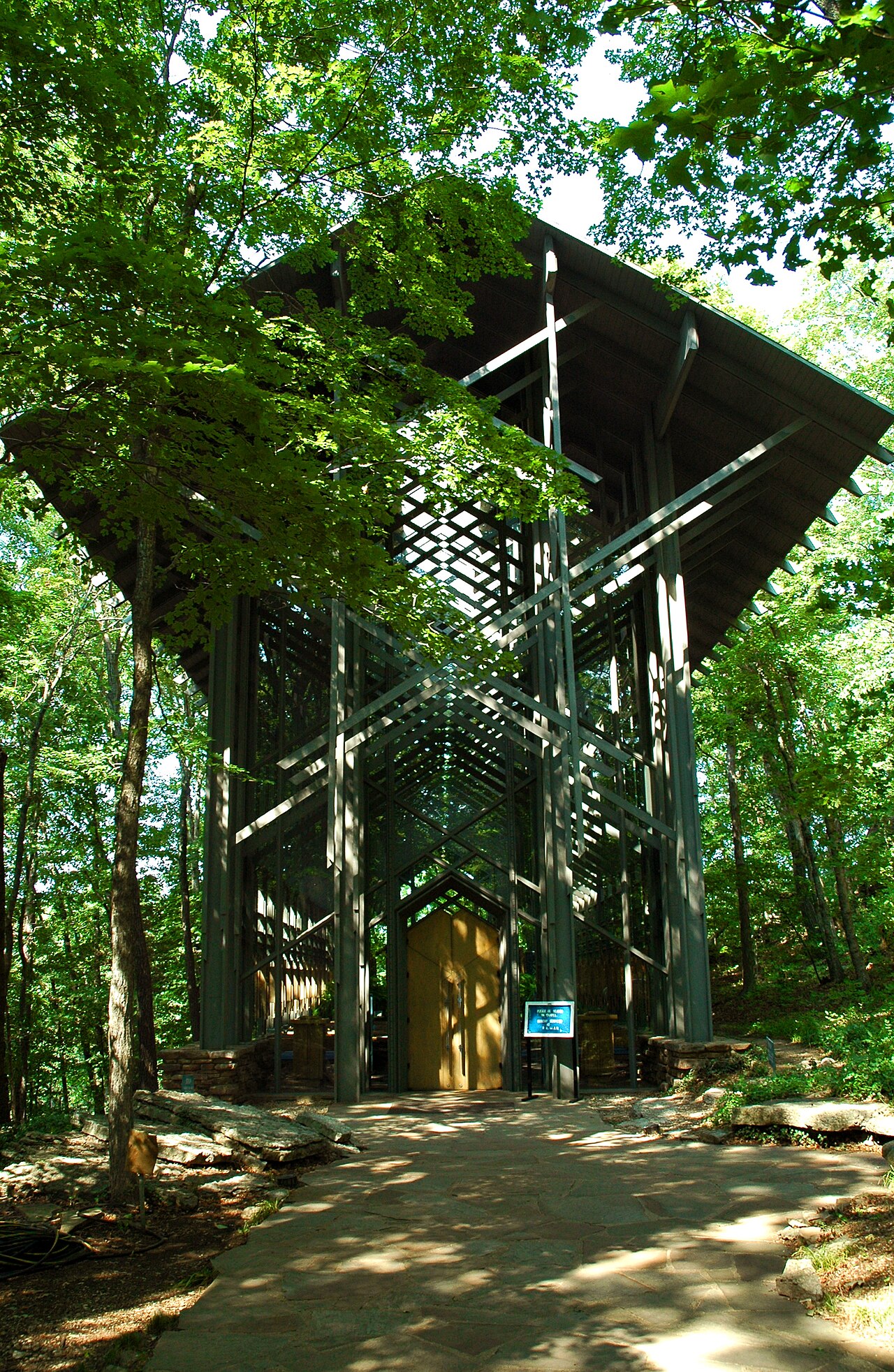
The architecture did not stop with the Victorians. Thorncrown Chapel, with its glass-and-timber design in the woods, is a modern landmark that fits the setting by echoing the surrounding trees rather than competing with them. The vintage railway depot recalls the era when trains carried visitors in, and the trolley system is a practical way to experience the hills without climbing every one. Together they show how the town has kept adapting without losing its character.
Tips for walking the district
Wear shoes with good grip, because stone steps and slopes can be slippery after rain. Carry water in summer and a light layer in spring and fall. Mornings are quieter and better for photography, while evenings suit lights and atmosphere.
Pairing history with the rest of your trip
A morning history walk fits neatly before a lunch stop, an afternoon at a gallery or a spa and an evening ghost tour, which uses the same stories in a more theatrical form. If you only have one day, do the museum, Basin Spring Park and Spring Street, then finish at the Crescent. If you have more, add the chapel and the railway, and let the surrounding countryside balance the town's density. Whatever you choose, the lesson of Eureka Springs is the same: look closely, move slowly and let the hillside set the pace.